Tire Repair vs. Replace Decision Tool
Answer the questions below to get an immediate recommendation on whether to repair or replace your tire.
You’re driving down the M2 or maybe just pulling out of your driveway in Adelaide when you feel that sickening wobble. You pull over, look at the wheel, and there it is: a flat tire. Is this the end of your tire’s life, or can you patch it up and keep going? The answer isn’t always "yes" or "no." It depends entirely on where the hole is, how big it is, and what kind of damage the sidewall took.
Most drivers panic because they don’t know the rules. They think any flat means a new tire. Others try to drive on a completely flat run-flat for miles, destroying the rim and the tire in the process. Here is the straightforward truth about when you need to replace that rubber and when a simple plug will do the job.
The Golden Rule: Location Matters More Than Size
Before you even think about buying a new tire, you need to inspect the damage. This is the single most important factor in the repair-or-replace decision. Tires have three distinct zones, and only one of them is safe to repair.
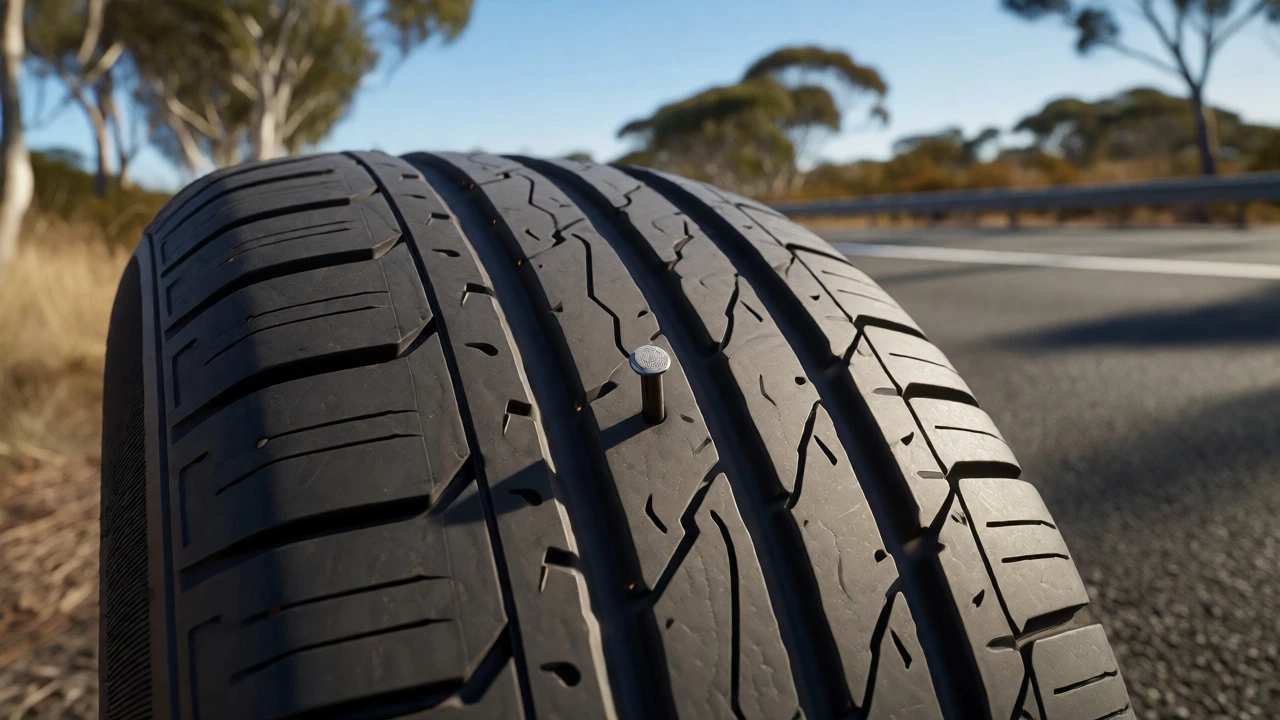
The first zone is the tread area. This is the part of the tire that touches the road. If your puncture is here, specifically within the central three-quarters of the tread width, you are likely in luck. A small nail or screw causing a leak in this area can usually be repaired safely using a combination plug-patch method. This involves inserting a sticky string into the hole from the outside and gluing a patch on the inside liner. It seals the air and reinforces the structure.
The second zone is the shoulder. This is the curved area where the tread meets the sidewall. Damage here is tricky. Because the shoulder flexes constantly as you turn and accelerate, repairs often fail. Most reputable tire shops in Australia will refuse to repair a puncture in the shoulder because the risk of blowout is too high.
The third zone is the sidewall. This is the vertical side of the tire. If you have a cut, bulge, or puncture here, you almost certainly need a new tire. The sidewall supports the vehicle’s weight and absorbs shocks. It has no steel belts like the tread does; it relies on flexible cords. Once those cords are broken by a sharp object or driven-on impact, the structural integrity is gone. You cannot patch a sidewall. Period.
Size and Type of Damage: When Patches Won’t Hold
Even if the puncture is in the safe tread zone, size matters. A standard nail hole is typically 1/4 inch (6mm) or smaller. These are easily repairable. But what if you ran over a large piece of glass or a rusty bolt?
If the hole is larger than 1/4 inch, most manufacturers say it’s time for a replacement. Why? Because a large hole removes too much structural material. Even with a patch, the remaining rubber around the hole may not hold up under highway speeds or heavy loads. In Adelaide, where we might hit the coast roads at 100km/h, a weak spot in the tread can expand rapidly due to heat buildup.
Also consider the angle of entry. If a nail went in straight through the tread, great. But if it entered at a severe angle, tearing a chunk of rubber out rather than just piercing it, the damage is irregular. Irregular tears are hard to seal properly. Air leaks slowly, moisture gets in, and rust forms on the internal steel belts. Over time, this causes delamination, where the layers of the tire separate. If you see a tear that looks jagged or wider than a pencil eraser, replace the tire.
The Sidewall Bulge: A Silent Killer
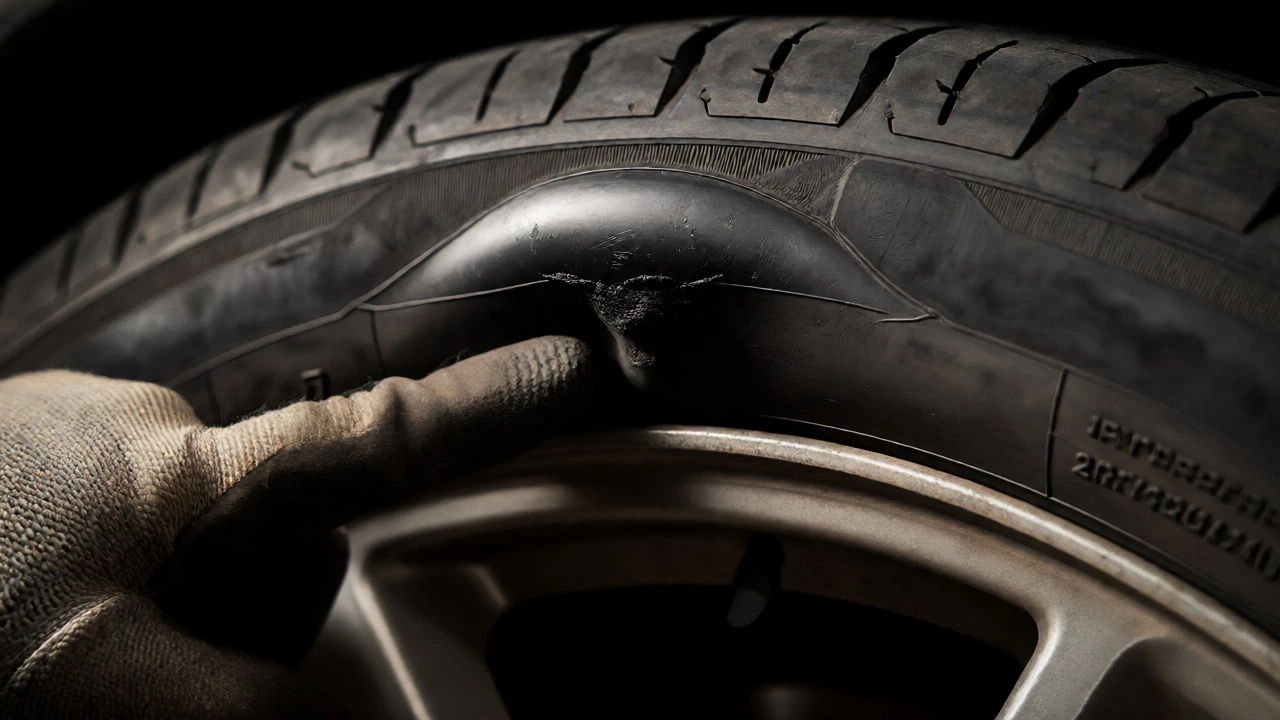
Sometimes you don’t get an immediate flat. Instead, you hit a pothole hard, and the next day you notice a bubble on the sidewall. This is called a sidewall bulge or hernia. It happens when the impact breaks the internal cords holding the tire together. The air pressure pushes the rubber outward, creating a soft spot.
Can you drive on a bulge? Briefly, yes, but it’s dangerous. That bulge is a ticking time bomb. At any moment, especially when hitting another bump or increasing speed, the weakened rubber can burst. This results in a sudden blowout, which can cause you to lose control of the car. There is no way to fix a bulge. You must replace the tire immediately. Do not attempt to put a plug in a bulge; it won’t stop the cord failure.
Age and Wear: The Hidden Factors
Let’s say you have a small, clean puncture in the tread. Technically, it’s repairable. But should you repair it? Not necessarily. You need to check the age and remaining tread depth of the tire.
Tires degrade over time, even if they aren’t used much. Rubber dries out and cracks. Check the DOT code on the sidewall-the last four digits indicate the week and year of manufacture. For example, "3522" means the tire was made in the 35th week of 2022. Most experts recommend replacing tires after six years, regardless of tread depth, because the rubber compounds break down. If your tire is five years old and you get a puncture, ask yourself: is it worth paying $80-$100 for a repair on a tire that needs replacing in six months anyway? Often, it’s smarter to just buy a new one.
Similarly, check the tread depth. Use the coin test: insert a 5-cent coin into the tread grooves. If you can see the top of Queen Elizabeth’s head, your tread is low. Australian law requires a minimum tread depth of 1.5mm, but performance drops significantly below 3mm. If your tire is near the end of its life, repairing a puncture is throwing good money after bad. Buy a new tire instead.
Run-Flat Tires: Special Rules Apply
If you drive a luxury car or certain modern SUVs, you might have run-flat tires. These have reinforced sidewalls that allow you to drive for a short distance-usually up to 80km-at reduced speeds (max 80km/h) after losing all air pressure.
Many people assume run-flats can’t be repaired. That’s a myth. However, repairing them is stricter. If you drove on the flat for more than a few kilometers, the internal structure may be damaged beyond repair because the weight of the car crushed the sidewall against the rim. If you stopped immediately and had very little air loss, some specialists can repair run-flats. But many shops prefer to replace them because verifying the internal damage is difficult without specialized equipment. Always consult your vehicle manual or a specialist before attempting to repair a run-flat.
DIY Plugs vs Professional Repairs
You’ve probably seen those cheap tire plug kits at Bunnings or Supercheap Auto. They cost about $20 and claim to fix a flat in minutes. Are they a valid solution?
A DIY plug is a temporary emergency measure. It stops the air from leaking so you can drive to a tire shop. It is not a permanent repair. Why? Because plugging from the outside leaves the inner liner exposed to moisture. Moisture gets into the steel belts, causing rust. Rust expands, pushing the rubber apart, leading to separation later. Also, a plug doesn’t seal the inner liner perfectly.
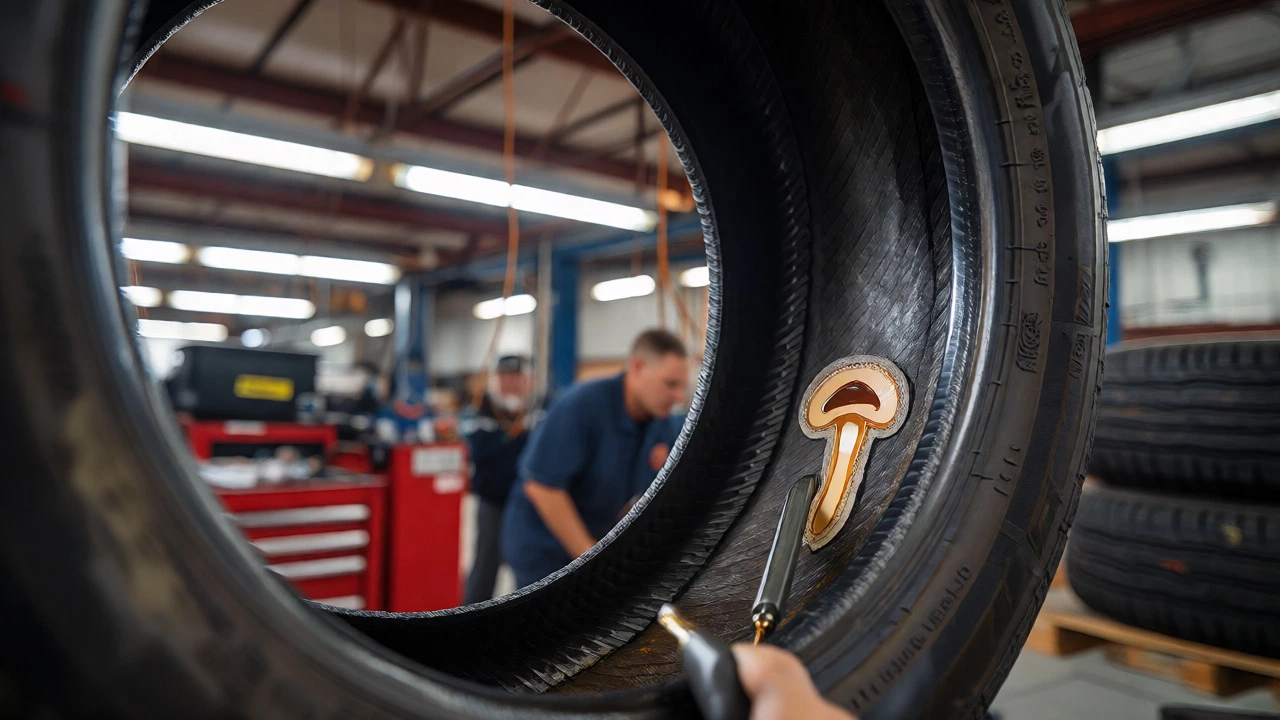
A professional repair uses a combination plug-patch. The technician inserts a stem through the hole and attaches a mushroom-shaped patch to the inside of the tire. This seals both the outer surface and the inner liner, preventing moisture ingress. This is the only method approved by major tire manufacturers like Michelin, Bridgestone, and Goodyear for permanent repairs.
| Damage Type | Location | Action | Reasoning |
|---|---|---|---|
| Nail/Screw Hole (<6mm) | Central Tread | Repair | Safe if patched internally; restores integrity. |
| Large Cut/Tear | Any Location | Replace | Structural damage too extensive for patching. |
| Puncture/Cut | Sidewall | Replace | Sidewall flexes; repairs fail and cause blowouts. |
| Bulge/Hernia | Sidewall | Replace | Internal cords broken; risk of sudden failure. |
| Old Tire (>6 years) | Any Location | Replace | Rubber degradation makes repair risky/uneconomical. |
| Low Tread Depth | Any Location | Replace | Tire nearing end of life; repair not cost-effective. |
What About TPMS Sensors?
Modern cars have Tire Pressure Monitoring Systems (TPMS). These sensors sit inside the tire on the valve stem. If you decide to replace your tire, ensure the shop transfers the sensor carefully. Breaking a TPMS sensor costs extra ($150-$300 per sensor depending on the brand). If you’re repairing the tire, the sensor stays untouched, which is a plus. Just make sure the repair doesn’t interfere with the sensor’s position.
Making the Right Call in Adelaide Conditions
Living in Adelaide, you deal with specific road conditions. We have smooth highways but also older suburban streets with unexpected potholes and debris. Heat is also a factor. High temperatures increase tire pressure and soften rubber, making structural weaknesses more likely to fail.
If you find a flat, stay calm. Check the location. If it’s the sidewall, call a tow truck or use your spare. If it’s the tread, assess the size. If it’s small and the tire is relatively new, book a professional repair. If the tire is old, worn, or the damage is significant, budget for a replacement. Replacing one tire is fine, but remember: for safety, it’s best to replace tires in pairs (both front or both rear) to maintain even grip, especially on wet roads. If you only replace one, ensure it matches the size, load rating, and speed rating of the others exactly.
Can I drive on a flat tire?
Only if it’s a run-flat tire and you follow the manufacturer’s limits (usually max 80km/h for 80km). For standard tires, driving even a short distance on zero pressure destroys the sidewall and rim, turning a $80 repair into a $500+ replacement. Stop immediately.
How much does it cost to repair a flat tire in Australia?
A proper internal plug-patch repair typically costs between $70 and $120 AUD. This includes removing the tire from the rim, cleaning the area, applying the patch, rebalancing, and refilling. Some shops offer free repairs if you bought the tire from them.
Is a tire plug permanent?
No, a string plug inserted from the outside is considered a temporary emergency fix. It allows you to reach a shop. A permanent repair requires an internal patch combined with a plug (mushroom patch) applied by a professional.
Should I replace one tire or two?
If your other tires have less than 3mm of wear difference, replacing one is acceptable. However, for optimal safety and handling, especially on wet roads, it is recommended to replace tires in pairs (axle sets). If you have an All-Wheel Drive (AWD) vehicle, you often need to shave the new tire to match the tread depth of the others to avoid damaging the drivetrain.
What is the maximum hole size for a tire repair?
Generally, holes up to 6mm (1/4 inch) in diameter are repairable if located in the tread. Larger holes compromise the structural integrity of the tire and require replacement.