Car Radiator Replacement Decision Calculator
Enter your vehicle details and check the condition boxes to get a personalized recommendation.
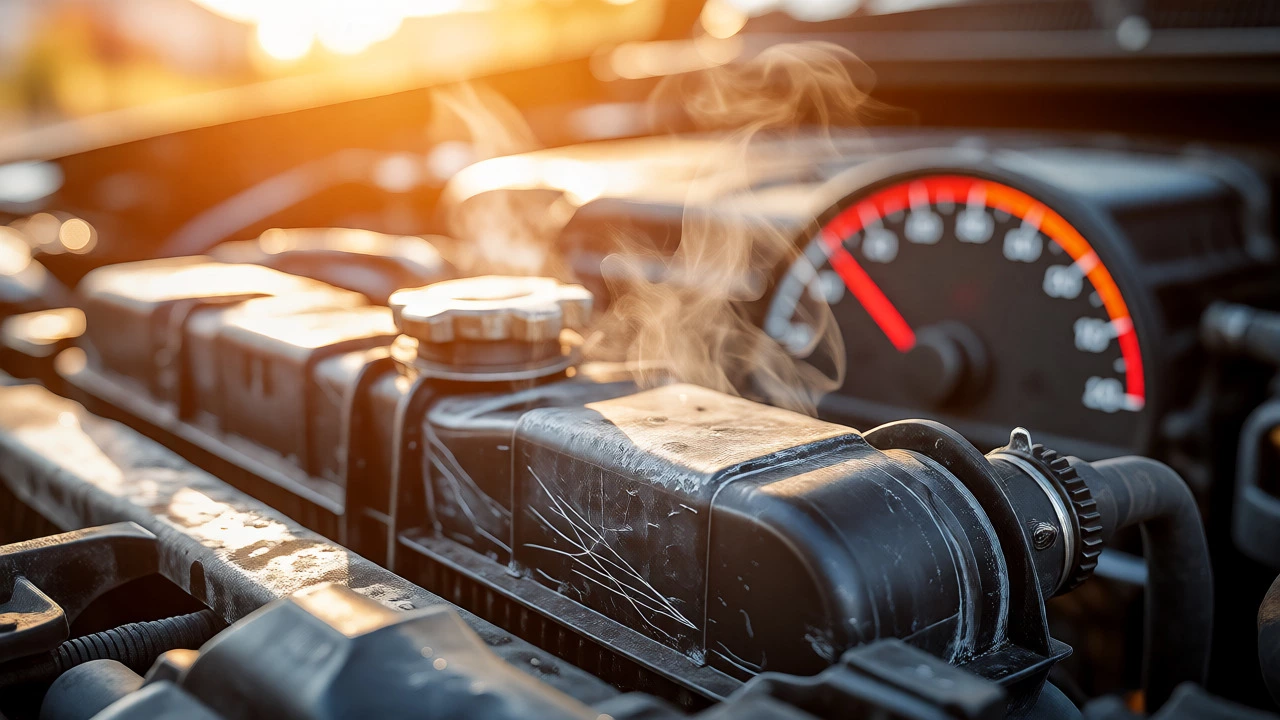
You’re cruising down the highway when the temperature gauge starts creeping toward the red zone. You pull over, pop the hood, and see steam hissing from under the cap. The mechanic tells you it’s time for a new car radiator, but your car is twenty years old. Is it really worth spending hundreds of dollars on a component for a vehicle that might not last another five? This isn’t just about money; it’s about reliability, safety, and whether your engine will survive the next summer heatwave.
The short answer is: usually, yes. But it depends entirely on the condition of the rest of your cooling system and your plans for the car. A failing radiator doesn’t just mean an overheating engine; it means a potential head gasket failure or a warped cylinder head, repairs that can cost three to four times more than the radiator itself. Let’s break down exactly when you should swap it out and when you can safely ignore it.
Why Age Matters More Than Mileage
Most people look at the odometer to judge wear, but radiators don’t care how many kilometers you’ve driven. They care about time and chemical exposure. Most modern automotive radiators are made of aluminum cores with plastic end tanks. While aluminum is durable, the plastic tanks become brittle after two decades of thermal cycling-expanding in the heat of Adelaide summers and contracting in winter mornings.
Plastic degradation is the silent killer here. Even if the metal fins look fine, those plastic tanks can crack spontaneously under pressure. I’ve seen countless cars where the radiator held up perfectly at idle but burst the moment the driver hit the highway and increased coolant pressure. If your plastic looks faded, chalky, or has visible stress lines near the hose connections, age alone is enough reason to replace it.
| Symptom | Cause | Urgency Level |
|---|---|---|
| Visible cracks in plastic tanks | Thermal fatigue and UV damage | High (Immediate) |
| Rusty or discolored coolant | Internal corrosion or oil mix | Medium (Inspect soon) |
| Dripping fluid under parking spot | Failed seal or cracked core | High (Immediate) |
| Frequent overheating | Clogged tubes reducing flow | High (Immediate) |
| Bent fins from debris | Physical impact | Low (Clean first) |
The Cost-Benefit Analysis: Repair vs. Replace
Let’s talk numbers. In Australia, a quality aftermarket radiator for a common 20-year-old sedan like a Toyota Corolla or Holden Commodore typically costs between $150 and $300 AUD for the part. Labor adds another $150 to $250 depending on the shop’s hourly rate and the complexity of the job. Some older vehicles require removing the fan shroud, condenser, or even the bumper cover, which doubles the labor time.
Compare this to the risk. If you drive a car with a compromised radiator through a hot day and the engine overheats severely, you could warp the cylinder head. Replacing a head gasket or machining a head can easily exceed $1,500. If the block cracks, you’re looking at an engine rebuild or replacement, which often exceeds the value of a twenty-year-old car. Spending $400-$500 now to prevent a $1,500 disaster later is a solid insurance policy.
However, there is a threshold. If your car is already showing major signs of death elsewhere-sludge in the oil, transmission slipping, or rusted-out chassis-dumping money into the cooling system might be throwing good money after bad. But if the engine runs strong and the transmission shifts smoothly, the radiator is a cheap fix to keep a reliable daily driver alive.
Don’t Just Swap the Radiator: Check These Components
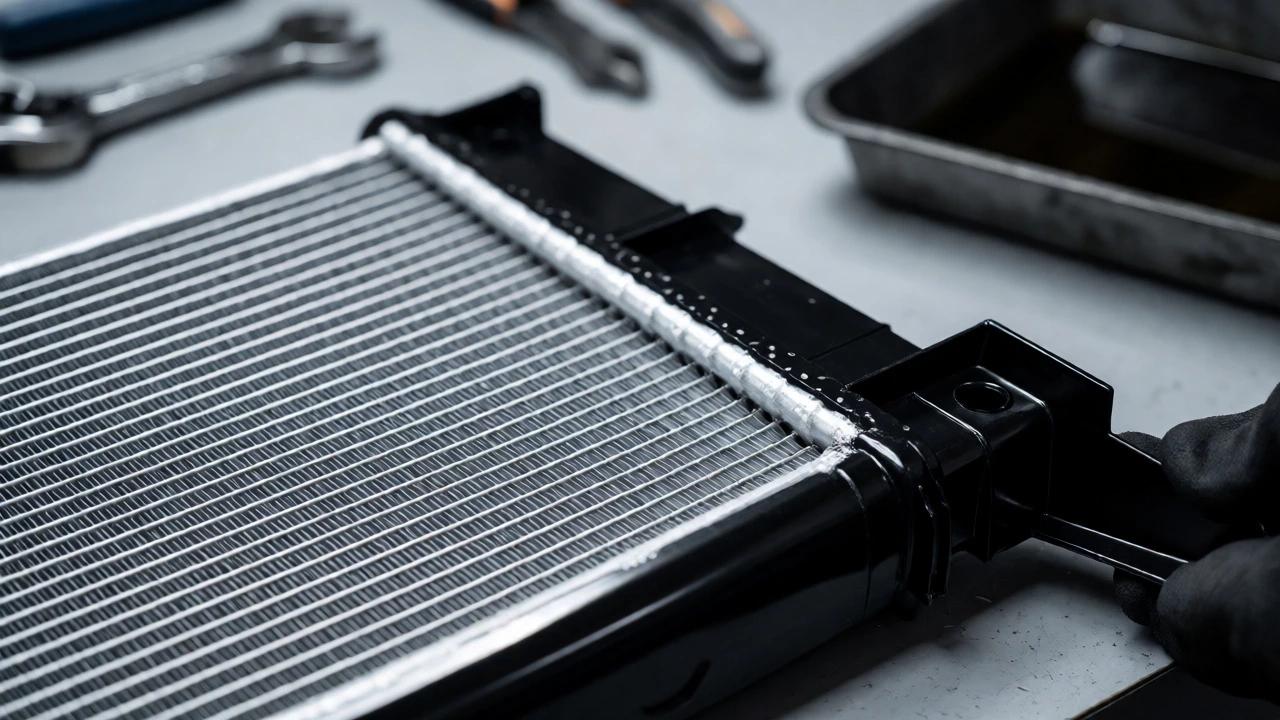
Here is the trap many owners fall into: they replace the radiator, only to have the new one fail within six months because the rest of the system was neglected. A twenty-year-old cooling system is a team effort. When you open the hood, you aren’t just looking at the radiator; you’re evaluating the entire loop.
- Hoses: Rubber hoses harden and crack over time. If they feel rock-hard or spongy, replace them. A blown upper radiator hose can dump all your coolant in seconds, destroying your new radiator’s warranty claim if you didn’t document the inspection.
- Water Pump: If the water pump weep hole shows dried coolant residue, it’s leaking. Since you’ll likely drain the coolant anyway to remove the radiator, replacing the water pump while everything is apart saves massive labor costs later. It’s rarely worth doing twice.
- Thermostat: A stuck-closed thermostat causes overheating that mimics a bad radiator. Always replace the thermostat when changing the radiator. It’s a $20 part that ensures proper flow regulation.
- Radiator Cap: This small spring-loaded valve maintains system pressure. A weak cap lowers the boiling point of your coolant, causing false overheating alarms. It’s the cheapest part in the system and the most overlooked.
If you skip these checks, you might think the new radiator failed when actually the old water pump seized or the thermostat stuck. Always flush the engine block thoroughly before installing the new unit to remove accumulated sludge that can clog the new radiator’s narrow tubes.
Choosing the Right Replacement Part
Not all radiators are created equal. For a twenty-year-old car, you generally have three options, each with distinct trade-offs.
OEM (Original Equipment Manufacturer) parts are exact copies of what came off the factory line. They fit perfectly and use the same materials. However, they are often overpriced for older models because supply chains have thinned out. Sometimes, the OEM design had known flaws that aftermarket companies have since fixed.
Premium Aftermarket brands like Denso, Valeo, or Nissens are often superior to OEM. These manufacturers supply many automakers directly. Their radiators frequently feature improved tube designs for better heat dissipation or thicker plastic tanks to resist cracking. For a daily driver, this is usually the sweet spot: high quality without the dealership markup.
Budget Import brands are tempting at half the price. But be careful. Thin aluminum walls and low-grade plastic can lead to premature leaks. If you plan to keep the car for another year or two, budget parts might suffice. If you want five more years of trouble-free driving, spend the extra $50 for premium aftermarket.
DIY or Professional Installation?
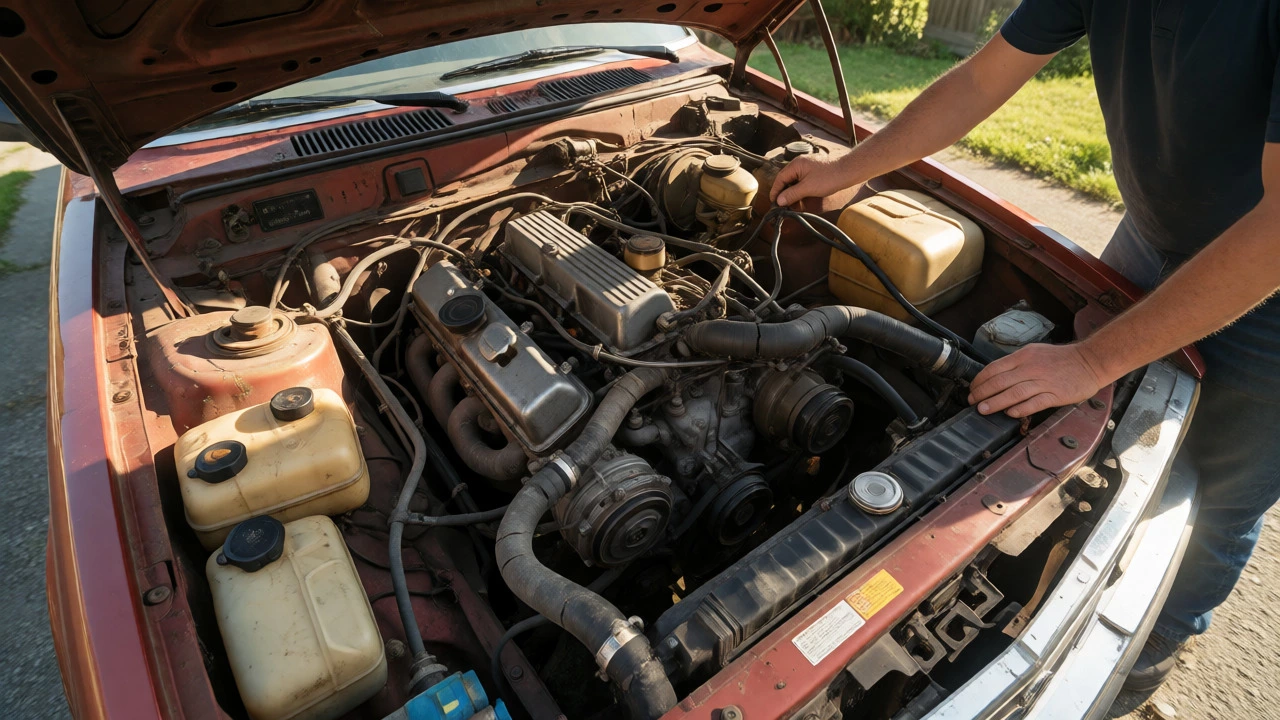
Can you do it yourself? Yes, if you have basic mechanical skills. Radiator replacement is one of the more accessible DIY jobs. You need a drain pan, pliers, screwdrivers, and maybe a socket set. The hardest part is often dealing with seized bolts or accessing hidden clips behind the grille.
However, consider the disposal issue. Old coolant is toxic and must be disposed of properly at a recycling center. Also, bleeding air from the system is critical. Trapped air pockets cause hot spots that can crack your new radiator’s plastic tanks. If you’re unsure about the bleeding procedure for your specific model, paying a professional is worth the peace of mind. Many shops offer free leak tests after installation, ensuring no drips remain.
If you choose DIY, take photos before disconnecting anything. Label hoses with tape. Use distilled water mixed with the correct specification antifreeze for your region. Never use plain tap water, as minerals in Adelaide’s water supply can accelerate internal corrosion over time.
When to Say Goodbye Instead
There are scenarios where replacing the radiator isn’t worth it. If your car has a cast-iron block and severe external rust, the mounting points may be so corroded that removing the old radiator breaks the brackets. Fabricating new mounts adds significant labor cost.
Also, check the transmission cooler lines. Many older automatic transmissions route cooler lines through the radiator. If these lines are heavily rusted, they might snap during removal. Repairing or replacing these lines adds complexity and cost. If the total bill approaches 20% of the car’s market value, it might be time to sell the vehicle as-is rather than invest in its cooling system.
How long does a car radiator last?
Typically, a car radiator lasts between 8 to 10 years or 100,000 to 150,000 kilometers. However, many last well beyond 20 years if maintained properly with regular coolant flushes and no physical damage. Plastic tank degradation is the most common cause of failure in older units.
Can I drive with a bad radiator?
You can drive briefly if the leak is minor, but it is risky. Low coolant levels lead to rapid overheating, which can warp the cylinder head or blow the head gasket. If the temperature gauge rises above normal, stop immediately and let the engine cool to avoid catastrophic engine damage.
Is it cheaper to repair or replace a radiator?
For aluminum/plastic radiators, replacement is almost always cheaper and more reliable than repair. Epoxy patches or welding aluminum cores are temporary fixes that often fail under pressure. New radiators are mass-produced and affordable, making replacement the standard recommendation for failures.
Do I need to replace the water pump when changing the radiator?
It is highly recommended if the water pump is original or shows any signs of leakage. Since the cooling system is already drained and disassembled, adding a water pump costs little in labor. Doing it later requires repeating the entire process, doubling the labor bill.
What happens if I don't bleed the air out of the cooling system?
Air pockets create hot spots because air does not transfer heat like liquid coolant. This can cause localized overheating, leading to heater issues, erratic temperature readings, and potentially cracking the new radiator's plastic tanks due to uneven thermal expansion.