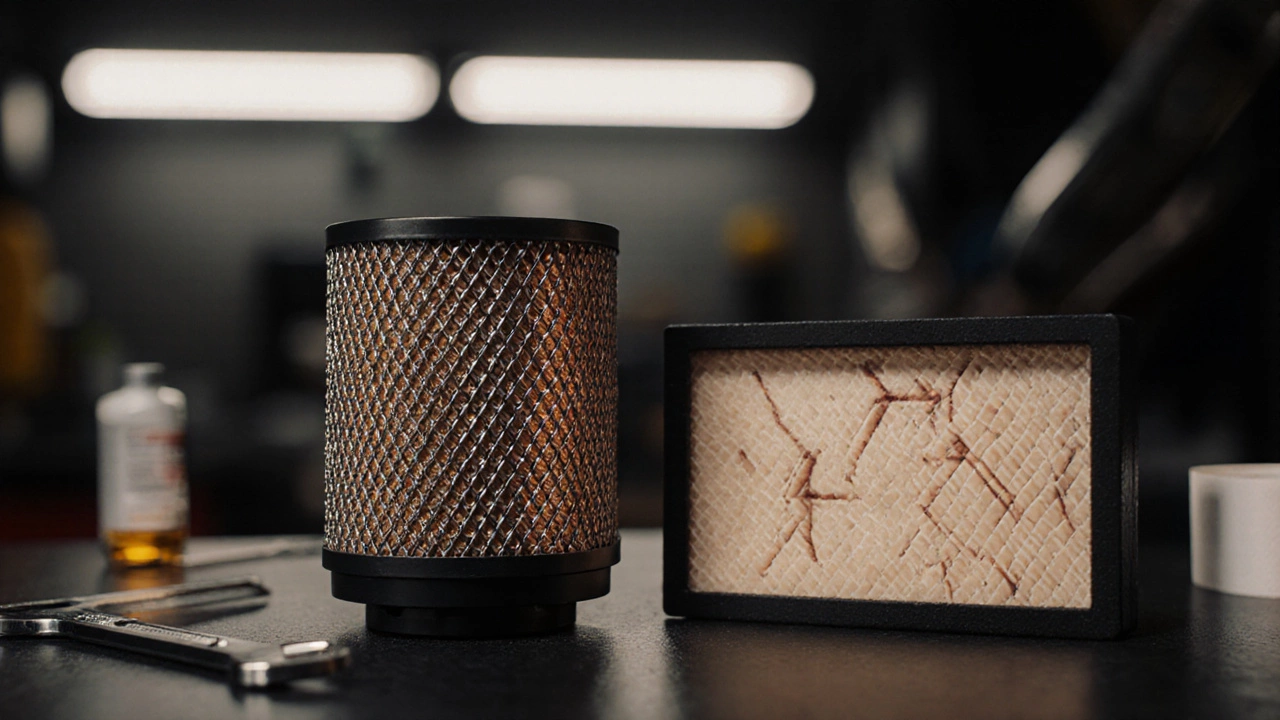
Premium Air Filter: Is It Worth the Extra Cost?
Find out if a premium air filter justifies its price by weighing performance gains, fuel savings, lifespan and real‑world tests.
View moreWhen you think about your car’s health, the air filter, a component that traps dirt and debris before they enter the engine or cabin. Also known as engine air filter or cabin air filter, it’s one of the few parts that quietly protects your engine, your lungs, and your wallet. Most drivers don’t check it until something goes wrong—like reduced fuel economy, strange engine noises, or musty air blowing from the vents. But a dirty or clogged air filter doesn’t just hurt performance—it can lead to expensive repairs.
The engine air filter, keeps dust, pollen, and road grit out of your engine’s combustion chamber is built to last, but not forever. Under normal driving, it should be replaced every 15,000 to 30,000 miles. If you drive in dusty areas, on gravel roads, or in heavy traffic, that clock ticks faster. The cabin air filter, filters the air you breathe inside the car wears out even quicker—often by 12,000 to 15,000 miles—because it’s catching everything from pollen to exhaust fumes. Skipping this one doesn’t hurt your engine, but it can make your nose run, your eyes itch, or your breath feel thick during long drives.
It’s not just about mileage. Weather matters. If you live where it rains a lot, your filter gets wet and traps more gunk. In winter, road salt and slush find their way in. Summer brings pollen storms and wildfire smoke. These aren’t just inconveniences—they’re silent killers of airflow. A clogged filter forces your engine to work harder, burning more fuel. A dirty cabin filter turns your car into an allergen trap. And if you ignore both, you risk damaging sensors, throttle bodies, or even the HVAC system.
You don’t need a mechanic to check it. Pop the hood, pull out the engine filter, hold it up to the light—if you can’t see through it, it’s done. For the cabin filter, look under the glovebox or behind the dashboard—most are easy to swap in under ten minutes. Replacing it yourself saves $50 to $100 per visit. And it’s not just about performance—it’s about safety. Poor airflow means foggy windows, reduced visibility, and slower reaction times when you need them most.
There’s no one-size-fits-all answer. A high-performance filter might last longer but cost more. A cheap paper filter might clog faster. The right choice depends on your driving habits, climate, and vehicle make. Some filters are washable. Others are disposable. Some cars have two filters—one for the engine, one for the cabin. Others combine them. Knowing the difference matters.
Below, you’ll find real-world guides on how to spot a failing air filter, what types actually work for your car, and how mixing up engine and cabin filters can cost you more than you think. No fluff. No theory. Just what works—and what doesn’t—based on what mechanics and everyday drivers have learned the hard way.
Find out if a premium air filter justifies its price by weighing performance gains, fuel savings, lifespan and real‑world tests.
View more
Curious about the lifespan of inexpensive air filters? You’re not alone. While cheap air filters are easy on the wallet, their durability often sparks debate. This article goes beyond the price tag, offering tips on choosing and maintaining air filters to ensure your HVAC system runs smoothly. Discover how often you really need to replace these filters and the signs that it's time for a change.
View more