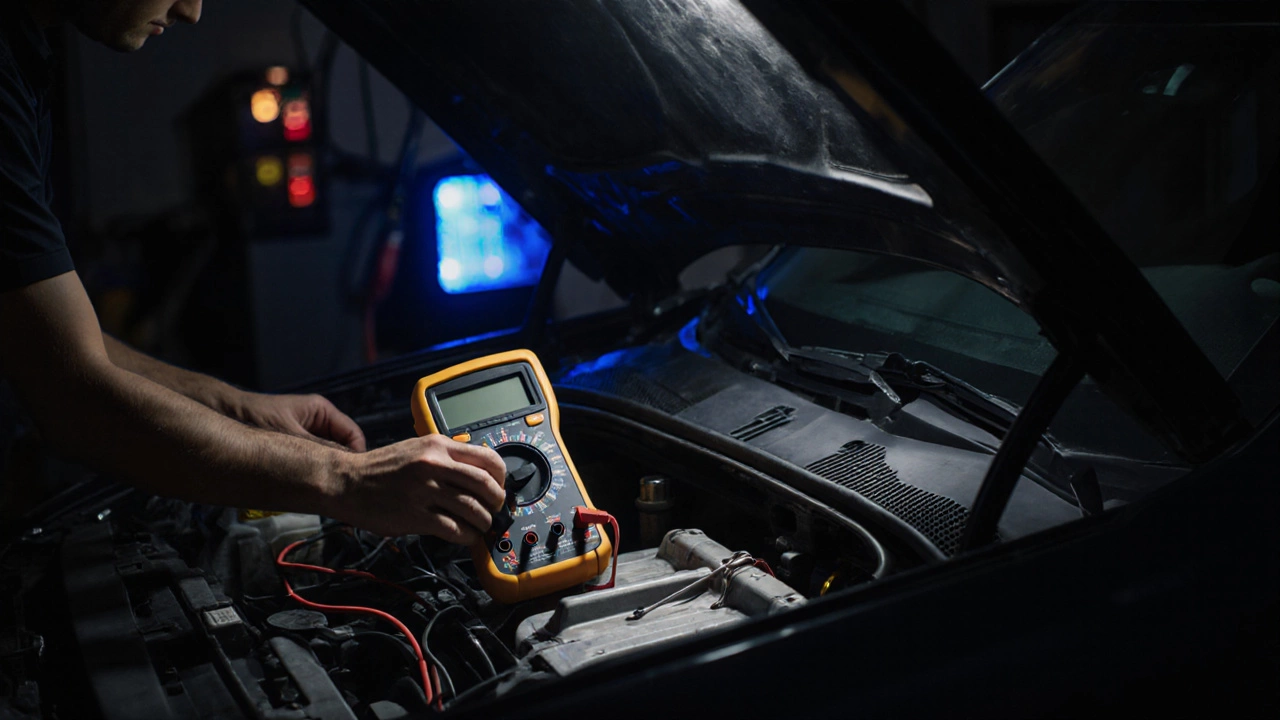
Car Won't Start? Here's What Actually Causes It and How to Fix It
When your car won't start, a condition where the engine fails to turn over or ignite despite turning the key or pressing the start button. Also known as crank-no-start, it's one of the most frustrating car problems—and usually not as complicated as you think. Most of the time, it's not a mystery. It's one of five things: the battery, the power source that delivers the initial jolt to start the engine, the fuel pump, the component that pushes gasoline from the tank to the engine, the spark plugs, the parts that ignite the air-fuel mixture in the cylinders, low engine oil, the lubricant that prevents engine parts from grinding together, or a simple connection issue. You don’t need a diagnostic scanner to figure out which one it is.
Start with the battery. If you hear a clicking sound but no cranking, that’s the classic sign. A weak battery can’t push enough power to the starter motor. Try jump-starting it or check the terminals for corrosion. If the car turns over slowly, the battery might be dying. But if you hear nothing at all—no click, no whirring—that’s often the starter or a blown fuse. Now, if the engine turns over fine but won’t catch, the problem is likely fuel or spark. A failing fuel pump won’t deliver gas, even if the tank isn’t empty. You might notice the car sputters before dying, or it cranks but never fires. A bad fuel pump doesn’t always make noise, but it will leave you stranded. Then there are spark plugs. They don’t add power, but they sure can stop it. Worn or fouled plugs won’t ignite the fuel, even if the fuel is there. Replacing them is cheap and easy. And don’t forget oil. If your engine is dangerously low on oil, modern cars will often refuse to start as a safety measure. Check the dipstick. No oil? Don’t try again. You could destroy the engine in seconds.
These aren’t guesswork problems. They’re diagnosable with basic tools and a little patience. You don’t need to pay $150 for a diagnostic just to find out your battery is dead. The posts below walk you through real-world checks, from testing fuel pressure with a simple gauge to spotting worn spark plugs by their color. You’ll find out why some people replace their fuel pump when it’s just a fuse, why changing spark plugs won’t make your car faster but might make it start again, and how low oil can trick you into thinking your starter is broken. No fluff. No jargon. Just what actually goes wrong—and how to fix it yourself before it turns into a bigger, costlier problem.