Brake Pad Wear Assessment Tool
Your Brake Safety Assessment
Enter your current brake pad thickness to see your safety status.
Ignoring worn brake pads isn’t just a delay-it’s a gamble with your life. Every time you hit the brake pedal, those thin pieces of friction material are doing the heavy lifting. When they’re new, they stop your car smoothly and quietly. But when they’re gone? You’re not just risking your car-you’re risking everyone around you.
Your brakes start squealing for a reason
That high-pitched squeal you hear when you brake? It’s not a coincidence. Most brake pads have a small metal tab built into them. When the pad material wears down to about 2 millimeters, that tab scrapes against the rotor. It’s designed to be annoying. It’s a warning you can’t ignore. If you keep driving past that sound, you’re moving from warning to emergency.
In Adelaide, where wet roads are common in winter and traffic is heavy in the city center, this warning matters more than you think. A study by the Australian Transport Safety Bureau found that 23% of brake-related crashes in South Australia were linked to worn brake pads. That’s not a small number. That’s one in every five accidents that could’ve been avoided.
Rotors get damaged-and they’re way more expensive to replace
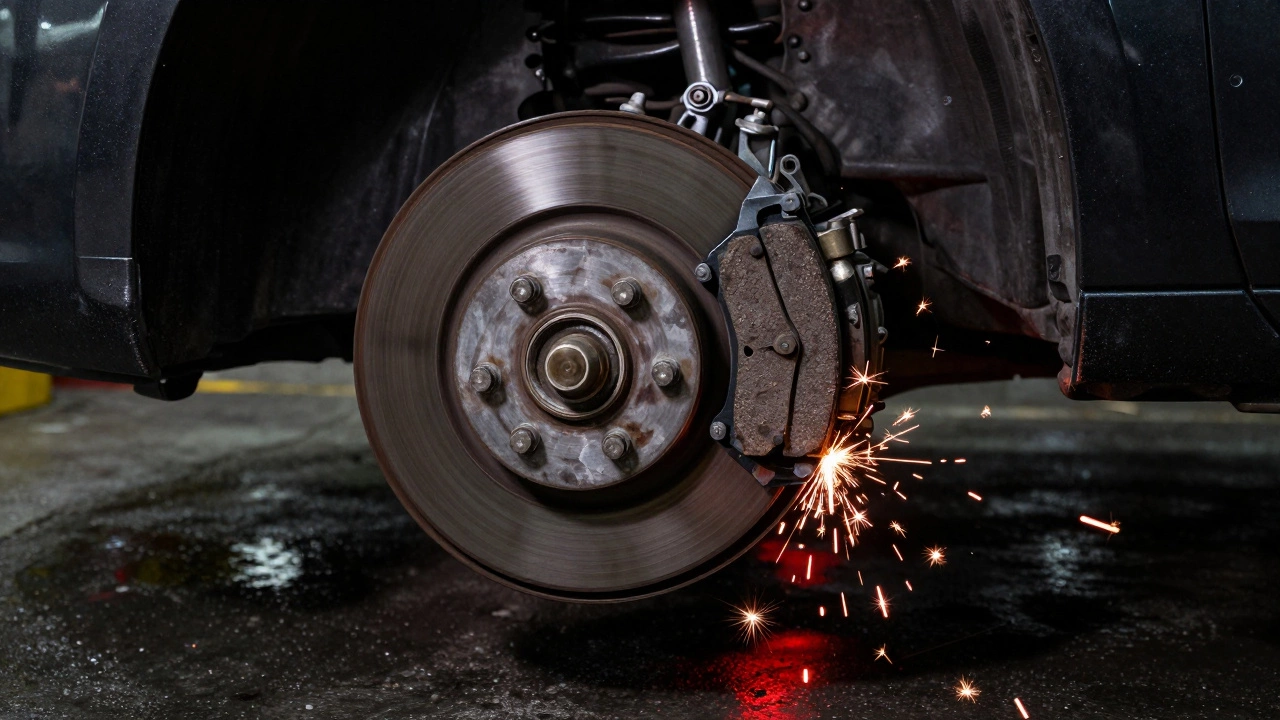
Brake pads aren’t the only thing wearing out. When the friction material is gone, the metal backing plate of the pad starts grinding directly against the rotor. This isn’t just friction-it’s metal-on-metal destruction. Rotor surfaces become grooved, warped, or cracked. Once that happens, you’re not just replacing brake pads. You’re replacing rotors too.
A new set of brake pads costs between $150 and $300 for a full axle in Australia. Rotors? Those run $300 to $600 per pair. And if the rotors are too damaged to resurface, you’re looking at full replacement. That’s double the cost, just because you waited too long.
Stopping distance increases dangerously
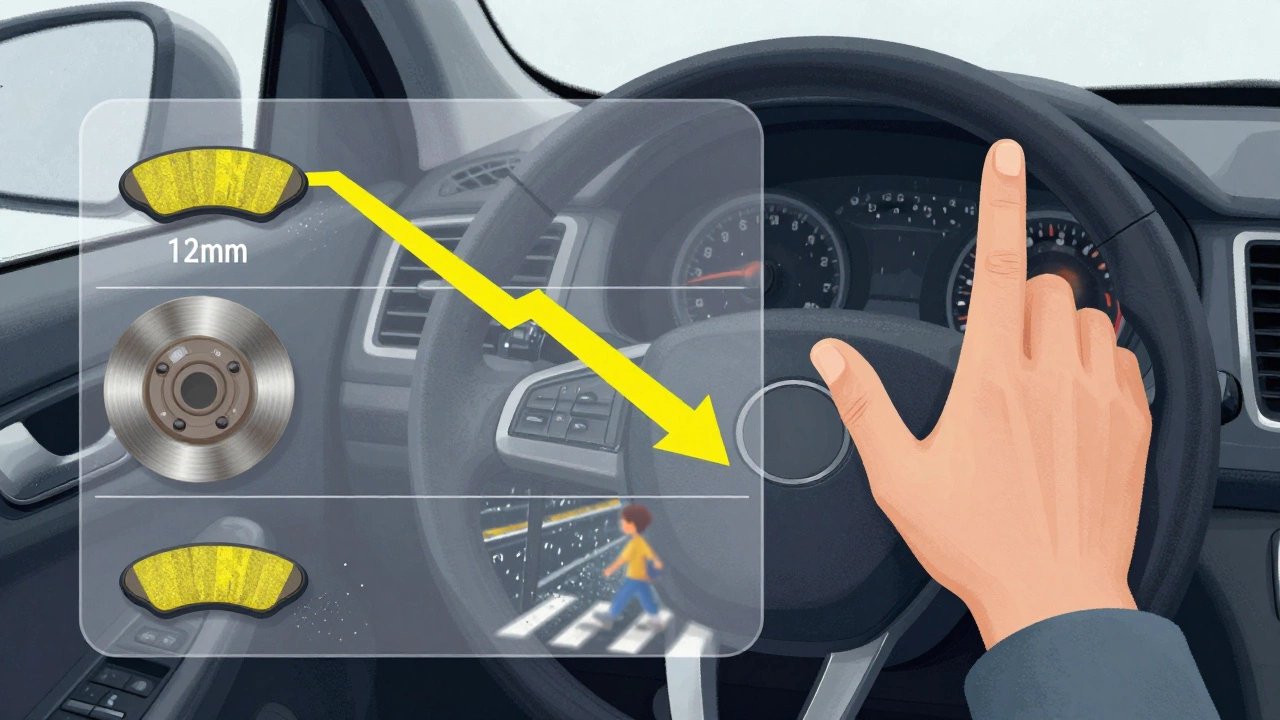
Think your car still stops fine? It doesn’t. Worn brake pads lose their grip. The heat they generate doesn’t dissipate as efficiently. Your braking power drops. In a real-world test by the NRMA, a car with 3mm-thick brake pads (barely legal) took 12% longer to stop from 60 km/h than one with new pads. At 80 km/h? That gap jumps to 18%. That’s the length of a full parking space. In a school zone. In the rain.
When you’re driving past kids walking to school, or merging onto the South Eastern Freeway, that extra distance isn’t just a number. It’s the difference between a near-miss and a collision.
Brake fluid and calipers start to fail
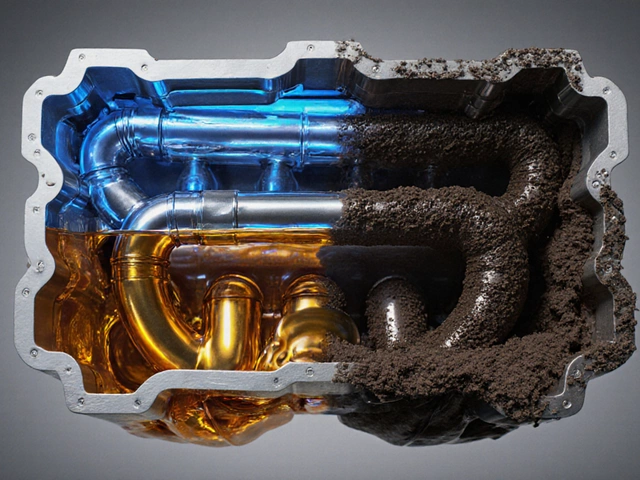
As the pads wear, the brake caliper pistons extend further to keep contact with the rotor. That puts more strain on the hydraulic system. Over time, the seals in the calipers can wear out or leak. Brake fluid, which is already hygroscopic (it absorbs moisture from the air), gets contaminated faster. That leads to a spongy pedal feel-or worse, total brake failure.
Brake fluid replacement isn’t cheap either. A full flush and bleed costs around $120. But if a caliper seizes or a line bursts because of excessive wear, you’re looking at $800 to $1,200 in repairs. And that’s not even counting towing or hospital bills if you crash.
Insurance might not cover you
Here’s something most drivers don’t realize: if you’re in an accident and it’s found that your brake pads were severely worn, your insurance company might deny your claim. In Australia, insurers follow the Road Traffic Act and consider maintenance negligence a form of reckless driving. If your brake pads were below the legal minimum (1.5mm in most states), you’re not just at fault-you’re liable.
One Adelaide driver we spoke with had her claim rejected after a rear-end collision. The investigation showed her front pads were at 0.8mm. Her insurer said she failed to maintain a safe vehicle. She paid $4,200 out of pocket.
It’s not just about stopping-it’s about control
Worn brake pads don’t just make you stop slower. They make your car harder to control. You’ll feel pulling to one side if one pad is more worn than the other. You might get vibrations through the steering wheel. In wet conditions, this can lead to hydroplaning or loss of stability. Modern cars rely on ABS and ESC systems to help you stay in control. But those systems can’t compensate for brakes that don’t grip.
On a rainy day in Glenelg, a driver with uneven brake pad wear lost control while braking for a roundabout. The car spun 180 degrees. No one was hurt-but the car was totaled. The mechanic said the left front pad had worn down to the metal. The right was still at 4mm. That imbalance was enough to flip the car’s dynamics.
How often should you check them?
You don’t need to check brake pads every week. But you should check them every 10,000 to 15,000 kilometers. That’s about every six months if you drive the average Australian distance. Look for:
- Pad thickness less than 3mm (time to plan a replacement)
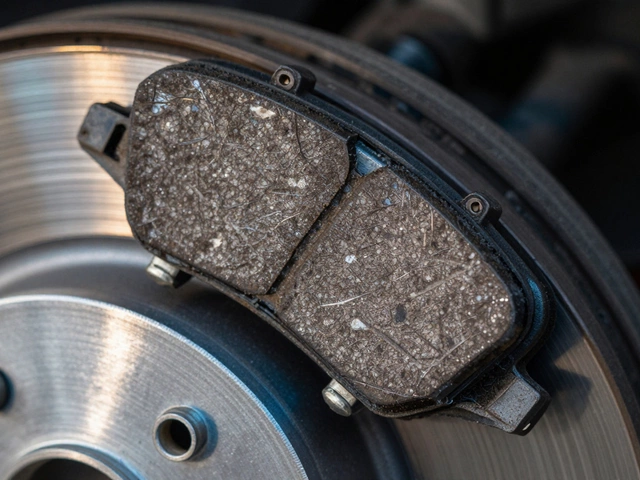
- Cracks or chunks missing from the pad surface
- Shiny, glazed appearance (means overheating)
- Grinding or metallic scraping sounds
Many mechanics offer free brake inspections. Use them. Don’t wait for the squeal. Get your pads checked before they get to that point.
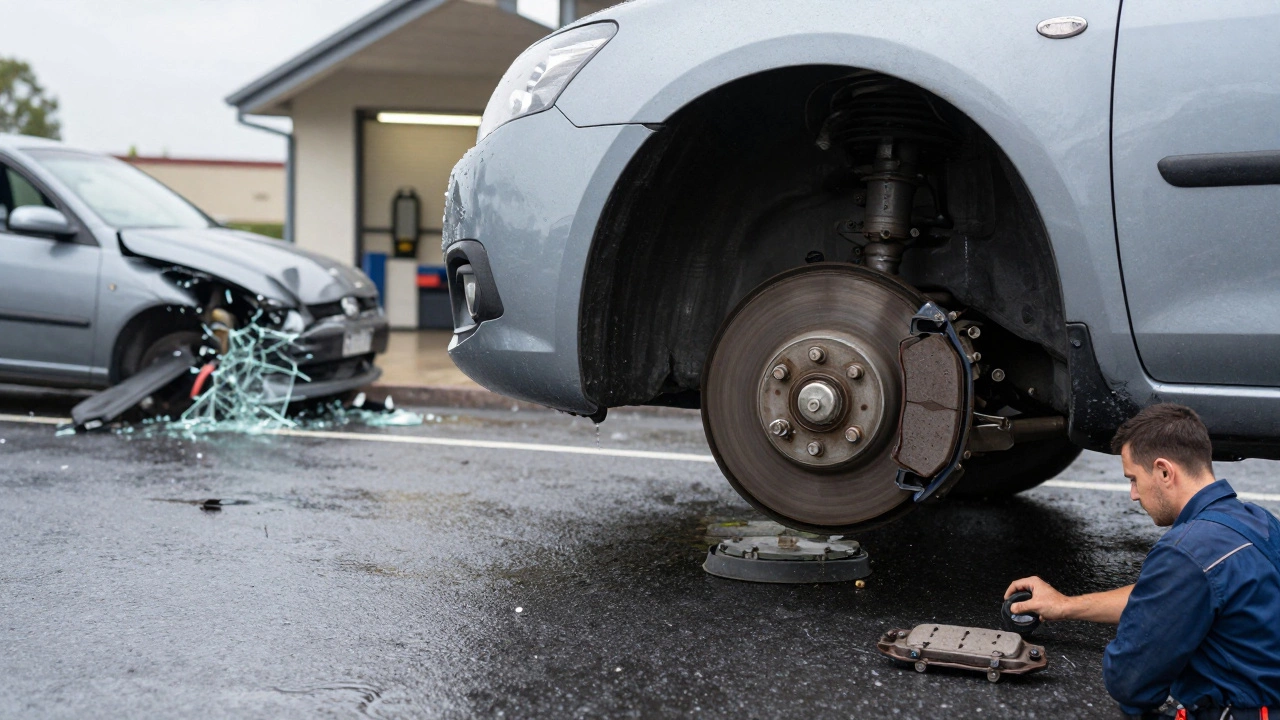
What’s the right time to replace them?
Most manufacturers recommend replacing brake pads between 25,000 and 70,000 kilometers. But that’s a wide range. It depends on your driving. City driving with lots of stop-and-go? You’ll need new pads every 25,000 km. Highway driving? Maybe 60,000 km. Heavy loads? Even less.
Here’s a rule of thumb: if you’ve had the same pads since you bought your car five years ago, it’s time. Even if they look okay, they’ve been exposed to heat, moisture, and dust. They’re not as effective as they were.
What happens if you wait until they’re completely gone?
Complete brake pad failure means no friction. No stopping. Just metal scraping metal. The rotor overheats, warps, and can crack. The caliper might seize. You might lose brake fluid. Your ABS light will flash. And then? You press the pedal-and nothing happens.
There’s no dramatic explosion. No warning lights that say, "You’re about to die." Just silence. And then, impact.
| Pad Thickness | Condition | Consequence | Cost to Fix |
|---|---|---|---|
| 12mm-8mm | New to normal wear | Quiet, responsive braking | $0 |
| 7mm-4mm | Early warning | Occasional squeal, reduced grip | $150-$300 |
| 3mm-2mm | Legal minimum reached | Loud squeal, longer stopping distance | $200-$400 |
| 1mm-0mm | Metal-on-metal | Grinding, rotor damage, caliper risk | $500-$1,200+ |
| 0mm (fully gone) | Complete failure | Loss of braking, crash risk | Variable-could be total car loss |
What to do next
Don’t wait for the worst-case scenario. If you haven’t checked your brake pads in over a year, book an inspection now. Most garages can do it in 15 minutes. If you’re handy, you can even check them yourself with a flashlight and a ruler.
Replace them before they hit 3mm. Don’t wait for the noise. Don’t wait for the vibration. Don’t wait for the warning light. Your brakes are the most important safety system on your car. Treat them like it.
Can I drive with worn brake pads for a short time?
Technically, yes-but it’s never safe. Even at 3mm, your stopping distance is already 10-15% longer. If you’re driving in heavy traffic, on wet roads, or near pedestrians, that’s not a gamble you should take. A short drive doesn’t mean a safe one.
Do all brake pads wear at the same rate?
No. Front brake pads wear 2-3 times faster than rear ones because they handle most of the stopping force. That’s why mechanics always check the front pads first. If the fronts are worn, the rears might still be fine-but you still need to replace them as a set to avoid uneven braking.
Are cheap brake pads okay to use?
Not always. Cheap pads often use lower-quality friction material that wears faster, creates more dust, and doesn’t perform well under heat. They might save you $50 upfront-but you’ll replace them twice as often. Stick with reputable brands like Bendix, Akebono, or Bosch. They’re worth the extra cost.
How long do brake pads last on average?
On average, brake pads last between 30,000 and 60,000 kilometers. But this varies wildly. City drivers with lots of stop-and-go might need replacements every 25,000 km. Highway drivers in rural areas can stretch it to 70,000 km. Always inspect them, don’t rely on mileage alone.
Can I just replace the front pads and not the rear?
You can-but you shouldn’t. Brake systems are designed to work as a matched set. Replacing only the front pads creates imbalance. This can lead to uneven braking, increased rear wear, and even ABS malfunctions. Always replace pads in pairs-front and rear, both sides.