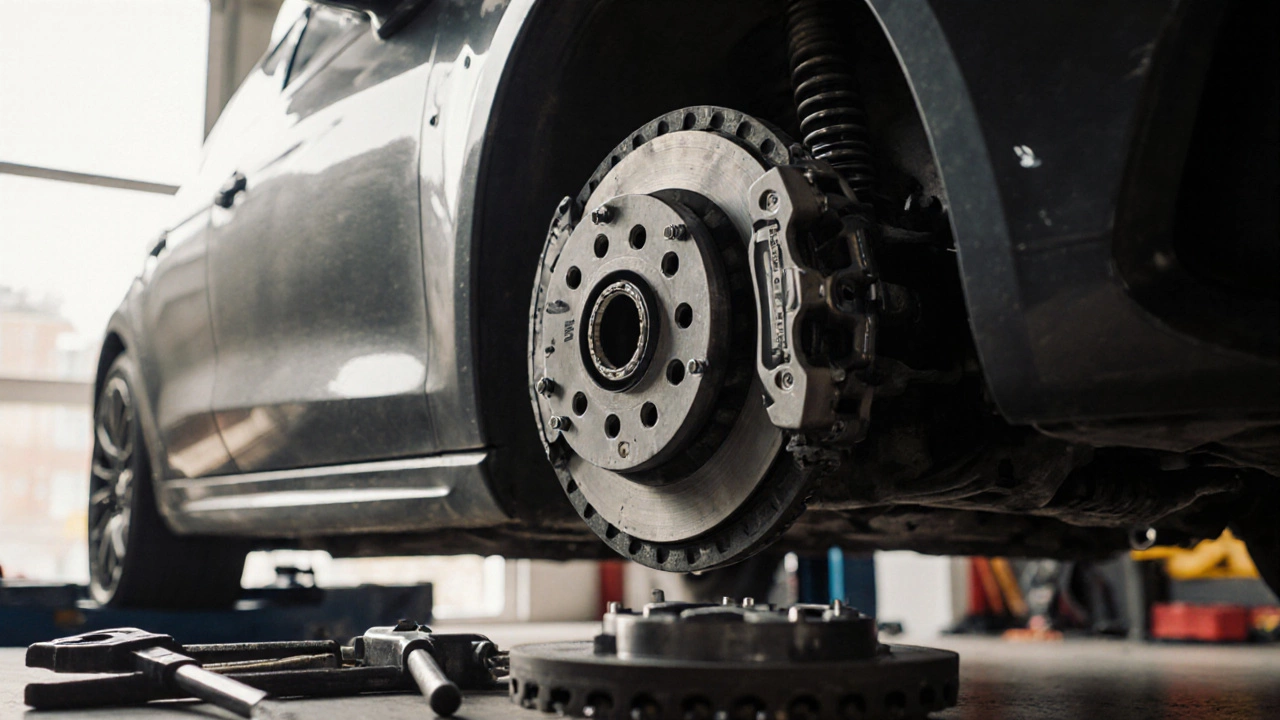
Stage 1 Clutch: What It Is, Who Needs It, and What to Expect
When you hear stage 1 clutch, a mild upgrade designed for street use with slight power increases. Also known as performance clutch, it's not meant for racing—it's for drivers who want better grip, quicker shifts, and longer life without giving up daily comfort. Unlike your stock clutch, which is built for smooth, gentle engagement and low cost, a stage 1 clutch uses stronger materials like organic or ceramic compounds and reinforced pressure plates. It holds up better when you’ve added a cold air intake, a tune, or a mild exhaust—things that push more torque through the drivetrain.
A manual transmission, the system that lets you control gear shifts manually relies on the clutch to connect and disconnect engine power. If your stock clutch starts slipping under load—especially when accelerating hard or towing—you’re not just losing power, you’re wearing it out fast. A stage 1 clutch fixes that. It doesn’t make your car faster on its own, but it lets your car deliver the power it already has. It’s the difference between your engine revving and the car barely moving, versus a solid, responsive connection that feels like the car and engine are working as one.
Who actually needs one? If you’ve done nothing to your car beyond oil changes, stick with stock. But if you’ve added bolt-ons that boost horsepower by 10-20%, or if you drive aggressively—quick launches, frequent hill starts, heavy stop-and-go traffic—a stage 1 clutch is a smart move. It’s also great for older cars where the original clutch is worn out and you want to upgrade while you’re at it. You’ll notice it’s a little firmer to press, and the engagement point might feel higher, but that’s not a flaw—it’s the trade-off for better durability and response.
Don’t confuse it with stage 2 or 3 clutches. Those are for track use, drag racing, or heavy modifications. They’re harsher, noisier, and harder to drive in traffic. A stage 1 clutch is the sweet spot: better than stock, still easy to live with. It’s the upgrade you don’t notice until you drive a stock car again—and then you wonder how you ever put up with it.
When your clutch starts to fade, it’s not always obvious. You might think your car is just sluggish. But if you feel the RPMs rise without matching speed, hear a burning smell after heavy use, or notice the pedal feels spongy or higher than usual, it’s not the transmission—it’s the clutch. That’s when you look at stage 1 options. And if you’re replacing it anyway, upgrading makes sense. You’ll save money in the long run by avoiding a second replacement.
What you’ll find below are real-world guides on clutch behavior, signs of failure, how driving habits shorten lifespan, and what parts pair best with a stage 1 upgrade. Some posts talk about flywheel noise, others about clutch burnout timelines. They all connect. Because a clutch isn’t just a part—it’s the link between your foot, your engine, and the road. Get it right, and your car responds like it should. Get it wrong, and you’re stuck waiting for the next repair.