Brake Pad Replacement Calculator
How often should you replace your brake pads?
Enter your current mileage and driving habits to get a personalized estimate based on real-world data.
Estimated Replacement Mileage
Most drivers don’t think about their brake pads until they start screeching like a banshee. But waiting for that noise could mean a costly repair-or worse, a dangerous situation. Brake pads don’t last forever, and replacing them at the right time isn’t just about saving money. It’s about safety. So how often should you replace them? The short answer: between 25,000 and 70,000 miles. But that range is useless without context. Let’s break down what actually determines when your brake pads need new ones.
Brake pads wear out faster than you think
Brake pads are made of friction material that slowly grinds away every time you hit the pedal. That’s their job. But not all driving is equal. If you spend most of your time in stop-and-go city traffic, your pads could be worn out by 25,000 miles. A driver who mostly cruises on highways might get 70,000 miles or more out of the same set. It’s not about time-it’s about use.
Take a delivery driver in Chicago. They’re stopping at every block, accelerating hard, and braking hard. Their brake pads might need replacing every 20,000 miles. Meanwhile, someone who drives 100 miles each weekend on open roads could go 80,000 miles without a single pad change. The difference isn’t magic-it’s physics.
Signs your brake pads are worn out
You don’t need a mechanic to tell you when your pads are done. Your car will scream at you in five clear ways:
- High-pitched squealing when you brake-this comes from a small metal tab built into the pad. It’s designed to rub against the rotor when the pad is down to 2mm. That’s your warning.
- Grinding noise-if you hear metal-on-metal, you’re already damaging your rotors. This means the pad material is gone, and the backing plate is scraping the rotor. Repair costs jump from $150 to $500+.
- Longer stopping distance-if you notice it takes longer to stop, especially at highway speeds, your pads are losing grip.
- Vibration or pulsing in the brake pedal or steering wheel-this usually means your rotors are warped from overheating due to worn pads.
- Brake warning light-some cars have sensors that trigger a dashboard light when pads are thin. Don’t ignore it.
These signs aren’t guesses. They’re built-in alerts. Ignoring them doesn’t save money-it just makes the problem worse.
What affects brake pad life?
Not all brake pads are created equal. The material they’re made from changes how long they last:
- Organic pads (made from rubber, glass, and resins) are quiet and gentle on rotors, but they wear out fast-often under 30,000 miles. Common on budget cars.
- Low-metallic pads have some steel fibers mixed in. They stop better and last longer, around 40,000-50,000 miles, but they’re noisier and harder on rotors.
- Ceramic pads are the premium choice. They last 60,000-70,000 miles, produce less dust, and handle heat better. Most modern cars come with these from the factory.
Also, your driving habits matter more than you think. Aggressive braking, hauling heavy loads, or driving in mountainous areas all shorten pad life. A pickup truck hauling 2,000 pounds of equipment every weekend will burn through pads three times faster than a sedan commuting to an office.
How to check your brake pads yourself
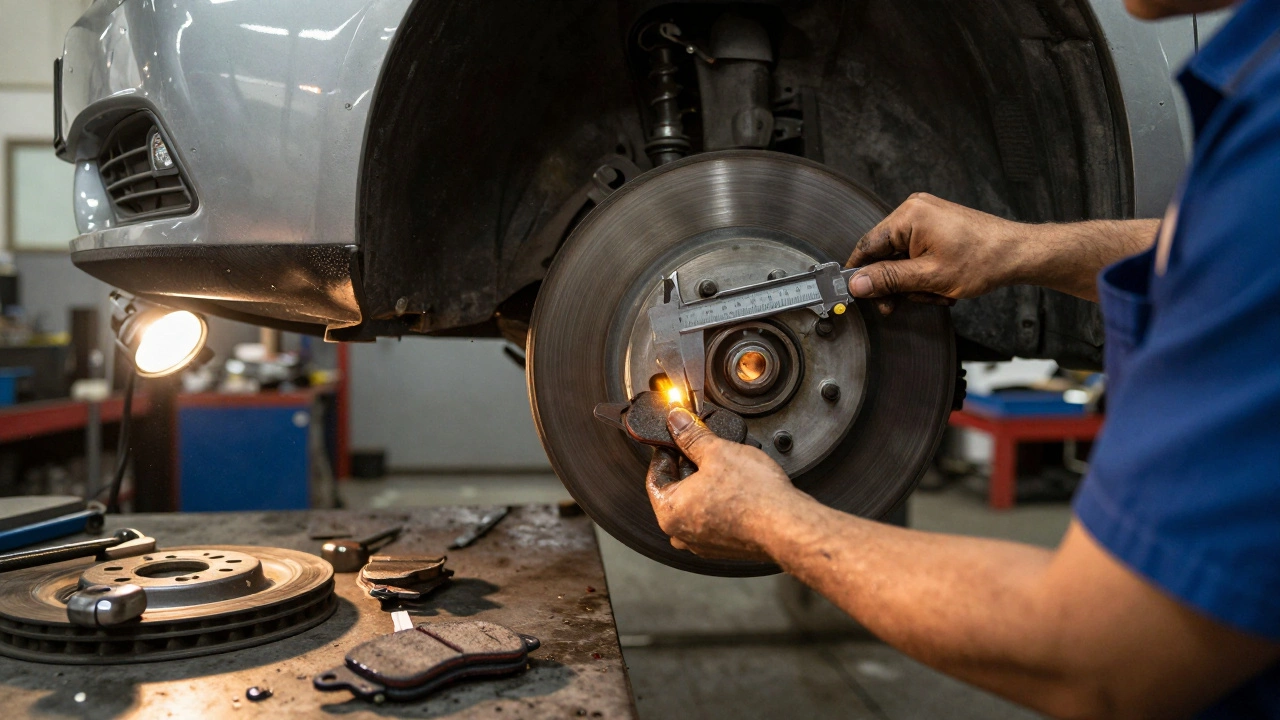
You don’t need a lift or special tools to get a rough idea of your pad thickness. Most wheels have openings between the spokes where you can see the brake pads through the rotor.
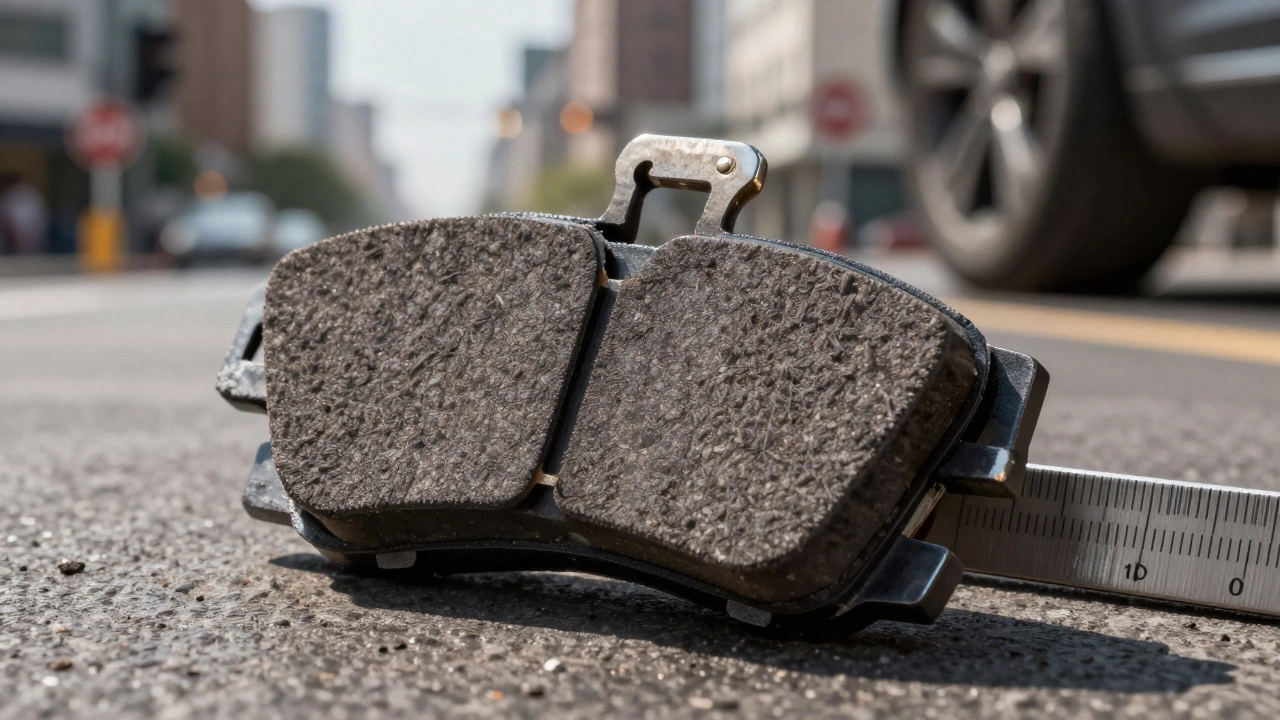
Look at the pad against the metal backing plate. If the friction material is less than 1/4 inch thick (about 6mm), it’s time to plan a replacement. If it’s thinner than 1/8 inch (3mm), replace them immediately. Some pads have wear indicators molded into the surface-when those grooves disappear, it’s game over.
For a better look, you can jack up the car, remove the wheel, and measure with a ruler. Don’t guess. Measure. A pad at 2mm is legally unsafe in most states. At 1mm, you’re one hard stop away from a rotor replacement.
Brake rotors: when do they need replacing?
Brake pads aren’t the only part that wears. Rotors get scored, warped, or worn down over time. If you replace pads but leave damaged rotors, you’ll get vibration, noise, and uneven braking.
Most rotors can be resurfaced once-if they’re thick enough. The minimum thickness is stamped on the rotor edge. If you’re below that, replace them. Some shops try to save you money by resurfacing worn rotors, but that’s a trap. A rotor that’s been turned too many times can overheat and crack under stress.
Rule of thumb: if your pads wore out in under 20,000 miles, check the rotors. If you heard grinding, replace the rotors. If you’re replacing pads at 50,000+ miles and there’s no noise or vibration, the rotors are probably fine.
Factory recommendations vs real-world use
Your owner’s manual says to inspect brakes every 12,000 miles. That’s a good baseline. But inspection doesn’t mean replacement. Most manufacturers recommend replacing pads at 25,000-30,000 miles as a general guideline-but that’s for average driving.
Real-world data from brake repair shops shows that 60% of vehicles need pad replacement between 30,000 and 50,000 miles. Only 15% last past 70,000 miles. The rest wear out faster due to driving style, climate, or vehicle load.
Don’t wait for your manual’s schedule. Watch for the signs. If you drive hard, check every 15,000 miles. If you drive gently, check every 25,000 miles. Keep a log. Note the mileage each time you get new pads. That way, you’ll know what’s normal for your car.
What happens if you delay replacement?
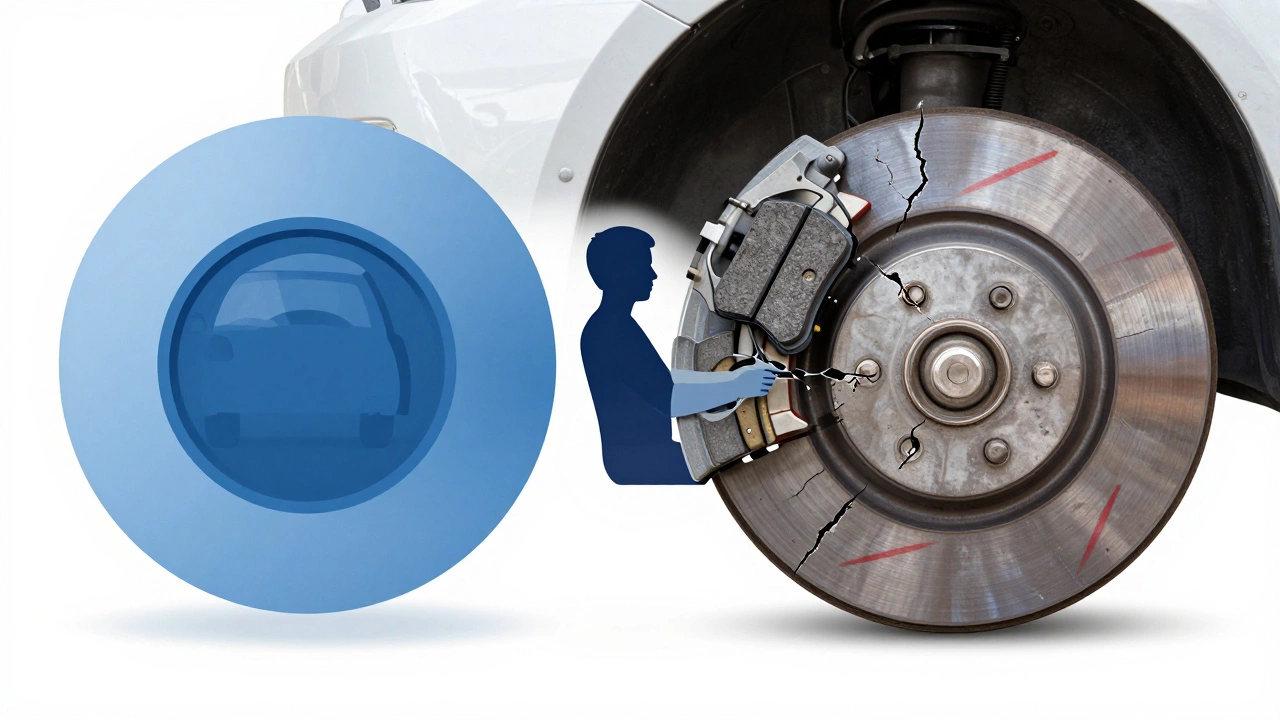
Delaying brake pad replacement isn’t just risky-it’s expensive. Worn pads cause:
- Warped rotors from overheating-replacement costs $200-$400 per axle.
- Brake fluid leaks from damaged calipers-caused by metal grinding against metal, which forces calipers to overextend.
- Complete brake failure-rare, but possible if pads wear through completely and the caliper piston loses hydraulic pressure.
One mechanic in Ohio told me about a customer who waited until the pads were gone. When they finally came in, the rotors were ruined, the calipers were seized, and the brake lines had cracked from the heat. The total bill: $1,800. The same job, caught early, would’ve been $450.
Brakes aren’t something you can afford to gamble with. A $150 pad job prevents a $1,500 disaster.
How to extend brake pad life
You can stretch out your pad life with simple habits:
- Coast to stop-ease off the gas early instead of braking hard at the last second.
- Avoid riding the brake-don’t rest your foot on the pedal while driving. Even slight pressure causes friction and heat buildup.
- Reduce weight-remove unnecessary items from your trunk or back seat. Every extra pound increases braking force.
- Use engine braking-downshift on hills instead of riding the brake. This reduces heat and wear.
- Upgrade to ceramic pads-if your car came with organic pads, switching to ceramic can double your pad life and reduce dust.
These aren’t magic tricks. They’re basic driving adjustments that anyone can make. And they add up.
When to replace brake pads: final checklist
Here’s your quick decision guide:
- Replace pads if thickness is under 3mm.
- Replace pads if you hear squealing, grinding, or see the warning light.
- Replace pads if stopping distance has noticeably increased.
- Replace pads if you’ve driven over 50,000 miles and haven’t checked them in a while.
- Replace rotors if they’re below minimum thickness or show deep grooves or cracks.
Don’t wait for the noise. Don’t wait for the light. Don’t wait for the shake. Check your pads every 15,000-25,000 miles. It takes five minutes. And it could save you thousands.
How often should brake pads be replaced on average?
On average, brake pads last between 30,000 and 70,000 miles. City drivers often need replacements closer to 30,000 miles, while highway drivers may get up to 70,000 miles. The actual lifespan depends on driving habits, vehicle weight, and pad material.
Can you drive with worn brake pads?
You can, but you shouldn’t. Driving with pads worn below 2mm is dangerous. The metal backing plate starts grinding against the rotor, which damages expensive parts and reduces stopping power. If you hear grinding, stop driving and get them replaced immediately.
Do brake pads wear out faster in winter?
Yes, especially in areas with salted roads. Salt and moisture accelerate corrosion on brake components. Cold weather also makes brake fluid thicker, which can cause calipers to stick and create uneven pad wear. Winter driving cuts pad life by 10-20% in most cases.
Are expensive brake pads worth it?
Ceramic pads cost more upfront but last longer, produce less dust, and handle heat better. If you drive daily or carry heavy loads, they’re worth the investment. For light city driving, standard low-metallic pads are fine. Avoid the cheapest organic pads-they wear out too fast.
Should I replace brake pads and rotors at the same time?
Not always. If your rotors are in good condition-no grooves, warping, or thinning-you can replace just the pads. But if the pads were worn down to metal, or you felt vibration when braking, replace the rotors too. It’s cheaper to do both at once than to replace rotors later after they’ve been damaged.
Brakes are the most important safety system on your car. They don’t need fancy tech or expensive upgrades-they just need attention. Check them regularly. Listen to the warnings. Replace them before they fail. That’s how you stay safe and save money.