Radiator Replacement Estimator
Calculate Your Radiator Lifespan
Enter your driving habits and maintenance routine to estimate when your radiator might need replacement.
Input Your Conditions
Estimated Result
Enter your information above to see when you might need to replace your radiator.
Important Note: This calculator estimates radiator lifespan based on typical maintenance conditions. Actual replacement time depends on your specific vehicle, driving habits, and maintenance quality.
Warning: If you notice coolant leaks, overheating, or sludge in your coolant, don't wait for this estimate. Have your cooling system inspected immediately to prevent costly engine damage.
How This Works
Based on data from the article:
Most radiators last between 8-15 years with proper maintenance. Your specific driving conditions and coolant maintenance significantly impact this timeframe:
- City driving with coolant changed every 3 years: 10-12 years
- Highway driving with coolant changed every 5 years: 12-15+ years
- Towing or extreme heat with coolant changed every 2 years: 8-10 years
- Neglected coolant maintenance: 3-5 years
Most car owners never think about their radiator until it fails. Then suddenly, steam is billowing from under the hood, the temperature gauge is in the red, and you’re stranded on the side of the road. A broken radiator doesn’t just cause inconvenience-it can destroy your engine in minutes. So how often should you replace a radiator? The short answer: radiators don’t have a fixed replacement schedule. They last as long as they’re maintained, but most will need replacing between 8 and 15 years, depending on driving habits, climate, and coolant care.
Why Radiators Fail (And How to Spot It Early)
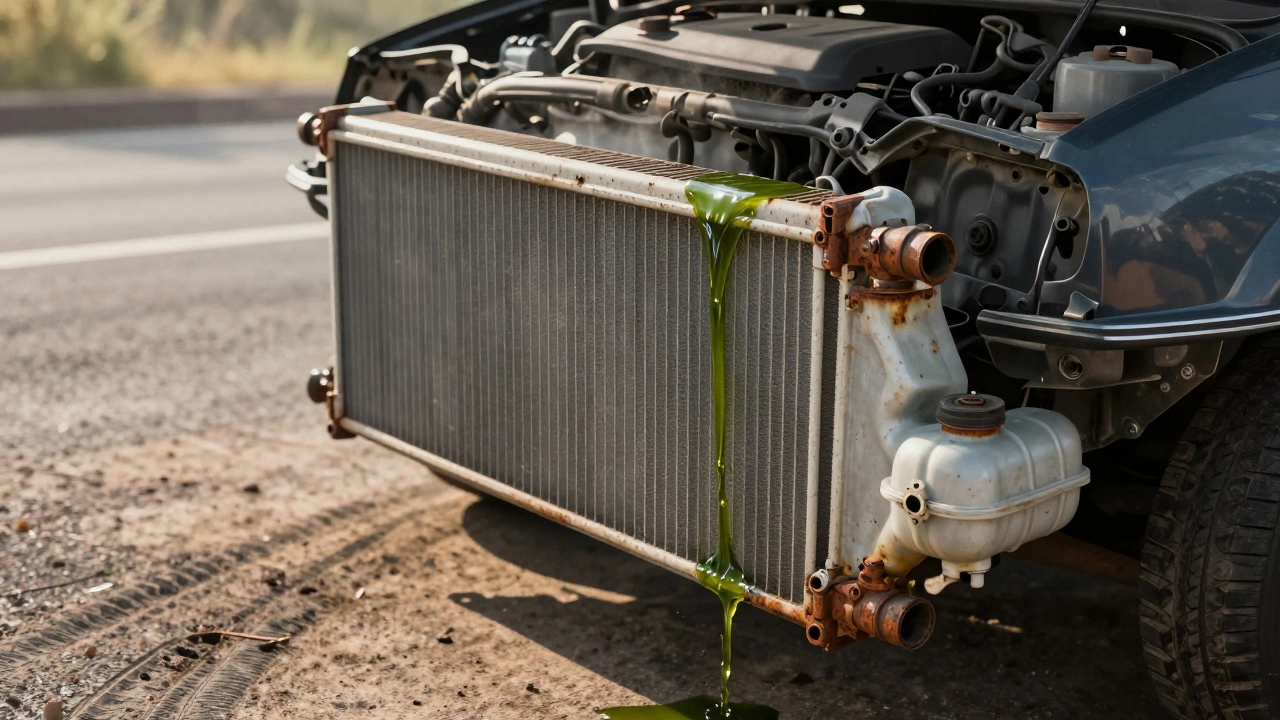
Radiators don’t just wear out randomly. They fail because of preventable issues. The biggest killer is contaminated coolant. Old or dirty coolant turns acidic, eating away at the metal tubes and plastic end tanks inside the radiator. Over time, this causes tiny leaks. You won’t see them at first-just a slow drop in coolant level you chalk up to "normal evaporation." But by the time you notice puddles under the car or white smoke from the exhaust, the damage is already serious.
Other common failure points:
- Physical damage from road debris (stones, gravel, debris kicked up by other vehicles)
- Corrosion from salt in winter climates or coastal air
- Overheating from a stuck thermostat or failing water pump, which puts extra stress on the radiator
- Improper coolant mix (using water alone or wrong type of antifreeze)
Watch for these warning signs before it’s too late:
- Coolant leaking from the radiator or hoses (green, orange, or pink fluid under the car)
- Sludge or rust in the coolant reservoir
- Engine running hotter than normal, even after a coolant top-up
- Visible cracks or bulges in the radiator end tanks
- Low coolant level that keeps dropping, even with no visible leaks
If you see any of these, don’t wait. A small leak today can become a blown head gasket tomorrow.
What Affects Radiator Lifespan?
Not all radiators live the same life. Your driving conditions and maintenance habits make a huge difference.
In hot, dry climates like Adelaide, radiators work harder. High ambient temperatures mean the cooling system is under constant pressure. Dust and debris clog the fins faster, reducing airflow. If you drive in stop-and-go traffic often-like commuting through the city or hauling heavy loads-the radiator is constantly cycling between high and low temps, which causes metal fatigue.
On the flip side, drivers in colder regions often have longer radiator life-but only if they use the right coolant. In freezing temperatures, plain water can expand and crack the radiator. Even a 50/50 mix of antifreeze and water can break down over time if not changed.
Here’s how typical radiator lifespans break down:
- Well-maintained radiator with regular coolant changes: 12-15 years or more
- Average maintenance, no coolant flushes: 8-10 years
- Neglected coolant, frequent overheating: 3-5 years
One real-world example: a 2015 Toyota Camry in Adelaide, driven daily in traffic, with coolant changed every 3 years, still had its original radiator at 145,000 km. Another 2012 Ford Ranger, used for towing and never had coolant flushed, failed at 87,000 km with a cracked end tank.
When to Replace vs. Repair
Not every leak means a full replacement. Small leaks in the radiator core can sometimes be fixed with a sealant additive-temporary, at best. These products plug tiny holes but don’t fix the root cause. They also clog the heater core or thermostat over time, creating new problems.
Here’s when to repair:
- Leak is isolated to a hose or clamp (easy fix)
- Minor crack in the end tank (can sometimes be soldered by a specialist)
- Minor corrosion on fins (cleaning and flushing can restore performance)
Here’s when to replace:
- Multiple leaks or widespread corrosion
- Cracked plastic end tanks (common on older models)
- Core tubes are clogged with sludge (flush won’t help)
- Repair cost is over 60% of a new radiator’s price
Most modern radiators are aluminum with plastic tanks. Once the plastic cracks or warps, it’s not repairable. Aluminum cores can corrode from the inside out-something you can’t see without removing the radiator. If you’ve had repeated coolant issues, replacing the radiator is cheaper than risking engine damage.
How to Extend Your Radiator’s Life
The best way to avoid a radiator replacement? Prevent the problem before it starts.
Flush and replace coolant every 40,000-60,000 km or every 3-5 years. This isn’t optional. Even "long-life" coolants break down. They lose their anti-corrosion properties and start attacking metal parts. Check your owner’s manual-some manufacturers say 100,000 km, but that’s under perfect conditions. Most drivers don’t have those.
Use the right coolant. Don’t mix types. Don’t use tap water. Always use distilled water mixed with the correct antifreeze for your car’s make and model. Mixing different coolants creates gunk that clogs the system.
Keep the radiator clean. Dust, bugs, and leaves block airflow through the fins. Every 6 months, rinse the front of the radiator with a garden hose (engine off and cool). Don’t use a pressure washer-you can bend the delicate fins.
Check the thermostat and water pump at the same time you flush the coolant. A stuck thermostat is one of the most common causes of overheating. If the pump’s bearings are noisy or leaking, replace it now. It’s cheaper than replacing a radiator after the pump fails.
What Happens If You Ignore a Failing Radiator?
Ignoring a bad radiator isn’t just risky-it’s expensive. The engine runs hot, and heat is the #1 killer of internal engine parts.
Overheating causes:
- Warped cylinder heads
- Blown head gaskets
- Cracked engine blocks
- Seized pistons or connecting rods
Fixing a head gasket can cost $2,000-$4,000. Replacing an entire engine? $5,000-$10,000. A new radiator? $300-$800, including labor.
It’s not a question of whether you can afford to replace the radiator. It’s whether you can afford not to.
Replacement Timeline Summary
Here’s a simple guide based on your driving habits:
| Driving Condition | Coolant Maintenance | Expected Radiator Lifespan |
|---|---|---|
| City driving, heavy traffic | Flushed every 3 years | 10-12 years |
| Highway driving, light loads | Flushed every 5 years | 12-15+ years |
| Towing, off-road, or extreme heat | Flushed every 2 years | 8-10 years |
| No coolant changes, neglected | Never flushed | 3-5 years |
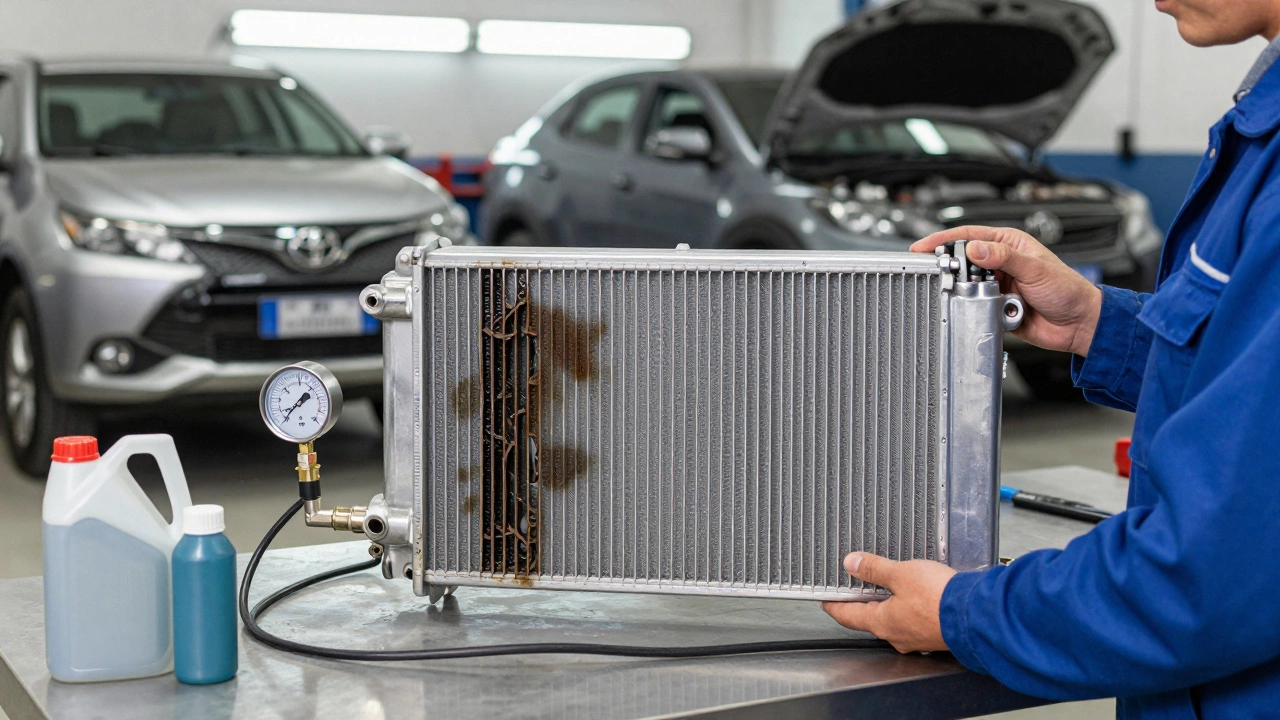
If your car is over 8 years old and you’ve never flushed the coolant, treat it like a ticking clock. Schedule a cooling system inspection now. A mechanic can pressure-test the radiator and check for internal corrosion with a simple diagnostic.
What to Look for in a New Radiator
Not all radiators are created equal. OEM (original equipment) radiators are designed for your car’s exact cooling needs. Aftermarket options vary in quality.
Choose:
- OEM or OEM-equivalent parts from reputable brands (Mishimoto, Denso, Spectra)
- Aluminum cores with brass fittings (better heat transfer)
- Warranty of at least 2 years
- Same size and port locations as original
Avoid cheap, no-name radiators. They often have thinner tubes, weaker end tanks, or mismatched fittings. They might fit, but they won’t last.
Always replace the radiator cap and thermostat at the same time. The cap maintains system pressure. A weak cap lets coolant boil off. A bad thermostat causes overheating. Replacing them together saves labor costs and prevents repeat failures.
Final Advice
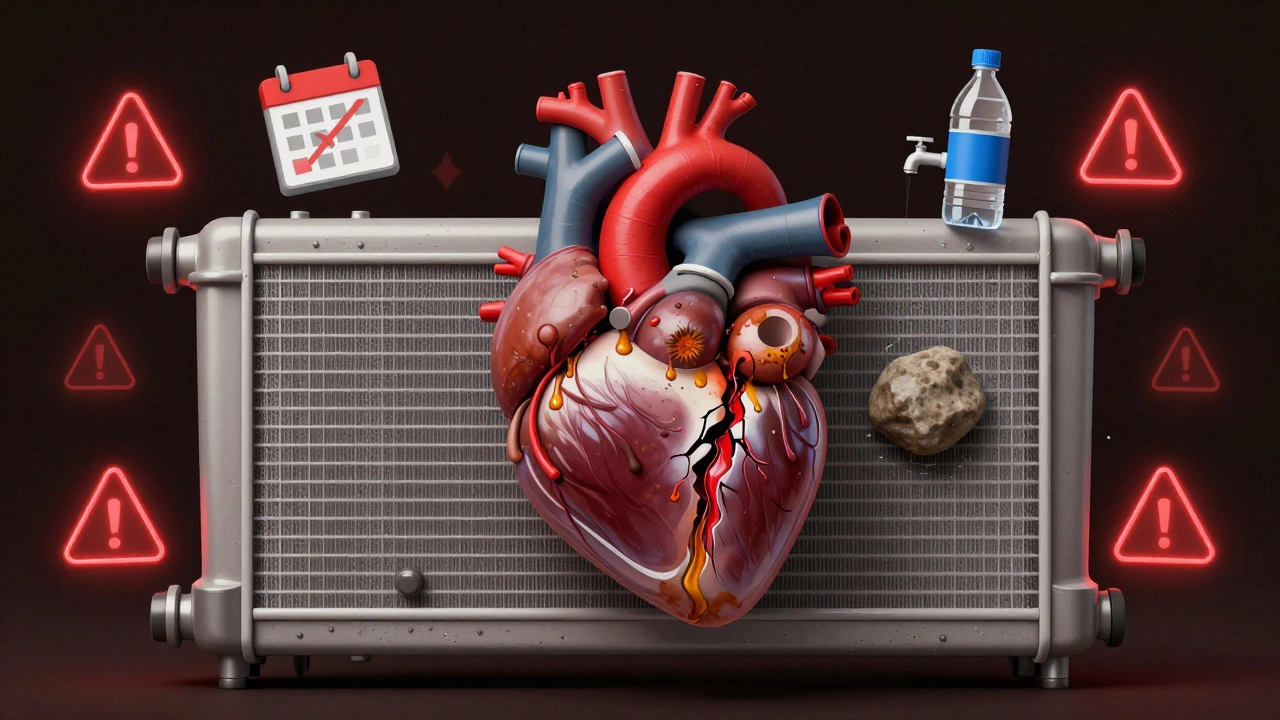
Your radiator isn’t a "set it and forget it" part. It’s the heart of your cooling system. Treat it like you treat your engine oil-regular checks, timely changes, and no shortcuts.
If you’re unsure whether your radiator needs replacing, get a pressure test. It takes 15 minutes and costs less than $50. Most shops will do it for free if you’re getting other work done. Don’t wait for steam to appear. By then, it’s too late.
Replace your radiator before it fails. Not because it’s old. Because you care about your car-and your wallet.
Can a radiator last 20 years?
Yes, but only under ideal conditions. A radiator in a low-mileage vehicle with coolant changed every 2-3 years, in a mild climate, and without towing or heavy loads can last 20 years or more. Most cars don’t meet those conditions. For the average driver, 10-15 years is realistic.
Is it worth repairing a cracked radiator?
It depends. If it’s a small leak in a metal core and you can find a specialist who welds radiators, a repair might work for a year or two. But plastic end tanks can’t be repaired. If the crack is in the tank, replacement is the only safe option. Most repairs are temporary fixes that cost almost as much as a new radiator.
Do I need to replace the radiator when I replace the water pump?
Not always, but it’s smart. When the water pump is removed, the cooling system is already drained and opened up. That’s the perfect time to inspect the radiator for corrosion or leaks. If the radiator is older than 8 years or shows signs of sludge, replace it while you’re there. It saves labor costs and prevents another breakdown soon after.
Can I use water instead of coolant in my radiator?
Never use plain water in the long term. Water boils at 100°C, but engines run hotter. Without antifreeze, the coolant boils, causing overheating. Water also causes rust and corrosion inside the radiator and engine. Even in summer, use a 50/50 mix of antifreeze and distilled water. It raises the boiling point, lowers the freezing point, and protects metal parts.
How do I know if my radiator is clogged?
Signs of a clogged radiator include: engine overheating even with full coolant, poor heater performance (no hot air from vents), and coolant that looks muddy or has rust particles. A professional can test flow by removing the radiator and running water through it. If water flows slowly or unevenly, the core is clogged and needs replacing.