Spark Plug Replacement Calculator
Your Spark Plug Assessment
Your Next Replacement
Your car sputters when you accelerate. The check engine light flickers on and off. You hear a strange rattling noise under the hood. These aren’t just random glitches-they could be signs your spark plugs are worn out. Spark plugs are small, but they do a huge job: igniting the fuel-air mix in your engine’s cylinders. When they fail, your engine doesn’t run right. And if you ignore them, you could end up with worse damage-and a much bigger bill.
What Happens When Spark Plugs Go Bad?
Spark plugs fire up to 1,500 times per minute in a typical engine. Over time, the electrodes wear down, the gap widens, and carbon or oil builds up on the tip. This messes with the spark’s strength and timing. A weak spark means incomplete combustion. That leads to poor fuel economy, rough idling, and loss of power. In severe cases, the engine might misfire or refuse to start altogether.
Most manufacturers recommend replacing spark plugs every 30,000 to 100,000 miles, depending on the type. Standard copper plugs last around 30,000 miles. Platinum and iridium plugs can go 60,000 to 100,000 miles. But real-world conditions matter. If you drive mostly short trips in stop-and-go traffic, or if your engine burns oil, your plugs will wear out faster.
5 Clear Signs Your Spark Plugs Need Replacing
- Engine misfires - This is the most obvious sign. You’ll feel a jerking or stumbling sensation when accelerating, especially under load. The car might hesitate before picking up speed. Misfires happen because the spark isn’t strong enough to ignite the fuel properly.
- Hard starting - If your car takes longer than usual to turn over, or you have to crank it multiple times before it fires up, worn spark plugs could be the culprit. Cold mornings make this worse.
- Poor fuel economy - You fill up more often than usual, but your mileage hasn’t changed. That’s not normal. Worn plugs cause incomplete burning of fuel, meaning more gas goes out the exhaust instead of powering your wheels.
- Idle problems - When you’re stopped at a light, the engine shakes or vibrates more than usual. The RPM needle bounces up and down instead of staying steady. This is called a rough idle, and it’s often caused by one or more plugs failing to fire consistently.
- Check engine light on - Modern cars monitor ignition performance. If the engine control unit detects misfires, it triggers the check engine light. Code P0300 means random misfires. Codes like P0301, P0302, etc., point to specific cylinders. These codes often link back to bad spark plugs.
How to Check Spark Plugs Yourself
You don’t need to be a mechanic to inspect your spark plugs. With a socket wrench, a spark plug socket (usually 5/8" or 13mm), and a little patience, you can pull one out and see what’s going on.
- Turn off the engine and let it cool. Spark plugs are hot-touching them while warm can burn you.
- Remove the ignition coil or boot from the spark plug. Label each wire or coil if you’re unsure which goes where.
- Use the spark plug socket and ratchet to carefully unscrew the plug. Don’t force it. If it’s stuck, spray a little penetrating oil around the base and wait 10 minutes.
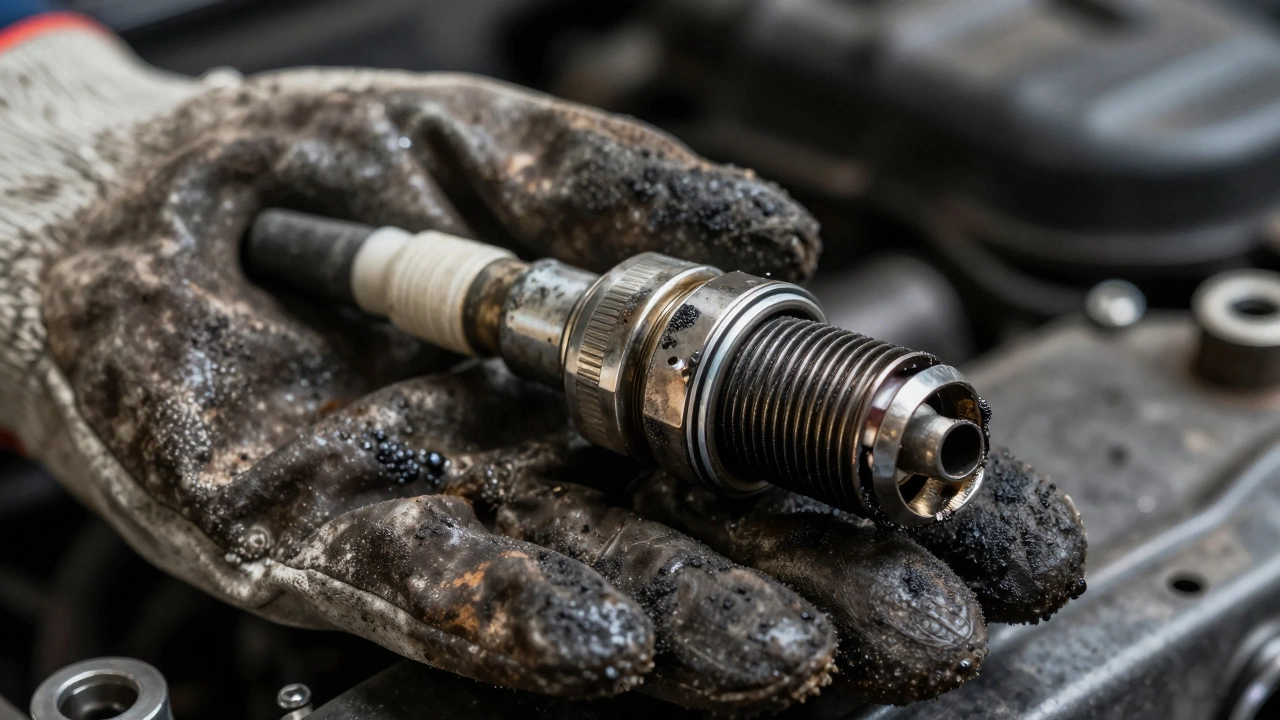
- Inspect the plug. Look at the electrode and insulator tip.
Here’s what to look for:
- Normal: Light brown or grayish tan color on the insulator. Electrodes are slightly worn but still sharp. This means your engine is running well.
- Black, sooty deposits: Indicates a rich fuel mixture or a plug that’s too cold for your engine. Could also mean oil is leaking into the combustion chamber.
- White or blistered insulator: Too hot. Could mean the plug is the wrong heat range, or your engine is running lean (not enough fuel).
- Worn or melted electrodes: The metal tips are rounded, eroded, or even gone. Time to replace them.
- Oil residue: Oily film on the plug. This points to worn valve seals or piston rings, not just bad plugs.
If you see any of these signs except normal, your plugs are likely due for replacement. Even if one looks okay, if others are bad, replace them all at once. Mixing old and new plugs causes uneven performance.
What Happens If You Don’t Change Them?
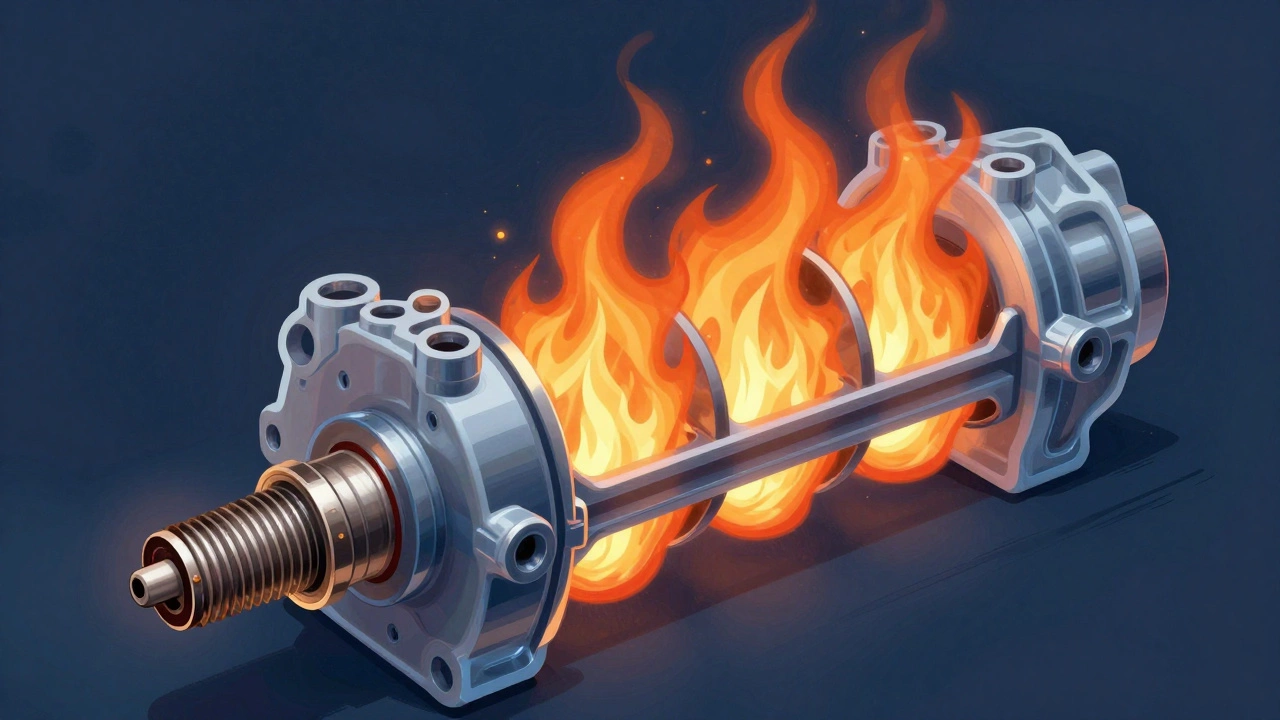
Driving with bad spark plugs doesn’t just hurt performance-it can damage your engine. Unburned fuel washes down the cylinder walls, diluting the engine oil. That reduces lubrication and increases wear. Over time, this can lead to expensive repairs like piston ring failure or even catalytic converter damage.
The catalytic converter is especially vulnerable. When unburned fuel enters the exhaust, it ignites inside the converter, overheating it. A melted converter can block the exhaust and cost over $1,500 to replace. That’s way more than the $100 to $300 it costs to replace spark plugs.
Choosing the Right Spark Plugs
Not all spark plugs are the same. Using the wrong type can cause problems. Always check your owner’s manual or look up the correct part number for your make, model, and year.
There are three main types:
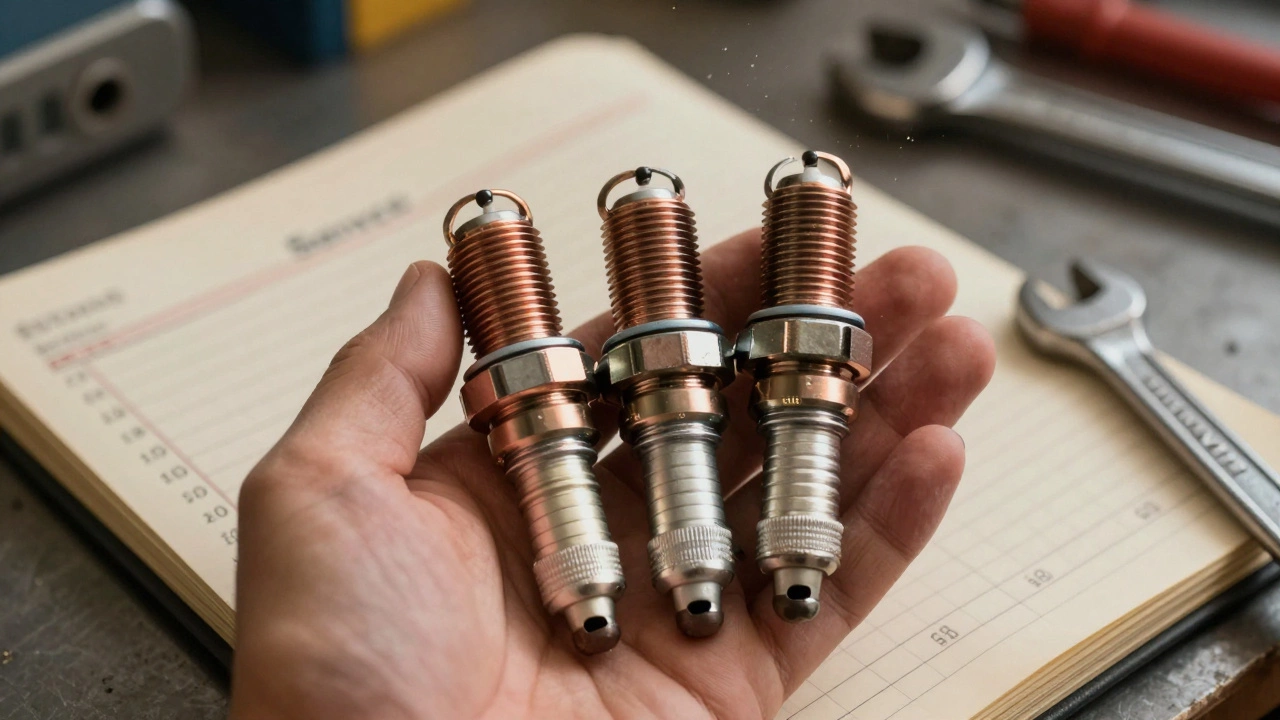
- Copper: Cheapest, good conductivity, but shortest lifespan. Best for older cars or budget repairs.
- Platinum: Longer life, better performance. Works well in most modern engines.
- Iridium: Highest performance, longest life. Ideal for high-output engines and turbocharged vehicles.
Don’t upgrade to a higher-performance plug unless your engine requires it. Using iridium plugs in a car designed for copper won’t give you extra power-it might even cause misfires if the heat range doesn’t match.
When to Replace Them-Even If They Look Fine
Some people wait until the car acts up before checking their plugs. That’s risky. By the time symptoms show, the damage might already be done. A better rule: replace spark plugs at or before the manufacturer’s recommended interval.
For most cars, that’s:
- Every 30,000 miles for copper plugs
- Every 60,000 to 80,000 miles for platinum
- Every 90,000 to 100,000 miles for iridium
If you drive in dusty areas, short trips, or extreme heat, cut those numbers by 10-15%. In Adelaide’s summer heat, with lots of stop-start driving, even iridium plugs might need replacing at 80,000 miles.
DIY or Professional?
Changing spark plugs is one of the easier maintenance tasks you can do yourself. Most people can finish it in under an hour with basic tools. But some engines make it tricky. If your plugs are buried under intake manifolds, coils, or other components, you might need special tools or removal procedures.
Consider professional help if:
- Your engine has coil-on-plug design and you’re unsure how to disconnect them
- You’ve never done it before and don’t want to risk cross-threading
- Your car is under warranty and the manual says to use authorized service
Otherwise, doing it yourself saves you $100-$200 in labor. Just make sure you torque the new plugs correctly. Over-tightening can crack the threads. Under-tightening lets gas leak. Use a torque wrench if you can. If not, snug them by hand, then give them a quarter-turn more with the socket.
Final Tip: Keep a Record
Write down the date and mileage when you replace your spark plugs. Stick it on the inside of your hood or save it in your phone. That way, you won’t forget when it’s time again. It’s easy to lose track, especially if your car runs fine after the job.
Spark plugs are cheap. Ignoring them isn’t. Pay attention to how your car runs. If something feels off, don’t wait for the check engine light. A quick look at the plugs could save you time, money, and stress down the road.
How often should spark plugs be replaced?
Most spark plugs last between 30,000 and 100,000 miles, depending on the type. Copper plugs need replacing every 30,000 miles. Platinum plugs last 60,000-80,000 miles. Iridium plugs can go up to 100,000 miles. Always check your owner’s manual for the exact interval for your car.
Can bad spark plugs cause the check engine light to come on?
Yes. Faulty spark plugs often trigger misfire codes like P0300 (random misfire) or P0301-P0308 (cylinder-specific misfires). The engine control unit detects when a cylinder isn’t firing properly and turns on the check engine light. Replacing worn plugs usually fixes this.
What happens if I don’t replace worn spark plugs?
Driving with bad spark plugs can damage your catalytic converter, cause oil contamination in the engine, reduce fuel efficiency, and lead to engine misfires. In extreme cases, unburned fuel can overheat and melt the catalytic converter, costing over $1,500 to replace. Replacing plugs is far cheaper.
Can I clean spark plugs instead of replacing them?
Cleaning old spark plugs isn’t recommended. Even if you scrub off carbon deposits, the electrodes are still worn. The gap won’t be accurate, and performance won’t return to normal. New plugs cost less than $10 each. Cleaning is a temporary fix that can cause more problems.
Do all spark plugs in an engine need to be replaced at once?
Yes. Even if only one plug looks bad, the others are likely close to the same wear level. Mixing old and new plugs causes uneven firing, which leads to rough running and potential engine damage. Always replace all spark plugs together.