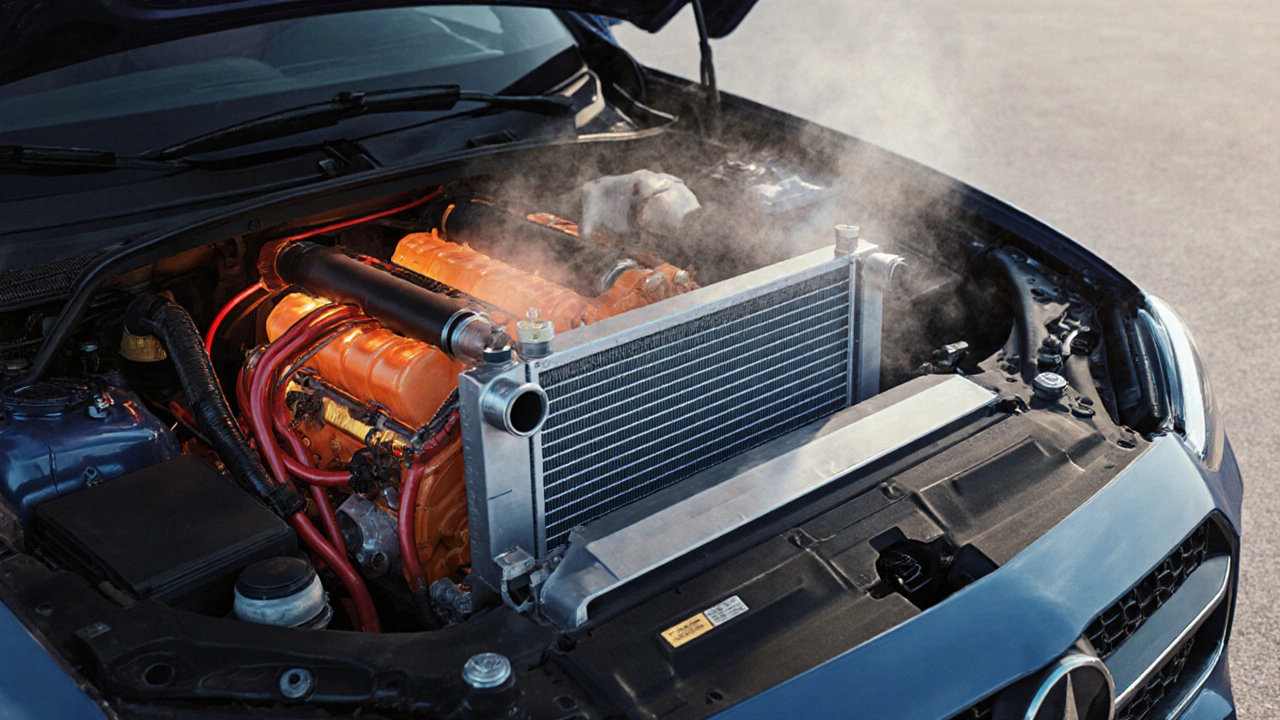
What Determines a Car Radiator's Life Expectancy?
Learn how long a car radiator typically lasts, what factors affect its durability, signs of failure, maintenance tips, and cost of replacement.
View moreWhen your engine runs, it gets incredibly hot—over 2,000 degrees Fahrenheit in some spots. That’s where the automotive cooling system, a network of parts designed to regulate engine temperature and prevent overheating. Also known as the engine cooling system, it’s not just a radiator and some fluid—it’s the reason your car doesn’t turn into a melted mess after 20 minutes on the highway.
This system includes several key parts that all work together: the radiator, a heat exchanger that pulls heat out of coolant as it flows through, the water pump, a belt-driven or electric pump that circulates coolant through the engine and radiator, the thermostat, a valve that opens and closes to control coolant flow based on engine temperature, and the coolant, a mixture of water and antifreeze that absorbs and transfers heat. If any one of these fails, the whole system breaks down. A clogged radiator, a worn water pump, or a stuck thermostat can all cause the same result: engine overheating.
Most people think overheating only happens in summer, but it can happen any time of year. A leaking hose, low coolant, or even a bad radiator cap can cause trouble in winter just as easily as in summer. And it’s not just about the temperature gauge—listen for gurgling sounds under the hood, watch for steam or puddles under your car, and pay attention if your heater stops blowing hot air. Those are all signs your cooling system is struggling. Replacing coolant every 30,000 to 60,000 miles, checking hoses for cracks, and inspecting the radiator for debris aren’t just maintenance tasks—they’re ways to avoid a $2,000 engine repair.
The posts below cover everything you need to know about keeping your cooling system working. You’ll find guides on how long a radiator replacement takes, what happens when coolant gets low, how to spot a failing water pump, and why skipping coolant flushes can ruin your engine. Some posts even show you how to test your thermostat yourself or mix your own coolant safely. Whether you’re trying to fix a leak, prevent a breakdown, or just understand why your car runs better after a service, these articles give you the real details—not guesses or marketing hype.
Learn how long a car radiator typically lasts, what factors affect its durability, signs of failure, maintenance tips, and cost of replacement.
View more