Radiator Lifespan Calculator
How Long Will Your Radiator Last?
Based on your maintenance habits, we'll estimate how many years or miles your radiator might last. Radiators typically last 8-15 years or 100k-200k miles, but your care habits can significantly affect this.
Your Estimated Radiator Lifespan
Pro Tip: Change coolant every 5 years for maximum radiator longevity. Use distilled water and correct coolant type to prevent corrosion and clogs.
Most people assume their car radiator lasts forever-until it suddenly starts leaking steam or overheating on the highway. But radiators aren’t immortal. They’re made of metal, plastic, and coolant, and over time, those materials break down. So how often do car radiators actually need to be replaced? The short answer: radiators typically last 8 to 15 years or 100,000 to 200,000 miles, but that’s only if you take care of them. Skip maintenance, and you could be replacing one in under five years.
What Even Is a Radiator?
A radiator isn’t just a metal box under the hood. It’s the heart of your car’s cooling system. When your engine runs, it gets hot-really hot. Up to 200°F or more. The radiator pulls that heat away using coolant that flows through tubes inside it. Air flows over those tubes (thanks to your fan and moving car), and the heat escapes into the atmosphere. If the radiator clogs, leaks, or corrodes, your engine overheats. And overheating? That’s how you end up with a $4,000 engine rebuild.
Modern radiators are usually made of aluminum with plastic end tanks. Older cars had all-metal radiators, but those are rare now. Aluminum is lighter and more efficient, but it’s also more prone to corrosion if coolant isn’t changed regularly. Plastic tanks can crack from heat stress or physical impact-like hitting a curb or a rock on the highway.
When Do Radiators Actually Need Replacing?
There’s no magic odometer reading that says, "Replace now." But there are clear signs your radiator is on its last legs:
- Coolant leaks under the car-especially green, orange, or pink fluid pooling near the front.
- Overheating even after topping off coolant or replacing the thermostat.
- Rusty or sludgy coolant when you check the reservoir. Clean coolant looks clear. Dirty coolant looks like mud.
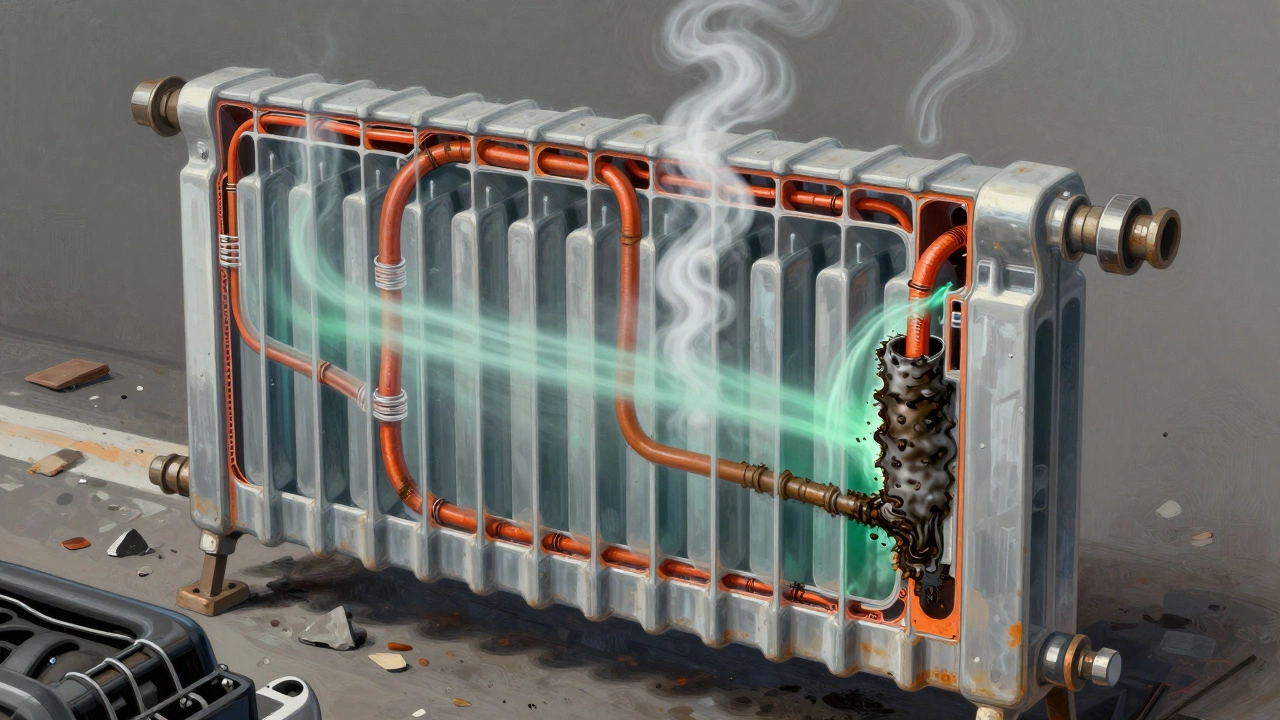
- Visible corrosion on the radiator fins or tanks. A little surface rust? Okay. Thick, flaky rust? Problem.
- Low coolant levels that keep dropping, even with no visible leak. That means internal leakage or a cracked tank.
- Heater doesn’t work well. The heater core is connected to the radiator. If your cabin stays cold, the radiator might be clogged.
If you notice even one of these signs, don’t wait. A failing radiator can destroy your engine in under 10 minutes of driving. I’ve seen it happen twice last year-both times, the owners ignored the warning lights because "it was just a little steam."
How Long Should a Radiator Last?
Manufacturers don’t usually list a "replace by" date for radiators. But based on repair shop data from 2025, here’s what we’re seeing:
- With proper maintenance (coolant changes every 5 years or 60,000 miles): 12-15 years or 150,000-200,000 miles.
- Average driver (coolant changed every 8-10 years): 8-12 years or 100,000-150,000 miles.
- Neglected maintenance (coolant never changed, dirty fluid, leaks ignored): 4-6 years or under 80,000 miles.
That’s a huge range. The difference isn’t the car-it’s the owner. A 2018 Honda Civic with 140,000 miles and fresh coolant can outlast a 2016 Ford F-150 with 90,000 miles and sludge in the radiator. It’s not about age. It’s about care.
What Kills Radiators So Fast?
Most radiator failures aren’t from wear and tear. They’re from neglect. Here are the top three killers:
- Old or wrong coolant. Coolant breaks down. It loses its anti-corrosion additives. If you use tap water instead of distilled, minerals build up and clog tubes. Mixing different coolant types? That causes chemical sludge. Use the exact type your manual says-no exceptions.
- Overheating events. One time your car boiled over? That’s enough to warp the radiator’s internal structure. Even if you fix the thermostat, the radiator is already damaged. You’re just buying time.
- Physical damage. Road debris, parking lot bumps, or even pressure washing the engine bay too hard can crack plastic tanks or bend aluminum fins. Once the fins are bent, airflow drops, and heat builds up. It’s a slow death.
There’s also a myth that "premium" radiators last longer. Not true. A $600 OEM radiator won’t last longer than a $250 aftermarket one if both are treated the same. Quality matters, but maintenance matters more.
How to Make Your Radiator Last Longer
You don’t need to be a mechanic to keep your radiator alive. Just do three things:
- Change the coolant every 5 years. Even if the bottle says "10-year life," real-world conditions (heat, vibration, moisture) shorten that. Use distilled water and the correct coolant mix-usually 50/50.
- Check the level monthly. Your coolant reservoir has minimum and maximum lines. If it’s consistently low, there’s a leak. Don’t ignore it.
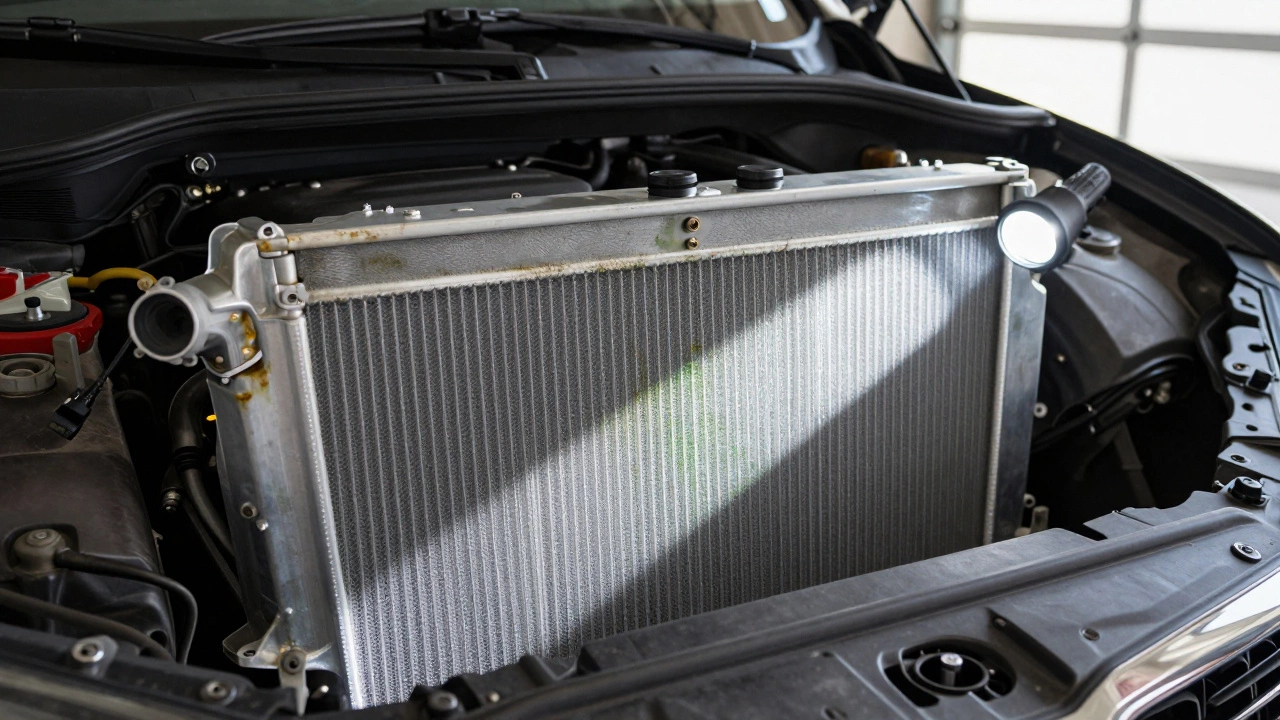
- Inspect for leaks and corrosion. Pop the hood once a month. Look at the radiator’s top and sides. Look for green streaks, white crust, or damp spots. A flashlight helps.
Also, don’t drive with a low coolant level. Ever. Even if the car seems fine. That’s like driving with half a tank of gas and saying, "I’ll refill when I see a station." You might make it-but you might not.
Replacement Cost: What to Expect
If you do need a new radiator, here’s what you’ll pay in 2026:
| Part Type | Cost Range | Labor Cost | Total Estimate |
|---|---|---|---|
| OEM (Original Equipment) | $350-$700 | $150-$300 | $500-$1,000 |
| Aftermarket (Quality) | $200-$450 | $150-$300 | $350-$750 |
| Budget Aftermarket | $100-$250 | $150-$300 | $250-$550 |
OEM parts are designed to match the factory specs. Aftermarket parts vary. A $400 aftermarket radiator from a reputable brand like Denso or Spectra is often just as good as OEM. A $120 radiator from a no-name brand? You’re gambling. I’ve seen those crack within six months.
Also, when replacing the radiator, always replace the thermostat and flush the entire cooling system. If you don’t, you’re just putting a new radiator into an old, dirty system. That’s asking for trouble.
What About Radiator Flushes?
Some shops push radiator flushes every 30,000 miles. That’s usually unnecessary. A flush is only needed if coolant is contaminated or clogged. If your coolant looks clean and your car runs cool, skip it. A bad flush can even damage the system by dislodging debris that then clogs the heater core.
Instead of flushes, stick to regular coolant changes. That’s the real preventative measure.
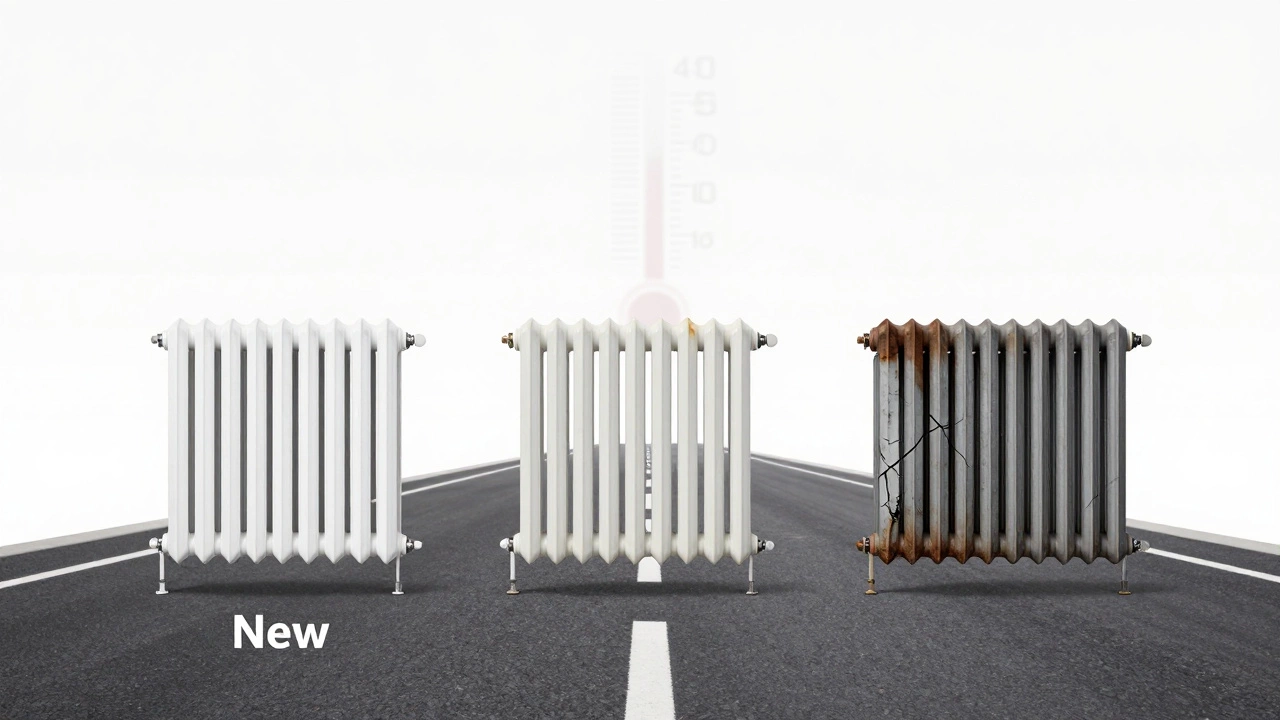
When to Skip Replacement
There’s one situation where replacing the radiator doesn’t make sense: if your car is worth less than $2,000 and you’re already spending $700 on repairs. If you’re driving a 2008 Toyota Corolla with 210,000 miles and it’s your only car, you might choose to patch it up instead of replacing the radiator.
How? Add a radiator sealant. It’s not a fix-it’s a temporary bandage. It can stop small leaks for a few months. But don’t rely on it. It clogs the heater core over time. And it won’t fix a cracked tank or corroded fins. Use it only if you’re planning to replace the car in 6 months.
Final Advice: Don’t Wait for Failure
Radiators don’t fail suddenly. They fail slowly. A tiny leak here. A little rust there. A slightly higher temperature gauge. These are warning signs-not inconveniences. Most people wait until the engine light flashes and steam pours out. Then they panic. Then they pay triple.
Check your coolant level once a month. Look at the radiator every time you get an oil change. Ask your mechanic to show you the condition of the radiator during routine service. If they say "it looks fine," believe them. If they say "it’s close to the end," take it seriously.
Your radiator isn’t glamorous. It doesn’t make your car fast or loud. But without it, your engine turns into scrap metal. Treat it like your oil change-not something you ignore until it breaks.
Can a radiator last 200,000 miles?
Yes-if you maintain it. Radiators that last 200,000 miles usually have fresh coolant every 5 years, no overheating events, and no physical damage. Cars like Toyota Corollas, Honda Civics, and Ford F-150s with consistent care regularly hit this mark.
Is it worth replacing a radiator on an old car?
It depends on the car’s value and your plans. If the car is worth more than $3,000 and you plan to keep it for another 2+ years, yes. If it’s worth $1,500 and you’re thinking about trading it in, consider temporary fixes like sealant or a used radiator. But don’t put a new radiator in a car you’re about to scrap.
Can I drive with a leaking radiator?
No-not safely. Even a slow leak can drop coolant levels enough to cause overheating. If you must drive a short distance to a shop, keep the coolant topped up and monitor the temperature gauge. But don’t make it a habit. Overheating can destroy your engine in minutes.
Do I need to replace the radiator if the thermostat fails?
Not necessarily. A failed thermostat doesn’t mean the radiator is bad. But if the engine overheated because of it, you should inspect the radiator for damage. Heat stress can warp aluminum tubes or crack plastic tanks. Always check the radiator after an overheating event.
What coolant should I use?
Use the exact type specified in your owner’s manual. Most modern cars use OAT (Organic Acid Technology) coolant-often orange, red, or pink. Never mix types. Don’t use tap water. Always use distilled water with a 50/50 mix. Using the wrong coolant can cause corrosion or sludge that kills your radiator.
Next Steps
If you’re unsure about your radiator’s condition, ask your mechanic to do a pressure test. It costs $30-$50 and tells you if there are hidden leaks. If you’ve never changed your coolant, do it now-even if it’s "only been 6 years." Better safe than overheated.
And if you’re thinking about buying a used car, check the radiator. Look under the hood. Ask for coolant change records. A car with a clean radiator is a car with a longer life.