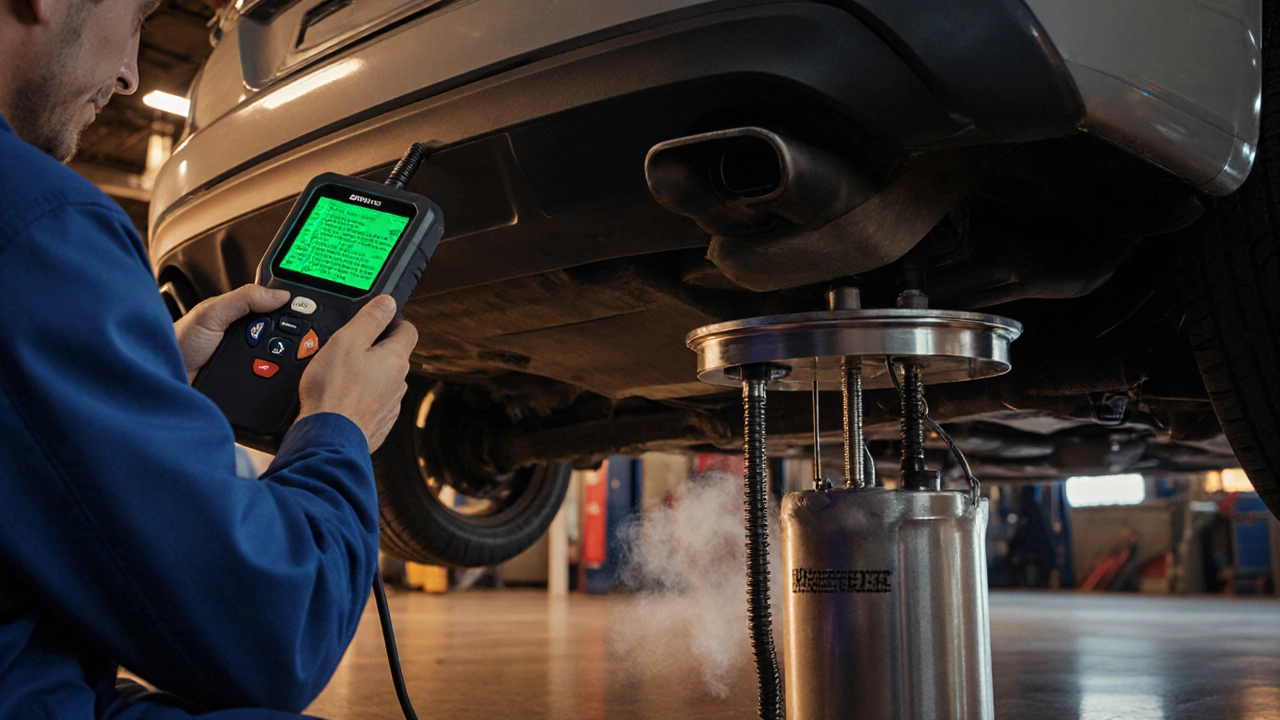
Fuel Pump Repair Time: How Long Does It Take?
Learn how long a fuel pump repair normally takes, whether DIY or shop service, and the factors that can speed up or delay the job.
View moreWhen your car sputters, stalls, or refuses to start—especially after sitting for a while—it’s often not the battery, it’s the fuel pump, a critical component that delivers gasoline from the tank to the engine under pressure. Also known as a fuel delivery pump, it’s one of the most overlooked parts until it fails completely. Unlike a dead battery you can jump, a bad fuel pump won’t respond to tricks like tapping the tank or cranking harder. It either works or it doesn’t—and if it’s failing, you need to know how to confirm it before spending money on the wrong fix.
A fuel pump failure, the gradual or sudden loss of fuel delivery pressure doesn’t always come with a warning light. Instead, it shows up in subtle ways: a hesitation when accelerating from a stop, a loud whining noise from the back seat when you turn the key, or the engine dying at highway speeds and restarting after cooling down. These aren’t random glitches—they’re classic signs your pump is losing pressure. Many people mistake these for bad spark plugs or clogged injectors, but those won’t cause the engine to die mid-drive and come back to life hours later. That’s the fuel pump’s signature.
Testing a fuel pump isn’t rocket science. You don’t need a $500 scanner. Most mechanics skip the basic check: listen for the hum when you turn the ignition to "on" before starting. If you hear nothing, the pump might be dead—or the relay or fuse is blown. A simple fuel pressure gauge, available for under $30, can tell you if the pump is delivering enough pressure. No pressure? Time for a replacement. But here’s the catch: not every "bad fuel pump" needs replacing. Sometimes it’s just a dirty fuel filter starving the pump, or a loose ground wire. Fix those first. Replacing the pump without checking the basics is like replacing your car’s tires because the brake light is on.
And no, you can’t jump start a bad fuel pump, a common myth that leads to wasted time and dangerous mistakes. Jumping the battery gives power to the starter, not the fuel system. If the pump’s motor is burnt out, no amount of voltage from another car will bring it back. That’s why posts like "Can You Jump Start a Bad Fuel Pump?" exist—to stop the misinformation before it costs you a tow bill.
What you’ll find below isn’t theory. It’s real advice from people who’ve been stranded, tested pumps, replaced them, and learned the hard way. You’ll see how to diagnose the issue without guessing, what tools actually matter, and why some "quick fixes" make things worse. Whether you’re a weekend mechanic or just trying to avoid a roadside breakdown, this collection gives you the facts you need—no fluff, no hype, just what works.
Learn how long a fuel pump repair normally takes, whether DIY or shop service, and the factors that can speed up or delay the job.
View more