Exhaust System Installation Time Calculator
Calculate Your Installation Time
Enter your details to see your estimated installation time.
Installing a full exhaust system isn’t like changing your oil. It’s a job that can take anywhere from 2 hours to 8 hours depending on your car, your skill level, and what kind of system you’re putting in. Most people assume it’s a quick swap - just unbolt the old one and bolt on the new one. But in reality, it’s rarely that simple.
What Counts as a "Full Exhaust System"?
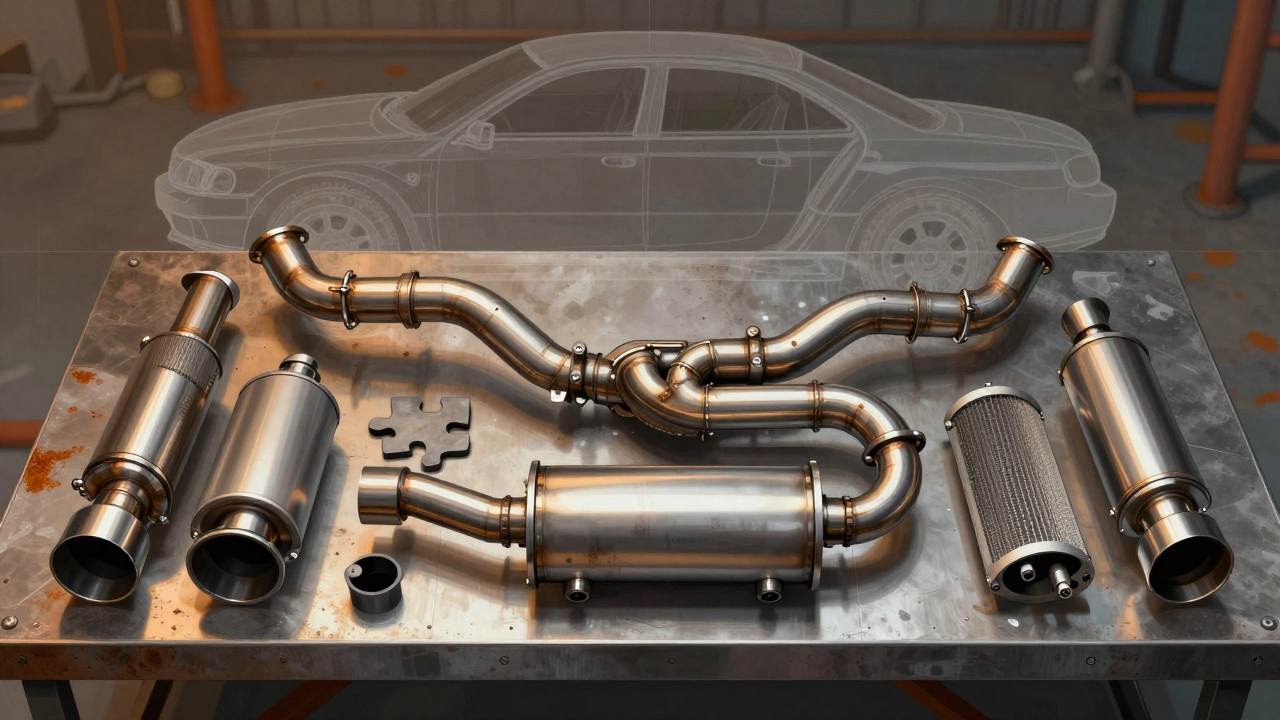
Before we talk about time, you need to know what you’re actually installing. A "full exhaust system" usually means replacing everything from the exhaust manifold or header all the way to the tailpipe. That includes:
- Headers or downpipes
- Mid-pipe
- Catalytic converter (if being replaced)
- Resonator
- Final muffler
- All connecting hardware and hangers
Some people call a "cat-back" system a full exhaust, but technically that’s only the part from the catalytic converter back. A true full system replaces everything upstream too - and that’s where the real time and complexity kick in.
Typical Installation Times by System Type
Here’s what you can realistically expect based on the type of system you’re installing:
| System Type | Typical Labor Time | Difficulty Level | Common Vehicles |
|---|---|---|---|
| Cat-Back System | 2-4 hours | Low to Medium | Toyota Camry, Honda Civic, Ford Mustang |
| Full System (Headers to Tailpipe) | 5-8 hours | Medium to High | Subaru WRX, BMW 3 Series, Nissan Skyline |
| Performance System with Dual Mufflers | 4-7 hours | Medium | Chevrolet Camaro, Dodge Charger |
| Factory Replacement (OEM-style) | 3-5 hours | Low | Most sedans, compact SUVs |
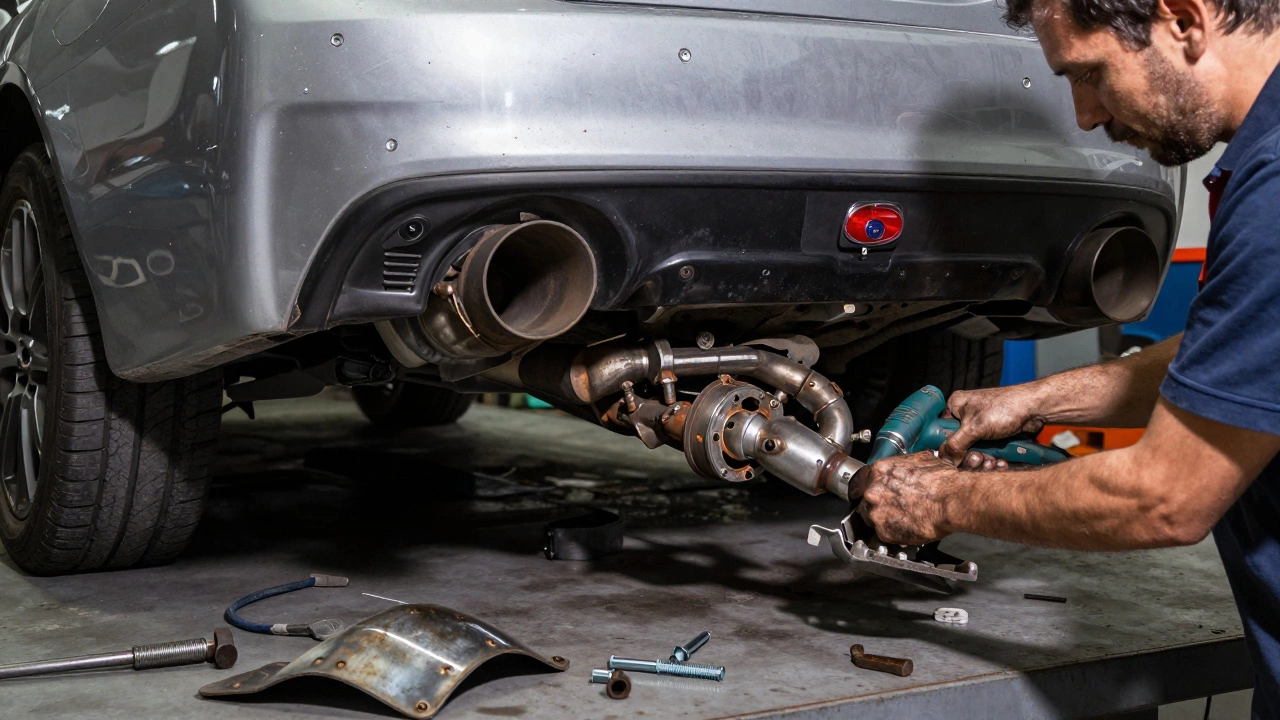
These times assume a skilled technician working in a well-equipped shop. If you’re doing it yourself in your driveway with basic tools, add 50% to 100% more time. Rust, seized bolts, and awkward angles don’t care how fast you think you are.
Why It Takes So Long - The Hidden Delays
Here’s what actually slows things down:
- Rusted bolts. On cars older than 8 years, exhaust bolts are often fused to the flanges. Cutting them off with a reciprocating saw or torch is common - and it takes time.
- Heat shields and brackets. Every manufacturer hides brackets, shields, and sensor wires in places you won’t expect. Removing them without breaking them is a puzzle.
- Clearance issues. Aftermarket systems don’t always fit perfectly. You might need to bend pipes slightly, trim hangers, or even relocate the fuel tank filler neck to make room.
- Sensor reconnection. If you’re replacing a catalytic converter, you’ll need to reconnect oxygen sensors. Some are buried deep, and others snap off if you tug too hard.
- Alignment and sealing. A leaky exhaust sounds like a jet engine. Getting all the flanges to seal properly takes patience. You can’t just torque them down - you need to snug them, let them cool, then re-torque.
I’ve seen guys try to install a full system in 90 minutes. They got it on, but it leaked. Two days later, they were back in the shop. The right way takes time.
DIY vs. Professional Installation
If you’re handy, you can save money doing it yourself. But here’s what most DIYers don’t realize:
- You need a lift or jack stands with enough clearance. Most cars sit too low to crawl under with tools.
- You’ll need at least two wrenches - one to hold the bolt, one to turn the nut. A torque wrench helps, but isn’t critical.
- Penetrating oil is your best friend. Spray it on every bolt 24 hours before you start.
- Heat shields are fragile. If you break one, you’ll need to replace it - and they’re often sold only as part of a kit.
Most shops charge $80-$120 per hour. A cat-back system might cost $200-$350 in labor. A full system? $500-$800. But if you mess it up, you’re looking at $1,000+ in repairs - not to mention the risk of carbon monoxide leaks.
What You Should Do Before Starting
Don’t just buy a system and start wrenching. Do this first:
- Check your car’s year, make, and model - then match the exhaust kit exactly. Even within the same model, there are different engine layouts.
- Buy the system from a reputable brand. Cheap systems use thin metal that rusts in 6 months.
- Get all the hardware included. Many kits come with clamps, gaskets, and hangers - but not always.
- Inspect your existing exhaust. If the flanges are cracked or the hangers are broken, you’ll need to fix those too.
- Work on a cool engine. Hot exhaust pipes can burn you badly - even after the car’s been off for hours.
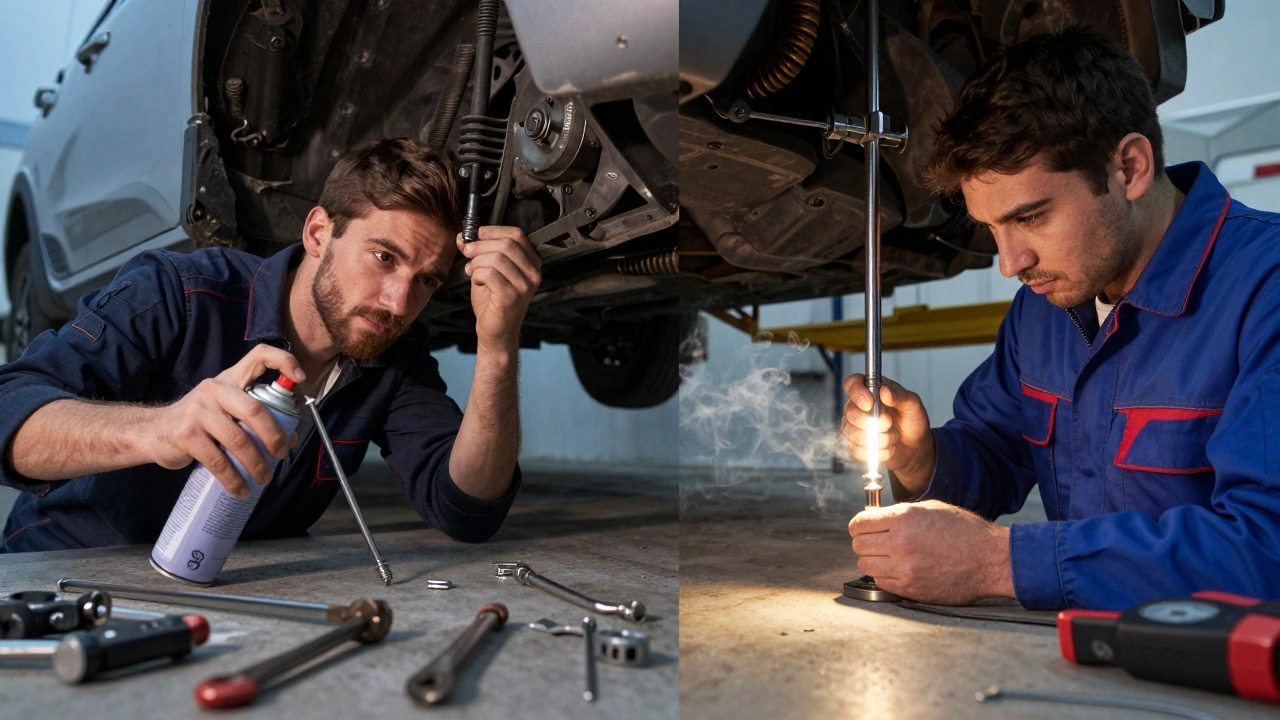
Real-World Example: 2021 Subaru WRX Full Exhaust Swap
Last month, a customer brought in a 2021 WRX with a stock exhaust that had rusted through at the mid-pipe. We installed a full titanium system from a well-known tuner.
Here’s how it went:
- Prep: 30 minutes - spraying bolts, raising the car, disconnecting battery
- Removing old system: 90 minutes - two bolts on the downpipe were seized. We had to cut them.
- Installing new system: 60 minutes - the new hangers didn’t line up. We had to bend one slightly.
- Final checks: 45 minutes - checking for leaks with a smoke tester, reconnecting sensors, torqueing flanges
Total time: 5 hours. No shortcuts. No mistakes. That’s the standard.
What Happens If You Rush It?
Skipping steps doesn’t save time - it just creates new problems:
- Leaky exhaust → loud noise, reduced fuel economy, carbon monoxide risk
- Improperly secured pipes → they bang against the chassis and crack
- Wrong gasket → exhaust gases melt plastic components under the car
- Missing oxygen sensor → check engine light, poor performance, failed emissions
One guy in Adelaide tried to install a performance system in one afternoon. He skipped the torque specs. Two weeks later, the mid-pipe came loose and dented his fuel tank. The repair cost $2,800.
Final Thoughts: It’s Not Just About Time
How long it takes to install a full exhaust system isn’t just a number. It’s a reflection of how much care you’re putting into the job. A quick install might get you on the road faster, but a careful one will last for years without noise, leaks, or danger.
If you’re doing it yourself, plan for a full weekend. If you’re hiring someone, ask how long they’ve been doing this. Look at their work on other cars. A good shop won’t rush - they’ll explain each step.
Because in the end, your exhaust isn’t just a pipe. It’s your car’s voice. Make sure it speaks clearly - and safely.
Can I install a full exhaust system in one day?
Yes, but only if you’re experienced and have the right tools. For most DIYers, a full exhaust system takes 6-8 hours spread over a full day. Cat-back systems are easier and can be done in a single afternoon. Don’t rush - exhaust leaks can be dangerous.
Do I need to remove the catalytic converter to install a full exhaust?
It depends. If you’re replacing the entire system from the headers down, then yes - the catalytic converter is part of that. If you’re only doing a cat-back, then no. But if your catalytic converter is rusted or damaged, it’s smart to replace it while you’re already in there.
Is it worth upgrading to a full performance exhaust?
It depends on your goals. A full performance system can add 5-15 horsepower, improve throttle response, and give your car a deeper sound. But it won’t fix poor fuel economy or bad handling. If you’re looking for real performance gains, pair it with a tune and intake. Just replacing the exhaust alone? You’ll hear the difference more than you’ll feel it.
How do I know if my exhaust needs replacing?
Signs include: loud roaring or hissing noises, especially when accelerating; a smell of exhaust inside the cabin; visible rust or holes on the pipes; a check engine light with codes related to oxygen sensors; or if your car failed emissions testing. If you’re unsure, get it inspected - a small leak can become a big problem fast.
Will a new exhaust system improve my car’s fuel efficiency?
Sometimes, but not always. A less restrictive exhaust reduces backpressure, which can help the engine breathe better. That might improve fuel economy by 1-3% in some cases. But if you install a louder, performance-oriented system and drive more aggressively, you’ll likely use more fuel. The system itself doesn’t magically save gas - how you drive does.