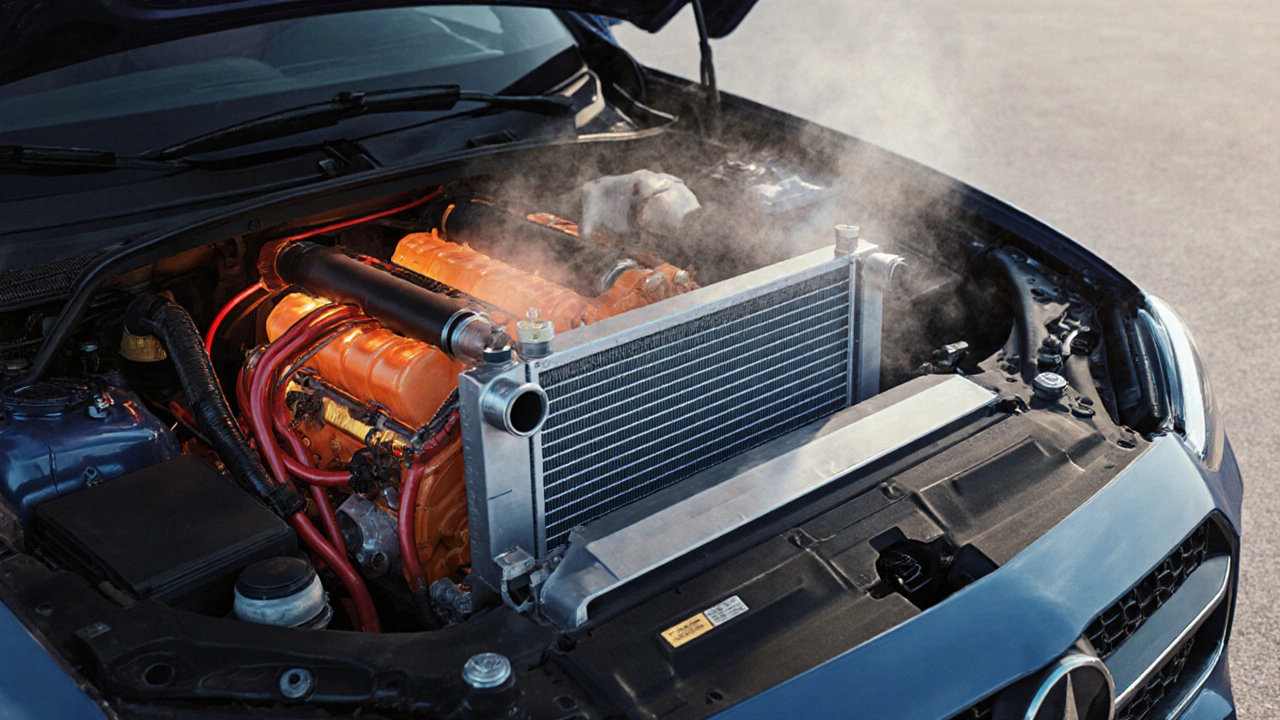
What Determines a Car Radiator's Life Expectancy?
Learn how long a car radiator typically lasts, what factors affect its durability, signs of failure, maintenance tips, and cost of replacement.
View moreWhen your car radiator, a key part of your vehicle’s cooling system that prevents the engine from overheating. Also known as engine radiator, it’s one of the few components that works nonstop—whether you’re idling in traffic or cruising on the highway. Most radiators last between 8 to 12 years, but that’s only if you keep up with basic maintenance. Skip fluid changes, let debris build up, or ignore small leaks, and your radiator could die in half that time. It’s not just about age—it’s about how you treat it.
The cooling system, the network of hoses, thermostat, water pump, and radiator that keeps engine temperature stable is only as strong as its weakest link. A failing water pump can overheat the radiator. Old or dirty coolant turns acidic and eats away at metal and plastic parts. Even a small crack in the radiator tank can turn into a major leak, and you won’t notice until your car starts steaming on the side of the road. Signs like puddles under your car, rising temperature gauge, or steam coming from the hood aren’t just warnings—they’re emergency signals. And if you ignore them, you risk blowing a head gasket or seizing the engine, which costs far more than a new radiator.
Driving habits matter too. If you live in a hot climate, haul heavy loads, or spend a lot of time in stop-and-go traffic, your radiator works harder. That means it wears out faster. Some people think a radiator lasts forever because it’s made of metal, but modern radiators are mostly plastic and aluminum. They’re lighter, yes, but also more fragile than the old all-metal ones. A single rock hit on the highway can crack the end tank. A cheap aftermarket part might look fine at first, but it can warp under heat stress and start leaking within months.
That’s why checking your radiator isn’t just about waiting for failure. It’s about catching problems early. Look for discolored coolant—brown or oily fluid means contamination. Listen for gurgling sounds when the engine is off; that’s air trapped in the system. And don’t wait for the warning light to come on. By then, it’s often too late. Regular coolant flushes every 30,000 to 50,000 miles, visual inspections during oil changes, and replacing worn hoses can double your radiator’s life.
What you’ll find below are real, practical guides from people who’ve been there. You’ll learn how to spot a failing radiator before it leaves you stranded, how long a radiator replacement actually takes, what to look for when buying a new one, and why skipping a coolant flush might be the worst thing you do to your car. These aren’t theory pieces—they’re fixes, warnings, and tips from real car owners and mechanics who’ve seen what happens when the radiator gives out.
Learn how long a car radiator typically lasts, what factors affect its durability, signs of failure, maintenance tips, and cost of replacement.
View more