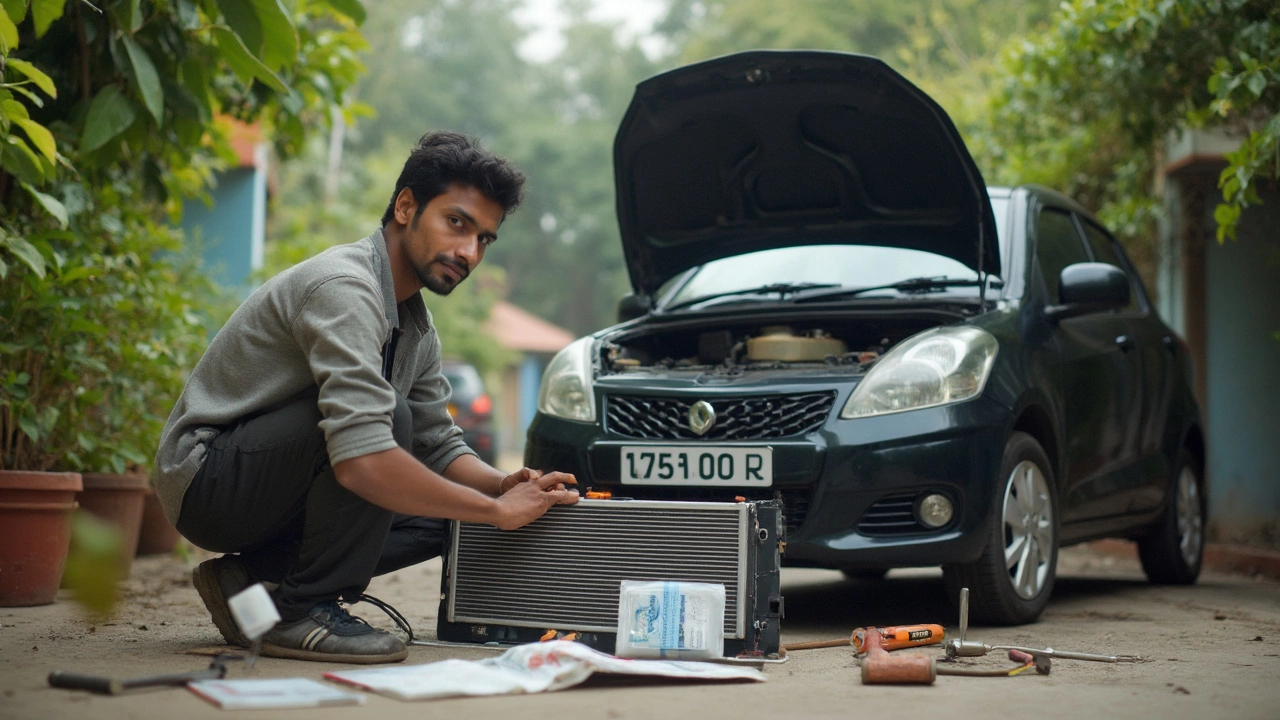
DIY Radiator Replacement: How to Do It Right and Avoid Costly Mistakes
When your engine starts running hot, a failing radiator, the main component that cools engine coolant by transferring heat to the air. Also known as cooling radiator, it's one of the most critical parts in your car's coolant system, the network of hoses, pumps, and fluids that regulate engine temperature. If it cracks, leaks, or gets clogged, your engine won’t last long. Replacing it yourself saves hundreds in labor—but only if you know what you’re doing.
A radiator replacement, the process of removing a damaged radiator and installing a new one. isn’t just about swapping parts. It involves draining coolant, disconnecting hoses and electrical fans, supporting the engine, and avoiding air pockets when refilling. Many people skip bleeding the system and end up with overheating days later. Others use the wrong coolant type, which corrodes aluminum parts. And if you don’t torque the bolts evenly, you’ll get leaks right after installation. The radiator replacement time, how long it takes to swap a radiator, whether done by a pro or at home. usually ranges from 2 to 4 hours for most cars, but older models or those with tight engine bays can take longer. Tools like a socket set, coolant catch pan, and a funnel with a hose are must-haves.
You’ll also need to check related parts while you’re in there. A worn water pump, cracked hose, or weak thermostat can cause the same symptoms as a bad radiator. If you’re replacing the radiator because of overheating, those other parts might be the real problem. Don’t assume the radiator is guilty until you’ve ruled out the rest. And never reuse old coolant—it picks up debris and loses its protective additives over time. Always flush the system and use fresh fluid matched to your car’s specs.
Some cars make this job easy. Others? You’ll need to remove the bumper, air intake, or even the condenser. That’s why knowing your exact make and model matters. The posts below cover real cases—from a 2010 Honda Civic with a simple swap to a 2008 Ford F-150 that needed a full front-end disassembly. You’ll find step-by-step timing guides, common mistakes people make, and how to pick the right replacement radiator without overpaying. Whether you’re a weekend mechanic or just trying to avoid a tow truck, this collection gives you what you need to get it right the first time.