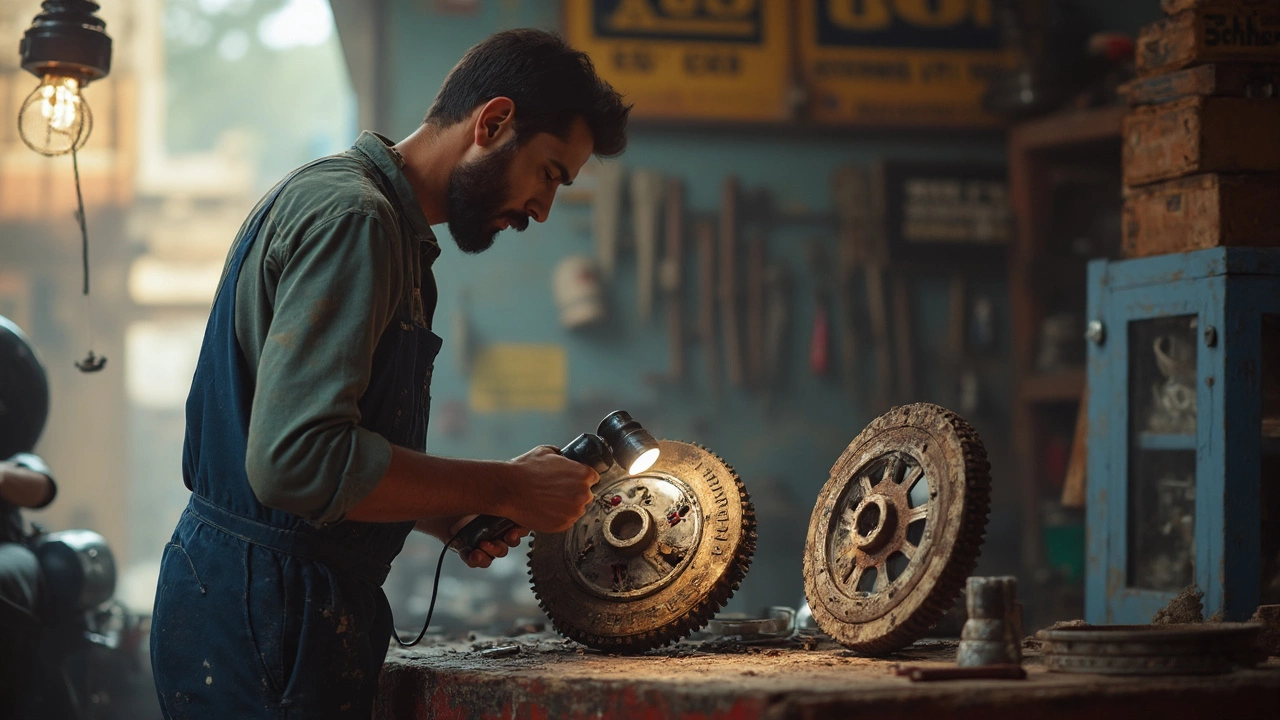
Flywheel Problems and Fixes: Noise, Damage, and Clutch Connection
When your car makes a grinding, chirping, or rattling sound from the engine bay—especially when you press the clutch—it’s often not the clutch itself. It’s the flywheel, a heavy metal disc that connects your engine to the transmission and smooths out power delivery. Also known as a clutch plate carrier, it’s one of the least talked-about but most critical parts in a manual transmission car. If it’s cracked, warped, or worn, it doesn’t just make noise—it kills clutches fast, causes gear shifting problems, and can even damage your starter motor.
The clutch, the component that lets you disconnect the engine from the transmission during gear changes doesn’t wear out alone. A bad flywheel is often the real culprit behind premature clutch failure. If your clutch is burning out after just 30,000 miles and you drive normally, check the flywheel. A warped surface from overheating or a cracked ring gear from a failed starter can turn a simple clutch job into a $1,200 repair if missed.
Not all flywheels are the same. Stock ones are heavy and smooth for daily driving. Performance cars use lighter flywheels for quicker revs, but they can make the engine feel jerky at low speeds. Dual-mass flywheels, common in modern diesel and turbo cars, have built-in dampeners to reduce vibration—but they’re expensive to replace and often fail around 100,000 miles. If you hear a rhythmic clunk when idling or a metallic rattle when the clutch is pressed, that’s usually the internal springs in a dual-mass flywheel breaking apart.
And here’s what most people miss: a bad flywheel doesn’t always scream for attention. Sometimes, it just makes shifting feel vague, causes the car to shudder when starting from a stop, or triggers a check engine light because the crankshaft position sensor can’t read the ring gear properly. You might think it’s a sensor issue, but if you’ve replaced the sensor and the problem stays, pull the transmission and inspect the flywheel.
You don’t need to replace it every time you change the clutch—but you should always inspect it. A lightly worn surface can be resurfaced (machined) if it’s thick enough. But if there are deep grooves, cracks, or heat spots the size of a coin, it’s time for a new one. And if you’re doing the work yourself, remember: flywheels are heavy. Use a proper holding tool to keep it steady when removing bolts. One slipped wrench and you could crack the ring gear or strip the threads.
What you’ll find in the posts below are real-world fixes, clear noise guides, and step-by-step checks from people who’ve been there. No theory. No guesswork. Just how to tell if your flywheel is failing, what it sounds like, and whether you can save money by resurfacing it—or if you’re better off replacing it outright. Whether you drive a daily commuter or a tuned hot hatch, this is the info that keeps you from getting stranded with a broken clutch and a $900 surprise bill.