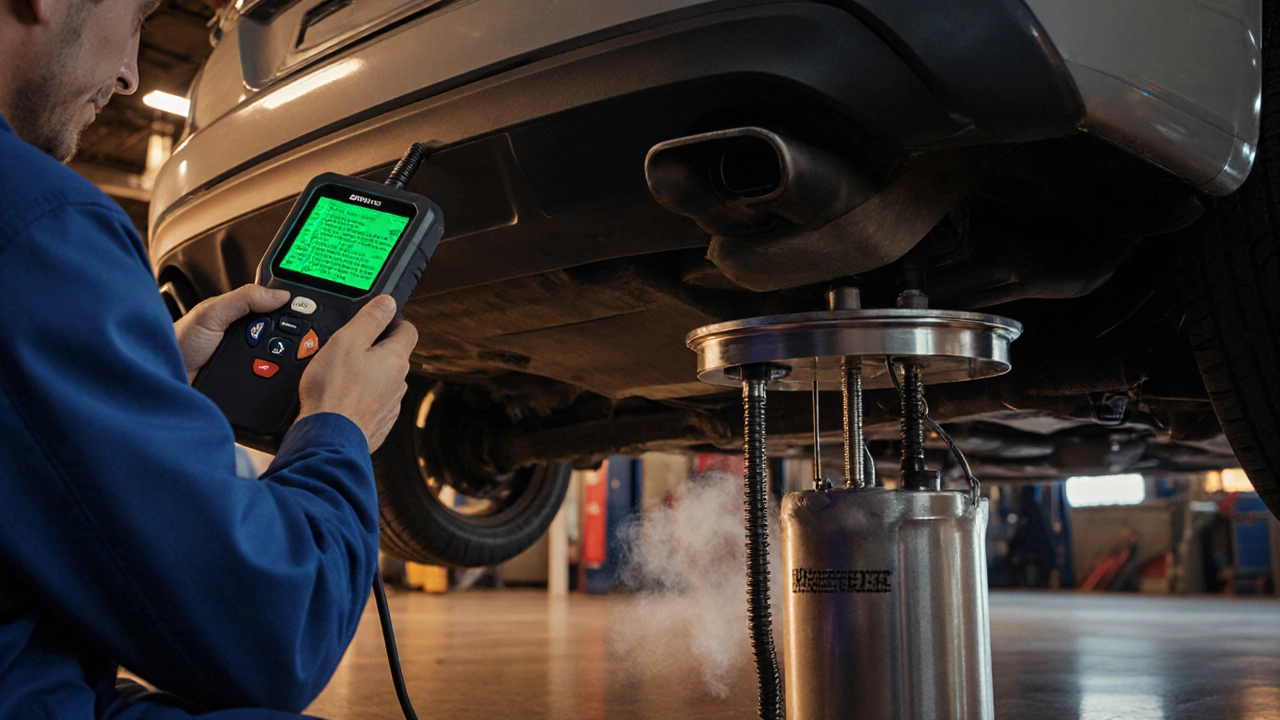
Fuel Pump Repair Time: How Long Does It Take?
Learn how long a fuel pump repair normally takes, whether DIY or shop service, and the factors that can speed up or delay the job.
View moreWhen your car won’t start—or sputters and dies on the highway—it’s often not the battery. It’s the fuel pump, a critical component that delivers gasoline from the tank to the engine under pressure. Also known as a fuel delivery pump, it’s one of those parts you never think about… until it stops working. Unlike spark plugs or brake pads, you can’t just glance at a fuel pump and tell if it’s failing. It hides inside the fuel tank, quietly doing its job until it doesn’t.
A failing fuel pump doesn’t always scream for help. Sometimes it whispers. You might notice your car hesitates when accelerating, especially uphill or at highway speeds. Or maybe it stalls at stoplights and starts again after sitting for a few minutes. These aren’t just "weird engine quirks"—they’re classic signs of a weakening fuel pump. If you hear a loud whining noise coming from the back of the car when you turn the key, that’s another red flag. And no, you can’t jump start a bad fuel pump. That’s a myth. The fuel pump needs power and pressure—not a boost from jumper cables.
What causes a fuel pump to die early? Often, it’s running the tank low too often. The fuel acts as a coolant and lubricant for the pump. When you’re running on fumes, the pump overheats and wears out faster. Contaminated fuel, old filters, or a clogged fuel line can also force the pump to work harder than it should. And if your car has over 100,000 miles, it’s just getting old. Most fuel pumps last between 100,000 and 150,000 miles, but some fail sooner if they’ve been stressed.
Replacing a fuel pump isn’t always a simple swap. In many cars, you have to drop the fuel tank or remove the back seat to access it. That means labor costs can add up fast. But catching the problem early means you avoid towing fees, engine damage, or getting stranded in the rain. And while you’re at it, it’s smart to replace the fuel filter too—most mechanics do it as a pair.
Some people try to diagnose a bad fuel pump by tapping on the tank or spraying starting fluid. Those tricks might work once, but they’re not fixes. The only real way to know is to test fuel pressure with a gauge or listen for the pump’s hum when you turn the ignition. If you’re not sure, don’t guess. A misdiagnosis could lead you to replace a $30 sensor when the real problem is a $400 pump.
Below, you’ll find real stories and practical guides from people who’ve been there. You’ll learn how to tell if your car needs a new fuel pump, what the symptoms really look like, and how to avoid the common mistakes that cost drivers time and money. No fluff. No hype. Just what works.
Learn how long a fuel pump repair normally takes, whether DIY or shop service, and the factors that can speed up or delay the job.
View more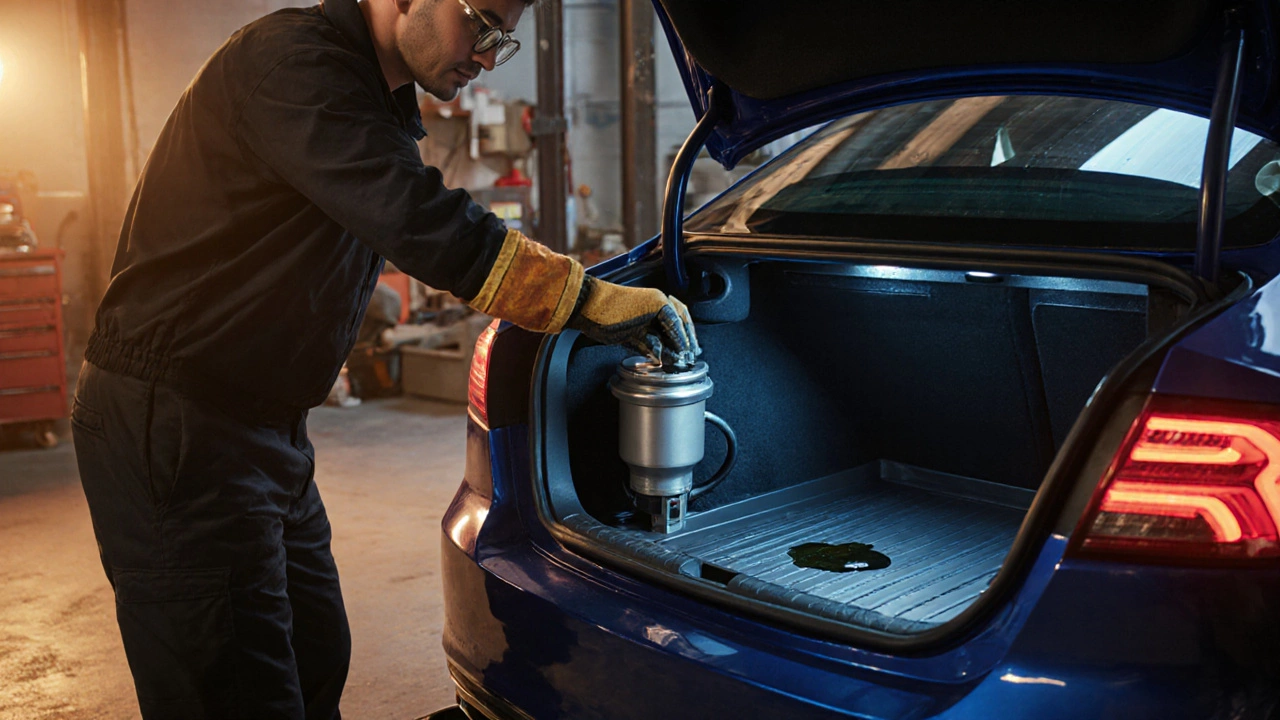
Learn why draining the fuel tank is usually safest for a pump swap, how to replace it step‑by‑step, and what to do when the tank can't be emptied.
View more