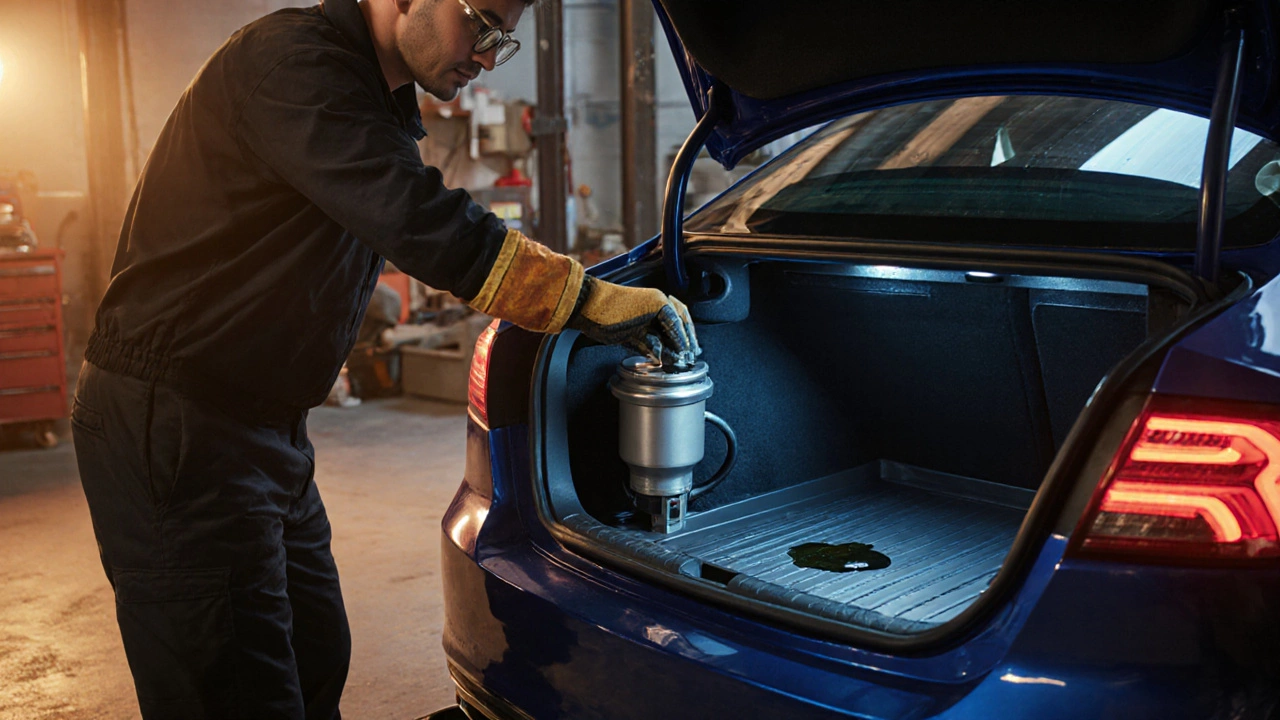
Do You Need an Empty Tank to Replace a Fuel Pump?
Learn why draining the fuel tank is usually safest for a pump swap, how to replace it step‑by‑step, and what to do when the tank can't be emptied.
View moreWhen your car sputters, stalls, or won’t start at all, the problem often isn’t the battery—it’s the fuel system repair, the network of components that delivers fuel from the tank to the engine. Also known as fuel delivery system, it includes the fuel pump, filter, lines, injectors, and pressure regulator. If any part fails, your engine starves for fuel—and that’s when you’re stuck on the side of the road.
The most common culprit? A failing fuel pump, the electric component that pushes fuel under pressure from the tank to the engine. It’s not a part you can hear working, but you’ll know it’s dying when acceleration feels weak, the engine hesitates at highway speeds, or the car dies after running for a while. Many people think a bad fuel pump can be jumped like a dead battery—it can’t. No jumper cables, no tricks. If the pump is truly dead, you need a replacement. And if you’re wondering how long it takes to fix, most shops do it in 2 to 4 hours, depending on the car’s design. DIY? It’s doable, but access can be tricky if the pump is inside the fuel tank. Then there’s the fuel filter, a small but critical screen that catches dirt and rust before they clog injectors. Most manufacturers say replace it every 20,000 to 40,000 miles, but if you drive on dusty roads or use low-quality fuel, it can gunk up much faster. A clogged filter mimics a bad fuel pump—same symptoms, different fix. And don’t forget the fuel injectors, tiny valves that spray precise amounts of fuel into the engine cylinders. Over time, carbon builds up and they start to drip or spray unevenly. That’s when you get rough idling, poor fuel economy, or even misfires.
Fuel system issues don’t always scream for attention. Sometimes they whisper—through a slight loss of power, a delay when you press the gas, or a check engine light that comes and goes. Ignoring them doesn’t save money; it just makes the repair bigger and more expensive. Replacing a fuel pump early costs less than replacing a damaged fuel injector or a ruined catalytic converter from running lean. And if you’ve ever tried to diagnose this yourself, you know how easy it is to waste time chasing the wrong problem. That’s why knowing the real signs matters.
Below, you’ll find real-world guides that cut through the noise. Learn how to test a fuel pump without a scan tool, why some "fixes" make things worse, how long repairs actually take, and what signs you can spot before you’re stranded. These aren’t theory pieces—they’re what mechanics and DIYers use when the car won’t start and the clock is ticking.
Learn why draining the fuel tank is usually safest for a pump swap, how to replace it step‑by‑step, and what to do when the tank can't be emptied.
View more