Brake Pad Replacement Cost Estimator (2026)
Vehicle & Service Details
Select your options and click Calculate to see estimated costs.
You pull into the driveway, hear that familiar grinding noise, and suddenly your wallet feels a little lighter. It’s a universal car owner experience: the moment you realize your brake pads are worn out, panic sets in because you have no idea what the bill will look like. Is it going to be $150? $500? More? The truth is, there isn't one single price tag for replacing a set of four brake pads. It depends heavily on your vehicle, the type of material you choose, and whether you’re doing it yourself or paying a pro.
Let’s cut through the confusion. By the end of this guide, you’ll know exactly what factors drive the price up or down, how much you should realistically budget in 2026, and when it’s worth spending extra for better quality. We aren’t just throwing numbers at you; we’re breaking down the anatomy of a brake job so you can make a smart decision for your car and your bank account.
The Real Cost Breakdown: Parts vs. Labor
When you ask "how much," you’re actually asking two different questions. First, how much do the parts cost? Second, how much does the work cost? If you’re handy with tools, you might only care about the first part. If you’re dropping your car off at a shop, you need to understand both.
For a standard sedan or hatchback, a complete set of four ceramic brake pads typically ranges from $80 to $200 AUD. This is the retail price you’d see online or at an auto parts store. However, if you opt for premium performance brands or specific OEM (Original Equipment Manufacturer) parts, that number can jump to $300 or more. On the other hand, semi-metallic pads are often cheaper, sometimes dipping below $70 for a full set, but they tend to be noisier and produce more dust.
Labor is where things get tricky. In Australia, as of 2026, independent mechanic rates generally hover between $90 and $140 per hour. A standard front-and-back brake pad replacement usually takes about 1.5 to 2 hours. So, you’re looking at roughly $150 to $280 just for the labor. Add the parts, and a professional job for four wheels typically lands between $300 and $600. Dealerships will charge more, often quoting $500 to $800+, because their hourly rates are higher and they strictly use branded parts.
| Service Type | Parts Cost (Set of 4) | Labor Cost (Est.) | Total Estimated Range |
|---|---|---|---|
| DIY (Do It Yourself) | $80 - $200 | $0 | $80 - $200 |
| Independent Mechanic | $80 - $200 | $150 - $280 | $230 - $480 |
| Dealership Service | $150 - $300+ | $250 - $400+ | $400 - $700+ |
| Premium Performance | $250 - $400 | $150 - $280 | $400 - $680 |
Why Your Car Matters More Than You Think
Not all cars are created equal, and neither are their brakes. If you drive a compact city car like a Toyota Corolla or a Mazda 3, you’re likely in the lower end of the price spectrum. These vehicles use smaller, lighter brake systems designed for efficiency rather than heavy-duty stopping power. The pads are standard, widely available, and cheap to produce.
But swap that for a large SUV, a pickup truck, or a luxury sedan like a BMW 3 Series, and the costs shift. Larger vehicles require bigger rotors and thicker, more robust pads to handle the increased weight and momentum. For these vehicles, a set of four high-quality ceramic pads can easily cost $250 to $400 before labor. Furthermore, some European cars use complex electronic parking brakes or multi-piston calipers that require specialized tools or software to reset. This adds time-and money-to the job. If your car has electric parking brakes, expect the labor cost to increase by 20-30% because the mechanic needs to put the system in service mode electronically.
Material Choices: Ceramic vs. Semi-Metallic vs. Organic
You can’t just grab any box labeled "brake pads" from the shelf. The material inside dictates performance, noise, and longevity. Understanding this helps you decide if the extra cost is worth it.
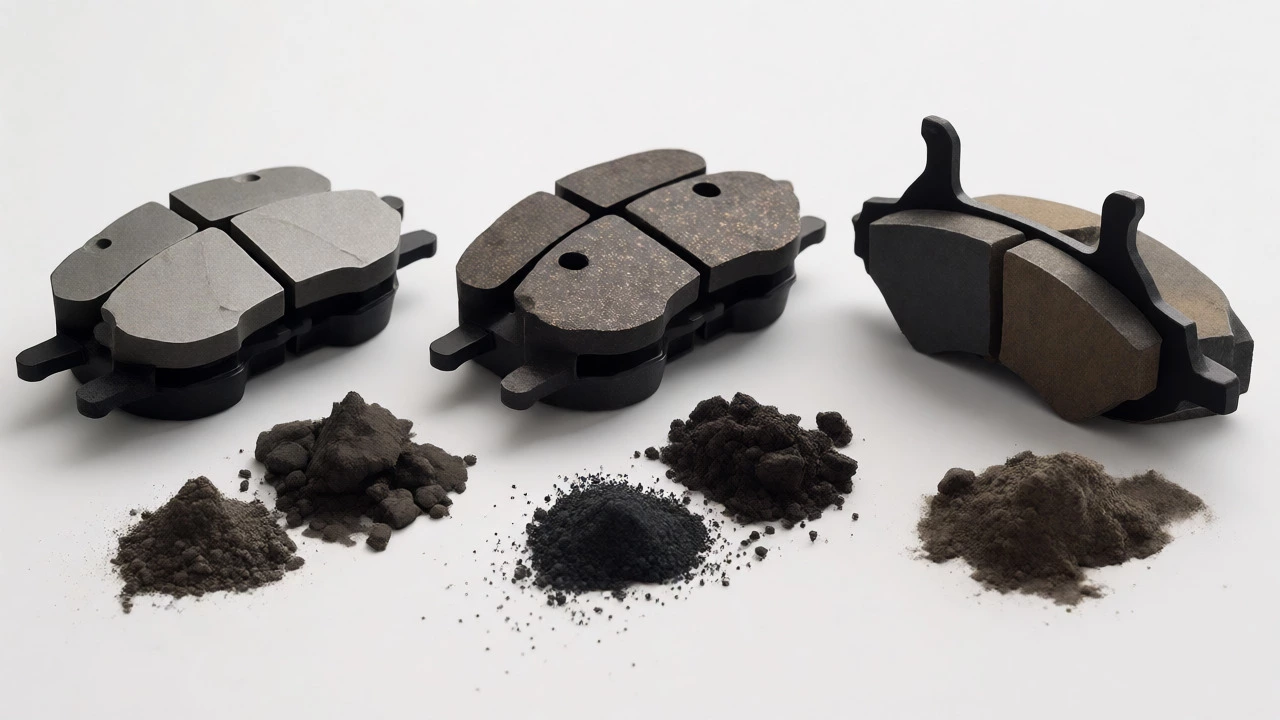
Ceramic brake pads are the current gold standard for most daily drivers. They are quiet, produce minimal dust, and last longer than organic options. While they cost more upfront-often 20-30% more than semi-metallic-they rarely require rotor resurfacing due to their smooth operation. For most Adelaide commuters dealing with stop-start traffic, ceramic is the smartest investment.
Semi-metallic pads contain metal fibers and shavings. They bite harder and handle heat better, making them popular for trucks and towing vehicles. The downside? They squeal. That high-pitched noise you hear after a cold morning start? That’s often semi-metallic friction against the rotor. They also wear down rotors faster, which means you might end up replacing rotors sooner, adding hidden costs to your total ownership expense.
Organic (NAO) pads are made from rubber, glass, and resin. They are the cheapest option and very quiet, but they fade quickly under heavy braking and wear out fast. Unless you are driving a low-mileage city runabout and plan to sell the car soon, organic pads are often a false economy. You’ll likely replace them twice as often as ceramics, doubling your labor costs over time.
Hidden Costs: When Pads Aren’t Enough
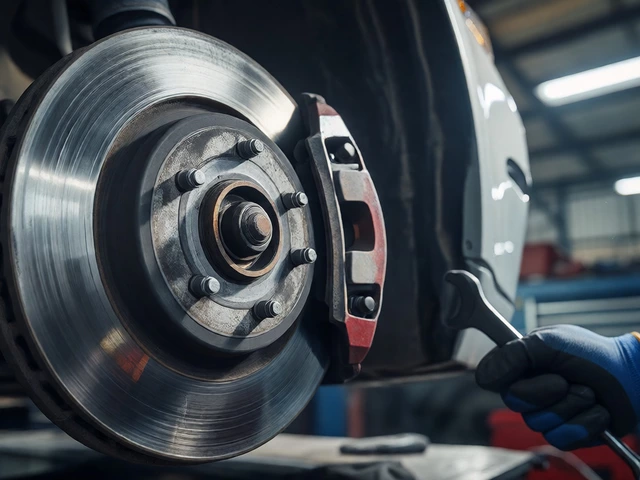
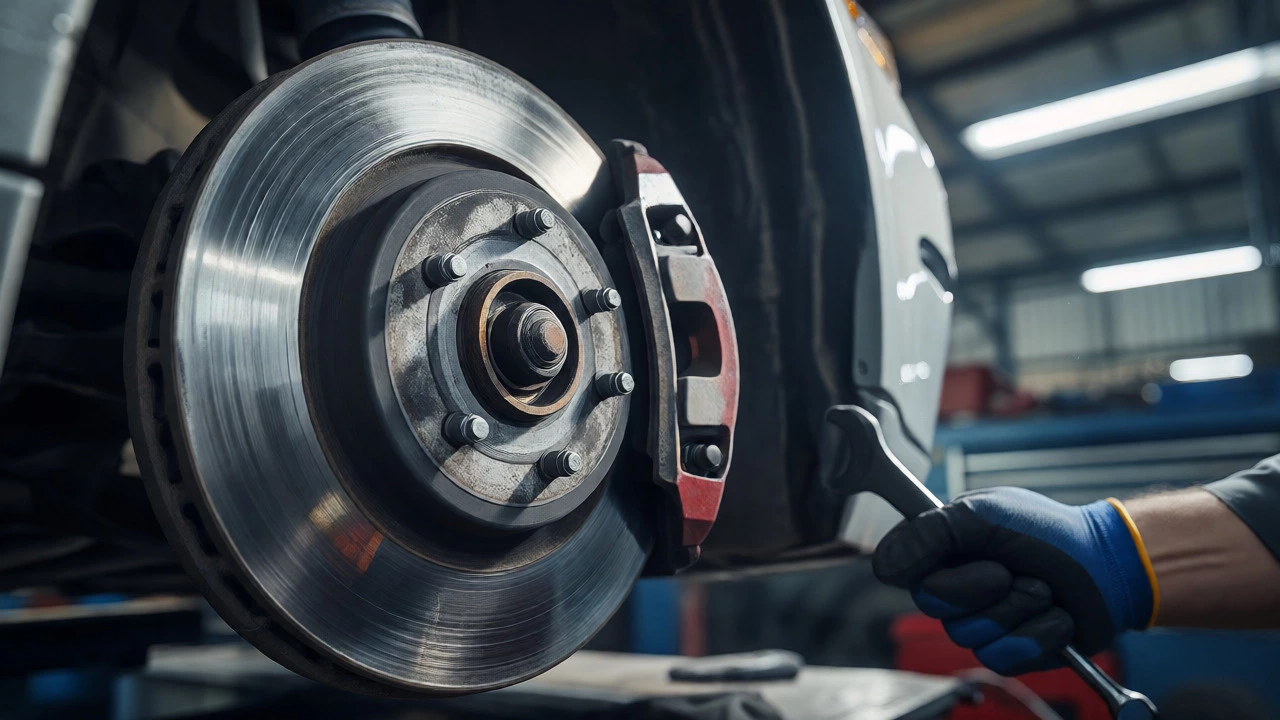
Here is the trap many owners fall into: they budget for pads, but forget about the rest of the system. Brake pads don’t exist in a vacuum. They press against brake rotors (also called discs). If your old pads were completely worn through, the metal backing plate may have scored the rotors. Deep grooves mean new pads won’t seat properly, leading to pulsing pedals and poor braking. Replacing rotors adds another $150-$300 to the bill for a set of four.
Then there are the hardware kits. Clips, pins, and shims hold the pads in place. Mechanics often reuse old clips to save time, but if they are rusted or deformed, new pads can rattle or bind. A hardware kit costs $20-$40. It’s a small amount, but skipping it can cause annoying noises later. Always ask if the quote includes hardware replacement. If not, insist on it. It’s cheap insurance against comebacks.
Don’t ignore brake fluid either. If you’re doing a major brake overhaul, bleeding the lines is good practice. Fresh fluid ensures consistent pedal feel and prevents internal corrosion. While not always mandatory for a simple pad swap, it’s a wise addition if your fluid is dark or hasn’t been changed in three years. Budget an extra $50-$80 for a fluid flush.
DIY vs. Professional: Is Saving Money Worth the Risk?
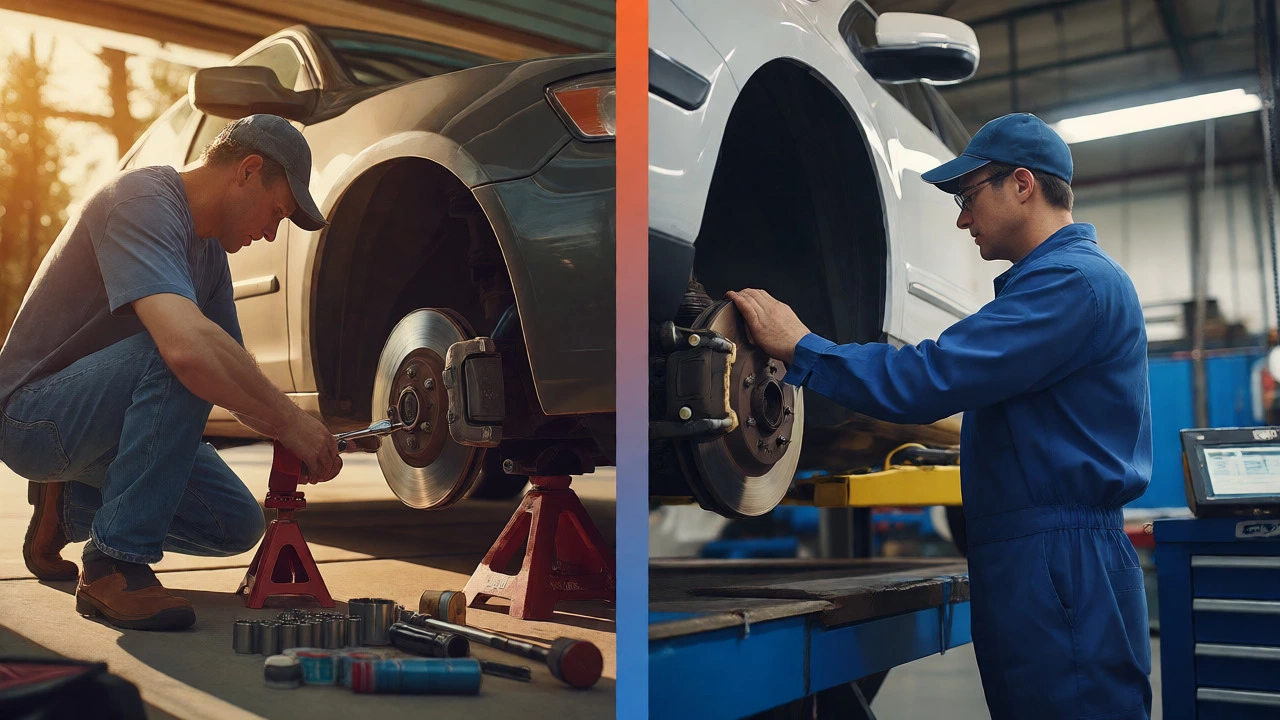
With YouTube tutorials everywhere, DIY seems tempting. And yes, saving $200+ in labor is great. But brakes are a safety-critical system. A mistake here doesn’t just mean a noisy car; it means potential failure on the highway.
To do it right, you need specific tools: a jack, jack stands, lug wrench, C-clamp or piston tool, and torque wrench. If you don’t own these, buying them eats into your savings. Plus, you need to know how to properly bed-in new pads. Bedding involves a series of controlled stops to transfer material from the pad to the rotor. Skip this step, and your brakes might feel spongy or never achieve full stopping power.
If you’re confident with basic mechanics, changing front pads is manageable. Rear brakes are harder, especially if you have drum-in-hat designs or electronic parking brakes. For those, I strongly recommend hiring a pro. The risk of damaging the caliper or misaligning components outweighs the labor savings for most people.
How to Get the Best Price in 2026
Prices fluctuate based on supply chains and local demand. Here is how to keep your costs down without sacrificing safety.
- Get Multiple Quotes: Never accept the first estimate. Call three local independent shops. Ask specifically for "parts and labor included" quotes to avoid surprise fees.
- Buy Your Own Parts: Some shops allow you to bring your own parts (BYO). They will charge for labor only. Check if they offer a warranty on BYO parts-if not, weigh the risk. Often, shops mark up parts by 20-30%, so buying online can save you $50-$100.
- Bundle Services: If you need tires rotated or an oil change, ask for a package deal. Shops love bundling because it saves them setup time.
- Avoid Peak Seasons: In Adelaide, pre-summer (November/December) sees a spike in brake work due to holiday travel prep. Scheduling in February or March might yield slightly better rates or availability.
Remember, the cheapest option isn’t always the best value. A $100 job using inferior pads might cost you $400 in six months when you have to redo it. Aim for the middle ground: reputable brand parts (like Brembo, Bendix, or EBC) installed by a certified mechanic.
Frequently Asked Questions
How long do brake pads last?
Most brake pads last between 30,000 and 70,000 kilometers. However, this varies wildly based on driving habits. City driving with frequent stops wears pads faster than highway cruising. Aggressive braking and heavy loads also shorten lifespan significantly.
Can I replace just two brake pads?
You should always replace brake pads in pairs (both front or both rear). Replacing only one side causes uneven braking force, which can pull your car to one side during hard stops and put stress on the suspension. Most manufacturers and mechanics refuse to replace just one wheel for safety reasons.
What are the signs my brake pads need replacing?
Common signs include a high-pitched squealing sound (wear indicators), a grinding metal-on-metal noise (severe wear), a vibrating steering wheel or brake pedal, and a longer stopping distance. If you see less than 3mm of pad material remaining, replace them immediately.
Do I need to replace rotors every time I change pads?
No, not necessarily. Rotors only need replacement if they are warped, deeply scored, or thinner than the manufacturer's minimum thickness specification. Many modern cars have thin rotors that cannot be resurfaced safely, so check the condition carefully. If they are smooth and within spec, new pads alone are fine.
Is it safe to drive with bad brake pads?
It is risky. Driving with worn pads reduces your ability to stop quickly, increasing accident risk. If you hear grinding, the metal backing plate is contacting the rotor, which damages the rotor and compromises hydraulic pressure. Limit speed and avoid heavy traffic until repaired.