Most people don’t realize you can check your brake pads without pulling off the tire. It’s not just a trick for mechanics-it’s something any driver can do in under five minutes with just a flashlight and a little curiosity. If you’ve ever heard a squeal when you brake, or felt the pedal sink lower than usual, you’re probably wondering if your pads are worn out. And you don’t need to jack up the car or grab a socket set to find out.
Why You Should Check Brake Pads Regularly
Brake pads wear down over time. They’re made of friction material designed to rub against the rotor and slow your car. That friction turns into heat, and eventually, the material gets thin. When that happens, your stopping distance increases. You might not notice it until it’s too late.
In Australia, where driving conditions vary from city traffic to outback highways, brake wear can happen faster than you think. A set of brake pads can last anywhere from 30,000 to 70,000 kilometers, depending on your driving style. Aggressive braking, heavy loads, or frequent stop-and-go traffic will eat through them quicker.
Waiting until the warning light comes on or the brake pedal starts vibrating is risky. By then, you might already be damaging the rotors-and those cost three times as much to replace.
How to Check Brake Pads Without Removing the Tire
You don’t need to remove the tire because most modern cars have wheels with gaps between the spokes. These gaps give you a clear view of the brake pad through the wheel. Here’s how to do it:
- Find a safe, flat surface and turn off the engine. Engage the parking brake.
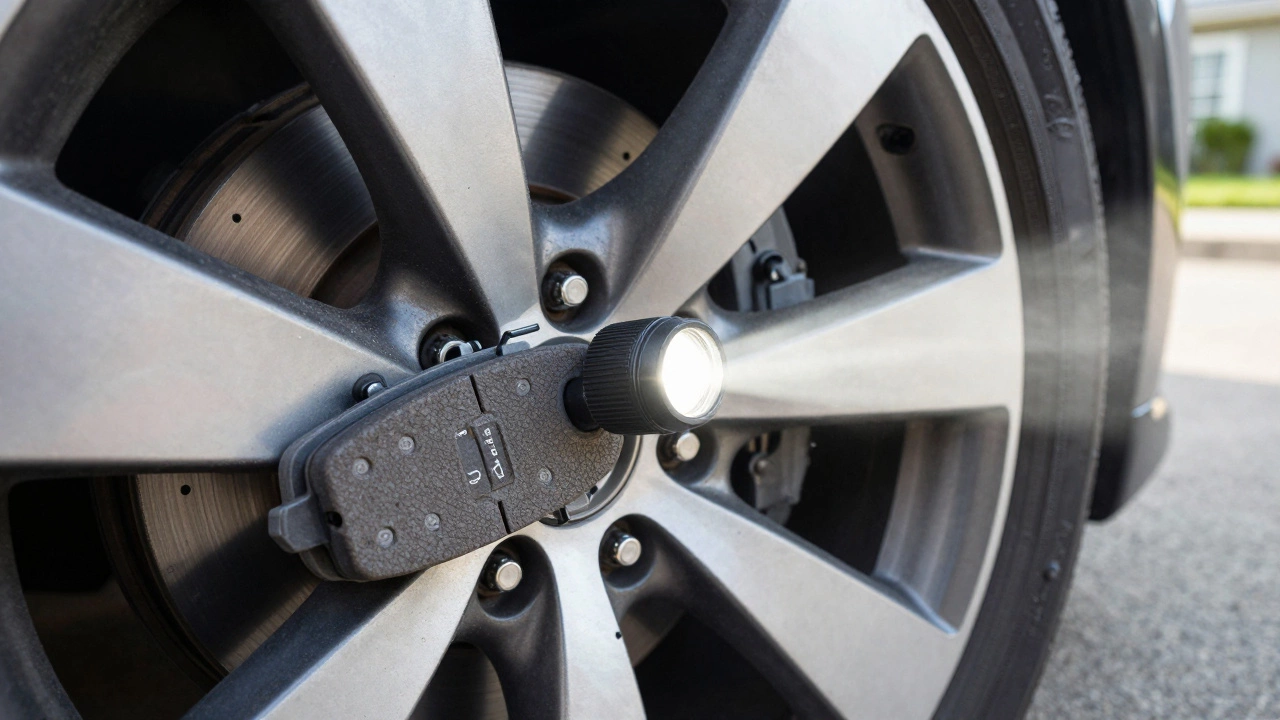
- Grab a flashlight. A phone flashlight works fine.
- Look through the gaps in the wheel rim at the brake caliper. You’ll see a flat, rectangular piece of material pressed against a metal disc (the rotor). That’s the brake pad.
- Check the thickness. New brake pads are usually about 10 to 12 millimeters thick. If you see less than 3 millimeters, it’s time to replace them. If it’s down to 2 millimeters or less, you’re running on metal backing plates-stop driving and get it fixed immediately.
- Look for uneven wear. If one side of the pad is worn much more than the other, that could mean a stuck caliper or worn hardware.
- Check the wear indicator. Many pads have a small metal tab that scrapes against the rotor when the pad is too thin. If you hear a high-pitched squeal when braking, that’s the indicator. You don’t need to see it to know it’s there.
Some wheels, like deep-dish alloys or narrow-spoke designs, make it harder to see the pads. If you can’t get a clear view, try turning the wheel slightly while looking from the front or back. You might get a better angle.
What to Look For: Wear Patterns and Red Flags
Not all brake pad wear is the same. Here’s what different signs mean:
- Even wear across the pad - Normal. Your brakes are working as designed.
- One side worn more than the other - Could be a sticking caliper piston. This causes uneven braking and overheating.
- Cracks or chunks missing - Signs of overheating or poor-quality pads. Replace them.
- Glazed surface (shiny and smooth) - The pads have overheated and lost their friction. They won’t stop well anymore.
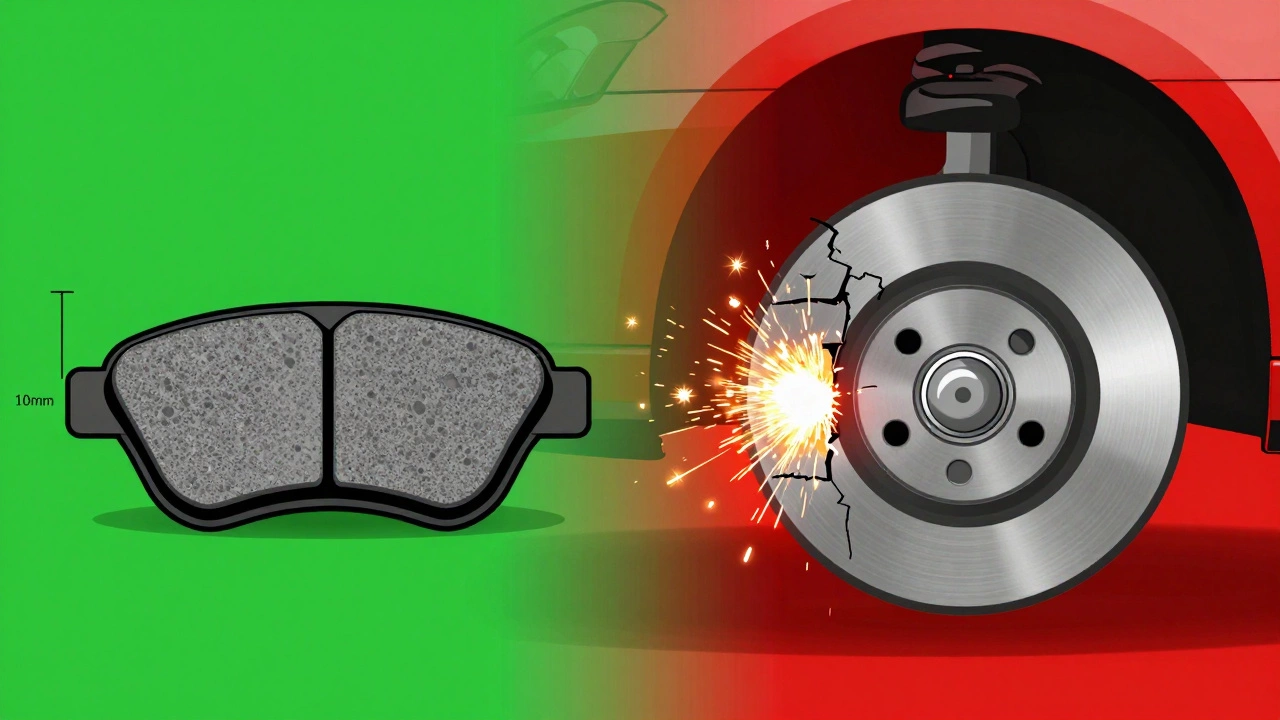
- Metal-on-metal grinding - The friction material is gone. You’re now grinding the caliper against the rotor. This will cost hundreds to fix.
It’s not just about thickness. The condition matters too. Even if your pads are still 4mm thick but look glazed or cracked, they’re not performing safely.
When You Can’t See the Pads Through the Wheel
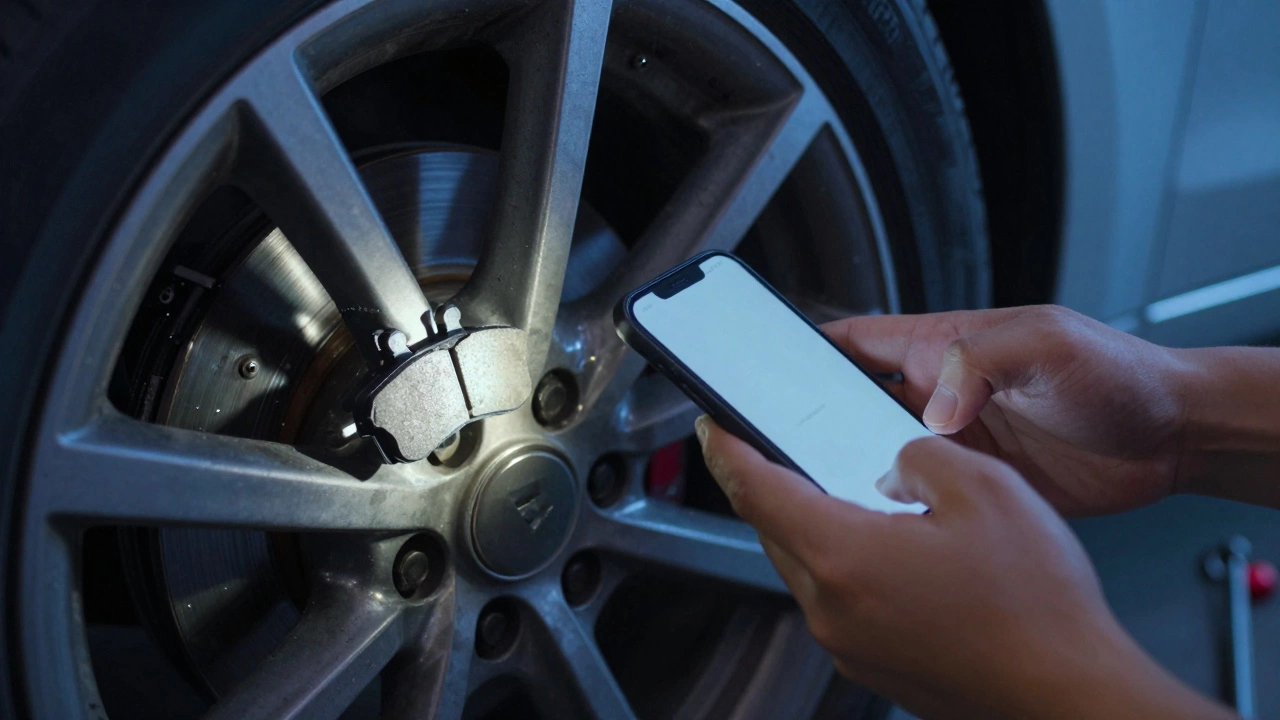
Some vehicles-like older models, trucks, or cars with solid wheel designs-don’t give you a clear view. If you can’t see the pads at all, you have two options:
- Remove the tire. It’s not as hard as it sounds. Loosen the lug nuts slightly before jacking up the car, then remove the wheel and inspect the pads directly. Use a ruler or tape measure to check thickness.
- Visit a mechanic for a quick visual check. Most auto shops will do this for free if you’re a regular customer. It takes less than five minutes.
Don’t assume your car is too complicated. Even if you can’t see the pads, that doesn’t mean you can’t monitor them. Pay attention to how your brakes feel. A spongy pedal, longer stopping distance, or vibration when braking are all signs something’s wrong.
How Often Should You Check?
Check your brake pads every 10,000 kilometers-or at least twice a year. If you drive mostly in the city, check them every 5,000 kilometers. High-speed highway driving is easier on brakes, but stop-and-go traffic? That’s where they wear fast.
Many drivers forget to check until the warning light comes on. That light doesn’t come on until the pads are dangerously thin. By then, you’ve already risked your safety and your wallet.
Make it part of your routine. When you wash your car, take five minutes to look through the wheel. Do it while you’re filling up with fuel. It takes less time than checking your tire pressure.
What Happens If You Ignore Worn Pads?
Ignoring worn brake pads doesn’t just mean slower stops. It leads to bigger, costlier problems:
- Rotors get scored - Metal backing plates grind into the rotor surface, creating grooves. Rotors can’t be resurfaced if they’re too thin.
- Calipers fail - Constant heat from metal-on-metal contact can warp or crack the caliper.
- Brake fluid leaks - Overheating can damage seals in the brake system.
- Increased stopping distance - At 100 km/h, worn pads can add 15 to 20 meters to your stopping distance. That’s the length of a small car.
In Australia, where road conditions can be unpredictable-dust, gravel, sudden animal crossings-reliable brakes aren’t optional. They’re essential.
Pro Tips for Better Brake Longevity
- Don’t ride the brake on hills. Use engine braking instead-shift to a lower gear.
- Avoid hard stops. Anticipate traffic and slow down gradually.
- Use quality brake pads. Cheap pads wear faster and produce more dust and noise.
- Keep your wheels clean. Brake dust buildup can hide wear signs. Wash them regularly.
- Replace pads in pairs. Always replace both front or both rear pads at the same time.
Brakes are one of the few systems in your car that directly affect your survival. You wouldn’t ignore a cracked windshield. Don’t ignore worn brake pads either.
Can you check brake pads without removing the tire?
Yes, you can check most brake pads without removing the tire. Look through the gaps in the wheel rim with a flashlight. If you can see the pad material and it’s thicker than 3 millimeters, you’re fine. If it’s thinner than that, or if you see metal, it’s time for replacement.
How thick should brake pads be before replacement?
New brake pads are typically 10 to 12 millimeters thick. Replace them when they reach 3 millimeters. Anything less than 2 millimeters is dangerous and risks damaging the rotors.
What if I can’t see the brake pads through the wheel?
If your wheels don’t have gaps or the view is blocked, you’ll need to remove the tire. It’s a simple job: loosen the lug nuts, jack up the car, remove the wheel, and inspect the pads directly. You can also ask a mechanic to check them-they often do it for free.
How often should I check my brake pads?
Check them every 10,000 kilometers, or at least twice a year. If you drive in heavy traffic, check every 5,000 kilometers. Don’t wait for warning lights or noises-they’re late indicators.
Is it safe to drive with worn brake pads?
No. Driving with brake pads under 2 millimeters thick is unsafe. You risk longer stopping distances, rotor damage, and complete brake failure. If you hear grinding or feel vibration, stop driving and get help immediately.
Brakes don’t fail suddenly. They wear down slowly-so slowly you might not notice until it’s too late. But you don’t need special tools or training to catch it early. Just look. Just check. Just care.