Engine Oil Level & Viscosity Checker
Adjust the slider to simulate different oil levels found on a dipstick.
Common Viscosities Reference
| Grade | Best For |
|---|---|
| 0W-20 | Hybrids, Newer Asian Cars |
| 5W-30 | Most Standard Engines |
| 5W-40 | Turbos, European Cars |
| 10W-30 | Older/High-Mileage Vehicles |
You’re driving down the highway, and that dreaded orange oil can icon lights up on your dashboard. Your heart skips a beat. Do you pull over immediately? Call a tow truck? Or can you just pop the hood, find the oil bottle in your trunk, and pour some in? The short answer is yes, you absolutely can add oil to your car if it’s low. But there’s a right way and a wrong way to do it, and getting it wrong can turn a minor inconvenience into a major engine headache.
Toping up engine oil is one of the most basic yet critical tasks in car maintenance. It’s not rocket science, but it requires a bit of care. This guide walks you through exactly how to check your levels, what kind of oil to use, and when adding oil isn’t enough.
Why Your Engine Needs Oil (And Why It Disappears)
Engine oil does more than just lubricate moving parts. It cools the engine, cleans out sludge, and protects against corrosion. Without it, metal-on-metal contact happens fast, leading to catastrophic failure within minutes. So why does your oil level drop?
In modern cars, oil consumption varies wildly. Some engines are so tight they barely use any between changes. Others, especially high-mileage vehicles or those with turbochargers, might burn through a quart every 1,000 miles. This isn’t always a sign of trouble. Older seals can leak slightly, allowing oil to seep into the combustion chamber where it gets burned off. However, if you’re topping up a quart every few weeks, you’ve got a leak or excessive wear that needs professional eyes.
How to Check Your Oil Level Correctly
Before you grab that bottle, you need an accurate reading. Checking oil incorrectly is surprisingly common. Here’s the foolproof method:
- Park on level ground. If your car is tilted, the oil pools to one side of the pan, giving you a false low or high reading.
- Wait for the engine to cool. While some manufacturers say you can check while warm, waiting 5-10 minutes after turning off the engine allows oil to drain back into the pan. Hot oil also risks burns.
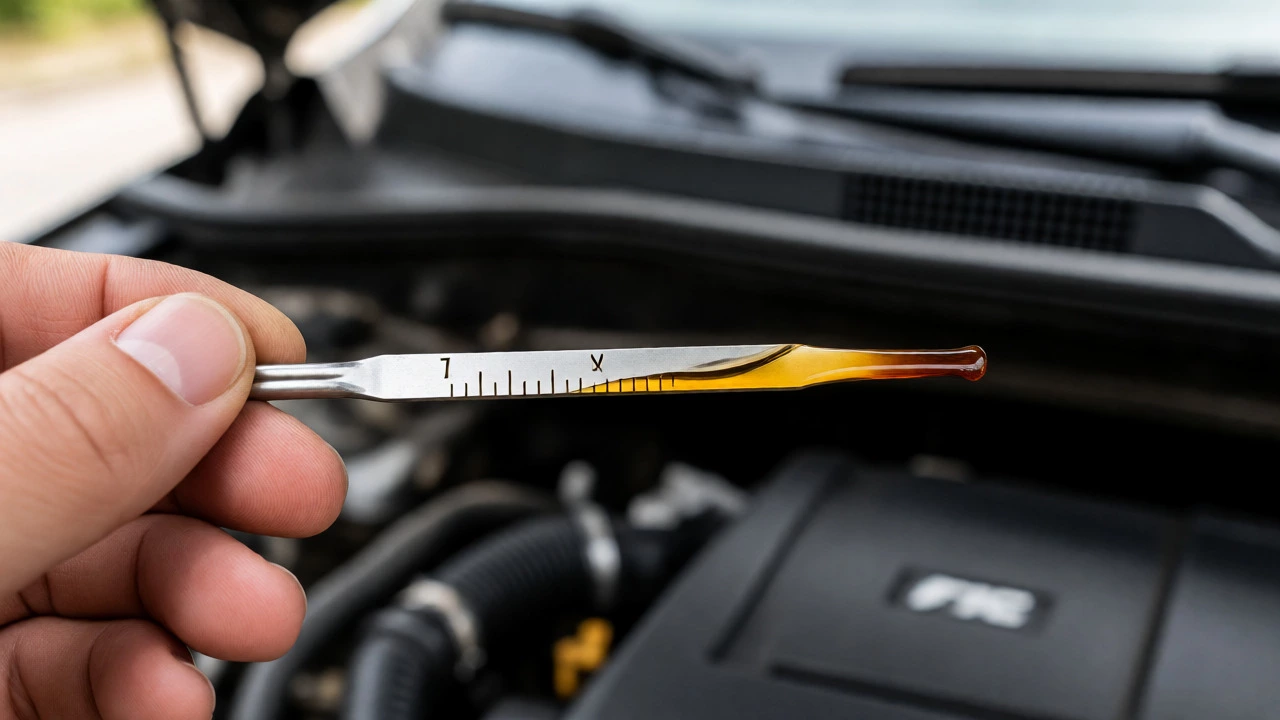
- Locate the dipstick. It usually has a yellow or orange loop handle. Pull it out completely.
- Wipe it clean. Use a rag or paper towel. You want no residue.
- Reinsert fully. Push it all the way back in until it clicks or seats firmly.
- Pull and read. Look at the tip. Most sticks have two marks: "Min" and "Max," or cross-hatched areas. If the oil film is below the lower mark, you’re low. If it’s above the upper mark, you’re overfilled.
If you don’t have a dipstick (common in newer BMWs, Audis, and Mercedes), rely on the electronic sensor via your infotainment system. These systems are generally accurate but can be fooled by recent aggressive driving or cold starts. Trust the warning light, but double-check with a manual inspection if possible.
The Golden Rule: Match the Oil Specification
This is where most DIY mistakes happen. You cannot just grab any oil from the gas station shelf. Motor oil comes in different viscosities and chemical compositions designed for specific engines.
Check your owner’s manual or the sticker under your hood. It will list a viscosity grade like 0W-20, 5W-30, or 5W-40. The first number indicates flow at cold temperatures; the second indicates thickness at operating heat. Using the wrong weight can cause poor lubrication during startup or increased friction at high speeds.
| Viscosity Grade | Typical Application | Characteristics |
|---|---|---|
| 0W-20 | Modern Japanese/Korean cars, hybrids | Very thin, maximizes fuel economy |
| 5W-30 | Most gasoline engines, older SUVs | Balanced protection and efficiency |
| 5W-40 | Turbocharged engines, European cars | Thicker at heat, handles higher stress |
| 10W-30 | Older vehicles, classic cars | Good seal conditioning for worn engines |
Beyond viscosity, pay attention to certifications. Look for API SP or SN Plus ratings on the bottle. For diesel engines, ensure it meets CK-4 standards. Mixing synthetic and conventional oils is generally fine in a pinch-they are compatible-but sticking to one type maintains consistent performance characteristics.
Step-by-Step: How to Top Up Safely
Once you’ve confirmed your level is low and bought the correct oil, here’s how to add it without making a mess.
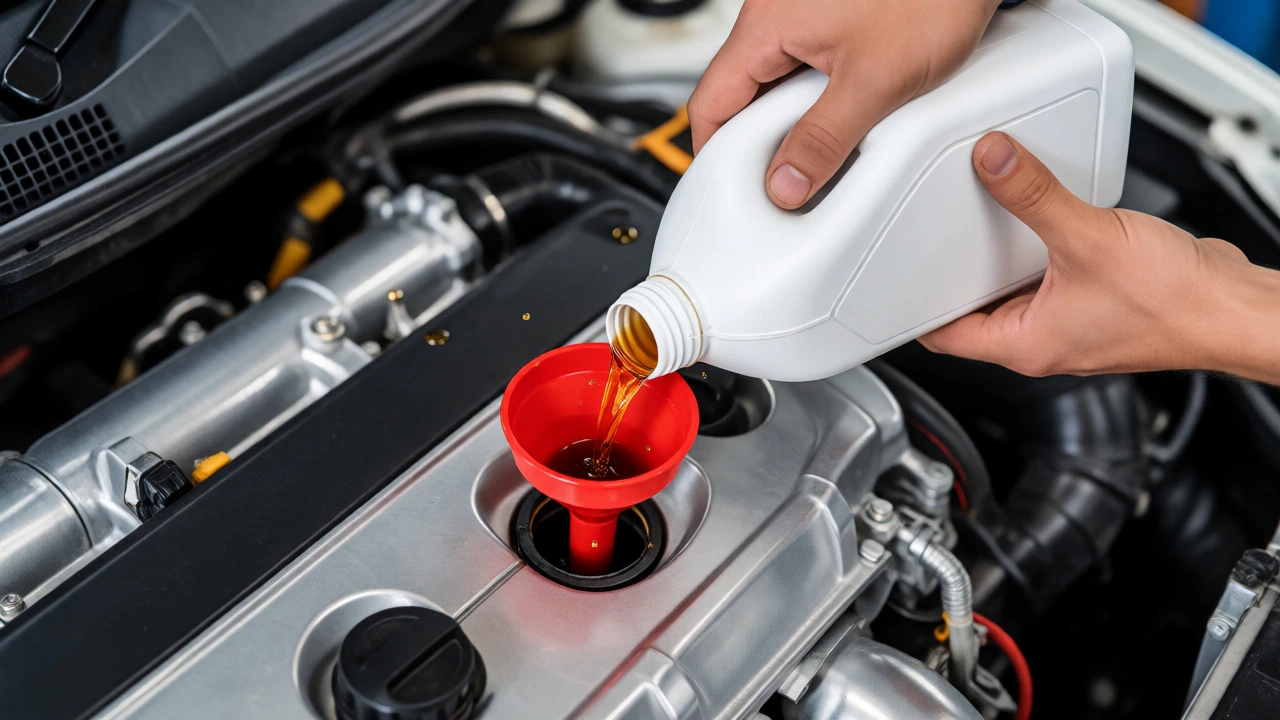
- Clean the area. Wipe dirt away from the oil filler cap before opening it. Debris falling into the engine is bad news.
- Use a funnel. Pour slowly. Spilling oil on hot exhaust manifolds causes smoke and smells terrible.
- Add small amounts. Start with half a quart (or 0.5 liters). Wait two minutes for it to settle, then recheck the dipstick.
- Avoid overfilling. This is crucial. Too much oil creates pressure inside the crankcase. This pressure can blow out seals, damage gaskets, and even force oil into the air intake, causing white smoke and potential hydro-lock issues.
- Replace the cap securely. Make sure it clicks or threads tightly to prevent leaks.
If you accidentally overfill, don’t panic. You can siphon excess oil out using a turkey baster inserted down the dipstick tube, or drive to a shop for a quick drain. Driving with significantly overfilled oil for long distances is risky, though.
When Adding Oil Isn’t Enough
Topping up is a band-aid, not a cure. If you find yourself adding oil frequently, investigate the root cause. Common culprits include:
- External Leaks: Look for dark puddles under your parked car. Valve cover gaskets and oil pan gaskets are frequent offenders.
- Internal Consumption: Blue smoke from the exhaust tailpipe often signals worn piston rings or valve stem seals letting oil into the combustion chamber.
- PCV Valve Failure: A stuck Positive Crankcase Ventilation valve can create excessive pressure, forcing oil out of seals.
If your oil looks milky or frothy on the dipstick, stop driving immediately. This indicates coolant mixing with oil, likely due to a blown head gasket. Adding more oil won’t fix this; it’s a serious repair job.
Pro Tips for Long-Term Engine Health
To keep your oil levels stable and your engine happy, adopt these habits:
- Check monthly. Don’t wait for the light. Make checking oil part of your routine when you fill up gas.
- Keep a spare. Store a small bottle of the correct oil in your trunk. It costs less than $10 and saves you from being stranded.
- Stick to service intervals. Old oil loses its additives and becomes acidic. Changing it regularly prevents sludge buildup that clogs passages and reduces lubrication.
- Warm up gently. Avoid high RPMs until the oil reaches operating temperature. Cold oil is thicker and doesn’t flow as quickly to all components.
Remember, the goal isn’t just to keep the needle in the middle-it’s to maintain the quality of the oil itself. Diluted fuel or contaminated oil performs poorly even if the level looks fine.
Can I mix different brands of motor oil?
Yes, you can mix different brands of motor oil as long as they have the same viscosity grade and meet the required specifications (e.g., both are 5W-30 API SP). Modern oils share similar base stocks and additive packages, so mixing them won't harm your engine. However, for optimal performance, it's best to stick to one brand during a full oil change cycle.
What happens if I overfill my engine oil?
Overfilling can cause several problems. Excess oil creates high pressure in the crankcase, which can blow out seals and gaskets, leading to leaks. In severe cases, the rotating crankshaft can whip the oil into a foam (aeration), reducing its ability to lubricate. Foam doesn't pump well, potentially starving bearings of oil. Always aim for the 'Max' line, never above it.
Is it okay to add oil instead of changing it?
Topping up adds volume but doesn't replace degraded oil. Over time, oil accumulates contaminants like dirt, metal particles, and acids. Simply adding fresh oil dilutes these contaminants but doesn't remove them. You still need regular oil changes to flush out debris and restore proper additive levels. Topping up is a temporary measure between scheduled services.
How much oil should I add if the light comes on?
Start with a small amount, typically 0.5 quarts (approx. 0.5 liters). Recheck the level after waiting a few minutes. Many low-oil warning lights trigger only when the level drops significantly, so you might need closer to a full quart. Always add incrementally to avoid overfilling. Refer to your owner's manual for total capacity to gauge how far off you might be.
Can I use synthetic oil if my car calls for conventional?
Generally, yes. Synthetic oils offer better protection and stability across temperature ranges. Unless your vehicle manufacturer explicitly forbids synthetic blends (rare in modern cars), switching to synthetic is usually beneficial. Just ensure the viscosity matches the recommendation. Check your warranty terms if your car is new, as some require specific certified products.