Cold Air Intake Gain Estimator
Marketing promises 15-20 HP, but real-world results vary. Use this tool to estimate what you might actually experience based on your specific setup.
You see the box at the auto shop. It promises 15 to 20 horsepower. The price tag is hefty, and the installation looks like a weekend project. But does your car actually feel faster when you turn the key? Or are you just paying for a louder engine note?
The truth about cold air intakes (CAIs) is messier than marketing brochures suggest. While they do improve airflow, the actual horsepower gain depends heavily on your specific vehicle, its age, and what else you have modified. For some drivers, it’s a game-changer. For others, it’s a placebo effect wrapped in polished aluminum.
The Physics: Why Cooler Air Equals More Power
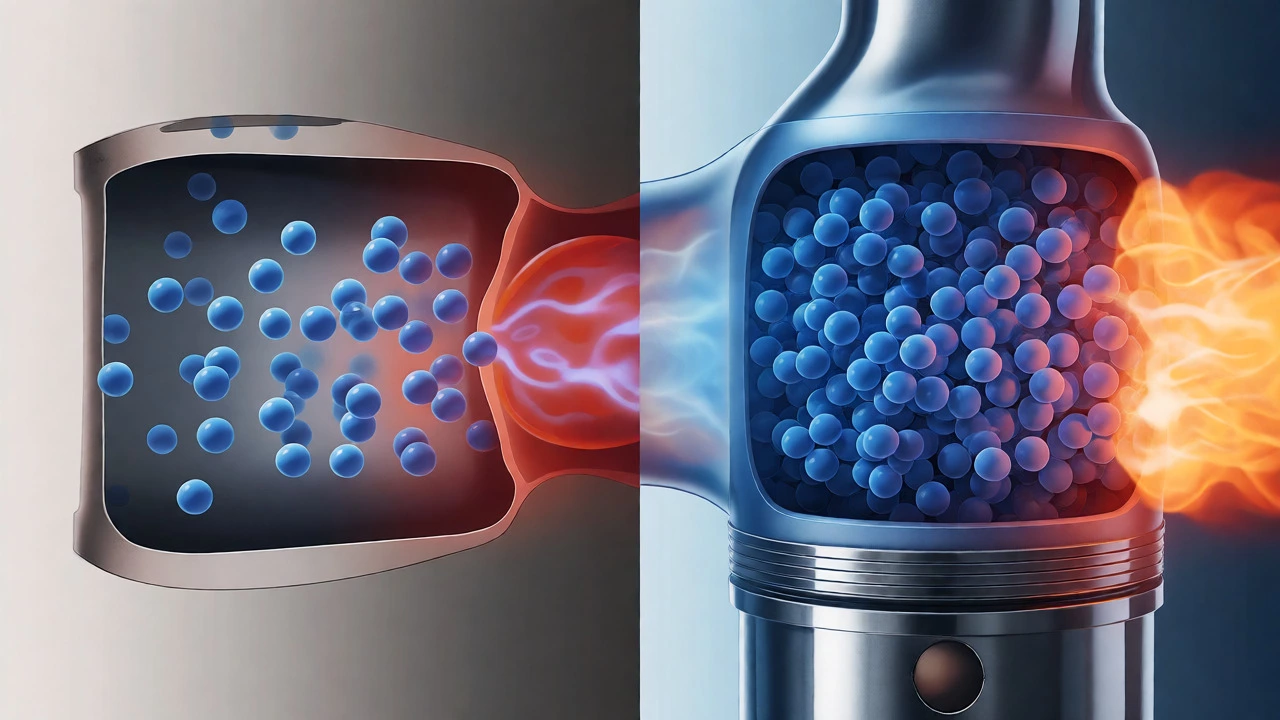
Engines are essentially air pumps. To make power, they need fuel and oxygen. The more oxygen you can pack into the cylinder, the more fuel you can burn, and the bigger the explosion. This is where density matters. Hot air is less dense than cold air because the molecules are spread further apart. If your engine sucks in hot air from under the hood-where temperatures can exceed 60°C-you’re getting fewer oxygen molecules per cubic foot of air.
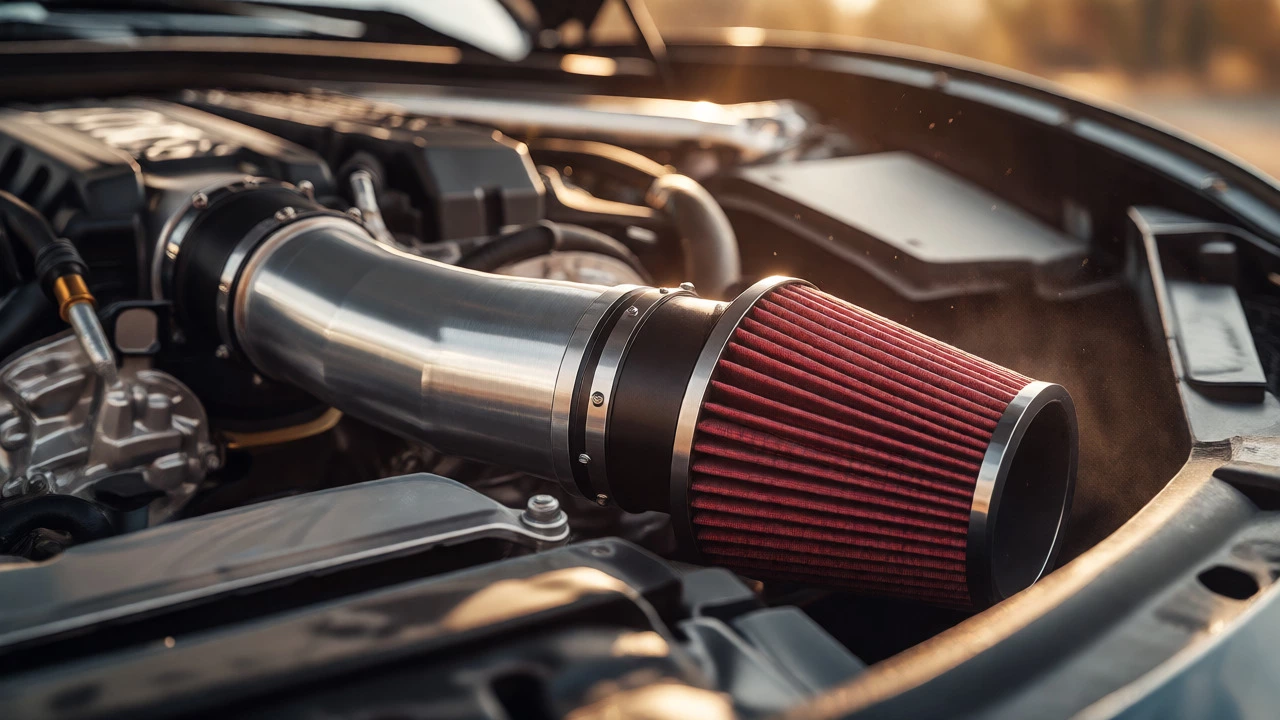
A cold air intake tries to fix this by relocating the air filter to a spot where ambient temperature is lower, such as near the front bumper or wheel well. By lowering the intake air temperature (IAT), even by just 10 degrees, you can theoretically increase oxygen density enough to boost combustion efficiency. In ideal conditions, this results in more torque and horsepower without needing to change the fuel mixture significantly.
However, there is a catch. Modern cars are incredibly efficient at managing heat. Engineers spend millions designing factory systems that balance noise, cost, and performance. Often, the factory setup already isolates the intake from excessive heat better than a cheap aftermarket kit might. If your new CAI draws air from a location that isn’t actually cooler-or worse, if it creates turbulence-it can hurt performance rather than help it.
Realistic Horsepower Gains: What to Expect
Let’s cut through the hype. Most dyno tests show that a standalone cold air intake adds between 3 and 15 horsepower on naturally aspirated engines. Turbocharged engines might see slightly higher gains, up to 20 hp, but only if the stock turbo was struggling with airflow restrictions. If you have a high-performance car like a Subaru WRX or a Ford Mustang EcoBoost, you might notice a tangible difference. On a sensible sedan like a Toyota Camry, the gain might be within the margin of error.
| Engine Type | Typical HP Gain | Torque Gain | Noticeability |
|---|---|---|---|
| Naturally Aspirated (Small) | 3-8 hp | 5-10 lb-ft | Barely noticeable |
| Naturally Aspirated (V6/V8) | 5-15 hp | 10-20 lb-ft | Slight improvement in throttle response |
| Turbocharged (Stock Tune) | 5-12 hp | 10-15 lb-ft | Improved spool time |
| Turbocharged (Remapped) | 10-20+ hp | 15-25 lb-ft | Significant when combined with tune |
Notice the last row. A cold air intake rarely unlocks its full potential alone. It works best as part of a "stage one" modification package, which usually includes an ECU remap or tune. When the computer is recalibrated to take advantage of the extra airflow, the gains become real. Without a tune, the engine’s safety parameters often ignore the extra air, leaving you with nothing but a whistling sound.

When a Cold Air Intake Is Worth It
Not every car benefits equally. You should consider buying one if you fall into these categories:
- Your car suffers from heat soak: Older vehicles or those with poor engine bay insulation often let too much heat into the intake. A CAI can mitigate this.
- You plan to modify further: If you are adding headers, a cat-back exhaust, and a tune, the CAI completes the airflow path. Removing bottlenecks before and after the engine yields compound gains.
- You want better throttle response: Even if peak horsepower doesn’t jump, the linear delivery of air can make the car feel more eager off the line. This subjective feeling often outweighs small dyno numbers.
- You enjoy the sound: Let’s be honest. Half the reason people buy CAIs is the induction roar. If that makes driving fun for you, the value is psychological and sensory, which is valid.
Conversely, skip it if you drive a modern, highly tuned daily driver like a Honda Civic RS or a Mazda3 Skyactiv. These engines use direct injection and variable valve timing to optimize airflow so precisely that a simple tube swap often yields negligible results. In some cases, poorly designed aftermarket tubes can create turbulence, reducing low-end torque.
Potential Pitfalls and Risks
It’s not all upside. Installing a cold air intake comes with risks that many enthusiasts overlook. The biggest issue is hydrolocking. Factory airboxes are positioned high and protected by body panels. Many aftermarket kits place the filter low in the bumper area. If you drive through deep puddles or heavy rain, water can get sucked directly into the engine. Since water cannot compress, this can bend connecting rods or crack pistons-a repair costing thousands versus the few hundred dollars for the intake.
Another concern is warranty voiding. While the Magnuson-Moss Warranty Act (in the US) or Australian Consumer Law protects consumers from blanket voids, dealerships may argue that a non-OEM part caused a failure. If your MAF (Mass Air Flow) sensor fails shortly after installation, expect a debate. Additionally, cheap kits use plastic tubing that cracks over time due to engine vibration and heat cycles, leading to vacuum leaks that trigger check engine lights.
Maintenance also changes. Factory paper filters are cheap and easy to replace. High-flow cotton gauze filters used in premium CAIs require cleaning and re-oiling every 15,000 to 20,000 kilometers. If you neglect this, dirt bypasses the filter and coats your MAF sensor, causing inaccurate readings and rough idling. Are you willing to commit to that maintenance schedule?
Installation Tips for Maximum Benefit
If you decide to proceed, how you install it matters as much as what you buy. Here is a quick checklist to ensure you actually get the performance you paid for:
- Seal everything: Use high-quality silicone sealant around any openings where the new intake passes through the firewall or fender liner. Any unfiltered air leaking in defeats the purpose.
- Check clearance: Ensure the filter doesn’t touch moving parts like the fan or suspension components. Vibration can damage the filter housing over time.
- Reset the ECU: After installation, disconnect the battery for 15 minutes or use a scanner to clear adaptive learning values. This forces the engine computer to relearn idle and fuel trims based on the new airflow characteristics.
- Verify the heat shield: If your kit didn’t come with one, fabricate a barrier between the intake pipe and the exhaust manifold. Radiant heat is the enemy of dense air.
Finally, test it yourself. Don’t rely on forums. Before installing, log a consistent acceleration run (e.g., 50-100 km/h in third gear). Do it three times to average out variables. After installing and resetting the ECU, repeat the process. If you don’t see a consistent improvement, you might prefer the simplicity of your stock setup.
Frequently Asked Questions
Does a cold air intake really add horsepower?
Yes, but typically only 3-15 hp on most street cars. Significant gains usually require additional modifications like an ECU tune. On some modern engines, gains may be negligible or nonexistent without other upgrades.
Can a cold air intake damage my engine?
Direct damage is rare if installed correctly. However, hydrolocking (sucking in water) can cause catastrophic engine failure if the filter is placed too low. Poor filtration or dirty filters can also damage the MAF sensor.
Is a cold air intake worth it for fuel economy?
Any fuel savings are minimal and often offset by the tendency to drive more aggressively due to improved throttle response. Real-world MPG improvements are usually within the margin of error.
Do I need a tune after installing a cold air intake?
For maximum benefit, yes. A tune adjusts fuel maps to match the increased airflow. Without it, the engine may run lean or fail to utilize the extra air efficiently, limiting performance gains.
What is the difference between a cold air intake and a short ram intake?
A cold air intake draws air from outside the engine bay (cooler). A short ram intake stays inside the engine bay but removes the restrictive factory box. Short rams are easier to install but prone to drawing hot air, reducing performance potential.