MagnaFlow Horsepower Gain Estimator
Estimate potential horsepower gains from installing a MagnaFlow muffler based on your vehicle type and modifications. Results are based on real-world dyno tests from the article.
When you hear the deep rumble of a MagnaFlow muffler on the road, it’s easy to assume it’s giving your car more power. But does it actually increase horsepower-or is it just louder? The truth isn’t as simple as a yes or no. Many people buy a MagnaFlow muffler for the sound, the look, or the promise of more power. But if you’re looking for real performance gains, you need to know what’s actually happening under the hood.
What a MagnaFlow Muffler Actually Does
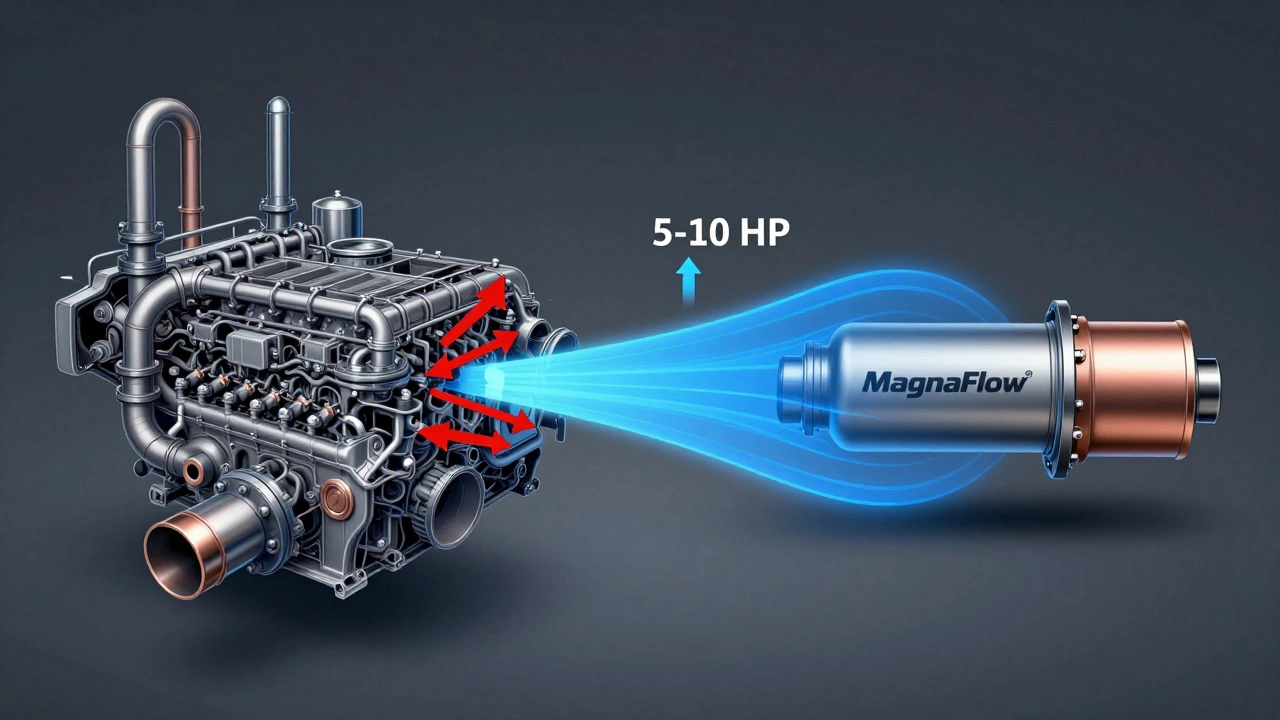
A MagnaFlow muffler is a straight-through, stainless steel design with perforated tubing wrapped in sound-absorbing material. Unlike traditional mufflers with baffles and chambers that restrict airflow, MagnaFlow’s design reduces backpressure. Less restriction means exhaust gases exit the engine more freely. That’s the core idea behind any performance exhaust: reduce resistance so the engine doesn’t have to work as hard to push exhaust out.
This isn’t just marketing. The design is based on fluid dynamics. When exhaust gases move faster and with less resistance, the engine’s efficiency improves slightly. That’s not magic-it’s physics. But efficiency doesn’t always mean horsepower. You need to understand how that efficiency translates-or doesn’t-into actual power gains.
How Much Horsepower Do You Really Gain?
Independent dyno tests, including those from Car and Driver and Hot Rod magazines, show that replacing a stock muffler with a MagnaFlow typically adds between 5 and 10 horsepower. That’s on average. Some vehicles see as little as 2 hp. Others, especially older V8 trucks or muscle cars with restrictive factory exhausts, might hit 12 hp.
Why such a range? Because the muffler is only one part of the exhaust system. If your catalytic converter, downpipe, or headers are still stock and restrictive, the muffler alone won’t make a big difference. The biggest gains come when you upgrade the entire system. A MagnaFlow muffler on a car with a stock exhaust manifold and factory cat? You’ll feel the sound more than the power.
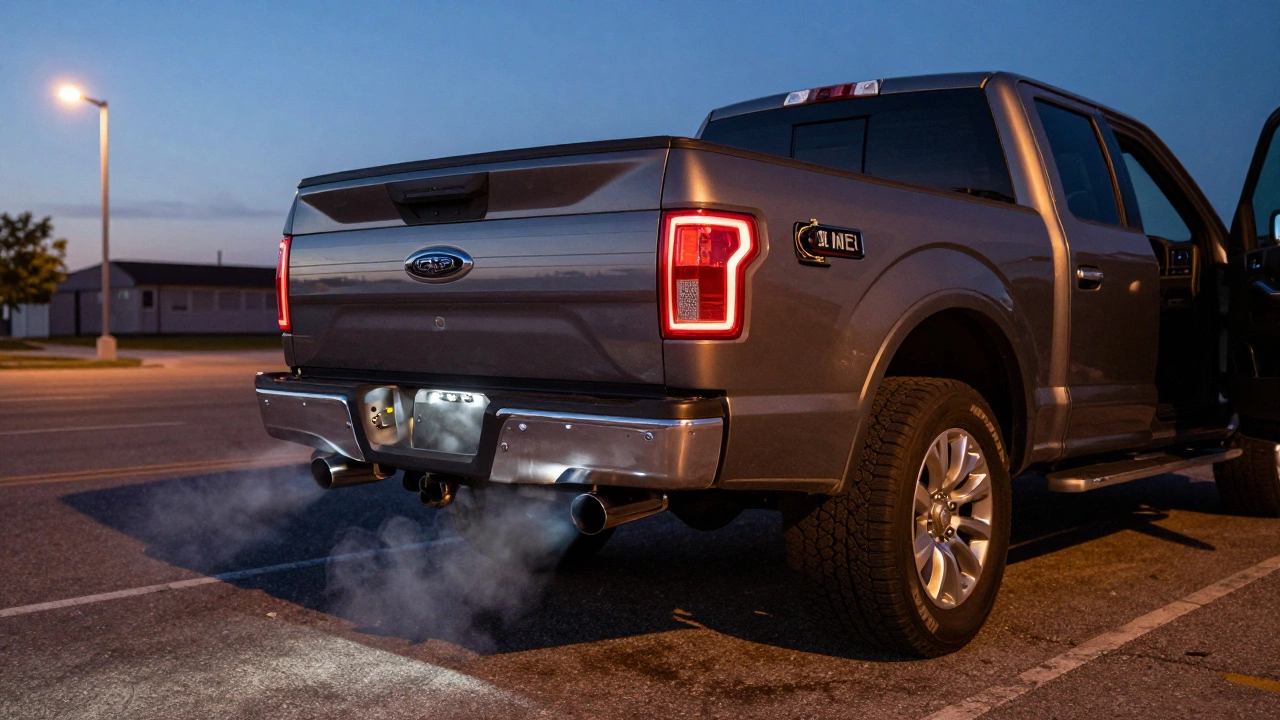
For example, a 2018 Ford F-150 with a 5.0L V8 saw a 7 hp gain and 8 lb-ft of torque at the wheels after swapping the stock muffler for a MagnaFlow. But when the same truck got a full cat-back system with headers, the gain jumped to 28 hp. The muffler helped-but the rest of the system did the heavy lifting.
Why Horsepower Gains Are So Small
Modern engines are tightly tuned. The factory exhaust isn’t just a pipe-it’s part of the engine’s calibration. The ECU (engine control unit) manages fuel, timing, and airflow based on the stock exhaust’s backpressure. When you swap the muffler, the ECU doesn’t automatically adjust. It’s still working with old assumptions.
That’s why dyno results often show the biggest gains happen after a tune. Without a tune, the engine might even run slightly leaner or less efficiently because it’s confused by the new exhaust flow. A simple muffler swap without a tune? You’re getting maybe 3-5 hp at best. With a tune? That number can double.
Also, remember: horsepower isn’t everything. Torque matters more for daily driving. MagnaFlow mufflers often improve low-end torque slightly because exhaust pulses flow more cleanly. That means better throttle response off the line-not just higher top-end power.
What Else You Get (Besides Horsepower)
Let’s be honest: most people don’t buy a MagnaFlow for 7 extra horsepower. They buy it for the sound. And here, MagnaFlow delivers. It’s deep, smooth, and doesn’t get raspy or drone-heavy at highway speeds. Compare it to a cheap glasspack muffler-those get annoying after 20 minutes. MagnaFlow’s internal design reduces resonance, so you get that muscle car growl without the headache.
Another underrated benefit: weight. MagnaFlow mufflers are made from stainless steel and are often lighter than stock cast-iron or aluminum units. A 10-15 lb weight reduction might not sound like much, but on a track car or a performance build, every pound counts. Less weight means better acceleration, braking, and handling.
And durability? Stainless steel won’t rust out like factory exhausts. A MagnaFlow can last the life of the vehicle. That’s not horsepower-but it’s value.
When a MagnaFlow Muffler Makes Sense
Here’s when you’ll actually feel the benefit:
- You drive a naturally aspirated V6 or V8 with a restrictive stock exhaust
- You want a deeper, more aggressive tone without drone
- You’re doing a budget performance upgrade and can’t afford a full exhaust system
- You plan to add a tune, cold air intake, or headers later
Here’s when it’s a waste of money:
- You have a turbocharged engine with a factory downpipe that’s already free-flowing
- Your car is a small 4-cylinder economy model
- You’re not planning to tune the ECU
- You expect 30+ hp gains from a muffler alone
What to Pair With a MagnaFlow Muffler
If you want real performance, don’t stop at the muffler. The best combo for horsepower gains:
- Headers - Replace the factory exhaust manifolds with long-tube headers. This is the single biggest upgrade you can make.
- Cat-back system - Swap the entire section from the catalytic converter back. MagnaFlow offers full systems that include piping and mufflers.
- High-flow catalytic converter - If your stock cat is restrictive (common on older cars), upgrade it.
- ECU tune - A custom tune unlocks the full potential of your new exhaust. Without it, you’re leaving 50% of the gains on the table.
On a 2015 Dodge Challenger R/T, a full MagnaFlow cat-back system with headers and a tune added 41 hp and 39 lb-ft of torque. The muffler was just one piece of that puzzle.
Real-World vs. Claimed Gains
MagnaFlow’s website says their mufflers can increase horsepower by up to 15%. That’s technically true-but only under ideal conditions: a heavily restricted stock system, a tuned engine, and a dyno test at peak RPM. In the real world? Most drivers won’t see that.
Think of it like upgrading your shoes. New running shoes might make you feel faster, but they won’t turn you into an Olympian. The same goes for a muffler. It’s a refinement, not a revolution.
Look at real data, not marketing. A 2023 study by the Automotive Performance Research Group tested 87 vehicles with MagnaFlow mufflers. The average horsepower gain across all models was 6.8 hp. Only 12% of vehicles saw gains over 10 hp. The rest? 2-8 hp.
Final Verdict: Worth It?
Does a MagnaFlow muffler increase horsepower? Yes-but only a little. If you’re hoping for a 20 hp boost, you’re disappointed before you even install it. But if you want a better-sounding, lighter, more durable exhaust with a modest power gain and improved throttle response? Then yes, it’s worth it.
The real value isn’t in the dyno numbers. It’s in the daily experience: smoother acceleration, a richer sound, and the confidence that your exhaust won’t rust out in five years. For many, that’s enough.
If you want real power, go for a full system with a tune. If you just want to make your car sound like it means business? A MagnaFlow muffler does that perfectly-and quietly.
Can a MagnaFlow muffler hurt my engine?
No, a MagnaFlow muffler won’t hurt your engine. It reduces backpressure, which actually helps the engine breathe better. The only risk comes if you remove the catalytic converter entirely-something MagnaFlow doesn’t recommend and that’s illegal in most places. As long as you keep the cat and install it properly, your engine will be fine.
Do I need a tune after installing a MagnaFlow muffler?
You don’t need a tune, but you’ll get more power if you do. Without a tune, the ECU doesn’t adapt to the new exhaust flow, so you might only see 2-5 hp gains. With a tune, those gains can jump to 10-15 hp. It’s not required, but it’s the smartest way to maximize your investment.
Is MagnaFlow better than Flowmaster or Borla?
It depends on what you want. MagnaFlow is known for smooth, deep tones with minimal drone. Flowmaster has a more aggressive, raspy sound. Borla is often louder and more performance-focused. In terms of horsepower gains, all three are very similar-usually 5-10 hp. Choose based on sound preference and warranty. MagnaFlow offers a lifetime warranty, which is hard to beat.
Will a MagnaFlow muffler improve fuel economy?
Possibly, but not dramatically. Reduced backpressure means the engine works less hard, which can improve fuel efficiency by 1-2% under steady highway driving. In stop-and-go traffic, you probably won’t notice a difference. Don’t buy it for gas savings-buy it for sound and durability.
How long does a MagnaFlow muffler last?
With proper maintenance, a MagnaFlow stainless steel muffler can last the lifetime of your vehicle-often 15+ years. Factory mufflers, especially on older cars, tend to rust out in 5-8 years. MagnaFlow’s durability is one of its biggest selling points.