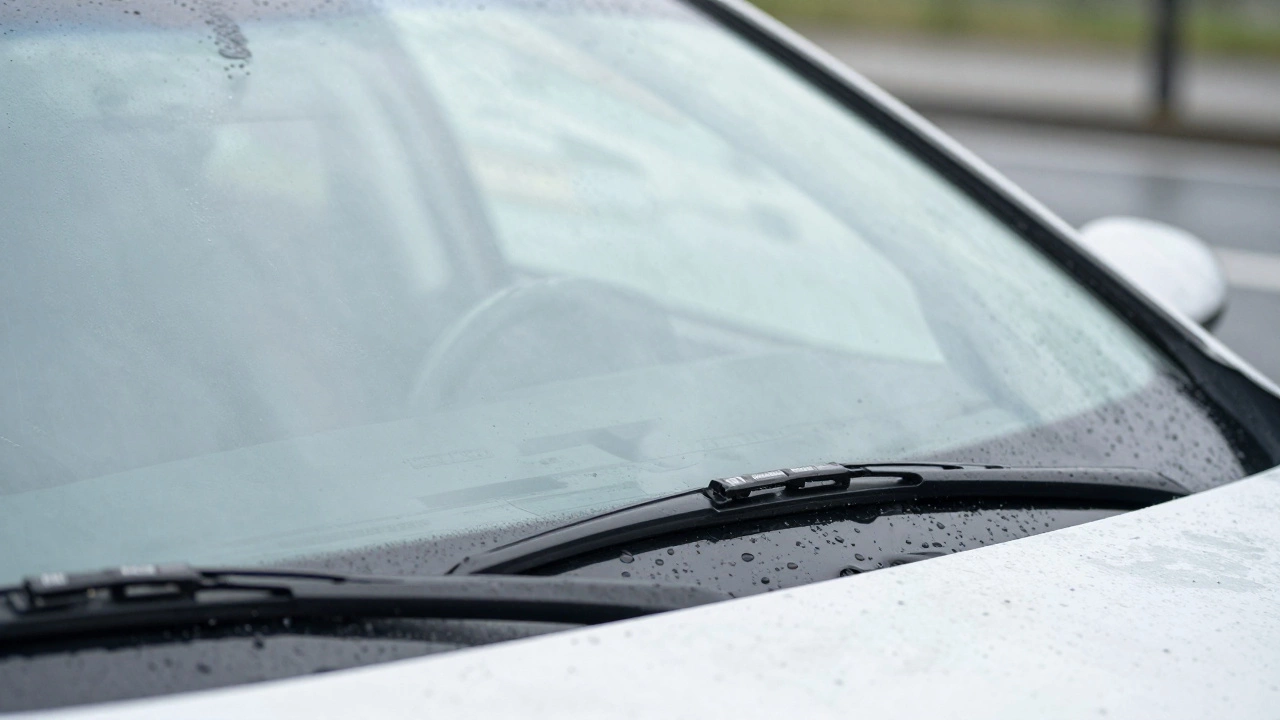
If you’ve ever heard someone in the U.S. say "windshield wipers" and wondered if they meant something different from "windscreen wipers," you’re not alone. The difference isn’t about function, design, or performance-it’s purely about language. In America, what the rest of the world calls a "windscreen wiper" is called a "windshield wiper." That’s it. No hidden mechanics, no technical upgrade, no secret variation. Just a different word for the same thing.
Why the Difference in Words?
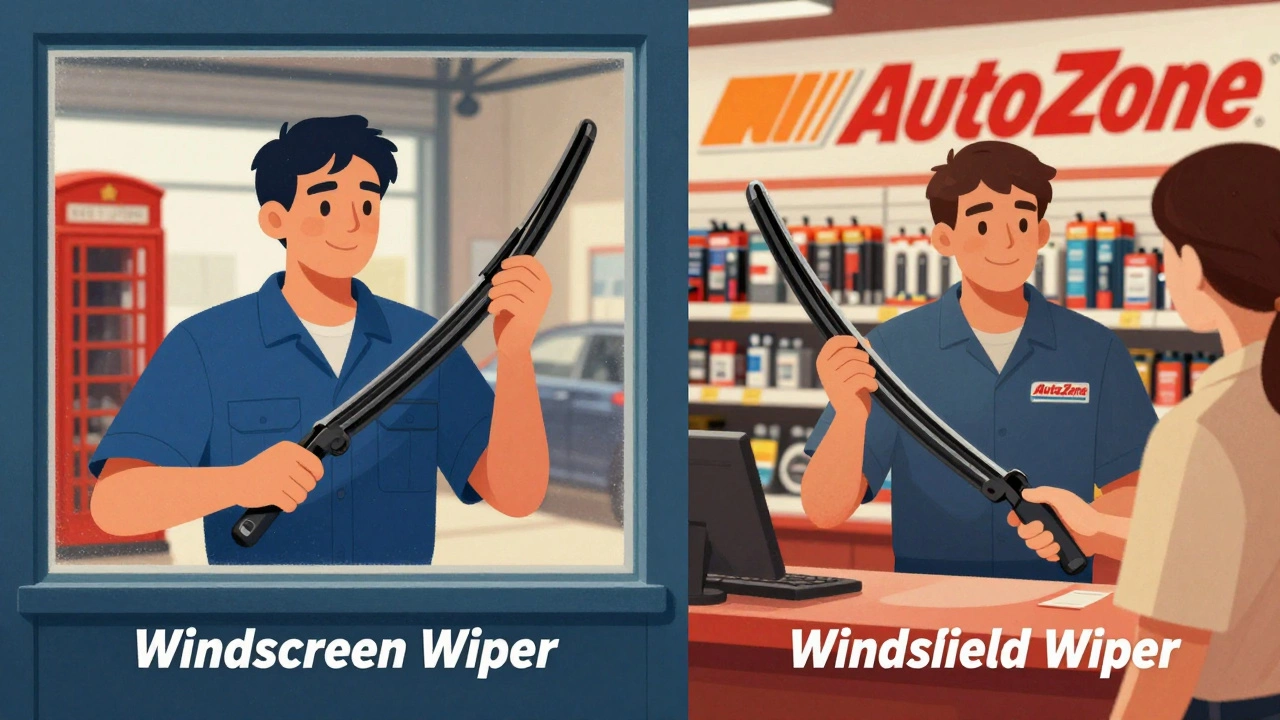
The word "windscreen" comes from British English. It literally means a screen that blocks wind-common in the UK, Australia, Canada, and many Commonwealth countries. In American English, the term "windshield" took root early in the 20th century, when cars started becoming common. The glass at the front of the car wasn’t just a screen-it was a shield against wind, debris, and weather. Over time, "windshield" became the standard term in the U.S., and the wipers that move across it naturally became "windshield wipers." You’ll hear "windshield wipers" on American TV, in car manuals, on parts websites like AutoZone or RockAuto, and even in roadside repair ads. If you walk into any U.S. auto parts store and ask for "windscreen wipers," you’ll likely get a confused look. But if you say "windshield wipers," they’ll hand you the right part without a second thought.What’s Actually Inside the Box?
The parts themselves don’t change based on the name. Whether you call them windscreen or windshield wipers, the components are identical:- Wiper blades-the rubber strip that sweeps across the glass
- Wiper arms-the metal or composite arms that hold the blades and connect to the motor
- Wiper motor-the electric motor that drives the movement
- Wiper linkage-the system of rods that transfers motion from the motor to the arms
There’s no American version of the blade, no special U.S.-only design. A Michelin Windshield Wiper Blade is the same physical part as a Michelin Windscreen Wiper Blade. The only difference is the label on the box.
How to Buy Them in the U.S.
If you’re in America and need new wipers, here’s how to find them:- Look for the words "windshield wipers" or "wiper blades" on packaging.
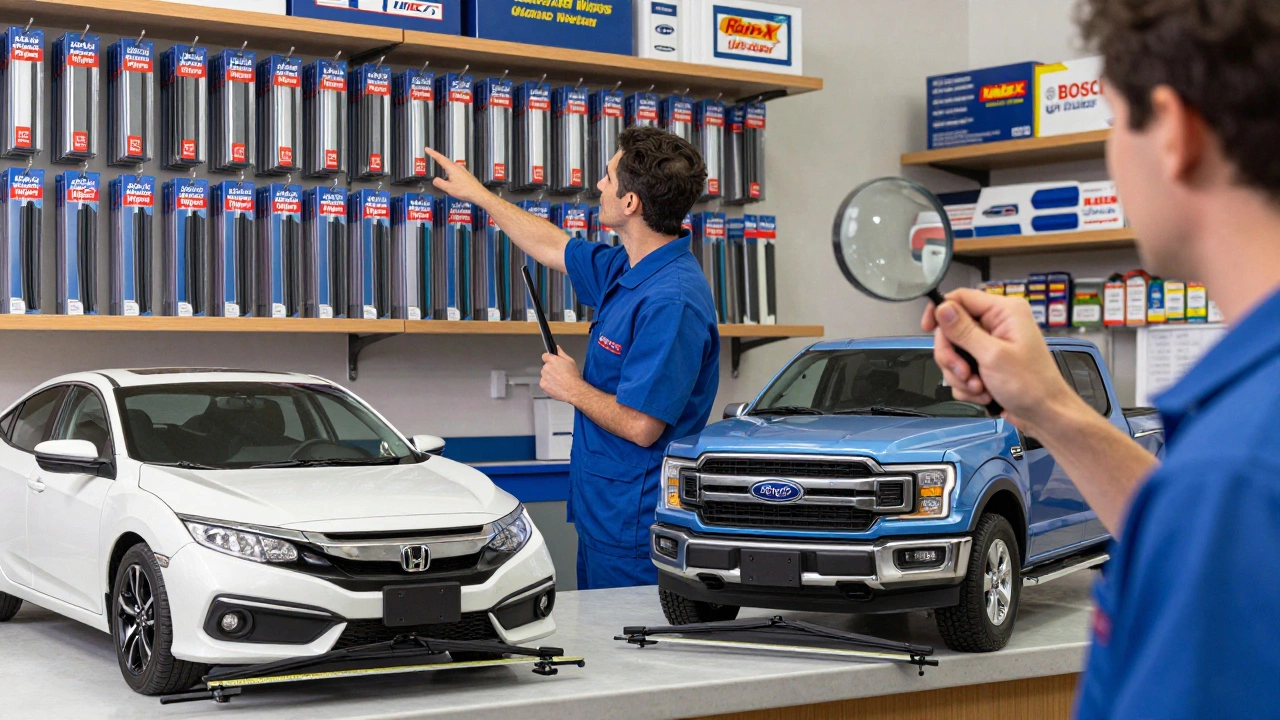
- Check your car’s make, model, and year-wiper sizes vary widely. A 2023 Honda Civic needs different blades than a 2021 Ford F-150.
- Use the part number on your old blades. Most blades have a number printed on the back.
- Visit an auto parts store and ask for "windshield wipers for [your car]."
Online retailers like Amazon, NAPA, and O’Reilly Auto Parts all use "windshield wipers" as the primary search term. Even the manufacturer websites-Bosch, Rain-X, Valeo-use "windshield" in their U.S. product listings.
Common Misconceptions
Some people think "windshield wipers" are bigger, more powerful, or made differently because of U.S. weather. That’s not true. American wipers aren’t designed for snowstorms or ice any more than British ones are. The difference in performance comes from the quality of the rubber, the frame design, and how well they’re installed-not the name.Another myth: "American wipers don’t work well in rain." In reality, wiper performance depends on blade material (silicone vs. natural rubber), blade angle, and how often they’re replaced. A $15 pair of generic wipers will streak and chatter whether you call them windscreen or windshield. A $30 Bosch Icon will clear water cleanly, no matter where you live.
What About Other Countries?
Outside the U.S. and Canada, most countries use "windscreen wipers." But even there, you’ll find "windshield wipers" used in technical manuals from global manufacturers. Companies like Denso, TRW, and Valeo produce parts for both markets and label them differently depending on the region. The same blade might be labeled "windscreen wiper" in Germany and "windshield wiper" in Texas.Canada is an interesting case. They use both terms. In English-speaking parts of Canada, "windshield" is more common, but "windscreen" still pops up in older manuals or among British immigrants. It’s a linguistic gray zone.
What Happens If You Say the Wrong Word?
If you walk into a U.S. auto shop and say "windscreen wipers," you’ll probably get a polite correction: "You mean windshield?" Then they’ll help you. No one will laugh. No one will refuse to sell you the part. It’s just a language gap. But if you’re ordering online, typing "windscreen wipers" might return zero results or show only international sellers shipping from overseas.Same goes for searching on Google. Try "windscreen wipers replacement" in the U.S.-you’ll get mostly British blogs and YouTube videos. Type "windshield wipers replacement" and you’ll get U.S.-based tutorials, step-by-step guides, and local part numbers.
How Often Should You Replace Them?
Regardless of what you call them, wipers wear out. Most manufacturers recommend replacing them every 6 to 12 months. Signs they’re done:- Streaking or smearing on the glass
- Chattering or skipping during use
- Cracked or hardened rubber
- Missing sections of the blade
Don’t wait until your visibility is poor. A bad wiper blade can turn a light rain into a dangerous situation. Studies from the Auto Care Association show that 70% of drivers don’t replace their wipers on time, and nearly 40% of accidents in wet conditions are worsened by poor wiper performance.
Final Thought: It’s All the Same Part
Windscreen wipers. Windshield wipers. Wiper blades. Rain brushes. Whatever you call them, they do one job: clear water from your view. The name doesn’t change the rubber, the arm, or the motor. It just changes how you search for it.If you’re in America, use "windshield wipers." It’s the local term. It’s what mechanics use. It’s what the parts stores list. And if you’re outside the U.S. and hear someone say "windshield," don’t think they’re wrong-just speaking a different dialect of the same language.
Are windshield wipers and windscreen wipers the same thing?
Yes. They’re the exact same part. "Windshield wipers" is the American term, while "windscreen wipers" is used in the UK, Australia, and most other countries. The design, function, and components are identical. Only the name changes based on region.
Can I use British windscreen wipers in my American car?
Absolutely. As long as the blade size, connector type, and arm fit your car, the label doesn’t matter. A Bosch windscreen wiper with the correct length and attachment style will work perfectly in a Ford or Toyota sold in the U.S. The difference is purely in naming conventions, not engineering.
Why do American car manuals use "windshield"?
American English developed its own terminology in the early 1900s when cars became widespread. "Windshield" was chosen to emphasize the glass’s protective role, while "windscreen" remained common in British English. Car manufacturers based in the U.S. (like Ford, GM, Chrysler) used local terms in their documentation, and that became the standard.
Do windshield wipers cost more in the U.S.?
No. The price depends on brand, material, and size-not the name. A set of Michelin wipers costs the same whether sold as "windshield" or "windscreen" wipers. You might pay more if you buy from a dealership, but that’s because of markup, not terminology.
Is "wiper blade" the same as "windshield wiper"?
Almost. "Wiper blade" refers only to the rubber strip that touches the glass. "Windshield wiper" usually means the entire system-blade, arm, and motor. But in casual conversation, people use them interchangeably. If you’re buying parts, check if you need just the blade (replacement) or the full assembly.