If your car hesitates to start on a cold morning, or the headlights dim when you turn on the radio, your battery might be giving up. It’s not always loud or obvious-most car batteries die quietly. By the time you’re stranded on the side of the road, it’s too late. But if you know what to look for, you can catch a failing battery weeks before it leaves you stranded.
Slow Engine Crank
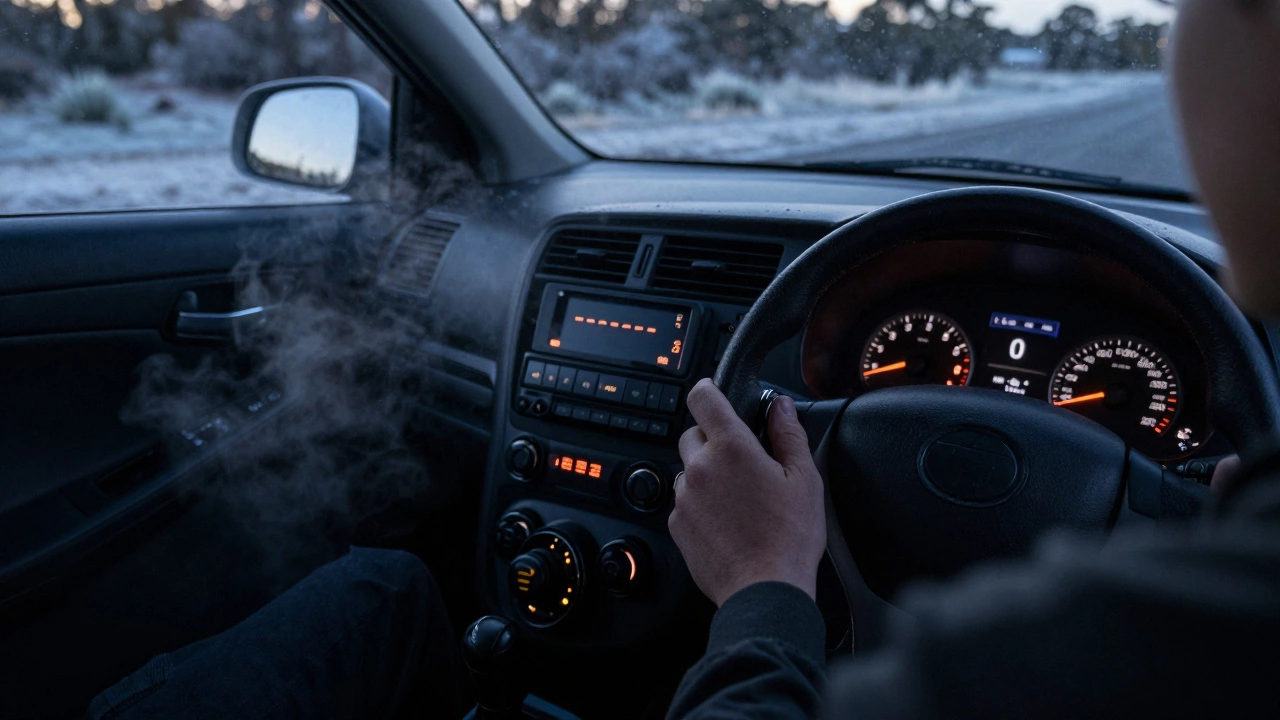
The most common sign is a slow, labored crank when you turn the key. Instead of that quick rrr-rrr-rrr sound, you hear a rrr... rrr... rrr like the engine is dragging through mud. This isn’t just a weak starter-it’s usually the battery not delivering enough power. A healthy battery should turn the engine over in under a second. If it’s taking two or three tries, especially in winter, the battery is losing its strength. In Adelaide, where winter nights drop below 5°C, a battery that’s been sitting for five years is already on borrowed time.
Dim or Flickering Lights
Your car’s electrical system runs on the battery when the engine is off. If your interior lights, dashboard, or headlights look dimmer than usual, the battery can’t hold a full charge. Try this test: turn on the headlights with the engine off. Then start the car. If the lights get noticeably brighter when the engine runs, your alternator is compensating for a weak battery. If they stay dim, the battery is likely dead or dying. I’ve seen too many people ignore this, thinking it’s just a bulb issue-only to find out their battery couldn’t even power a single dome light after a few days.
Electrical Issues That Don’t Go Away
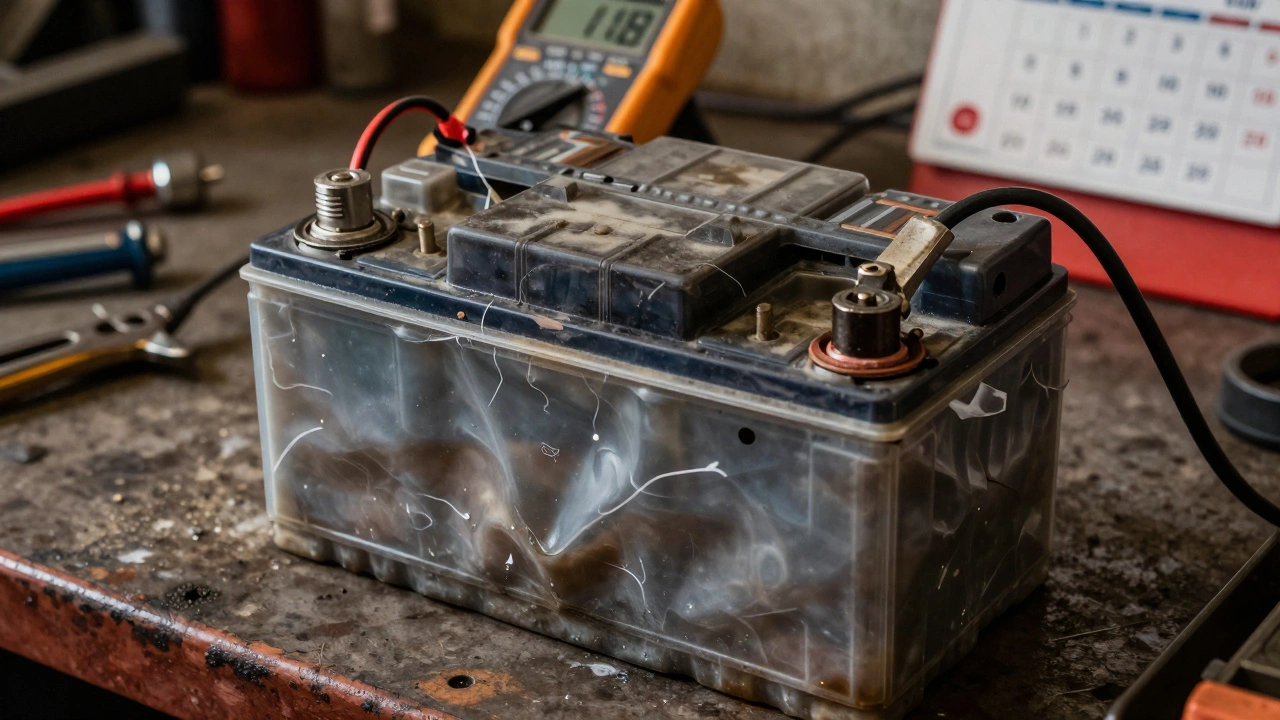
Modern cars rely on dozens of electronic systems. If your radio resets itself, the power windows move slower, or the climate control glitches, it’s not a software bug. It’s a battery that can’t maintain stable voltage. A good battery holds steady at 12.6 volts when the car is off. When it drops below 12.4 volts, you’re entering danger zone. At 12 volts or lower, you’re running on fumes. I had a customer come in last month with a 2020 Corolla that kept losing its Bluetooth pairing. Turned out the battery was at 11.8 volts. Replaced it, and the problem vanished.
Swollen or Bloated Battery Case
Look at your battery. Not the terminals-the case. If the plastic shell looks bulging, warped, or misshapen, it’s done. This happens when the battery overheats or gets overcharged, causing internal pressure to build up. It’s not just a sign of failure-it’s a safety risk. A swollen battery can leak acid or even rupture. I’ve seen this happen twice in Adelaide summers when cars sat in direct sun for hours. If your battery case looks like it’s been sat on, don’t wait. Replace it now.
Old Age-It’s Not Just a Number
Most car batteries last between three and five years. After that, their ability to hold a charge drops sharply. Even if your battery looks fine, if it’s been in your car since 2021, you’re in the danger zone. Cold weather hits batteries hardest, and Australian winters are no joke. The chemical reactions inside the battery slow down, and older batteries just can’t keep up. I’ve pulled batteries out of cars that still passed a quick test at the shop-but failed under real-world load. That’s why I always ask: “When was this battery installed?” If they don’t know, it’s probably time.
Corrosion on the Terminals
A little white or green crust around the battery posts is common. But thick, crusty buildup? That’s a red flag. Corrosion forms when battery acid vapor escapes and reacts with metal. It doesn’t kill the battery-but it blocks the flow of electricity. If you can’t clean it off with a wire brush and baking soda solution, the battery is likely leaking or venting too much. That means internal damage. I’ve replaced batteries where the corrosion had eaten through the terminal clamps. No amount of cleaning fixes that.
Check the Battery Age Code
Every battery has a date code stamped on the side. It’s usually a letter and a number. The letter stands for the month (A = January, B = February, up to L = December). The number is the year. So if you see D25, that’s April 2025. If your battery is older than 3 years, start watching for the other signs. If it’s 4 or 5 years old, don’t wait for it to fail. Get it tested.
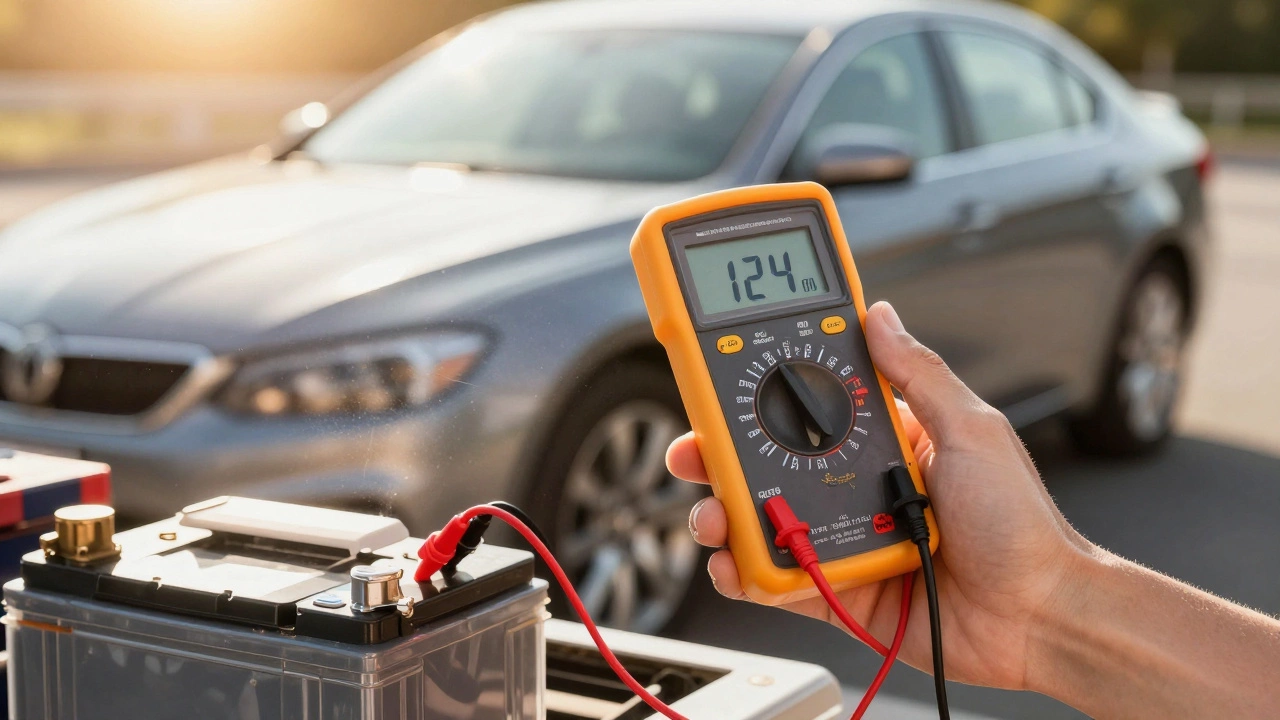
How to Test It Yourself
You don’t need a mechanic to check your battery. A basic digital multimeter costs under $30 and does the job. Set it to DC voltage (20V range). Touch the red probe to the positive terminal, black to negative. Engine off. A reading of 12.6V or higher? Perfect. 12.4V? Okay, but keep an eye on it. 12.2V or lower? It’s weak. Now start the car. The voltage should jump to 13.7-14.7V. If it stays below 13V, your alternator isn’t charging properly. If it drops below 10V while cranking, the battery can’t handle the load. That’s your cue to replace it.
What to Do Next
If you’ve noticed even one of these signs, get your battery tested. Most auto parts stores-Repco, Supercheap, Autobarn-offer free testing. They’ll check voltage, cold cranking amps, and state of health. Don’t assume it’s the battery. Sometimes it’s a bad alternator, a parasitic drain, or a loose cable. But if the battery is old and weak, replacing it is the cheapest fix you’ll make all year. A new battery costs between $120 and $250, depending on size and brand. It’s not cheap-but towing fees and rental car charges are worse.
Prevention Tips
- Drive your car at least 20 minutes once a week, especially if you’re not using it daily.
- Keep terminals clean and tight. Use petroleum jelly on posts after cleaning to slow corrosion.
- Turn off all electronics before shutting off the engine.
- If you’re storing your car for weeks, use a smart trickle charger.
Car batteries don’t fail overnight. They fade. And if you ignore the quiet signs, you’ll pay for it in time, money, and stress. Don’t wait for the car to refuse to start. Check it now. Replace it before it’s too late.
Can a car battery die suddenly without warning?
Yes, but it’s rare. Most batteries show warning signs for weeks or months before failing completely. Sudden death usually happens when the battery is already weak and gets hit with extreme cold, a long period of inactivity, or a charging system failure. If your battery is over four years old and you’ve ignored dim lights or slow cranking, it’s more likely to fail without warning. That’s why regular checks matter.
Does leaving my car idle for long periods kill the battery?
Absolutely. Modern cars have computers and sensors that draw small amounts of power even when off. If you leave your car parked for more than two weeks without driving it, that constant drain can deplete the battery. In Adelaide, where many people keep second cars for weekend use, this is a common cause of dead batteries. The fix? Drive it for 30 minutes once a week, or use a solar trickle charger.
Is it okay to use a used or refurbished battery?
Generally, no. Refurbished batteries are often just old batteries recharged and resold. Their internal plates are already degraded, and they won’t last more than a year-even if they seem fine at first. Used batteries from wreckers are risky too. You have no way of knowing how long they’ve been sitting or how many deep discharges they’ve taken. Always buy a new battery from a reputable brand. The savings aren’t worth the risk.
Do I need a specific type of battery for my car?
Yes. Batteries are sized by group size (physical dimensions), cold cranking amps (CCA), and reserve capacity (RC). Using the wrong size can cause fit issues or damage to the battery tray. Too low CCA means poor starting in cold weather. Always check your owner’s manual or ask a parts store to match the OEM specs. For Australian conditions, look for a battery with at least 500 CCA, even if your car’s manual says 400.
Why do car batteries fail faster in summer than winter?
It’s counterintuitive, but heat kills batteries faster than cold. High temperatures speed up the chemical reactions inside the battery, which causes the internal plates to corrode and the electrolyte to evaporate. In Adelaide, where summer temps regularly hit 40°C, a battery’s lifespan can drop by 50% if it’s exposed to direct sunlight under the hood. That’s why many premium batteries now come with heat shields. If your battery is under the hood and your car sits in the sun, consider a battery with better thermal protection.