Clutch Health Diagnostic Tool
Is Your Clutch Failing?
Answer these questions to assess your clutch's health and get personalized recommendations
There is nothing quite as frustrating as pressing the gas pedal and watching your tachometer climb while your speed stays exactly where it is. You’re not broken; your car is just telling you that the connection between the engine and the wheels has slipped. Literally.
If you drive a manual transmission vehicle, the clutch kit is the unsung hero that allows you to change gears smoothly. It’s a wear-and-tear component, much like brake pads or tires. Eventually, it wears out. The problem is that it rarely fails all at once. Instead, it gives you warning signs for weeks or even months before it completely quits on you.
Ignoring these signs doesn’t just make driving annoying; it can lead to expensive damage to your transmission or flywheel. So, how do you know if it’s time to replace your clutch kit? Let’s break down the seven most common symptoms, what they mean, and what you should do about them.
1. The Engine Revs, But Speed Doesn’t Match (Slipping)
This is the classic sign of a dying clutch. Imagine you’re cruising in third gear at 60 km/h. You press the accelerator to overtake a car. Normally, the engine noise rises slightly, and the car speeds up. With a worn clutch, the engine roars louder and the RPMs shoot up, but the car feels like it’s hitting a wall. You’re losing power because the clutch disc can no longer grip the flywheel firmly enough to transfer all the engine’s torque to the gearbox.
Clutch slippage usually happens under load-when you’re accelerating hard, going uphill, or towing something heavy. If this only happens when the car is brand new and cold, it might be a different issue. But if it persists after the car warms up, your friction material is likely gone.
2. A High or Spongy Clutch Pedal
Pull your foot off the clutch pedal while stopped. Where does it rest? In a healthy car, the pedal sits relatively low. If you notice your left foot resting higher up than usual, or if the pedal feels soft and spongy rather than firm, you have a problem.
The clutch pedal height is determined by the thickness of the clutch disc. As the friction material wears down, the disc gets thinner. This changes the geometry of the hydraulic system, causing the pedal to sit higher. A spongy feel often points to air in the hydraulic lines or a leaking master/slave cylinder. While a leak isn’t strictly a "clutch kit" failure, mechanics almost always recommend replacing the entire kit-including the release bearing and pressure plate-at the same time to avoid paying for labor twice in a few months.
3. Difficulty Shifting Gears (Grinding)
If shifting into second or third gear results in a loud grinding noise, or if the gear lever fights against you, your clutch might not be disengaging fully. When you press the pedal, the clutch should separate the engine from the transmission completely. If it doesn’t, the gears are still spinning at different speeds, causing them to clash.
This is often caused by a faulty release bearing (also known as a throw-out bearing) or a warped pressure plate. Sometimes, it’s simply that the hydraulic fluid level is low. Check your reservoir first. If the fluid is full and the grinding continues, the internal components of your clutch assembly are likely compromised.
4. Unusual Noises When Pressing the Pedal
Listen closely next time you press the clutch. Do you hear a squeaking, chirping, or rumbling sound? These noises often come from the release bearing. This bearing slides back and forth on the transmission input shaft every time you use the clutch. Over time, the lubricant dries out, and metal rubs against metal.
If the noise goes away when you let go of the pedal, it’s almost certainly the bearing. If the noise persists regardless of pedal position, it could be the pilot bearing in the crankshaft or an issue with the transmission itself. Since the release bearing is part of a standard clutch repair kit, replacing the whole unit fixes this annoyance permanently.
5. Vibrations When Taking Off
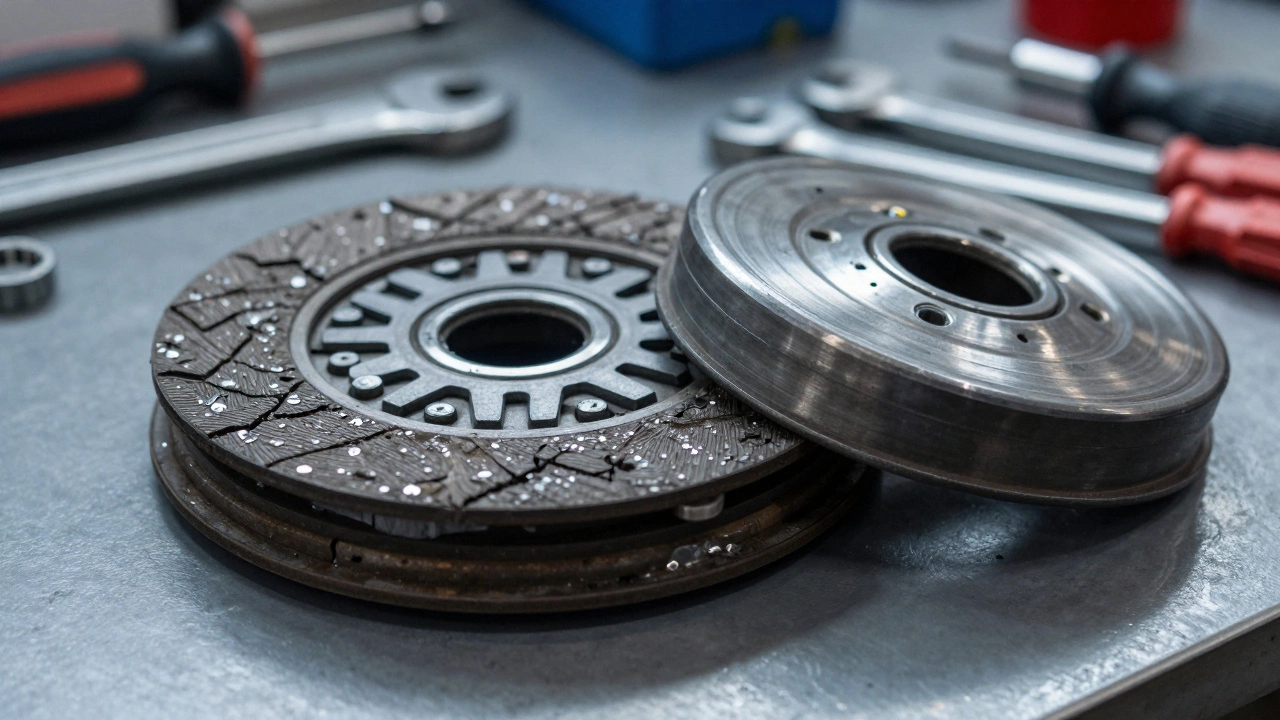
Does your car shudder or vibrate violently when you try to pull away from a stoplight? It feels like you’re riding a lawnmower instead of a car. This vibration usually indicates a damaged or contaminated clutch disc. Oil leaks from the rear main seal can soak the friction material, causing it to grab unevenly. Alternatively, the diaphragm spring in the pressure plate may be fatigued or cracked.
This symptom is dangerous because it puts extra stress on the transmission mounts and the drivetrain. Don’t ignore the shakes. They won’t get better on their own.
6. The Smell of Burning Friction Material
Have you ever smelled burning brakes? Now imagine that smell coming from underneath the dashboard. That acrid, chemical odor is burnt clutch. It happens when you ride the clutch too long (resting your foot on the pedal while driving) or when you slip the clutch excessively during aggressive acceleration.
While one instance of smelling smoke might just mean you were rough on the car, a persistent burning smell means the friction lining is degrading rapidly. The heat generated by the slippage cooks the resins holding the friction material together, turning your clutch into a slippery mess.
7. Stiff or Hard-to-Press Pedal
Sometimes the opposite of a spongy pedal occurs: the pedal becomes rock hard. You have to stomp on it just to engage first gear. This is often due to corrosion in the hydraulic system or a failing slave cylinder that has seized up. In older cars, it can also be caused by rusted linkage cables. While this might seem like a minor inconvenience, a stiff pedal prevents the clutch from disengaging properly, leading to the gear grinding mentioned earlier.
| Symptom | Likely Culprit | Urgency |
|---|---|---|
| High RPMs, low speed | Worn clutch disc | High - Risk of total failure |
| Squealing on pedal press | Release bearing | Medium - Will fail soon |
| Grinding gears | Pressure plate / Hydraulics | High - Transmission damage risk |
| Burning smell | Overheated friction material | Medium - Stop abusing the pedal |
| Vibration on take-off | Contaminated or warped disc | High - Drivetrain stress |
Should You Replace Just the Disc or the Whole Kit?
Here is a question many drivers ask: "Can’t I just replace the clutch disc to save money?" Technically, yes. Practically, no.
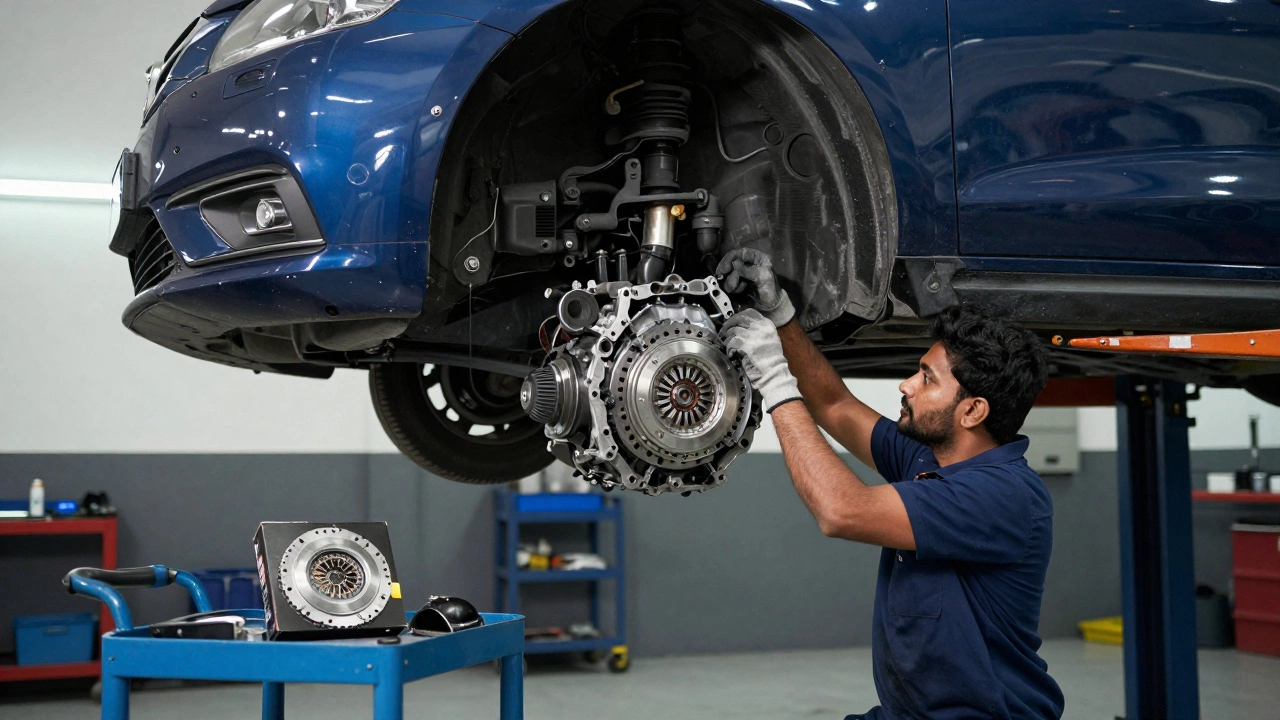
A complete clutch kit includes the clutch disc, the pressure plate, and the release bearing. The reason mechanics insist on replacing all three is simple economics. The labor cost to remove the transmission is high-often several hundred dollars. If you replace only the disc and the old pressure plate seizes up six months later, you pay that same labor bill again. Replacing the entire kit ensures that all mating surfaces are fresh and compatible. It’s a one-time fix that lasts for years.
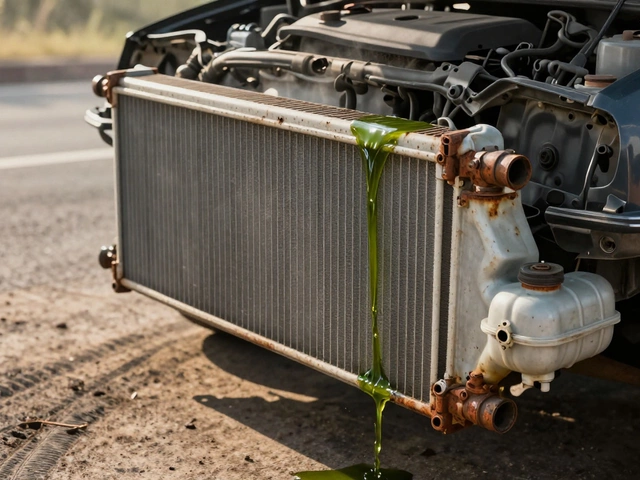
In Adelaide, where we see a mix of hot summers and dusty roads, keeping your cooling system efficient helps prolong clutch life. Overheating engines transfer excess heat to the transmission housing, which bakes the clutch components faster than normal.
How Long Does a Clutch Last?
There is no mileage guarantee for clutches. One driver might get 200,000 kilometers out of theirs by driving gently and avoiding traffic jams. Another might burn through a clutch in 40,000 kilometers by riding the pedal and launching aggressively from lights. Your driving style is the single biggest factor in clutch longevity.
City driving with constant stop-start traffic wears clutches faster than highway cruising. If you live in the heart of Adelaide CBD and spend hours in gridlock, expect to replace your clutch sooner than if you commute from the suburbs on open roads.
What Happens If You Ignore It?
If you keep driving with a slipping clutch, you will eventually reach a point where the car cannot move forward at all. The disc will wear down to its steel core, which can then grind against the flywheel. This damages the flywheel surface, meaning you’ll need a resurfaced or replaced flywheel on top of the new clutch kit. That adds significant cost to the repair. In severe cases, metal shards from the destroyed disc can enter the transmission, requiring a full rebuild. Don’t wait until you’re stranded on the side of the road.
How much does it cost to replace a clutch kit in Australia?
The cost varies widely depending on the vehicle. For a standard family sedan, parts might cost between $300 and $600 AUD. Labor typically ranges from $800 to $1,500 AUD because removing the transmission is labor-intensive. Performance cars or trucks with dual-mass flywheels can exceed $2,500 AUD for the complete job.
Can I drive my car to the mechanic with a slipping clutch?
You can, but be cautious. Avoid heavy acceleration and steep hills. Drive gently to prevent further damage to the flywheel. If the clutch slips severely, you may not be able to accelerate out of intersections safely. Towing is safer if the slip is extreme.
Does changing the clutch fluid help?
Only if the issue is hydraulic. Old brake fluid absorbs moisture, which can corrode the master and slave cylinders. Flushing the fluid might restore pedal feel if there are no leaks. However, fluid changes will not fix a worn clutch disc or a bad release bearing.
How long does clutch replacement take?
Most mechanics quote 4 to 8 hours of labor. Front-wheel-drive cars are generally quicker to service than rear-wheel-drive vehicles because the transmission removal process is more complex in RWD layouts. Plan to leave your car at the shop for a full day.
Is it worth repairing an old car's clutch?
It depends on the car’s value and condition. If the car is reliable and worth more than the repair cost, it’s usually worth fixing. A new clutch can add another 100,000+ kilometers of life. If the car has other major issues like rust or engine trouble, the investment might not make sense.