Suspension Problem Diagnostic Tool
Select all symptoms you're experiencing with your vehicle. The tool will analyze them and provide likely causes.
0 symptoms selected
Diagnostic Results
Likely Components Affected:
Recommended Actions:
Estimated Repair Cost Range:
Your car feels like it’s driving on a bumpy road even when the pavement is smooth. You hear a strange clunking noise every time you turn a corner. Or maybe your vehicle pulls slightly to one side while cruising down the highway. These are not just minor annoyances-they are warning signs that your suspension system is the network of springs, shocks, and linkages that connects your wheels to the chassis, ensuring stability, comfort, and control. When this system fails, safety drops quickly.
Troubleshooting suspension issues doesn’t require a degree in engineering, but it does require a systematic approach. Most drivers ignore these symptoms until they become dangerous or expensive. By learning how to identify common faults early, you can save money on repairs and avoid accidents caused by loss of control.
Quick Summary / Key Takeaways
- Listen for noises: Clunking, squeaking, or rattling sounds often point to worn bushings, ball joints, or struts.
- Check tire wear: Uneven or cupped tires indicate alignment issues or failing shocks.
- Perform the bounce test: If your car oscillates more than once after pushing down on a corner, your dampers need replacement.
- Inspect visually: Look for leaking fluid on shock absorbers or cracked rubber components.
- Don’t delay: Ignoring suspension problems leads to accelerated wear on tires, brakes, and steering systems.
Understanding Your Vehicle’s Suspension Components
Before diagnosing specific problems, you need to know what parts make up your suspension. The system consists of several key components working together to absorb road impacts and keep your tires planted on the ground.
| Component | Function | Common Failure Signs |
|---|---|---|
| Shock Absorbers | Control spring movement and reduce bouncing | Fluid leaks, excessive body roll, poor handling |
| Struts | Combine shock absorber and structural support | Noisy operation, uneven tire wear, alignment drift |
| Ball Joints | Connect control arms to steering knuckles | Clunking noises, loose steering, vibration |
| Control Arm Bushings | Allow flexible movement between arm and frame | Squeaking, cracking rubber, wandering steering |
| Springs (Coil or Leaf) | Support vehicle weight and absorb bumps | Sagging ride height, bottoming out over potholes |
Each part plays a distinct role. For example, shock absorbers don’t carry the weight of the car-that’s the job of the springs. Instead, shocks manage how fast the springs compress and rebound. Without proper damping, your car will bounce uncontrollably after hitting a bump. This isn’t just uncomfortable; it reduces tire contact with the road, increasing stopping distances and the risk of skidding.
Identifying Common Symptoms of Suspension Problems
The best way to troubleshoot suspension issues is to pay attention to changes in how your car behaves. Here are the most frequent indicators that something is wrong:
- Excessive Bouncing: After going over a speed bump or dip, does your car continue to bounce up and down? Healthy dampers should stop oscillation within one cycle. Multiple bounces mean your shock absorbers or struts are worn out.
- Nose Diving During Braking: When you brake hard, does the front end dip sharply? This suggests weak front shocks or broken spring coils. It also shifts weight forward, reducing rear traction and making emergency stops less effective.
- Body Roll in Corners: If your car leans heavily during turns, especially at moderate speeds, your stabilizer bar links or sway bar bushings may be failing. This compromises cornering stability and increases rollover risk in SUVs and trucks.
- Uneven Tire Wear: Check your tires monthly. Cupping (dips around the tread edge) usually points to bad shocks. Feathering (smooth on one side, rough on the other) indicates alignment issues stemming from worn control arms or tie rods.
- Noises Over Rough Roads: Clunks suggest loose ball joints or strut mounts. Squeaks often come from dried-out bushings. Rattles might mean a missing cotter pin or loose mounting hardware.
These symptoms rarely appear overnight. They develop gradually as components degrade. That’s why regular inspection matters-catching a problem early prevents cascading damage to other systems.

Step-by-Step Diagnostic Process
You don’t need a lift or professional tools to perform basic diagnostics. Start with simple observations before moving to hands-on checks.
1. Visual Inspection
Park your car on level ground. Walk around and look for obvious signs of failure:
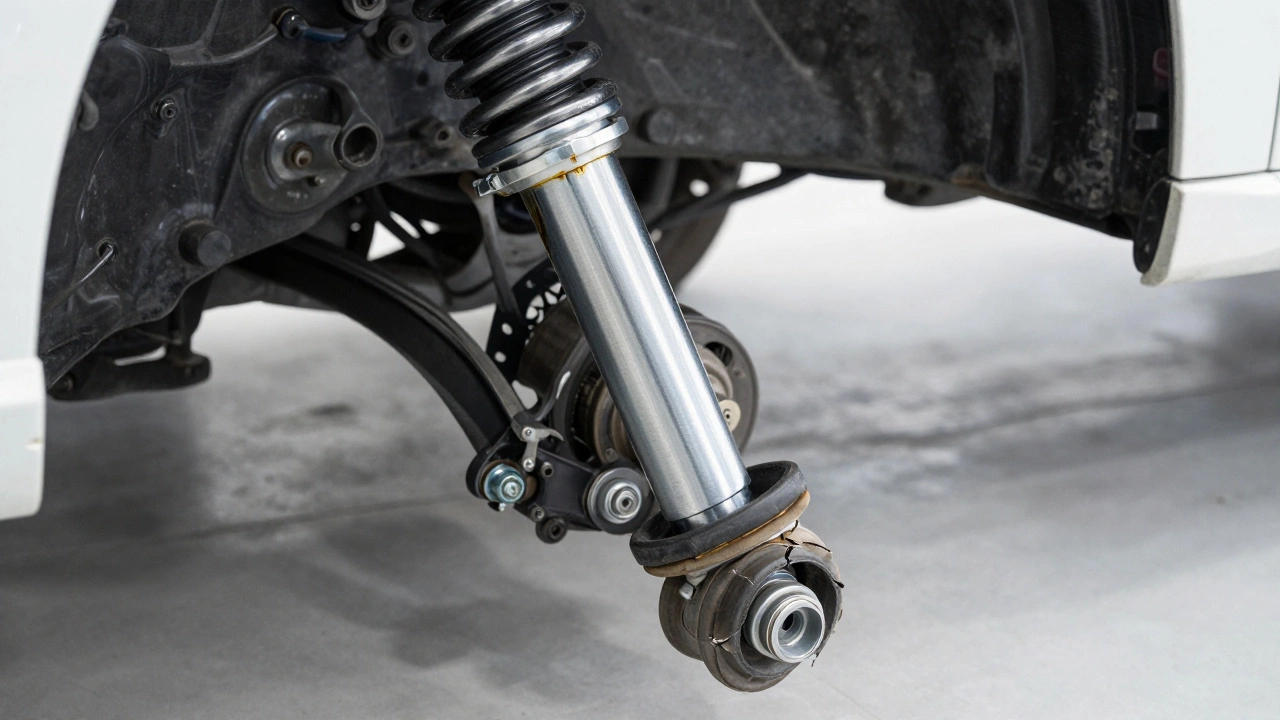
- Leaking Fluid: Examine the outer tubes of your shock absorbers and struts. Any oily residue means internal seals have failed. Replace immediately-leaking units offer zero damping.
- Damaged Rubber: Inspect bushings, mounts, and boot covers. Cracks, tears, or hardened rubber lose flexibility and cause metal-to-metal contact, leading to premature wear.
- Loose Hardware: Tighten any visible bolts connecting control arms, sway bars, or subframes. Loose connections create play in the suspension geometry.
2. The Bounce Test
This quick check reveals whether your dampers still work. Push down firmly on each corner of your vehicle four times, then release. Watch how many times it rebounds:
- One bounce back: Normal. Your shocks are doing their job.
- Two or more bounces: Problematic. The damper isn’t controlling spring energy effectively.
3. Steering Feedback Check
Drive slowly over a series of small bumps or expansion joints. Pay attention to what you feel through the wheel:
- Vibration: Could indicate unbalanced wheels, bent rims, or worn CV joints-but also possibly loose wheel bearings or bad ball joints.
- Looseness: If the steering feels vague or requires constant correction, suspect worn tie rod ends or inner rack bushings.
- Hardness: Stiff steering combined with poor responsiveness may signal power steering fluid loss or pump failure, though this affects steering rather than suspension directly.
4. Alignment Verification
Even if your suspension parts aren’t visibly damaged, misalignment causes abnormal wear and handling issues. Have your camber, toe, and caster angles checked annually-or sooner if you notice pulling or crooked steering wheel position.
- Camber: Angle of tire tilt inward/outward. Incorrect camber wears one side of the tire faster.
- Toe: Direction tires point relative to centerline. Toe errors cause rapid feathering wear.
- Caster: Forward/backward tilt of steering axis. Affects straight-line stability and returnability.
When to Seek Professional Help
While many initial diagnostics can be done at home, some tasks require specialized equipment and expertise. Consider visiting a mechanic if:
- You suspect internal strut cartridge failure (requires disassembly).
- Steering remains loose despite tightening all accessible bolts.
- Tire wear patterns persist after alignment correction.
- Your vehicle has air suspension or adaptive damping systems needing diagnostic software.
Preventive Maintenance Tips
Avoiding costly repairs starts with proactive care. Follow these practices to extend suspension life:
- Inspect Every 6 Months: Include suspension checks alongside oil changes and tire rotations.
- Avoid Overloading: Carrying heavy loads regularly stresses springs and shocks beyond design limits.
- Slow Down on Bad Roads: Speeding over potholes multiplies force transmitted to suspension components.
- Lubricate Where Applicable: Some older models have grease fittings on ball joints and control arms. Greasing them extends service intervals significantly.
- Replace in Pairs: Always install new shocks or struts on both sides of an axle to maintain balanced performance.
Frequently Asked Questions
How much does it cost to fix suspension issues?
Costs vary widely depending on the component replaced. Replacing a single shock absorber typically ranges from $50 to $150 per unit plus labor ($80-$150). Strut assemblies run higher-$200-$400 per side including installation. Ball joint replacements average $100-$300 total. Full alignment services cost between $75 and $150. Labor rates depend on location and shop type, so get multiple quotes.
Can I drive safely with bad suspension?
Short trips at low speeds may be acceptable temporarily, but prolonged driving risks worsening damage and compromising safety. Worn suspension reduces braking efficiency, increases stopping distance, and impairs directional control during evasive maneuvers. Never ignore severe symptoms like loud clunking or visible fluid leaks.
Do I need to replace all four shocks at once?
It’s recommended to replace shocks in pairs-at least both fronts or both rears-to ensure consistent damping characteristics across axles. While replacing all four isn’t mandatory unless all show signs of failure, mismatched damping levels can lead to unpredictable handling and uneven tire wear.
What causes suspension noise specifically?
Different noises point to different failures. Clunking usually comes from loose ball joints, strut mounts, or sway bar links. Squeaking originates from dry or cracked rubber bushings. Creaking may indicate torsion bar tension issues (common in certain European brands). Grinding suggests metal-on-metal contact due to complete bushing breakdown.
Is alignment necessary after replacing suspension parts?
Yes, always. Removing and reinstalling control arms, struts, or steering components alters geometric settings. Even minor shifts affect camber, toe, and caster angles. Skipping alignment leads to premature tire wear and compromised handling. Budget an additional $75-$150 for post-repair alignment.
How long do suspension parts last?
Lifespan depends heavily on driving conditions. Under ideal circumstances, shock absorbers last 50,000-100,000 miles. Struts endure similarly but face greater stress since they’re load-bearing. Ball joints typically survive 70,000-100,000 miles unless exposed to saltwater environments or off-road use. Regular inspections help catch degradation before catastrophic failure occurs.
Can DIY maintenance prevent major suspension repairs?
Absolutely. Simple actions like checking tire pressure, inspecting for leaks, listening for unusual noises, and performing bounce tests allow early detection. Addressing small problems promptly avoids compounding damage-for instance, ignoring a leaking shock accelerates tire wear and strains adjacent components like control arms and mounts.
What’s the difference between shocks and struts?
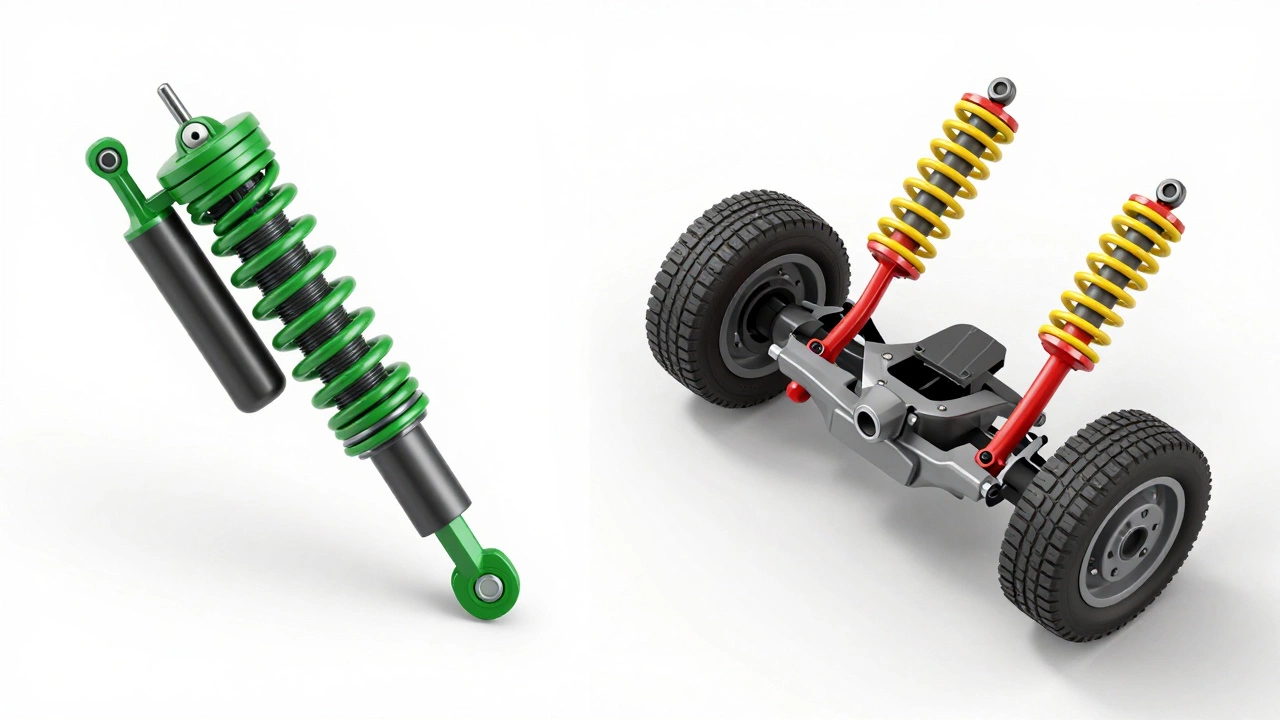
Shocks purely dampen spring motion without supporting vehicle weight. Struts combine damping function with structural support-they form part of the steering assembly and bear significant load. Because of this dual role, strut replacement involves more steps and often requires realignment afterward. Both serve similar purposes but differ fundamentally in construction and integration.
Are aftermarket suspension upgrades worth it?
Upgrade kits improve handling, reduce body roll, and enhance appearance-but sacrifice ride comfort. Coilovers and lowering springs suit enthusiasts seeking track performance or aesthetic customization. Daily drivers benefit more from OEM-quality replacements focusing on durability and compliance. Choose based on usage intent: sporty vs practical.
Why does my car sag on one side?
Asymmetrical sagging usually indicates a broken coil spring, collapsed air spring (in pneumatic suspensions), or severely worn shock absorber on that corner. It could also result from previous collision damage altering mounting points. Immediate inspection prevents further deterioration and potential collapse under load.