Fuel System Troubleshooting Diagnostic Tool
Diagnostic Assistant: Why won't my car start?
Turn your key to the "On" position (don't crank). Do you hear a faint humming or buzzing sound from the back of the car for 2 seconds?
The short answer is no. Resetting your battery will not fix a physically broken fuel pump. However, it might reset the software that tells the pump when to run. There is a massive difference between a mechanical failure and a software glitch. If your pump motor has burnt out or your fuel filter is clogged with gunk, no amount of power-cycling will bring it back to life.
Key Takeaways for Fast Troubleshooting
- Disconnecting the battery resets the Engine Control Unit (ECU), not the pump hardware.
- It can clear temporary software errors (glitches) but won't fix a burnt-out motor.
- If the pump isn't priming, check the fuel pump relay and fuse first.
- Physical blockages or electrical shorts require a mechanical fix, not a reboot.
How the Fuel Pump and Battery Actually Interact
To understand why a battery reset rarely works for fuel issues, you have to look at how the system is built. Your fuel pump is an electrical device, usually submerged in the fuel tank, designed to push gasoline or diesel at high pressure toward the engine. It is controlled by the Engine Control Unit (ECU), which is essentially the brain of your car. The ECU tells the pump to prime when you turn the key to the "On" position and keeps it running while the engine is humming.
When you disconnect the battery, you are cutting power to the ECU. This clears the volatile memory-the "short-term memory"-of the computer. If the ECU was stuck in a weird loop or had a corrupted sensor reading that was preventing it from triggering the pump, a reset might temporarily solve the problem. But in 95% of cases, if the pump isn't working, the problem is physical.
Think of it like a computer. If your hard drive is physically smashed, restarting the PC won't fix the drive. If the computer just froze because of a software bug, a restart is exactly what you need. Most fuel pump failures are the "smashed hard drive" variety.
When a Battery Reset Actually Helps
There are a few specific scenarios where messing with the battery actually does something. Modern cars use complex security systems and anti-theft modules. Occasionally, an Immobilizer system might malfunction, telling the ECU to cut fuel delivery because it thinks the car is being stolen. In these rare instances, a full power cycle can sometimes clear that security flag.
Another case is "limp mode." Some vehicles enter a reduced power state if they detect a major fault. While this usually affects the transmission or turbocharger, it can occasionally mess with fuel trim settings. Resetting the battery wipes these learned values, forcing the ECU to go back to factory defaults. If the car starts after a reset, you haven't "fixed" the pump; you've just forced the computer to ignore a specific error for a few minutes.
The Real Culprits: Why Your Pump Isn't Priming
If you're currently staring at a car that won't start, don't just pull the battery cables. There are several components between the battery and the pump that are much more likely to be the problem. The most common failure point is the Fuel Pump Relay. This is a small plastic cube in your fuse box that acts as a high-current switch. If the relay fails, the pump gets no power, even if the battery is fully charged.
Then there's the Fuel Filter. If you've been buying cheap gas or haven't changed your filter in 50,000 miles, it could be completely blocked. The pump might be spinning perfectly fine, but the fuel can't get through the filter to reach the injectors. This often feels like a pump failure because the engine won't start, but it's actually a plumbing issue.
| Symptom | Likely Cause | Will Battery Reset Help? | Correct Fix |
|---|---|---|---|
| No humming sound when key is turned | Blown Fuse or Dead Relay | No | Replace Fuse/Relay |
| Engine starts then dies immediately | Clogged Fuel Filter | No | Replace Filter |
| Intermittent starting issues | Failing Pump Motor | No | Replace Fuel Pump |
| Security light flashing on dash | Immobilizer Glitch | Maybe | Reprogram Key/Reset ECU |
How to Properly Test Your Fuel Pump
Instead of guessing with the battery, use a a few simple tests to see if your pump is actually dead. First, listen for the "prime." Turn your key to the accessory position without cranking the engine. You should hear a faint hum or buzz coming from the rear of the car for about two seconds. That's the pump building pressure. If it's silent, you have an electrical issue or a dead motor.
If you're feeling handy, you can use a Multimeter to check for power at the pump connector. If the multimeter shows 12 volts reaching the pump but the pump isn't humming, the motor is dead. If there's no power at the connector, the problem is further up the line-likely a blown fuse or a bad ground wire.
Another old-school trick is the "hammer method." If you suspect the pump is stuck (sometimes they seize up), you can gently tap the bottom of the fuel tank with a rubber mallet while someone else cranks the engine. This can sometimes jar a sticking pump back into motion long enough to get you to a mechanic, but it's a desperation move, not a fix.
The Dangers of Only Relying on ECU Resets
One big risk of the "battery reset" mentality is that it masks the real problem. Let's say you have a failing Fuel Pressure Regulator. It might be causing the system to lose pressure, leading to a stall. If a battery reset happens to clear a related error code and the car starts, you might think you've fixed it. However, the regulator is still failing. You'll likely find yourself stranded on a busy highway later because you treated the symptom (the error code) instead of the disease (the failing hardware).
Furthermore, constantly disconnecting your battery can cause other issues. Many modern cars have "adaptive learning" for the transmission and idle air control. When you wipe the ECU, the car has to re-learn how to idle smoothly. You might notice your car idling roughly or shifting gears awkwardly for the first few miles after a reset.
Step-by-Step Troubleshooting Flowchart
If your car won't start and you suspect the fuel system, follow this logical path instead of jumping straight to the battery cables:
- Listen for the Prime: Key on, engine off. Hear the hum? If yes, the pump is likely working. If no, move to step 2.
- Check the Fuses: Locate your fuse box. Look for the one labeled "Fuel Pump" or "EFI." If the metal strip inside is broken, replace it.
- Swap the Relay: Find another relay in the box with the same part number (often the horn relay is the same). Swap them. If the car starts, buy a new relay.
- Check Fuel Pressure: If you have a pressure gauge, hook it to the fuel rail. If pressure is low despite the pump humming, your filter is clogged or the regulator is leaked.
- Test the Pump Electricals: Use a multimeter at the pump harness to confirm power is arriving.
Does disconnecting the battery clear fuel system error codes?
Yes, on many older vehicles, disconnecting the battery for 15-30 minutes will clear the volatile memory of the ECU and wipe the check engine light. However, this does not fix the mechanical part that caused the code in the first place. Once you drive the car for a few miles, the computer will likely detect the same fault and the light will return.
Can a bad fuel pump cause my battery to drain?
It is very unlikely. A fuel pump is a high-draw device, but it only runs when the ignition is on. If your battery is draining, look for a "parasitic draw" like a cabin light left on, a faulty alternator, or a failing battery cell. A dead pump will prevent the car from starting, but it won't suck the life out of your battery while the car is parked.
How do I know if my fuel pump is actually dead?
The most tell-tale signs are a complete lack of the priming sound when you turn the key, engine sputtering or stalling during acceleration, and a car that cranks forever but never catches. If you have a fuel pressure gauge and the readings are significantly below the manufacturer's specifications, the pump is likely failing.
Will a battery reset fix a car that only starts when pushed (bump started)?
No. If a car starts by being pushed, the issue is almost always the starter motor or the battery itself, not the fuel pump. The fuel pump needs electrical power to move gas; bump starting the car uses the momentum of the wheels to turn the engine and generate enough electrical activity to fire the spark plugs, but it doesn't "reset" any fuel components.
Is it safe to leave the battery disconnected for a long time to reset the pump?
Leaving the battery disconnected for hours or days won't hurt the fuel pump, but it might cause you to lose your car's programmed settings, such as the clock, radio stations, and seat memories. More importantly, it won't solve a mechanical failure. If a 20-minute disconnect doesn't work, a 20-hour disconnect certainly won't either.
Next Steps for Your Vehicle
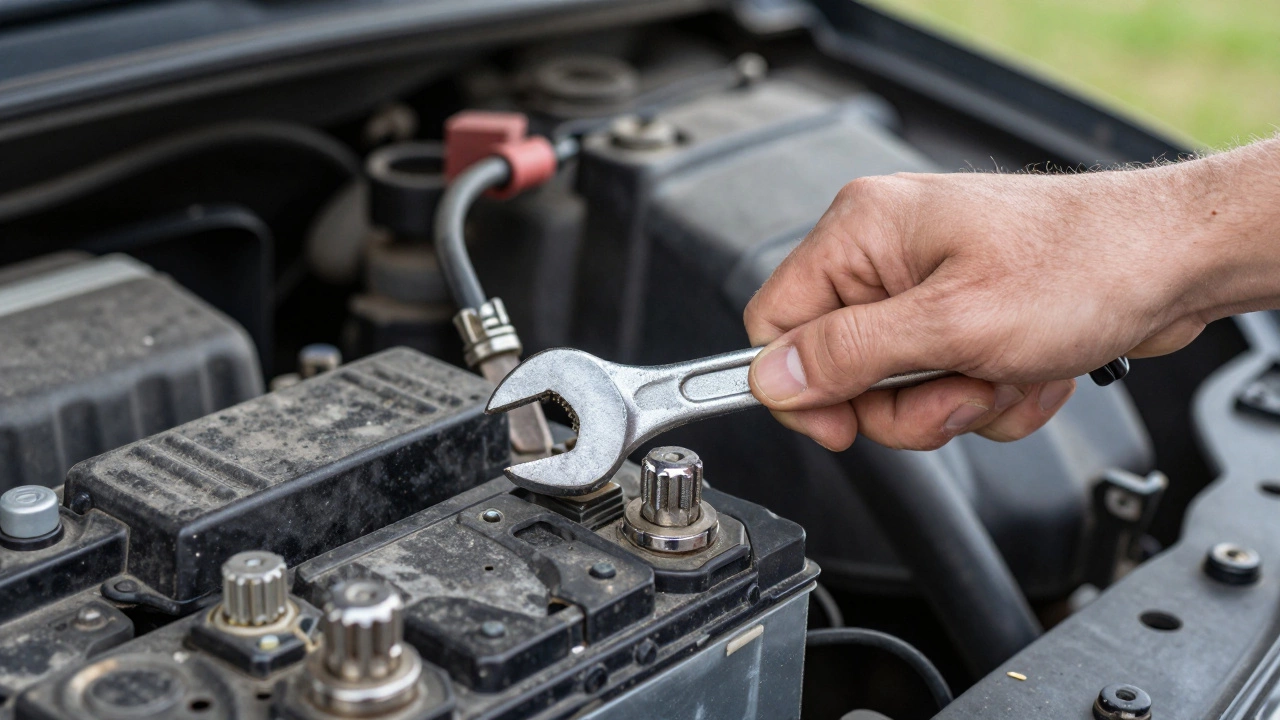
If you've tried the battery reset and your car still won't fire up, stop fighting with the battery. Your next move should be to check the fuel pressure. If you don't own a pressure gauge, you can often rent one from an auto parts store. If the pressure is low, you have a decision to make: replace the filter first (the cheap option) or go straight for the fuel pump (the permanent fix).
If you're dealing with a luxury car or a very new model, be careful with the battery reset. Some high-end vehicles require a "battery registration" process after a disconnect or replacement, meaning you'll need a professional scan tool to tell the car the battery has been reset, otherwise, the charging system might not work correctly.