MagnaFlow vs Flowmaster Decision Tool
Configure Your Priorities
Sound Profile:
You are standing in the aisle of an auto parts store, staring at two boxes that promise to wake up your engine. On one side is MagnaFlow, known for its straightforward, high-flow design. On the other is Flowmaster, famous for its patented reverse flow technology and deeper tone. Both brands have been around for decades. Both claim to add horsepower. Both want your money. But which one actually fits your needs?
This isn't just about picking a name you recognize. It is about deciding how your car sounds, how it performs, and whether you want to spend three hours installing it or three days fighting with fitment issues. I have worked on enough exhaust swaps to know that "better" depends entirely on what you value more: raw power, a specific sound profile, or ease of installation.
Understanding the Core Technologies
To decide between these two giants, you first need to understand how they move air. They use completely different internal designs to achieve their goals. This difference dictates everything from the decibel level to the horsepower gains.
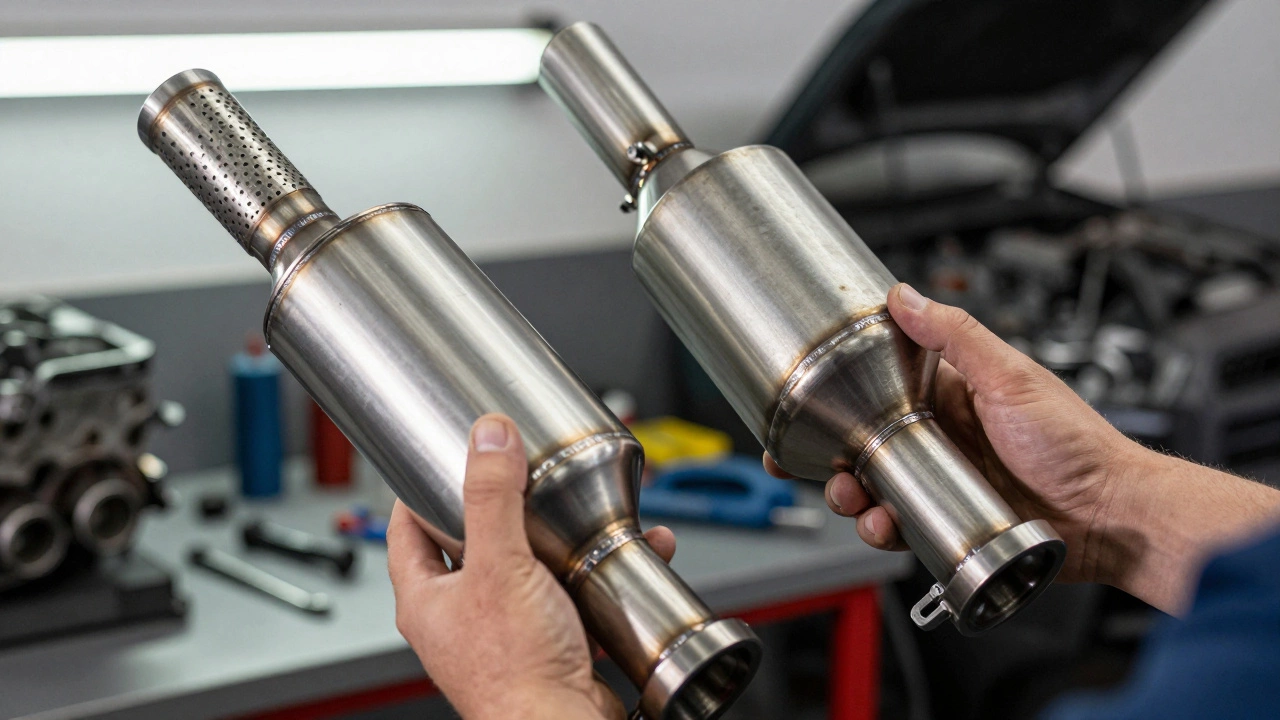
MagnaFlow uses a free-flowing perforated tube design. Imagine a large pipe inside your muffler with small holes drilled into it. Sound waves enter through those holes and bounce around the internal chambers until they lose energy and exit quietly. Because there are very few obstructions, exhaust gases flow through with minimal restriction. This simplicity means MagnaFlow systems often feel like a direct upgrade from stock, offering a clean, aggressive roar without too much fuss.
In contrast, Flowmaster relies on Reverse Flow Technology. Instead of straight-through paths, Flowmaster forces exhaust gases to change direction multiple times within the muffler. The gas enters, hits a baffle, reverses direction, passes through another chamber, and exits. This complex path cancels out sound waves more effectively than simple reflection. The result is a distinct, deep rumble that many enthusiasts describe as "muscular" rather than just loud.
The trade-off is clear. MagnaFlow prioritizes flow efficiency and ease of manufacturing. Flowmaster prioritizes acoustic tuning and tonal quality. Neither is inherently wrong, but they serve different drivers.
Sound Profile: Roar vs. Rumble
Let's be honest. For most people, the sound is the primary reason for upgrading an exhaust system. You do not buy a new exhaust because you love the smell of burnt rubber; you buy it because you want to hear your car work. So, how do they compare when you hit the gas?
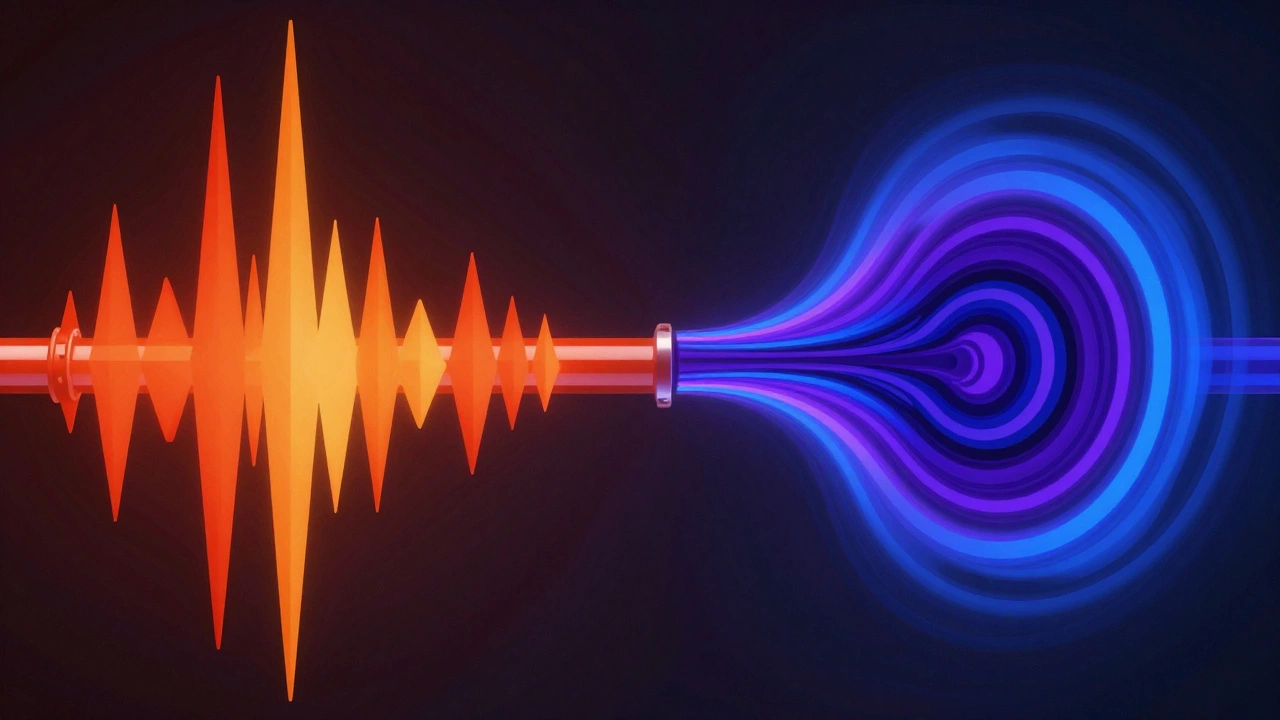
MagnaFlow tends to produce a higher-pitched, aggressive growl. If you drive a modern V6 or a turbocharged four-cylinder, MagnaFlow can make the engine sound alive without becoming annoying. It is loud, yes, but it is rarely harsh. However, if you install a full cat-back system on a smaller engine, you might find yourself wishing for a bit more bass. Some users report a slight "drone" at highway speeds, particularly in the 2,500 to 3,000 RPM range. This is common with free-flow designs because they let low-frequency noise escape more easily.
Flowmaster, on the other hand, is engineered for depth. Their Reverse Flow Technology creates a lower-frequency rumble that fills the cabin. If you drive a V8 or a large-displacement V6, Flowmaster will give you that classic American muscle car sound. It is less likely to drone at cruising speeds because the baffles cancel out the mid-range frequencies that cause ear fatigue. That said, Flowmaster can sometimes sound flat or muffled on smaller engines if the system is too restrictive for the airflow volume.
If you want a loud, attention-grabbing sound, lean toward MagnaFlow. If you prefer a refined, deep tone that feels premium, Flowmaster is usually the safer bet.
Performance Gains: Horsepower and Torque
Every exhaust manufacturer claims horsepower gains. But do these numbers hold up under real-world testing? Generally, both brands offer modest improvements over stock exhausts, typically ranging from 5 to 15 horsepower depending on the vehicle and the extent of the system (cat-back vs. axle-back).
MagnaFlow’s free-flow design often yields slightly better top-end horsepower because it minimizes backpressure. Less resistance means the engine can breathe easier at high RPMs. This makes MagnaFlow a popular choice for track-focused builds or vehicles where peak power matters more than idle rumble. Dyno tests on various platforms, including Ford Mustangs and Chevrolet Camaros, often show MagnaFlow edging out competitors by 1-3 HP in the upper RPM range.
Flowmaster focuses more on torque retention across the mid-range. By managing exhaust pulse timing, Flowmaster aims to improve scavenging efficiency-the process of pulling fresh air-fuel mixture into the cylinder. This can result in better throttle response and a feeling of increased acceleration off the line, even if the peak horsepower number is similar to MagnaFlow. For daily drivers who care more about passing power on the highway than quarter-mile times, this mid-range torque boost is often more noticeable.
Neither brand will transform a 150-horsepower sedan into a race car. But both will unlock potential that your stock exhaust is choking. If you chase dyno numbers, MagnaFlow has a slight edge. If you chase drivability, Flowmaster delivers.
Build Quality and Materials
An exhaust system sits underneath your car, exposed to road salt, water, heat, and vibration. How well it holds up over time matters. Let's look at the materials and construction methods used by each brand.
| Feature | MagnaFlow | Flowmaster |
|---|---|---|
| Primary Material | Stainless Steel (409 & 304) | Stainless Steel (409 & 304) |
| Welding Quality | Clean, consistent TIG/MIG welds | Robust, heavy-duty welds |
| Fitment Precision | High (OEM-style bolt-on) | Variable (Some models require modification) |
| Corrosion Resistance | Excellent (especially 304 series) | Good (depends on model tier) |
| Weight | Lighter (due to simpler internals) | Slightly Heavier (complex baffles) |
Both brands offer stainless steel options, which are essential for longevity. Avoid aluminized steel unless you are on a tight budget and live in a dry climate. MagnaFlow consistently uses high-grade 304 stainless steel in their premium lines, which resists rust far better than the standard 409 grade. Their welding is generally cleaner, with smoother joints that reduce turbulence and noise leaks.
Flowmaster also uses stainless steel, but their build quality can vary more between product tiers. Their entry-level systems may use thinner gauge metal compared to MagnaFlow’s equivalent price point. However, Flowmaster’s heavier construction can sometimes mean better durability against physical impacts from road debris. One complaint often heard about Flowmaster is inconsistent fitment. While MagnaFlow prides itself on OEM-style bolt-on installations, some Flowmaster kits require cutting, grinding, or clamping adjustments to sit perfectly. This can be a dealbreaker for DIYers who lack welding skills.
Installation Experience
If you plan to install the exhaust yourself, the ease of installation is a critical factor. A system that requires professional fitting adds hundreds of dollars to your project cost.
MagnaFlow is widely regarded as the king of plug-and-play exhaust systems. Their engineering team works closely with vehicle manufacturers to ensure precise fitment. Most MagnaFlow cat-back systems include all necessary hardware, hangers, and gaskets. You typically only need basic hand tools-wrenches, sockets, and a jack-to swap them out. The instructions are clear, and the pipes align correctly with factory mounting points. This predictability saves time and frustration.
Flowmaster installations can be trickier. While many of their systems are designed for bolt-on convenience, several models require minor modifications. You might find that a flange doesn’t line up perfectly, or that a hanger rubs against the chassis during suspension travel. This isn’t necessarily a flaw in design, but rather a consequence of Flowmaster’s broader application strategy-they try to fit more vehicles with fewer part numbers. As a result, you may end up using universal clamps or trimming brackets. If you are comfortable with fabrication, this is manageable. If you are not, you might need to visit a shop.

Price and Value Proposition
How much are you willing to pay for sound and performance? MagnaFlow and Flowmaster occupy similar price brackets, but their value propositions differ.
MagnaFlow systems typically range from $300 to $800 for complete cat-back setups, depending on the vehicle and material grade. You are paying for precision engineering, consistent fitment, and reliable performance. For many buyers, this represents good value because you get a hassle-free installation and a predictable outcome. There are no surprises.
Flowmaster offers a wider range of pricing, from $250 for basic axle-backs to over $1,000 for high-performance cat-backs. Their entry-level products are often cheaper than MagnaFlow’s equivalents, making them attractive to budget-conscious buyers. However, the premium Flowmaster systems compete directly with MagnaFlow’s top tier. In this segment, Flowmaster charges for its proprietary sound technology and brand heritage. Whether you consider this worth it depends on how much you prioritize tone over convenience.
If you are on a strict budget, Flowmaster’s lower-tier options provide decent upgrades. If you want a set-it-and-forget-it solution, MagnaFlow’s consistent pricing and quality justify the investment.
Which Should You Choose?
There is no single winner here. The best exhaust system is the one that matches your priorities. Here is a quick decision guide:
- Choose MagnaFlow if: You want easy installation, maximum horsepower gain, and a loud, aggressive sound. You value precision fitment and don’t want to modify anything during install. You drive a modern turbocharged or high-RPM engine.
- Choose Flowmaster if: You prioritize a deep, rumbling tone over pure volume. You drive a larger displacement engine (V8/V6) and want a muscular sound. You are comfortable with minor fabrication or don’t mind visiting a shop for perfect fitment. You are on a tighter budget and are willing to compromise on some convenience.
Think about how you use your car. Is it a weekend toy that you take to car meets? Flowmaster’s sound might turn more heads. Is it a daily driver that you want to perform better on the commute? MagnaFlow’s reliability and ease of use might save you headaches. Test both if possible. Listen to videos from owners of your specific vehicle model. And remember, the best exhaust is the one you enjoy hearing every time you start the engine.
Is MagnaFlow louder than Flowmaster?
Generally, yes. MagnaFlow’s free-flow design allows more sound to escape, resulting in a louder, higher-pitched roar. Flowmaster’s Reverse Flow Technology dampens sound more effectively, producing a deeper, quieter rumble. However, loudness varies significantly based on the specific model and vehicle type.
Do MagnaFlow and Flowmaster increase horsepower?
Yes, both brands can increase horsepower by reducing backpressure and improving exhaust flow. Typical gains range from 5 to 15 HP over stock exhausts. MagnaFlow often shows slightly higher peak horsepower due to its unrestricted flow, while Flowmaster may improve mid-range torque and throttle response.
Which exhaust is easier to install?
MagnaFlow is generally easier to install. Their systems are engineered for precise, bolt-on fitment with minimal modification required. Flowmaster systems sometimes require cutting, grinding, or adjusting hangers to achieve proper alignment, especially on older or less common vehicles.
Will a new exhaust void my warranty?
In many regions, including Australia and the US, manufacturers cannot void your entire warranty simply because you installed an aftermarket exhaust. However, if the exhaust causes damage to related components (like the catalytic converter or engine sensors), they may deny coverage for those specific repairs. Always check your local consumer laws and warranty terms before modifying your vehicle.
What is the difference between cat-back and axle-back exhausts?
An axle-back system replaces everything from the rear axle backward, primarily changing the sound and tailpipe appearance. A cat-back system replaces everything from behind the catalytic converter backward, affecting both sound and performance by improving exhaust flow. Cat-back systems are louder and offer more horsepower gains but are more expensive and complex to install.