What Sound Does a Bad Radiator Make? Identify, Diagnose, and Fix Common Radiator Noises
Learn the tell‑tale noises of a failing radiator, what each sound means, how to diagnose them, and DIY fixes to keep your engine cool.
View moreWhen your car makes a bad radiator noise, an unusual sound coming from the engine cooling system that signals potential failure. Also known as radiator clunking, gurgling, or hissing, it’s not just annoying—it’s a warning your engine could overheat in minutes. Most drivers ignore it until the temperature gauge spikes, but by then, damage is already done. A noisy radiator isn’t always broken, but it’s never normal.
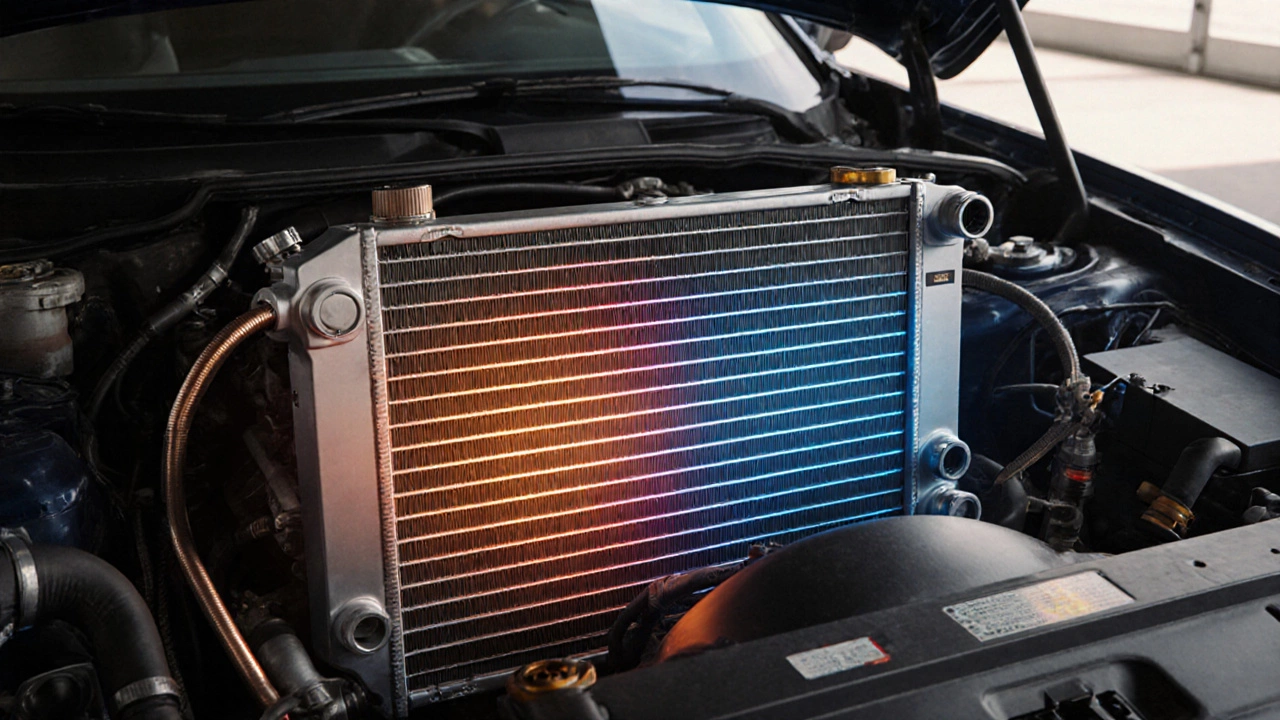
The cooling system, the network of parts that keeps your engine from overheating includes the radiator, hoses, water pump, thermostat, and coolant. A radiator, a metal heat exchanger that cools engine coolant can make noise for many reasons: air trapped in the system, a failing water pump, a cracked tank, or even a loose fan. Gurgling usually means air bubbles from a coolant leak or low fluid. A loud clunk or rattle often points to internal damage or a loose mounting bracket. Hissing? That’s steam escaping—time to stop driving immediately.
Many people think radiator issues only happen in summer, but cold weather can be just as harsh. Frozen coolant expands and cracks the radiator. Old hoses swell and leak. A bad thermostat traps heat, forcing the radiator to work harder and make noise. Even a simple low coolant level can cause bubbling sounds that sound like a boiling kettle under your hood.
You don’t need to be a mechanic to spot the early signs. Check your coolant level weekly. Look for puddles under the car—green, orange, or pink fluid means a leak. Listen for changes: if the noise gets louder when you accelerate or when the engine is hot, it’s not just a coincidence. And never top off coolant with just water. Mixing the wrong fluid can cause corrosion or blockages that make the noise worse.
Fixing a noisy radiator isn’t always expensive, but delaying it is. Replacing a hose or bleeding air from the system costs less than $100. Letting it go could mean a blown head gasket, warped cylinder head, or a full engine rebuild—easily $2,000 or more. The good news? Most radiator problems show clear warning signs long before total failure. You just need to know what to listen for.
Below, you’ll find real-world guides on diagnosing radiator issues, replacing parts yourself, understanding coolant types, and avoiding common mistakes that turn a small noise into a big repair bill. Whether you’re hearing gurgles, clanks, or hisses, there’s a solution here that fits your car and your skill level.
Learn the tell‑tale noises of a failing radiator, what each sound means, how to diagnose them, and DIY fixes to keep your engine cool.
View more