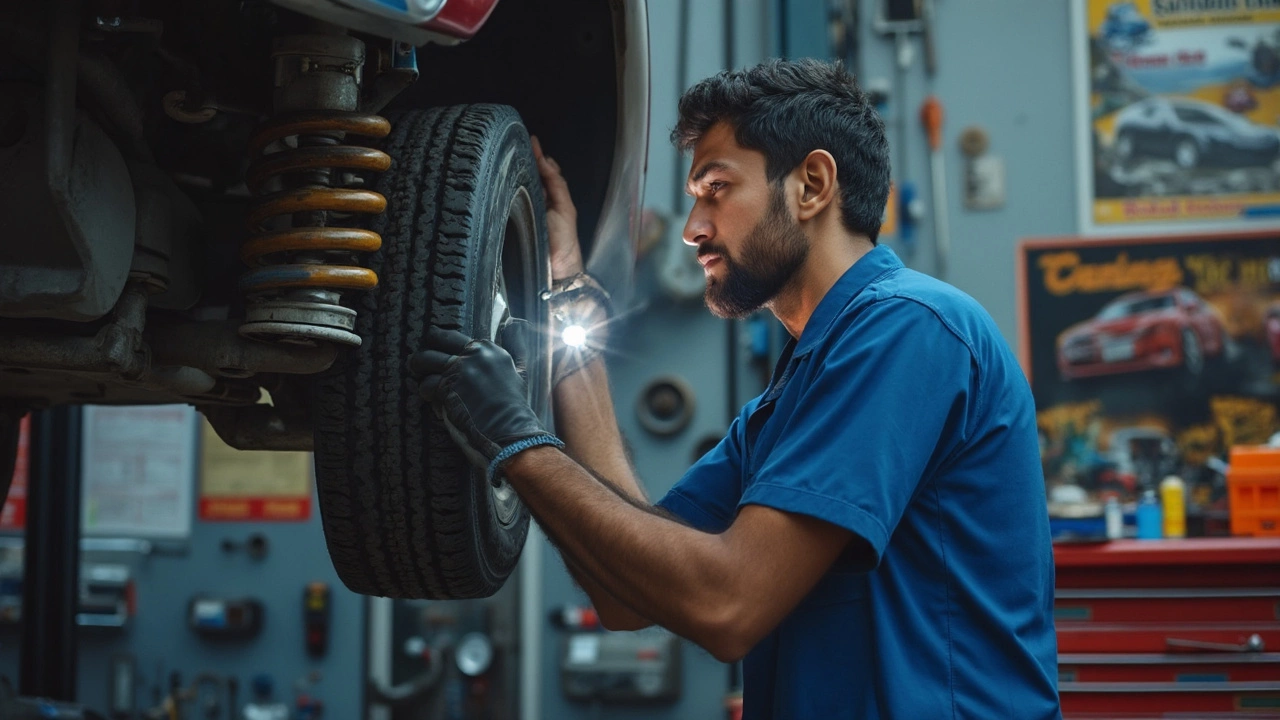
Bad Suspension Signs: What to Watch For and What It Means for Your Safety
When your car’s suspension, the system that connects your wheels to the frame and absorbs road shocks. Also known as ride control system, it keeps your tires on the road and your body steady through bumps, turns, and sudden stops. starts to fail, it doesn’t just feel weird—it puts you at risk. A worn or broken suspension doesn’t just make your ride bumpy. It affects braking, steering, tire wear, and worst of all, your control in an emergency. You might not notice it right away, but the signs are there if you know what to look for.
One of the clearest bent suspension, a physical deformation in the suspension components from impact or wear. Often caused by hitting potholes, curbs, or accidents. is uneven tire wear. If one side of your tire is bald while the other still has tread, your suspension isn’t holding the wheel at the right angle. You’ll also feel your car pulling to one side when driving straight, even if your alignment is good. Then there’s the bouncing—when you hit a bump and your car keeps bouncing like a trampoline instead of settling right away. That’s a sign your shocks or struts are worn out. And if your car leans heavily when turning, or dips forward hard when braking, that’s your suspension losing its grip on the road. These aren’t just annoyances. They’re warnings that your car can’t handle sudden moves safely.
Don’t ignore noises either. Clunking or knocking sounds when you go over bumps? That’s often a broken mount, worn bushing, or loose control arm. A squeaking noise when turning could mean dry ball joints. And if your steering feels loose or vague, like the wheel isn’t connected to the road anymore, you’re not imagining it—your suspension is failing. The suspension repair, the process of replacing or fixing damaged components like shocks, struts, springs, or control arms. isn’t always expensive if you catch it early. But waiting too long can damage your tires, brakes, or even your steering system, turning a $300 fix into a $1,500 repair.
You don’t need to be a mechanic to spot these issues. Pay attention when you drive. Does your car feel different? Does it sound wrong? Do your tires look uneven? If the answer is yes, don’t wait for it to get worse. The posts below break down real-world examples of what bad suspension looks like, how to test it yourself, and what parts are most likely to fail. You’ll find guides on diagnosing clunks, checking for bent parts, and understanding why driving with a damaged suspension is never worth the risk. This isn’t theory—it’s what mechanics see every day. And if you’ve noticed any of these signs, you’re already one step ahead.