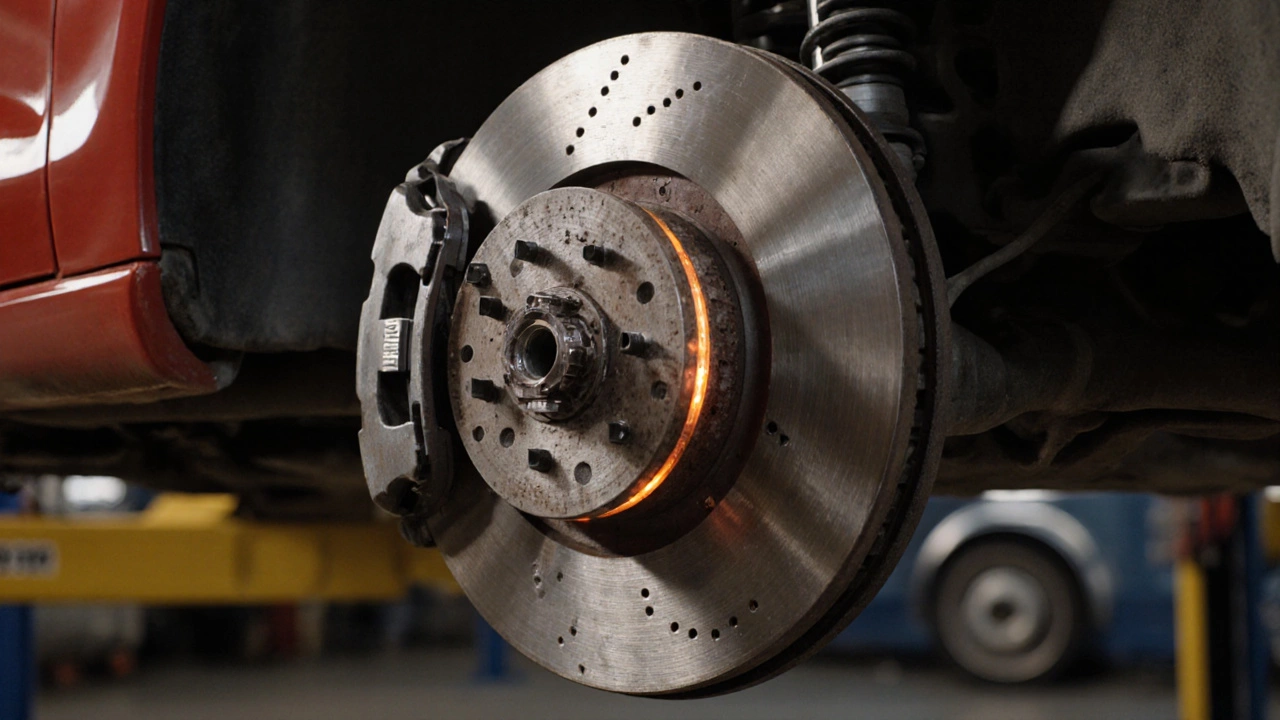
How to Know When Your Brakes Need Replaced - Simple Signs and DIY Checks
Learn how to spot worn brake pads, understand brake noises, vibration signs, and DIY inspection steps to know when it's time for a replacement.
View moreWhen you press the brake pedal, you're relying on brake fluid, a hydraulic liquid that transfers force from your foot to the brake calipers. Also known as hydraulic brake fluid, it’s the invisible hero keeping your stops smooth and safe. If this fluid is low, old, or contaminated, your brakes won’t work like they should—even if the pads look fine. Most drivers never check it until something goes wrong, and by then, it’s often too late.
Brake fluid doesn’t just wear out—it absorbs moisture from the air over time. That water lowers its boiling point, which means under hard braking, the fluid can turn to steam and create air bubbles. No liquid, no pressure. No pressure, no stopping power. That’s why a simple brake fluid check, a quick visual and functional test of fluid level and condition every 6 to 12 months can prevent a dangerous failure. It’s not about replacing parts—it’s about preserving the system that holds your life in your hands.
Related issues like worn brake pads or warped rotors get all the attention, but dirty or low brake fluid is often the hidden cause behind squeaks, spongy pedals, or longer stopping distances. A brake system, the full assembly of lines, calipers, master cylinder, and fluid that converts pedal pressure into stopping force is only as strong as its weakest link—and that link is often the fluid nobody checks. You don’t need a garage to test it. A clean dipstick, a flashlight, and knowing what color fluid should look like (clear or amber, not dark brown or black) is all it takes.
What you’ll find below are real, practical guides from drivers who’ve been there. From how to tell if your brake fluid is bad without tools, to why replacing pads alone won’t fix a spongy pedal, to what happens when you ignore the warning signs—these posts cut through the noise. No fluff. No upsells. Just what works. Whether you’re checking fluid for the first time or fixing a problem you’ve been ignoring, this collection gives you the facts you need to stay safe—and save money before a small fix turns into a big repair.
Learn how to spot worn brake pads, understand brake noises, vibration signs, and DIY inspection steps to know when it's time for a replacement.
View more