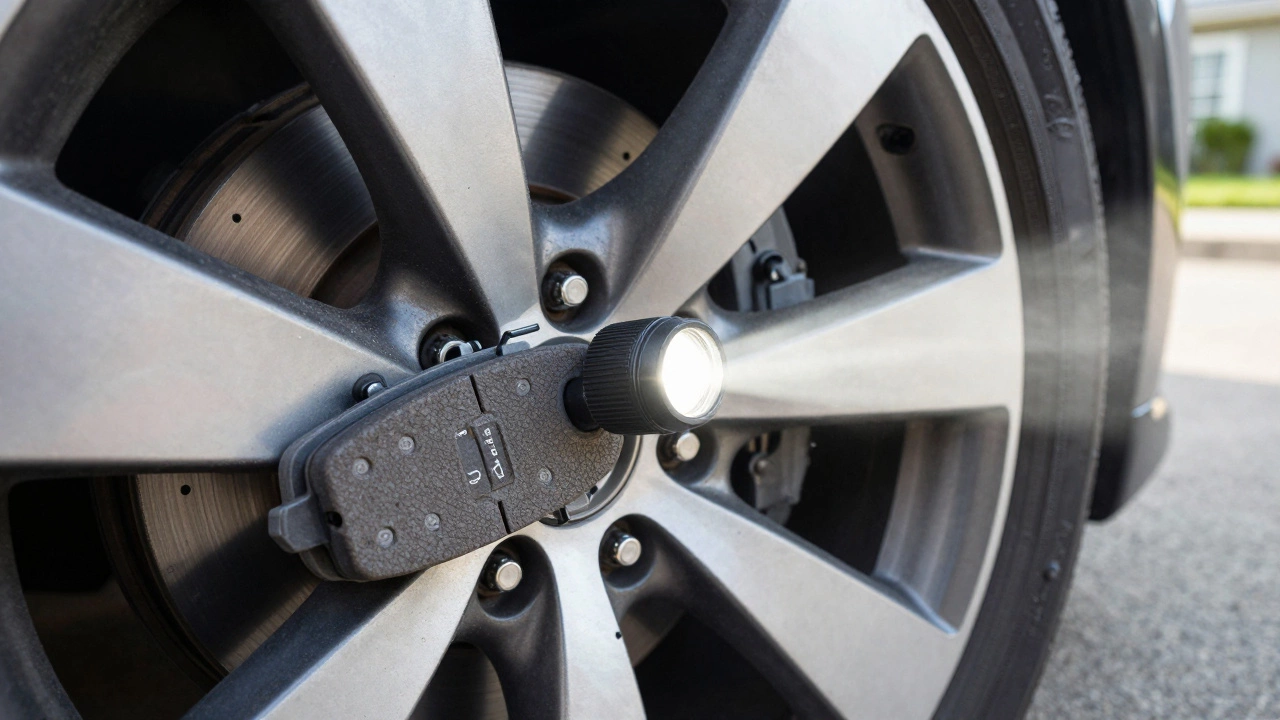
Brake Pad Thickness: How Much Is Safe and When to Replace Them
When your brakes start to squeal or feel spongy, it’s not just a nuisance—it’s a warning. The brake pad thickness, the measurable amount of friction material left on the brake pad. Also known as brake lining thickness, it’s one of the most overlooked but critical safety factors in your car. Most manufacturers recommend replacing brake pads when they drop below 3mm. Anything less than that, and you’re driving on metal-to-metal contact, which can wreck your rotors, increase stopping distance, and even cause brake failure.
Brake pad thickness isn’t just about mileage. It’s shaped by how you drive. City driving with constant stops? Your pads wear faster. Highway cruising? They last longer. Aggressive braking, heavy loads, or towing? That eats through material like crazy. And here’s the thing—most people don’t check thickness until they hear grinding. By then, the brake rotors, the metal discs the pads clamp onto are already damaged. Replacing rotors costs three times as much as replacing pads. A simple visual check with a flashlight can save you hundreds.
How do you measure it? You don’t need a tool shop. Look through the wheel spokes. If you can see less than a quarter-inch of pad material, it’s time to get them checked. Some pads have wear indicators—thin metal tabs that squeal when the pad is too thin. But don’t wait for the noise. That’s your last warning, not your first. brake pad wear, the gradual loss of friction material over time happens quietly. By the time you feel it, the damage is already done.
And no, you can’t just replace the pads and call it done. If the rotors are warped or scored from worn pads, your new pads won’t work right. You’ll get vibration, noise, and uneven wear. That’s why checking brake safety, the overall condition of the braking system that includes pads, rotors, fluid, and calipers matters as a whole. A good mechanic doesn’t just swap pads—they measure, inspect, and advise.
There’s no magic number that fits every car, but 3mm is the universal red line. Some high-performance pads start at 8mm and wear down to 2mm over 40,000 miles. Others wear out at 5mm in 20,000. It depends on your driving, your car, and your environment. The point isn’t to guess—it’s to know. Keep an eye on thickness. Check it every oil change. If you’re unsure, ask for a measurement. It takes less than a minute and could save your life.
Below, you’ll find real-world guides on spotting brake wear before it’s too late, understanding why replacing just the pads isn’t always enough, and how to tell if your rotors are already damaged. These aren’t theory pieces—they’re practical checks, tips, and fixes from people who’ve been there. Don’t wait for the grinding to start. Your brakes are your most important safety system. Treat them like it.