Car Exhaust: Types, Signs of Failure, and How It Affects Performance
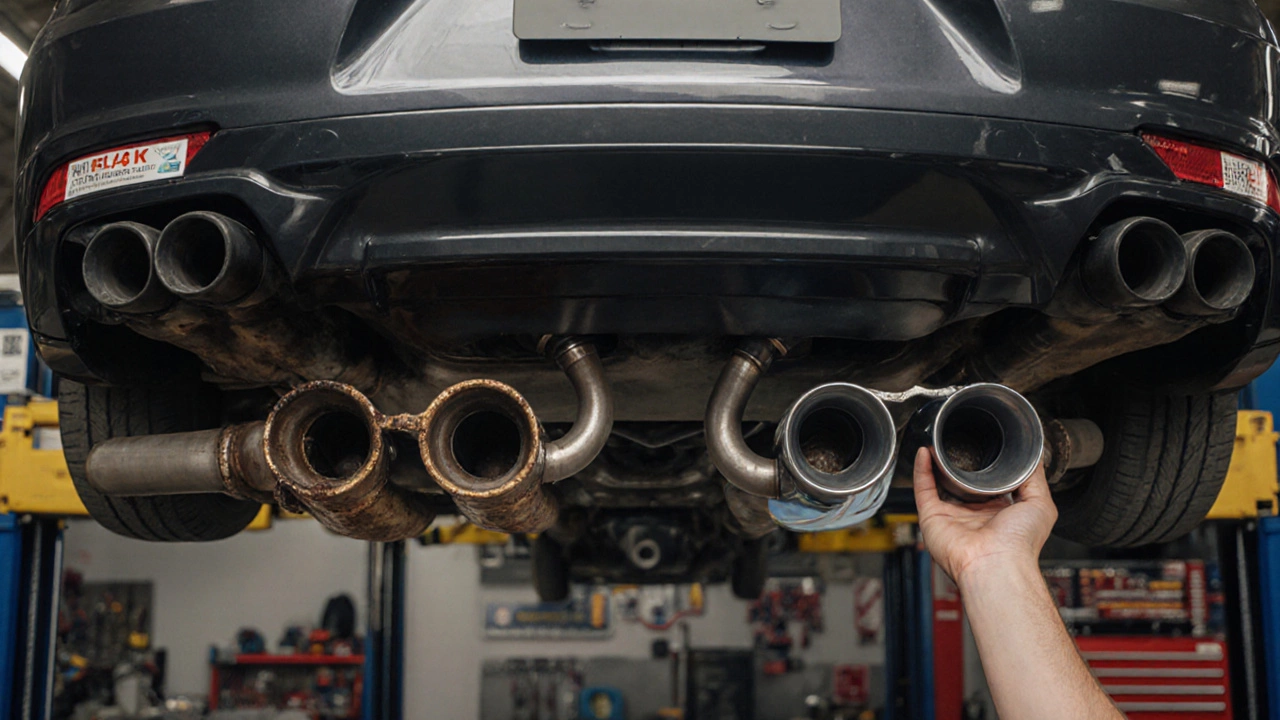
When your car exhaust, the system that channels harmful gases away from your engine and out the back of your vehicle. Also known as exhaust system, it does more than just make noise—it keeps your engine running efficiently, reduces emissions, and keeps you safe from toxic fumes. A broken or clogged exhaust doesn’t just sound bad—it can kill your fuel mileage, trigger check engine lights, and even let carbon monoxide into your cabin. You don’t need a mechanic to spot the warning signs. Listen for new rattles, smell gasoline when you’re not refueling, or notice your car feels weaker when you press the gas. Those aren’t normal—they’re your exhaust screaming for help.
The exhaust pipe, the metal tube that carries gases from the engine to the tailpipe rusts out fast if you drive on salted roads or take short trips often. The muffler, the part that reduces engine noise can develop holes from moisture and heat cycles, turning your quiet ride into a loud drone. And if you’ve got a performance exhaust, a modified system designed to improve flow and sound, it might be tuned for power—but only if it’s installed right. Many aftermarket setups hurt low-end torque, make your car fail emissions tests, or just rattle apart after a year.
What you’ll find below are real, no-fluff guides on how exhaust problems show up, how to tell if you need a full replacement or just a new gasket, and why some "power upgrades" do more harm than good. We cover what causes loud exhaust noises, how a bad catalytic converter kills your fuel economy, and why a 2-into-1 exhaust might not give you the horsepower you think it will. These aren’t theory pieces—they’re fixes people have actually used, tested, and shared after spending their own money getting it right. Whether you’re hearing a new rattle on your commute or just wondering if your exhaust is working as it should, the answers are here—no jargon, no upsells, just what works.