Suspension Diagnostic Tool
Check Your Symptoms
Select all symptoms you're experiencing
Your car rides smooth because of the suspension system-but when parts start failing, that smooth ride turns into a bumpy, unsafe nightmare. You don’t need to be a mechanic to spot the warning signs. If your car feels like it’s bouncing off every pothole, pulls to one side when braking, or makes clunking noises over speed bumps, something in the suspension is worn out. And if you ignore it, you’re not just risking comfort-you’re risking control, tire wear, and even your safety.
Shock Absorbers and Struts: The First to Go
Shock absorbers and struts are the most common suspension parts to fail. They don’t just soften bumps-they keep your tires firmly planted on the road. When they wear out, your car doesn’t just ride rough. It becomes harder to steer, brake, and stop safely.
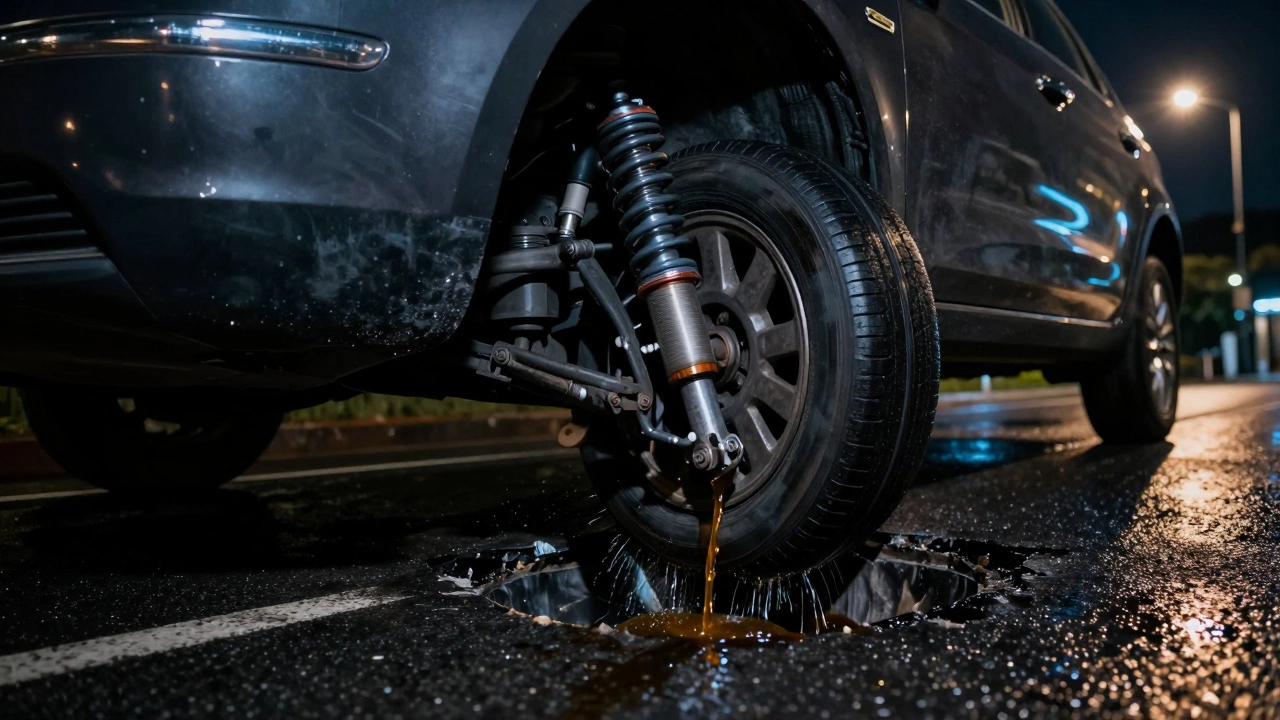
Most manufacturers say shocks and struts last 50,000 to 100,000 kilometers. But in places like Adelaide, where roads are rough and speed bumps are everywhere, they often wear out closer to 60,000 km. Signs they’re done? If your car bounces more than once after hitting a bump, or if you notice oil leaking from the shock body, it’s time to replace them. A simple bounce test works: push down hard on one corner of the car. If it keeps bouncing, the shock is dead.
Struts are even more critical because they’re part of the steering system. A failed strut doesn’t just affect ride quality-it throws off your wheel alignment, leading to uneven tire wear and pulling while driving.
Control Arms and Bushings: The Silent Killers
Control arms connect your wheels to the frame. They move up and down with the suspension, and rubber bushings at each end absorb vibrations. These bushings are made of rubber, and rubber dries out, cracks, and breaks over time. Heat, road salt, and age all speed up the process.
When bushings go bad, you’ll hear clunking or knocking noises when going over bumps. You might also feel the steering wheel vibrate or notice your car drifting sideways when you hit a rough patch. These symptoms often get mistaken for wheel balance issues-but if you’ve had your tires balanced and the problem stays, check the control arm bushings.
Worn control arms can also cause your alignment to shift. That means your tires wear unevenly-often on the inside or outside edges. Replacing just the bushings can save money, but if the arm itself is bent or corroded, you’ll need the whole part.
Ball Joints: The Connection That Can Fail Without Warning
Ball joints are like the shoulders of your suspension. They let your wheels move up and down and turn left and right. When they wear out, they don’t just get noisy-they can separate completely.
Signs of bad ball joints? Clunking when going over bumps, steering that feels loose or wobbly, or uneven tire wear on the inside. In severe cases, you might hear a metallic clicking sound when turning. This isn’t just annoying-it’s dangerous. A failed ball joint can cause your wheel to fold under the car, leading to a loss of control.
Most ball joints have a grease fitting. If yours does, greasing it every 20,000 km can extend its life. But if it’s sealed (which most modern cars are), you can’t service it. Inspection is your only option. Lift the car and grab the tire at the top and bottom. If there’s any noticeable play-more than a millimeter or two-it’s time to replace it.
Spring Damage: When the Coil or Leaf Gives Way
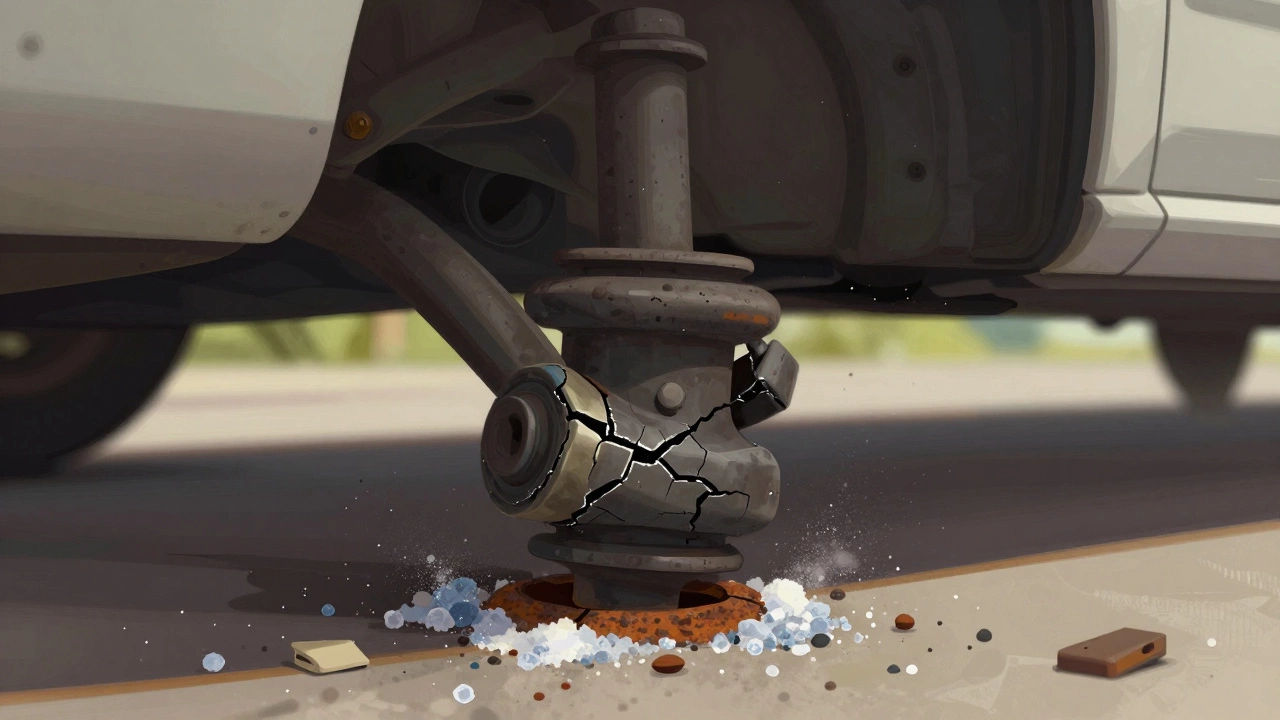
Coil springs and leaf springs carry the weight of your car. They don’t wear out from friction like shocks or bushings. But they can break from corrosion, metal fatigue, or impact.
If one spring breaks, your car will sit lopsided. One side will be lower than the other. You might also hear a loud bang or clang if it snaps while driving. Even if it doesn’t break completely, a spring can sag over time. That changes your ride height, which throws off your headlights, alignment, and handling.
Spring damage is more common in older cars or those driven on rough roads. Salt from winter roads (even in places like Adelaide with occasional wet winters) can cause rust that weakens the metal. If your car sits lower than it used to, or if you see visible cracks or gaps in the coils, replace the springs. Never drive on a broken spring-it can damage other parts or cause an accident.
Stabilizer Bars and Links: The Balance Keepers
Stabilizer bars (also called sway bars) reduce body roll when you turn. They connect the left and right sides of the suspension. The links that attach them to the control arms are made of metal and rubber, and they wear out fast.
When these links go bad, you’ll feel a clunking noise when turning corners or going over bumps. The car might feel loose or wobbly in turns, like it’s floating. You might also notice the steering feels less responsive.
These parts are cheap and easy to replace. But if you ignore them, the stabilizer bar itself can start to bend or break. That means your car leans more in corners, increasing the risk of rollover on sharp turns.
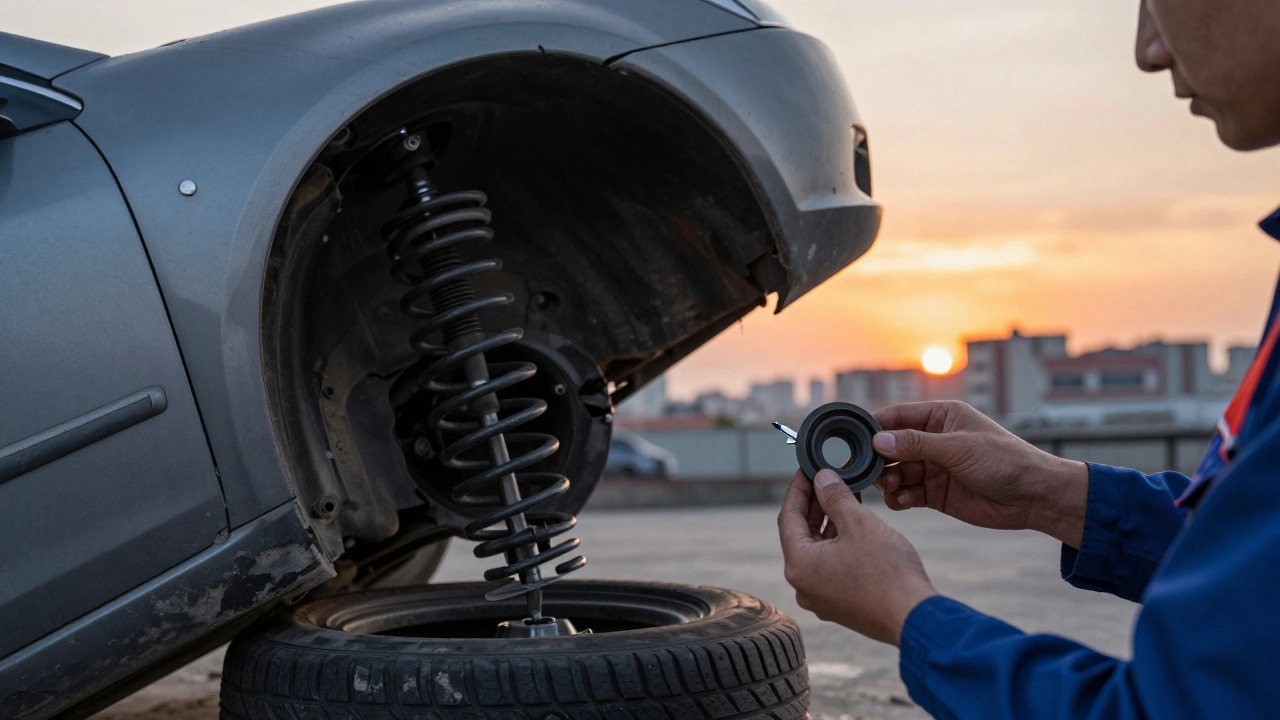
What Happens If You Ignore Worn Suspension Parts?
Ignoring bad suspension isn’t just about a rough ride. It’s a chain reaction.
- Tires wear out faster. Worn shocks or misaligned control arms cause uneven tire wear. You could go through a set of tires in half the time.
- Brakes wear out quicker. If your car bounces instead of staying flat when braking, your brakes have to work harder to stop you.
- Steering and handling suffer. You lose grip on wet roads. Your car doesn’t respond the way it should in emergencies.
- Other parts get damaged. A broken ball joint can destroy your wheel hub. A sagging spring can crack your fender or damage the wheel well.
One mechanic in Adelaide told me he once saw a car where the driver ignored a clunking noise for six months. When they finally brought it in, the ball joint had failed. The wheel was twisted sideways. The tire was shredded. The control arm was bent. The repair bill was nearly $3,000. All because they waited.
When to Get Your Suspension Checked
You don’t need to wait for something to break. Regular checks can save you money and keep you safe.
- Every 20,000 km: Ask your mechanic to inspect shocks, struts, bushings, and ball joints.
- After hitting a major pothole or curb: Even if nothing feels wrong, get it checked. Damage isn’t always obvious.
- Every 5 years: Rubber bushings and mounts age even if you don’t drive much. Time degrades them as much as miles.
If your car is over 10 years old and has more than 120,000 km, assume the suspension is nearing end-of-life. Replace parts in pairs-always. If one shock is bad, the other is close behind.
How to Extend the Life of Your Suspension
You can’t stop wear, but you can slow it down.
- Avoid potholes and speed bumps at high speed. Even small impacts add up.
- Keep your tires properly inflated. Underinflated tires force the suspension to work harder.
- Don’t overload your car. Excess weight stresses springs and shocks.
- Wash your undercarriage twice a year, especially after winter rains. Salt and grime eat away at metal parts.
Good suspension isn’t luxury-it’s safety. It’s what lets you stop quickly, turn sharply, and stay in control when you need it most. Don’t wait for the clunk to turn into a crash.
How do I know if my shocks are worn out?
Do the bounce test: push down hard on one corner of your car and let go. If it bounces more than once or twice, the shock is worn. You might also notice oil leaking from the shock body, or your car feels floaty and unstable over bumps.
Can I drive with a broken sway bar link?
You can, but you shouldn’t. A broken sway bar link makes your car feel loose in turns and increases body roll. It reduces stability, especially when cornering or avoiding obstacles. Replace it as soon as possible to avoid losing control.
Do I need to replace suspension parts in pairs?
Yes. If one shock, strut, or control arm is worn, the other side is close behind. Replacing only one side creates imbalance, which affects handling, tire wear, and safety. Always replace in pairs.
How much does it cost to replace suspension parts?
Costs vary by car and part. Shocks and struts typically cost $150-$400 each installed. Control arms range from $200-$500 per side. Ball joints are cheaper-$100-$250 each. Stabilizer links are under $150. Labor adds $80-$150 per hour. Replacing all major parts at once can run $1,500-$3,000, but it’s cheaper than replacing tires and brakes twice as fast.
Can worn suspension cause my car to pull to one side?
Yes. Worn control arms, ball joints, or bushings can throw off your wheel alignment. That causes your car to pull left or right while driving, even on flat roads. It’s often mistaken for tire pressure issues, but if your tires are balanced and inflated properly, suspension wear is the likely cause.