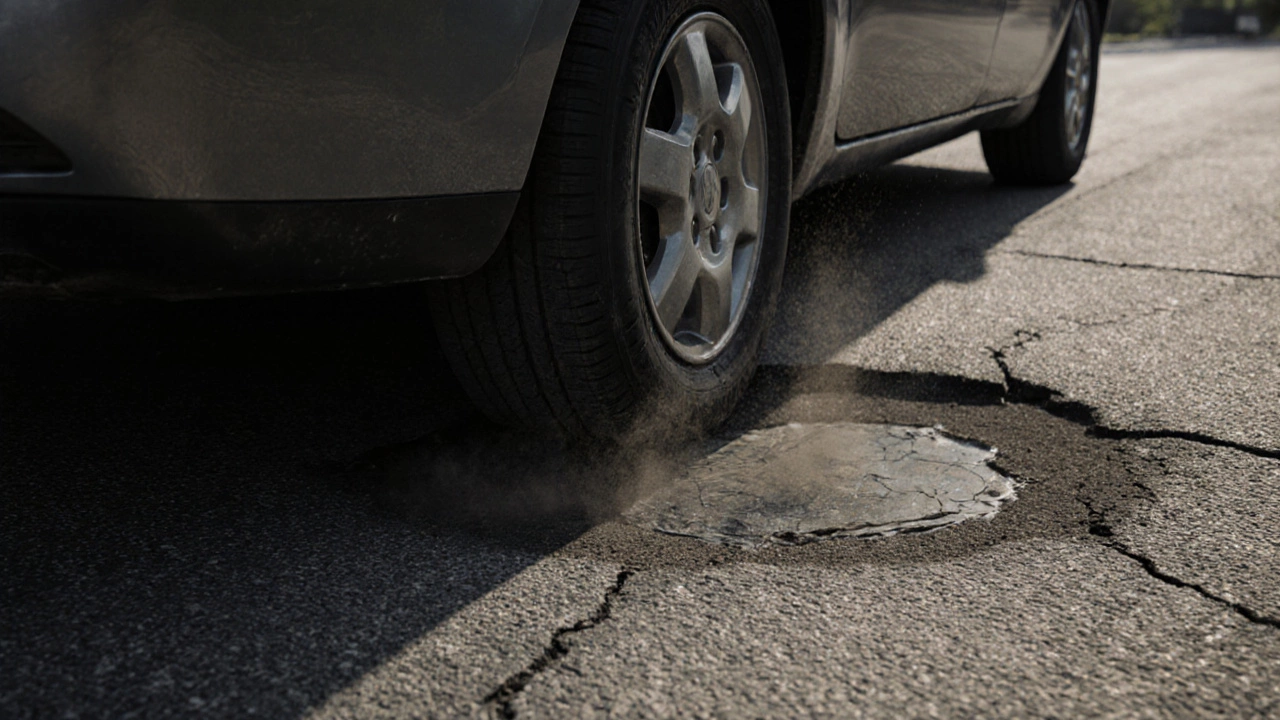
Driving with Damaged Suspension: Risks, Signs, and What to Do
When you’re driving with damaged suspension, a system that connects your wheels to the vehicle body and absorbs road shocks. Also known as worn suspension, it doesn’t just make your ride bumpy—it puts your safety at risk every time you hit a bump or turn a corner. Many drivers ignore the warning signs, thinking it’s just an annoying noise or a slightly loose feeling. But a failing suspension doesn’t get better over time. It gets worse—and fast.
Worn shock absorbers, components that control how quickly the suspension moves up and down are often the first to go. You’ll notice your car bouncing too much after hitting a pothole, or the front dips hard when you brake. Then there’s control arm bushings, rubber or polyurethane parts that let the suspension move smoothly without clunking. When they crack or wear out, you hear knocking sounds over rough roads, and your steering feels loose or wanders. And don’t forget struts, combined shock absorbers and spring supports that hold up the weight of your car. A bad strut can cause uneven tire wear, making your tires useless long before their time.
Driving with damaged suspension doesn’t just hurt your ride—it hurts your wallet. Uneven tire wear from bad suspension can cost you hundreds in premature replacements. It also puts extra stress on your brakes, steering, and alignment. Mechanics in Adelaide and beyond see this all the time: people replacing tires every 20,000 miles when they should last 50,000, all because the suspension was failing. And if you’re driving on highways or in rain, a compromised suspension can mean the difference between stopping in time and sliding into something you can’t avoid.
You don’t need to be a mechanic to spot the warning signs. If your car leans heavily when turning, if the front end dives under braking, if you feel every crack in the road through the steering wheel, or if your tires show cupping or scalloping on the edges—you’ve got a problem. It’s not a "maybe" issue. It’s a now issue. Replacing worn suspension parts isn’t about comfort. It’s about control. It’s about safety. And it’s cheaper than replacing tires, brakes, or worse—paying for an accident you could’ve prevented.
The posts below cover everything you need to know: how to test your suspension at home, what parts fail most often, why some "cheap fixes" make things worse, and how to choose the right replacements without getting ripped off. You’ll find real advice from people who’ve been there—no fluff, no guesswork. Just what works.