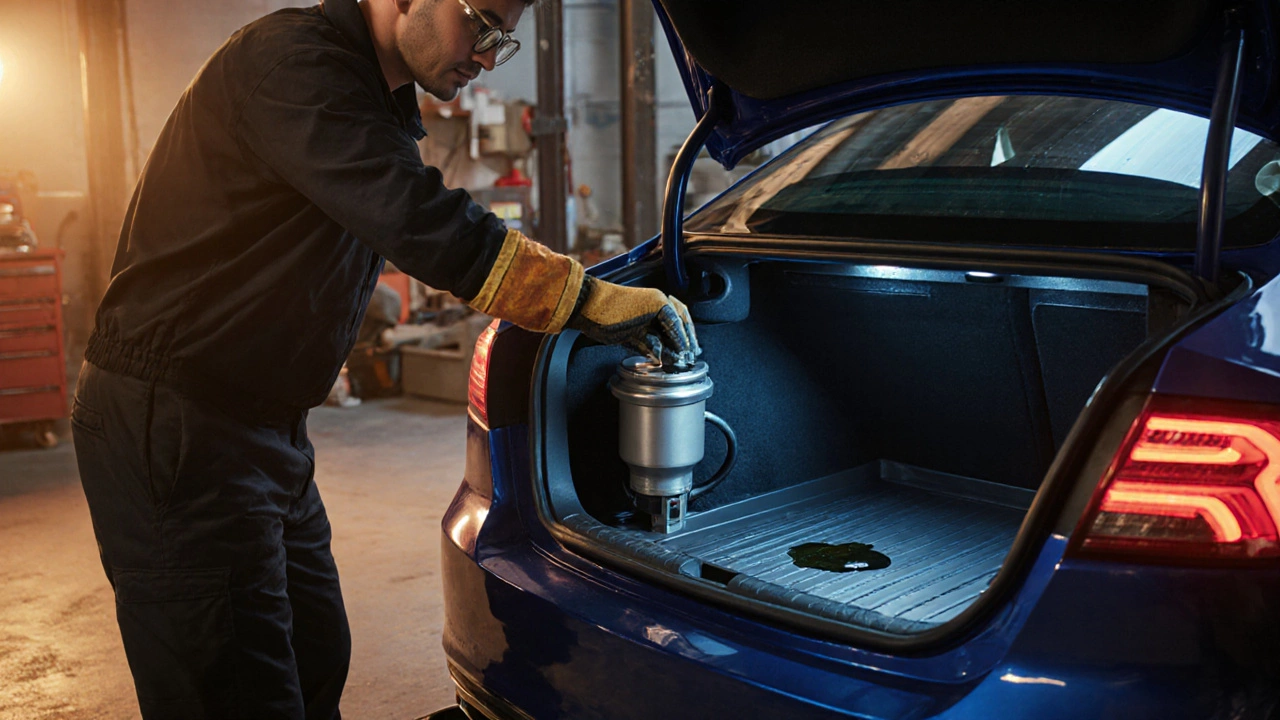
Do You Need an Empty Tank to Replace a Fuel Pump?
Learn why draining the fuel tank is usually safest for a pump swap, how to replace it step‑by‑step, and what to do when the tank can't be emptied.
View moreWhen your car won’t start and you hear nothing but silence, the problem might not be the battery—it could be your fuel pump, a critical component that delivers gasoline from the tank to the engine under pressure. Also known as a fuel delivery pump, it’s one of the least visible but most essential parts in your vehicle’s fuel system, the network of lines, filters, and injectors that keep your engine running. If the fuel pump fails, your engine doesn’t just lose power—it stops completely, often in dangerous situations like highways or heavy traffic.
Fuel pump safety isn’t just about keeping your car moving. A failing pump can cause sudden stalling, misfires, or even fire risks if fuel leaks due to damaged seals or electrical shorts. Many people think a bad fuel pump can be fixed by jump-starting the car, but that’s a myth. You can’t jump start a fuel pump—it’s not a battery. It’s a motor inside your gas tank that needs proper voltage and pressure to function. If it’s dead, no amount of jumper cables will bring it back. The real fix is diagnosis and replacement. Signs like sputtering at high speeds, trouble accelerating, or the engine dying under load are red flags. And if your car cranks but won’t start, especially after sitting for a while, that’s often the fuel pump giving up.
Replacing a fuel pump isn’t always easy. It usually requires dropping the tank or accessing it through a panel under the back seat. That’s why knowing the signs early matters. A pump that’s been running dry for months—because you kept driving with low fuel—wears out faster. Keeping your tank at least a quarter full isn’t just good practice; it helps cool the pump and keeps debris from clogging the intake. And when you do replace it, don’t just grab the cheapest option. Cheap pumps fail sooner, and they can damage your fuel injectors or even cause engine damage if they don’t deliver the right pressure. Always match the OEM specs or go with a trusted aftermarket brand.
What you’ll find below are real, practical guides from people who’ve been there. You’ll learn how to tell if your fuel pump is truly dead, what tests actually work (and which ones are useless), how long a replacement takes, and why skipping the diagnosis can cost you way more than the part itself. These aren’t theory pieces—they’re hands-on, no-fluff advice from drivers who fixed their own cars and lived to tell the story. Whether you’re trying to avoid a tow truck or just want to understand what’s under your hood, this collection gives you the facts you need before you spend a dollar.
Learn why draining the fuel tank is usually safest for a pump swap, how to replace it step‑by‑step, and what to do when the tank can't be emptied.
View more