Ignition System: How It Works and What Can Go Wrong
When your car won’t start and the engine just turns over, the problem isn’t the battery—it’s usually the ignition system, the component group that creates the spark to ignite fuel in the engine cylinders. Also known as the spark ignition system, it’s the reason your car fires up instead of sitting dead. Without it, no matter how much fuel you have or how good your battery is, your engine stays silent.
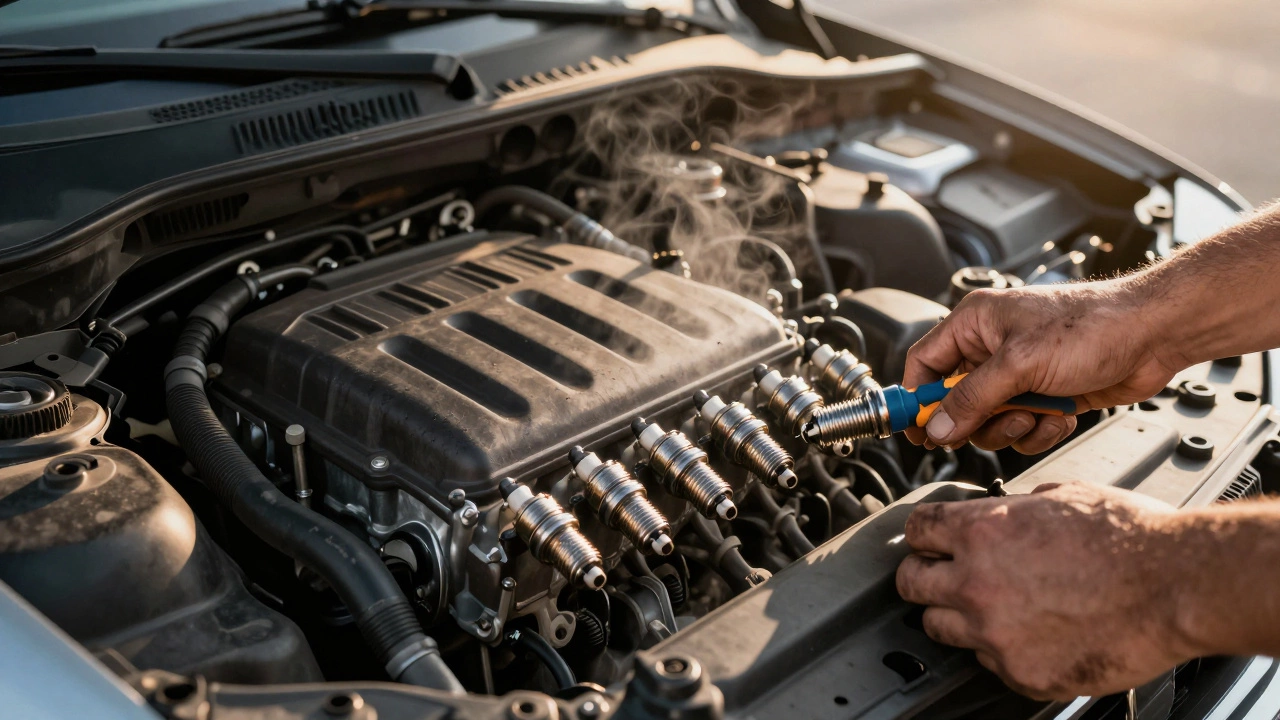
The ignition coil, a transformer that boosts battery voltage to thousands of volts needed for a spark works with the spark plugs, the tiny electrodes that fire the actual spark inside the combustion chamber to get the engine running. These parts don’t last forever. A worn spark plug can misfire, causing rough idling or poor fuel economy. A failing ignition coil might let your car start one day and leave you stranded the next. The ignition module, the electronic brain that tells the coil when to fire can also die silently, especially in hot climates or older cars.
People often blame the fuel pump when their car won’t start—but if the spark is gone, no amount of fuel will help. You can’t jump start a bad ignition system like you can a dead battery. Testing it doesn’t need fancy tools: a simple spark tester can tell you if the coil is sending juice to the plugs. If you hear clicking but no start, or if the car sputters and dies after warming up, those are classic signs of ignition trouble.
What you’ll find below isn’t theory—it’s real fixes. Posts show how to test spark plugs yourself, why replacing just one coil can cause more problems, and how a dirty ignition switch can mimic a full system failure. You’ll learn what parts actually need replacing versus what’s just a symptom. No guesswork. No expensive dealer diagnostics. Just clear, practical steps to get your car running again.