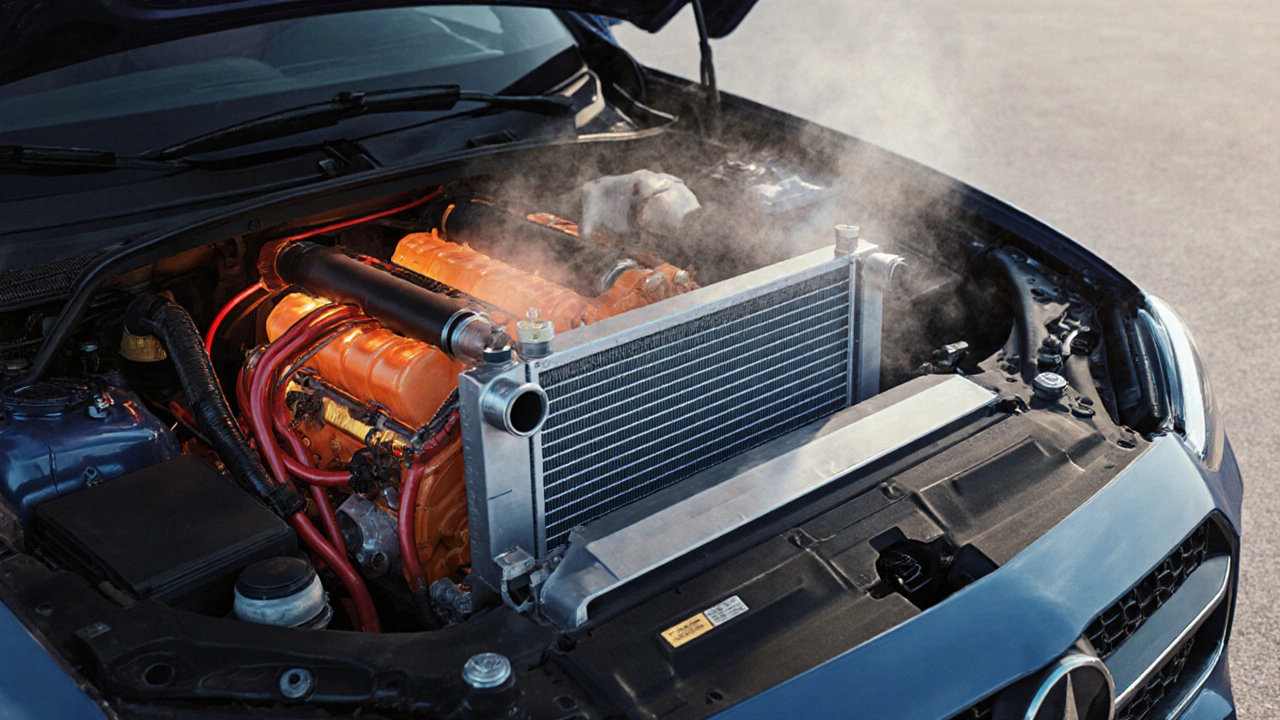
What Determines a Car Radiator's Life Expectancy?
Learn how long a car radiator typically lasts, what factors affect its durability, signs of failure, maintenance tips, and cost of replacement.
View moreWhen your engine starts running too hot, it’s rarely just a coincidence—it’s often a failing radiator, a critical component that circulates coolant to keep your engine from overheating. Also known as a cooling radiator, it’s one of the few parts in your car that works nonstop, day after day, no matter the weather. If it fails, your engine can seize in minutes. That’s why knowing when to replace it isn’t optional—it’s essential for safety and savings.
A radiator doesn’t work alone. It’s part of a system that includes the coolant, the fluid that absorbs heat from the engine and carries it to the radiator. Also called antifreeze, it needs to be clean, at the right level, and free of rust or debris to do its job. A clogged or leaking coolant system can mimic radiator failure, so diagnosing the real issue matters. Then there’s the radiator hose, the rubber tubes that connect the radiator to the engine. They crack, swell, or leak over time—and if they fail, you’re left with no coolant flow, even if the radiator itself is fine.
Most people don’t realize how fast things can go wrong. A small leak, a bent fin, or a worn thermostat can turn a minor repair into a full engine rebuild. You might notice steam under the hood, a sweet smell inside the cabin, or the temperature gauge creeping into the red. These aren’t just warnings—they’re alarms. And if you’ve seen your coolant level drop repeatedly, even after refilling, your radiator is likely done. It’s not about age—it’s about performance. A 10-year-old radiator with no leaks and clean coolant might still be fine. A 3-year-old one with internal corrosion? Done.
How long does a radiator replacement actually take? If you’re doing it yourself, plan for 3 to 6 hours, depending on your car model and tools. Most garages will charge 2 to 4 hours of labor, but that doesn’t include parts. Some cars make it easy—others hide the radiator behind the bumper, the AC unit, or the fan assembly. That’s why radiator replacement time varies so much. The part itself? It’s usually $200 to $600. Labor? Another $150 to $400. But skipping it? You could be looking at $3,000 in engine damage.
And here’s something most guides leave out: when you replace the radiator, you should also replace the thermostat and flush the entire cooling system. Old coolant left in the lines can clog the new radiator before it even starts working. It’s like putting a new filter in a dirty pipe—it won’t last. You’ll also want to check the water pump. If it’s original and your car has over 80,000 miles, it’s probably on borrowed time. Replacing it now saves you from another trip to the shop next month.
Below, you’ll find real-world guides on what to expect during a radiator swap, how long it takes, and what else to check while you’re at it. No fluff. No theory. Just what mechanics and DIYers actually do when the engine starts overheating. Whether you’re trying to fix it yourself or just want to know if your mechanic is telling you the truth, these posts give you the facts you need to make the right call.
Learn how long a car radiator typically lasts, what factors affect its durability, signs of failure, maintenance tips, and cost of replacement.
View more
Changing a car radiator might seem daunting, but with a bit of patience and the right tools, it's something you can handle. Understanding when and why a radiator needs changing can save you headaches down the road. From cleaning to installing, knowing the steps can prevent a potential mess. Here's a practical guide on what you need, what to watch out for, and how to get the job done smoothly.
View more