Spark Plug Replacement Calculator
Spark Plug Replacement Estimator
Determine if your spark plugs need replacement based on vehicle mileage and plug type. Follow manufacturer guidelines for best results.
Every car owner has been there: your engine sputters, the check engine light flickers, and you wonder if it’s time to clean your spark plugs or just swap them out. It sounds simple, but the answer isn’t. Cleaning spark plugs might seem like a cheap fix, but in most cases, replacing them is the smarter, safer, and more reliable choice. Let’s cut through the myths and show you exactly what to do.
Why Spark Plugs Matter
Spark plugs are the ignition system’s heartbeat. They fire a high-voltage spark across a tiny gap to ignite the air-fuel mixture in your engine’s cylinders. That’s it. No fancy tech, no moving parts-just pure electrical physics. But when they wear out, your engine pays the price. Poor fuel economy, rough idling, hard starts, misfires-all point to spark plug trouble.
Modern spark plugs last anywhere from 30,000 to 100,000 miles, depending on the type. Copper plugs wear out fastest, around 30,000 miles. Platinum and iridium plugs last longer-often 60,000 to 100,000 miles. But even the best ones don’t last forever. Carbon buildup, electrode erosion, and oil contamination slowly degrade performance.
The Cleaning Myth
You’ve probably heard someone say, “Just clean them with sandpaper or a wire brush.” It sounds practical. It’s cheap. And it’s wrong.
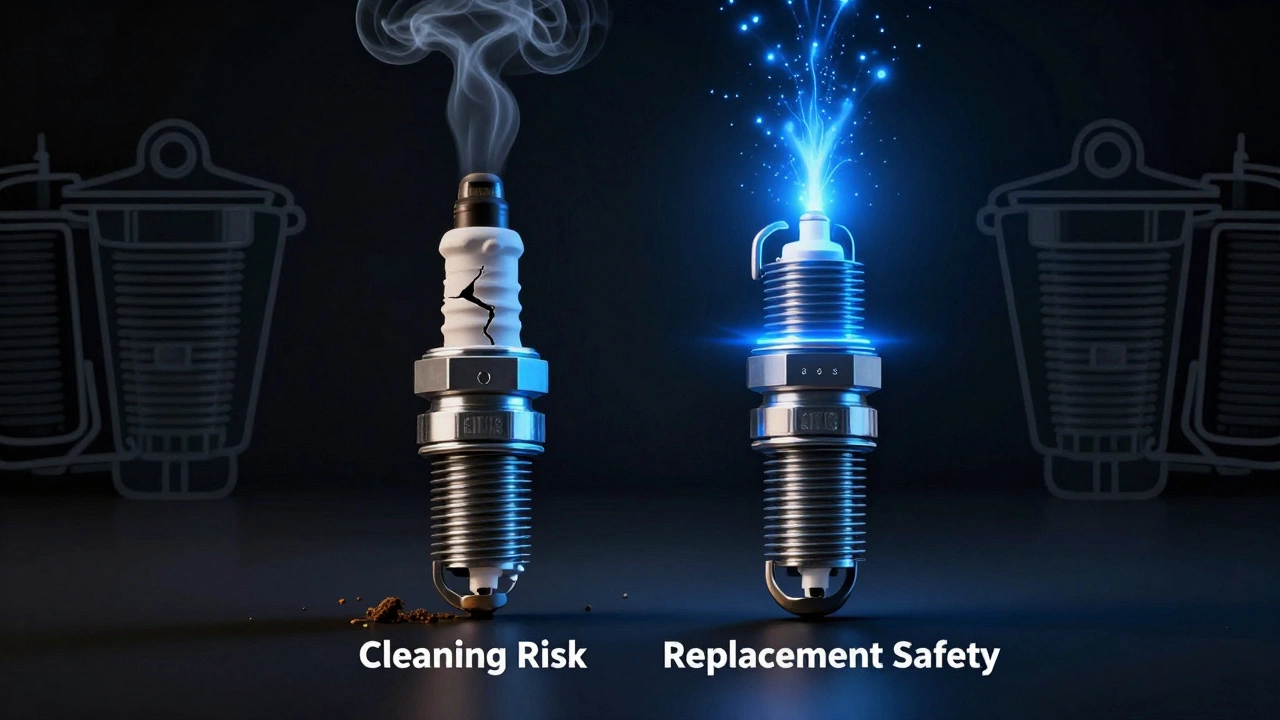
Spark plugs aren’t designed to be cleaned and reused. Their electrodes are precision-engineered. The gap between the center and ground electrode is set at the factory to within 0.025mm. Sandpaper or a wire brush doesn’t just remove carbon-it scrapes off the metal coating, widens the gap unevenly, and creates micro-cracks. Even if you get the gap back to spec, the surface finish is ruined. That affects spark strength and consistency.
Real-world test: A 2023 study by the Society of Automotive Engineers tracked 1,200 vehicles where owners cleaned old spark plugs instead of replacing them. Within 5,000 miles, 78% of those vehicles showed a drop in fuel efficiency and increased misfires. Only 12% of vehicles that replaced their plugs had any issues after 10,000 miles.
And let’s talk about the gunk. Carbon deposits? Easy to scrape. But oil fouling? That’s from leaking valve seals or worn piston rings. Cleaning the plug won’t fix the root problem-it’ll just give you a temporary fix before it fouls again. Same with fuel deposits from bad fuel or rich mixtures. Cleaning doesn’t fix your fuel system.
Why Replacement Is the Right Move
Replacing spark plugs isn’t just about getting new electrodes. It’s about restoring factory performance. New plugs have:
- Perfect, calibrated gaps
- Unworn, coated electrodes
- Sealed ceramic insulators
- Manufacturer-specified heat ranges
That means consistent ignition, smoother acceleration, better fuel economy, and fewer emissions. A fresh set of iridium plugs can improve fuel efficiency by 4-7% in older engines. That’s not a small gain-especially if you’re driving 20,000 kilometers a year.
Also, modern engines are tuned tightly. If your spark plugs are even slightly worn, your ECU (engine control unit) compensates by adjusting timing and fuel delivery. That’s why you might not notice the problem until it’s too late. Replacing them resets the system to factory specs.
When Cleaning Might Be Acceptable
There’s one real exception: brand-new spark plugs that came pre-gapped and were installed but never fired. Maybe you bought a set, installed one, realized you got the wrong heat range, and pulled it out. That plug can be cleaned and reused-carefully.
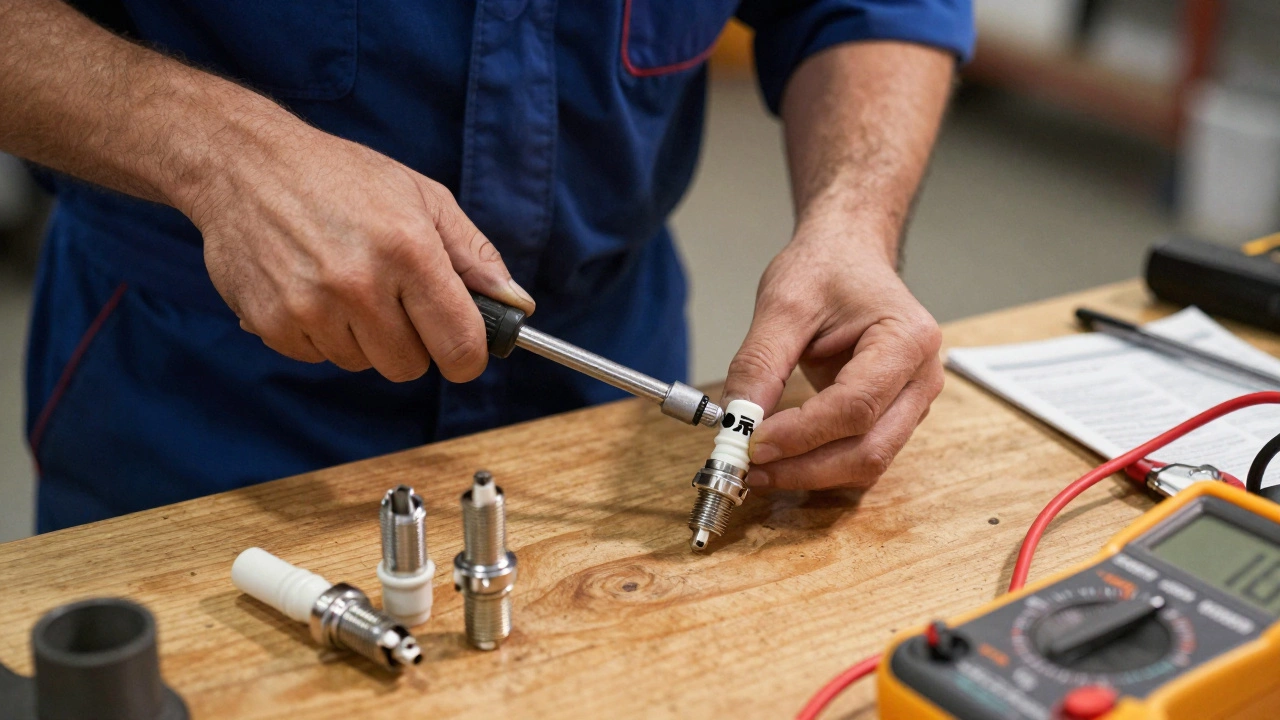
Use a dry, lint-free cloth. Gently brush off loose debris with a soft-bristled toothbrush. Never use metal tools. Check the gap with a feeler gauge. If it’s still within spec, it’s fine to reinstall. But if it’s been fired-even once-don’t risk it.
Another edge case: classic cars with hard-to-find plugs. If you’re restoring a 1972 Ford Mustang and the original copper plugs are no longer made, cleaning them might be your only option. But even then, you’re trading reliability for authenticity.
Cost Comparison: Clean vs. Replace
Let’s say you’ve got a 2018 Toyota Corolla with 75,000 km on it. It needs new spark plugs.
Replacing all four: $80-$120 for a set of iridium plugs. Labor? If you do it yourself, zero. If you take it in, $50-$80. Total: $80-$200.
Cleaning them: $0 for materials (wire brush, brake cleaner, sandpaper). But here’s the catch-you’ll need to test them, re-gap them, reinstall them, and hope they work. If they fail in a week, you’re back to square one. And if they cause a misfire that damages your catalytic converter? That repair costs $1,200-$2,000.
It’s not about the upfront cost. It’s about risk. Cleaning saves you $80 now but could cost you $1,500 later.
How to Know When to Replace
You don’t need to guess. Here’s your checklist:
- Your car’s manual says it’s time (check the maintenance schedule)
- Engine misfires or hesitates under acceleration
- Hard starting, especially in cold weather
- Check engine light with codes like P0300 (random misfire) or P0301-P0304 (cylinder-specific misfires)
- Fuel economy dropped noticeably over a few months
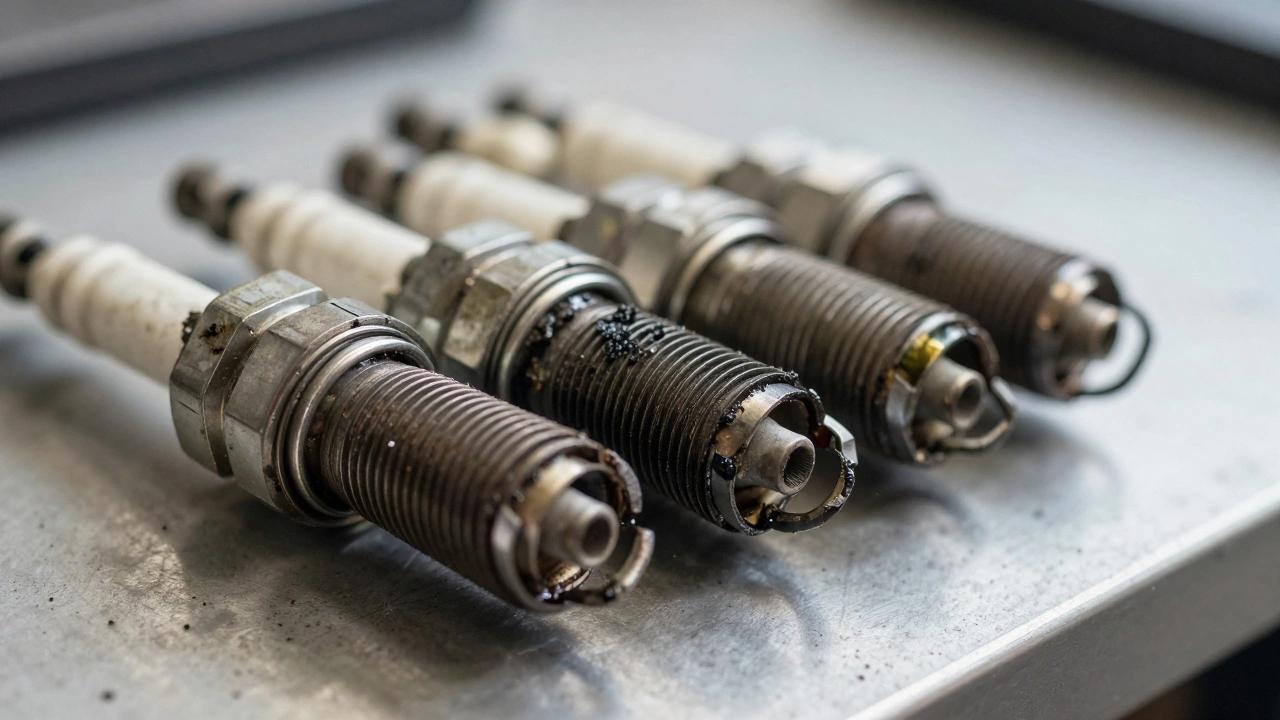
- Plugs are covered in black soot, oily residue, or melted electrodes
If two or more of these apply, replace them. Don’t clean them. Don’t wait.
What Happens If You Wait Too Long
Spark plugs don’t just wear out-they can seize. Especially in aluminum cylinder heads, which expand and contract with heat. Over time, the plug’s metal threads fuse to the head. When you finally try to remove it, the plug breaks off. Now you’re not just replacing a plug-you’re paying for a thread repair kit, a helicoil installation, or even a new cylinder head.
One mechanic in Adelaide told me about a customer who waited until his 2015 Honda Civic wouldn’t start. He tried to pull the plugs himself. One snapped off. The repair cost $1,800. He could’ve replaced all four for $140 a year earlier.
Waiting isn’t saving money. It’s gambling with your engine.
Pro Tips for Replacement
Replacing spark plugs isn’t hard, but mistakes happen. Here’s how to do it right:
- Let the engine cool completely. Hot metal expands. Removing plugs while hot can strip threads.
- Use a spark plug socket with a rubber insert. It holds the plug without crushing the ceramic.
- Apply a tiny drop of anti-seize to the threads-only on the threads, not the electrode. Too much can cause misfires.
- Hand-tighten first. Then torque to spec (usually 15-20 Nm). Over-tightening cracks the ceramic. Under-tightening causes leaks.
- Replace one at a time. Don’t remove all at once-you risk mixing up ignition wires or coils.
Use the exact plug type your car needs. Don’t swap in a “close enough” version. Heat range, thread size, and reach matter. A plug that’s too hot can cause pre-ignition. One that’s too cold will foul quickly.
Bottom Line
Forget cleaning your spark plugs. It’s a relic of the 1980s. Today’s engines are too precise, too sensitive, and too expensive to risk.
Replace them on schedule. Use the right type. Do it right. You’ll get better fuel economy, smoother performance, and avoid costly repairs. It’s not a luxury-it’s basic maintenance.
Spark plugs are cheap. Engine repairs aren’t. Choose wisely.
Can I clean spark plugs with WD-40?
No. WD-40 is a water-displacement spray, not a cleaner. It leaves an oily residue that can cause misfires and fouling. Even if you wipe it off, microscopic oil film remains on the electrodes. This affects spark quality. Use only dry brushing or compressed air for light debris. Never use solvents on spark plugs.
How often should spark plugs be replaced?
It depends on the plug type. Copper plugs last 20,000-30,000 miles. Platinum plugs last 60,000-80,000 miles. Iridium plugs can go 80,000-100,000 miles. Always check your owner’s manual. Some manufacturers recommend replacement every 4 years, regardless of mileage, because the ceramic can degrade over time.
Do I need to gap spark plugs before installing?
Most modern spark plugs come pre-gapped and should not be adjusted. Iridium and platinum plugs have thin electrodes that can break if you try to bend the ground electrode. Only check the gap if the manual says to, or if the plug was handled roughly. Use a wire-style gap tool, never a coin or feeler gauge with a blade-those can scratch the electrode.
Can bad spark plugs damage the engine?
Yes. Misfires from worn plugs can cause unburned fuel to enter the exhaust system. This overheats and damages the catalytic converter, which costs over $1,000 to replace. In extreme cases, persistent misfires can cause piston damage or even bend valves. Ignoring spark plug issues isn’t just expensive-it’s dangerous.
Are expensive spark plugs worth it?
For most drivers, yes. Iridium plugs cost more upfront but last twice as long as copper. That means fewer replacements, better fuel economy, and fewer misfires over time. If you drive more than 15,000 km a year, the long-term savings and performance gains make them worth it. For low-mileage drivers, platinum is a good middle ground.