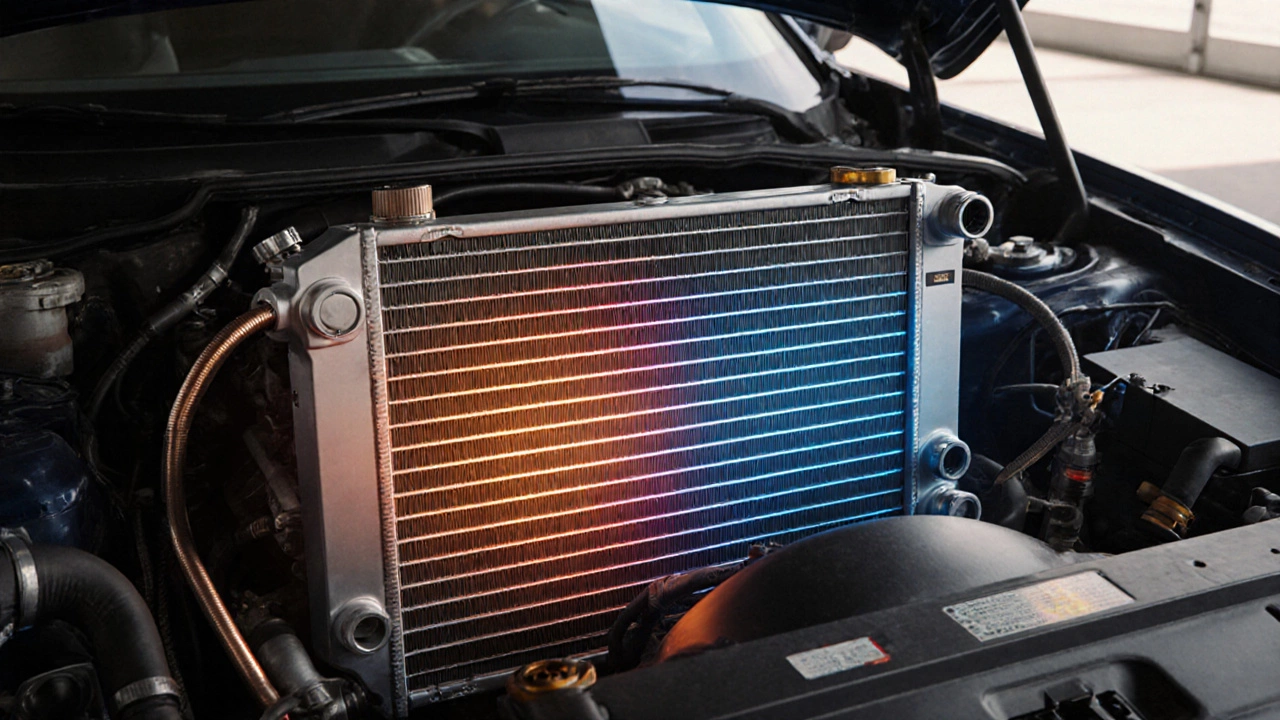
What Sound Does a Bad Radiator Make? Identify, Diagnose, and Fix Common Radiator Noises
Learn the tell‑tale noises of a failing radiator, what each sound means, how to diagnose them, and DIY fixes to keep your engine cool.
View moreWhen your radiator, the main component that cools engine coolant in your car. Also known as cooling radiator, it plays a critical role in keeping your engine from overheating. starts making noise, it’s not just annoying—it’s a warning. That hissing, gurgling, or knocking sound isn’t normal. It usually means something’s wrong with your cooling system, the network of hoses, pumps, and fluids that regulate engine temperature. Ignoring it can lead to a blown head gasket, warped cylinder heads, or a total engine failure. Most people think radiator problems only show up as steam or warning lights, but the first sign is often the sound.
A coolant leak, a common cause of radiator noise, often happens at the hoses, radiator cap, or the radiator itself. If you hear a hissing noise right after turning off the engine, it’s likely hot coolant escaping under pressure. A gurgling sound while driving usually means air is trapped in the system—often from low coolant or a faulty radiator cap. And if you hear a knocking or clicking noise that matches your engine’s RPM, your water pump, the component that circulates coolant through the engine and radiator. might be failing. These aren’t guesswork issues. Mechanics see these exact sounds every day, and they all point to the same thing: your cooling system is under stress.
What makes radiator noise worse is that it often hides behind other symptoms. You might think your car is overheating because of a bad thermostat, but the real culprit could be a cracked radiator tank or a loose hose clamp. A failing radiator can also cause your heater to blow cold air, even when the engine is hot. And if you’ve noticed your coolant level dropping without any visible puddles, that’s a classic sign of an internal leak—maybe a cracked head or a blown head gasket. These problems don’t fix themselves. The longer you wait, the more expensive the repair becomes.
You don’t need to be a mechanic to spot the early signs. Check your coolant level weekly. Look for rust or debris in the reservoir. Listen for sounds right after parking. If your radiator’s making noise, don’t assume it’s just old age. It’s often a simple fix—like replacing the cap, bleeding the air out, or tightening a hose. But if you hear a loud clunk or see steam, stop driving. Turn off the engine. Let it cool. Then check it out. The difference between a $50 repair and a $2,000 engine rebuild is often just a few days of attention.
Below, you’ll find real-world guides that break down exactly what those sounds mean, how to test your cooling system yourself, and which parts you can replace without lifting a wrench. From diagnosing radiator noise to understanding when to replace the whole unit, these posts give you the facts—not the fluff. No jargon. No upsells. Just what works.
Learn the tell‑tale noises of a failing radiator, what each sound means, how to diagnose them, and DIY fixes to keep your engine cool.
View more