Suspension Noise Diagnostic Quiz
Loading question...
Quiz Complete!
You scored 0 out of 5.
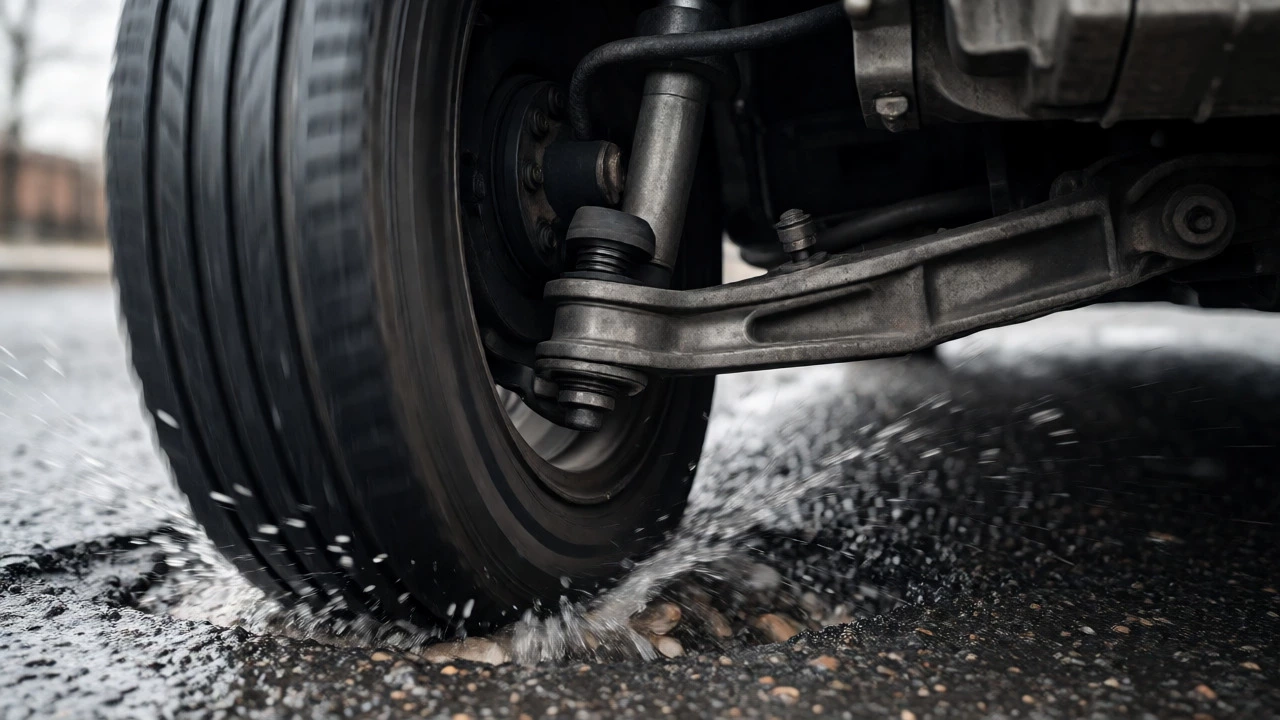
You’re driving down a familiar road, maybe hitting a pothole or taking a sharp turn, and suddenly you hear it. A clunk, a squeak, or a low grind. It’s annoying, sure, but more importantly, it’s your car trying to tell you something is wrong. The suspension system is the unsung hero of your ride-it keeps your tires on the ground, absorbs shocks, and handles the weight of the vehicle. When it starts making noise, it’s rarely just a cosmetic issue. It’s usually a sign that parts are wearing out, loose, or broken.
Ignoring these sounds can lead to bigger problems, like uneven tire wear or even loss of control in emergency maneuvers. But don’t panic. Most suspension noises fall into three distinct categories: clunking, squeaking, and grinding. Each one points to a specific type of failure. Let’s break down what each sound means, which parts are likely responsible, and how you can identify the culprit before it becomes a roadside breakdown.
The Loud Clunk: Loose or Worn Components
If you hear a loud, metallic knocking or clunking sound when going over bumps, turning, or braking, you’re likely dealing with loose or worn-out suspension components. This is the most common complaint mechanics hear regarding suspension issues. The sound happens because there’s excessive play in a joint or bushing, allowing metal parts to bang against each other.
The usual suspects here are ball joints and control arm bushings. Ball joints connect your steering knuckles to the control arms, allowing them to move up and down while supporting the vehicle's weight. When the grease inside wears away or the seal breaks, dirt gets in, causing rapid wear. Once the joint has too much play, it knocks every time the suspension compresses. You might also hear this from sway bar links. These small rods connect the sway bar to the suspension arms. They have ball-and-socket ends that wear out frequently. If they’re rattling, you’ll hear a distinct clatter over small imperfections in the road.
| Component | Symptom Trigger | Severity |
|---|---|---|
| Ball Joint | Turning at low speed, hitting bumps | High - Can cause wheel separation |
| Sway Bar Link | Small bumps, uneven roads | Medium - Annoying, affects handling |
| Control Arm Bushing | Braking, acceleration, large potholes | Medium - Causes alignment issues |
The High-Pitched Squeak: Dry or Failing Rubber Parts
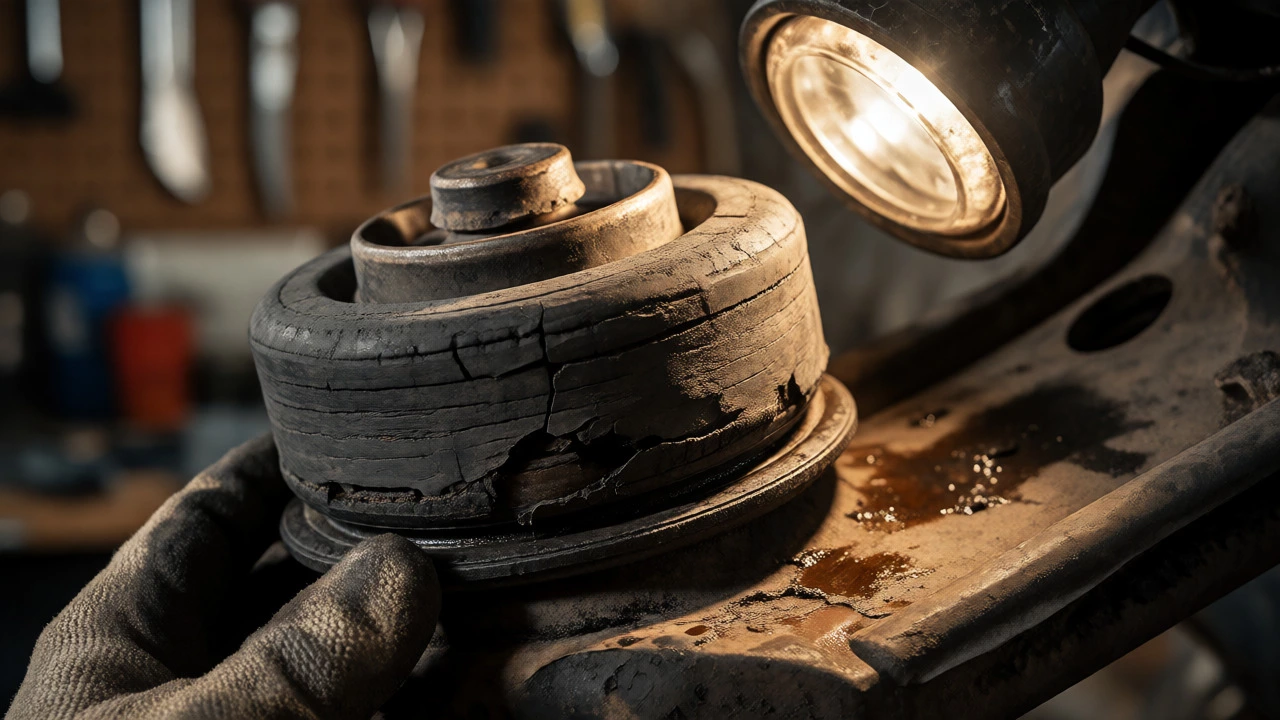
A high-pitched squeak or creak is often mistaken for a brake issue, but if it changes pitch as you turn the wheel or goes over a bump, it’s almost certainly suspension-related. This sound typically comes from rubber components that have dried out, cracked, or lost their lubrication. Rubber bushings are designed to isolate vibration and allow movement, but they degrade over time due to exposure to ozone, heat, and cold.
The most frequent source of squeaking is the strut mount. Strut mounts sit at the top of your shock absorbers or struts, connecting them to the vehicle’s body. They contain rubber and sometimes bearings. When the rubber hardens or cracks, the metal strut rod rubs against the mount housing, creating a squeal. Another common culprit is the bushing itself, particularly in the control arms or leaf springs (on trucks). If you spray silicone lubricant on a suspect bushing and the noise disappears temporarily, you’ve found the problem.
It’s worth noting that some cars are prone to squeaks simply because of design. For example, older vehicles with leaf spring suspensions often need regular greasing of the shackle pins. If you drive an older truck and hear creaking from the rear, check those shackles first. Modern independent suspensions rely heavily on polyurethane or rubber bushings that don’t require maintenance, so when they squeak, replacement is usually the only fix.
The Low Growl or Grind: Bearing Failure
A continuous humming, growling, or grinding noise that changes volume with speed-rather than road surface-is often misdiagnosed as tire noise. However, if the sound persists on smooth pavement and changes when you swerve slightly left or right, you’re likely looking at a failing wheel bearing. While technically part of the hub assembly, wheel bearings are integral to the suspension’s ability to keep the wheel rotating smoothly.
Wheel bearings consist of steel balls or rollers enclosed in a race. They are sealed and pre-lubricated for life, but seals can fail. Water and grit get in, destroying the grease and damaging the races. As the bearing deteriorates, it creates friction and noise. Initially, it might be a faint hum. As it worsens, it becomes a loud growl. In severe cases, it can grind loudly and generate significant heat, potentially locking up the wheel.
How do you distinguish a bad bearing from bad tires? Try this simple test: Drive at a steady speed on a quiet road. Gently steer left, then right. If the noise gets louder when you turn one way and quieter when you turn the other, it’s a wheel bearing. Why? Turning shifts the weight of the car onto one side. If the left bearing is bad, turning right puts more load on it, making it louder. Tires, on the other hand, tend to make consistent noise regardless of slight steering inputs, unless they have irregular wear patterns like cupping.
Diagnosing the Noise Yourself
You don’t need a mechanic’s stethoscope to narrow down the issue, though it helps. Here is a practical approach to diagnosing suspension noises without lifting the car immediately:
- The Rock Test: Park on a level surface. Push down firmly on the front bumper and release. The car should bounce once and settle. If it bounces multiple times or makes a clunk during the rebound, your shocks or struts are worn out. Worn dampers can also cause a thudding noise over bumps because they aren’t controlling the spring’s movement effectively.
- The Jack Stand Check: Safely jack up the front of the car and support it on jack stands. Grab the tire at the 12 and 6 o’clock positions and try to rock it. Excessive vertical play indicates worn ball joints. Next, grab the tire at 9 and 3 o’clock positions. Horizontal play suggests worn tie rod ends (steering) or lower ball joints.
- The Visual Inspection: Look for torn rubber boots on CV axles and ball joints. Grease splattered on the inside of the wheel is a dead giveaway that a boot has failed. Also, look for cracked or missing bushings on the control arms. If the rubber is split or separated from the metal sleeve, it needs replacement.
When to Worry and What to Do Next
Not all noises are emergencies. A slight squeak from a dry bushing won’t leave you stranded today. However, a loud clunk from a ball joint or a growing growl from a wheel bearing requires immediate attention. Driving with a failed ball joint can cause the wheel to detach from the suspension, leading to a loss of steering control. A seized wheel bearing can lock the wheel, causing a blowout or damage to the axle and transmission.
If you identify the noise as coming from a bushing or sway bar link, you can often replace these parts yourself with basic tools. They are relatively inexpensive, ranging from $20 to $50 per part. Ball joints and struts are more complex and may require specialized tools to compress springs or press out old joints. Wheel bearings are often sold as complete hub assemblies, which simplifies replacement but increases cost. Always check your vehicle’s service manual for torque specifications, as under-tightening or over-tightening suspension bolts can lead to premature failure.
Remember, suspension components work together. Replacing one worn part often reveals another that is close to failure. Mechanics frequently recommend replacing pairs-both sides of the front suspension-to ensure balanced handling. If you’re unsure about your diagnostic skills, take the car to a shop for an inspection. Ask them to demonstrate the play in the suspected component. Seeing the looseness firsthand builds trust and confirms the diagnosis.
Is it safe to drive with a clunking noise?
It depends on the severity. A mild clunk from a sway bar link is generally safe for short distances but will worsen. A loud, repetitive clunk from a ball joint or control arm is dangerous. It indicates significant play that could lead to component failure and loss of control. Avoid highway speeds and heavy loads until repaired.
Can tire noise mimic suspension noise?
Yes, especially if tires have developed uneven wear patterns like cupping or scalloping. Tire noise usually changes with road surface texture, while suspension noise (like bearings) changes with vehicle speed and steering angle. Rotating tires can help determine if the noise moves with the tire or stays in place.
How long do suspension bushings last?
Typically between 50,000 and 100,000 miles, depending on driving conditions. Harsh roads, extreme temperatures, and lack of maintenance accelerate wear. Polyurethane bushings last longer than rubber but transmit more vibration into the cabin.
Why does my car squeak when I turn the wheel?
This is commonly caused by dry strut mounts or worn upper ball joints. The rotation of the steering knuckle against a dry or damaged interface creates friction. Applying silicone spray to the strut mount area can confirm the source; if the noise stops, the mount is likely the issue.
Do I need to align my car after suspension repairs?
In most cases, yes. Replacing control arms, ball joints, or tie rods alters the geometry of the suspension. Even minor adjustments can affect toe, camber, and caster angles. An alignment ensures even tire wear and proper steering response.