Spark Plug Replacement Diagnostic Tool
Vehicle & Plug Information
Enter your vehicle details and select symptoms to receive a personalized recommendation.
You turn the key, and instead of that satisfying roar, you get a sluggish crank or a hesitant sputter. It’s frustrating, especially when you’re late for work. Your first instinct might be to check the battery, but have you considered your spark plugs? These small components are the heartbeat of your ignition system, responsible for igniting the air-fuel mixture in your engine cylinders. But here is the million-dollar question: will swapping out old ones for new ones actually fix your hard-starting problem?
The short answer is: sometimes. The long answer involves understanding what happens inside your engine during startup and why spark plugs matter more than you think. Let’s break down exactly when new plugs help, when they don’t, and how to diagnose the real culprit behind your starting troubles.
Why Spark Plugs Matter for Engine Startup
Think of a spark plug as a tiny lightning rod inside your engine. Its job is simple: create a high-voltage electrical arc that jumps across a gap to ignite the compressed fuel-air mixture. When this happens efficiently, your engine fires up smoothly. Over time, however, those electrodes wear down. The gap widens, carbon builds up on the tip, and the insulation can crack.
When your engine is cold, the fuel doesn’t vaporize as easily. This means the spark needs to be stronger and more precise to light the mixture. If your plugs are worn, the spark might be too weak or inconsistent. You’ll notice this most during cold starts, where the engine struggles to catch fire until it warms up enough for easier combustion. In these cases, fresh plugs can make a noticeable difference, turning a three-second struggle into an instant ignition.
Symptoms That Point to Worn Spark Plugs
How do you know if your starting issue is actually caused by the plugs? Cars rarely lie; they just speak in subtle codes. Look for these specific signs before you spend money on parts:
- Rough idling: Does your engine shake or vibrate excessively when stopped at a red light? Uneven firing from bad plugs often causes this.
- Misfires under load: Do you feel a stutter or hesitation when accelerating quickly? This suggests one or more cylinders aren’t firing correctly.
- Poor fuel economy: If you’re visiting the gas station more often without changing your driving habits, incomplete combustion due to weak sparks could be wasting fuel.
- Check Engine Light with P0300-P0304 codes: These diagnostic trouble codes specifically indicate misfires in individual cylinders, which are frequently linked to plug issues.
If you see these symptoms alongside slow starting, new plugs are likely a worthwhile investment. However, if your car runs perfectly once it’s warm but only struggles when cold, other factors like battery health or oil viscosity might be playing a bigger role.
When New Plugs Won’t Fix Hard Starting
It’s crucial to manage expectations. Replacing spark plugs isn’t a magic bullet for every starting problem. If your starter motor is whining loudly but the engine won’t turn over, that’s usually a battery or starter issue, not a plug problem. Similarly, if you smell raw gasoline after several failed attempts, you might have a flooding issue related to the fuel injectors or coolant temperature sensor, not the ignition spark.
Consider the age and mileage of your vehicle. Modern cars use iridium or platinum-tipped plugs that last between 60,000 and 100,000 miles. If your plugs were replaced recently, they are probably fine. Conversely, if you’ve driven 80,000 miles on copper plugs, they are definitely overdue. Also, remember that a single bad plug can cause rough running, but it rarely prevents the engine from starting entirely unless multiple cylinders are failing simultaneously.
| Plug Type | Lifespan (Miles) | Starting Benefit | Best For |
|---|---|---|---|
| Copper Core | 20,000 - 30,000 | High initial performance, degrades faster | Older vehicles, budget-conscious owners |
| Platinum | 50,000 - 60,000 | Consistent spark, good longevity | Daily drivers, modern engines |
| Iridium | 60,000 - 100,000+ | Superior cold-start capability, durable | Performance cars, turbocharged engines |
Other Culprits Behind Slow Starting
If you replace your plugs and the problem persists, look elsewhere. The ignition system is just one part of the puzzle. Here are three common alternatives that mimic spark plug failure:
Battery Health: A weak battery can’t spin the engine fast enough for the plugs to ignite effectively. Test your battery’s voltage with a multimeter. Anything below 12.4 volts while resting indicates a charge issue. Cold weather exacerbates this, making batteries seem dead even if they’re technically okay.
Fuel Pump Pressure: If the fuel pump is failing, it might not deliver enough pressure to the injectors. Without proper fuel delivery, even the best spark plug can’t create combustion. Listen for the brief hum of the fuel pump when you turn the key to "On" before starting.
Engine Oil Viscosity: Using the wrong oil weight can make cold starts difficult. Thick oil creates more resistance, slowing down the crank speed. Always use the manufacturer-recommended grade, especially in winter climates.

DIY Check: Inspecting Your Current Plugs
Before buying new parts, pull out one spark plug and inspect it. This takes ten minutes and costs nothing. Look for these conditions:
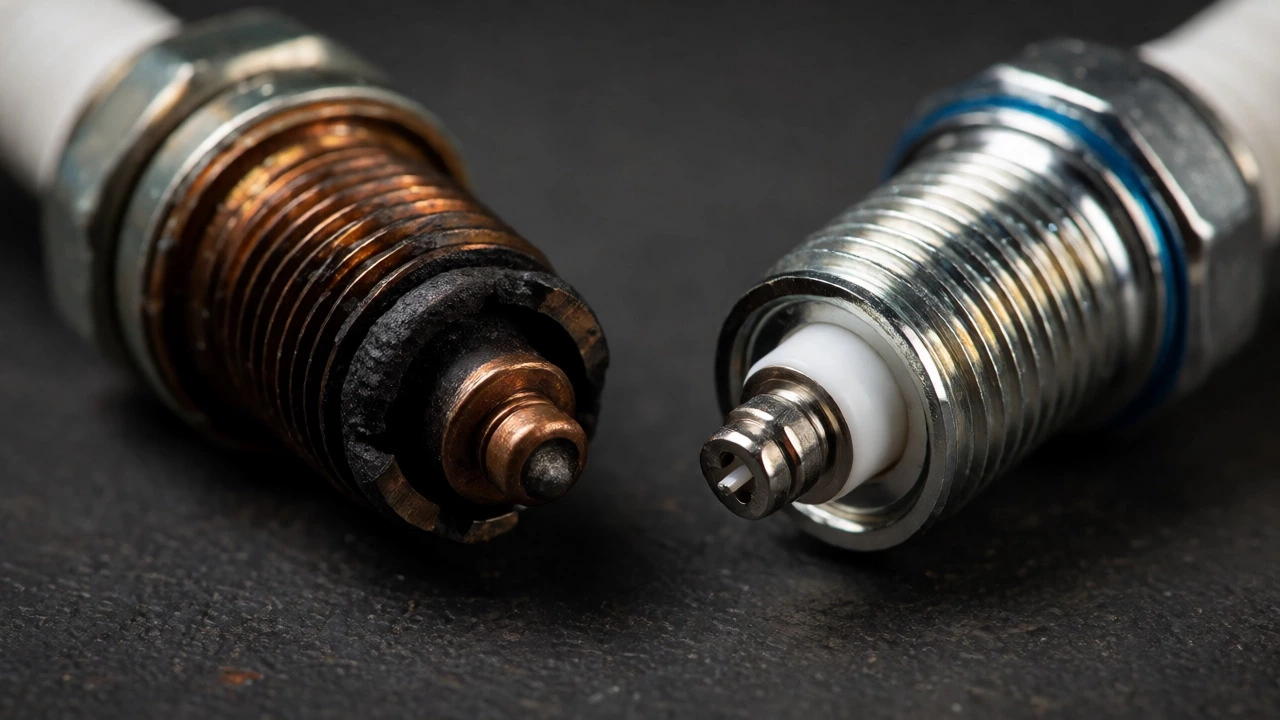
- Carbon Fouling: Black, sooty deposits on the electrode. This means the engine is burning rich (too much fuel) or has a leaky valve seal. Cleaning might help temporarily, but replacement is better.
- Oil Fouling: Wet, black residue. This indicates oil leaking past piston rings or valve guides. New plugs won’t fix the root cause, but they will run cleaner than the oily ones.
- Blistered Electrodes: White or gray spots with holes. This comes from overheating, often due to incorrect timing or lean fuel mixtures. Replace immediately.
- Wide Gap: Measure the distance between electrodes with a feeler gauge. If it’s significantly wider than the spec (usually 0.8mm to 1.1mm), the spark has to jump further, weakening its intensity.
If your plugs look clean and within spec, save your money. Focus on the battery or fuel system instead.
Pro Tips for Maximum Starting Improvement
To get the most out of a spark plug replacement, follow these guidelines. First, always replace all plugs at once. Mixing new and old plugs can cause uneven cylinder performance, leading to vibrations and poor efficiency. Second, apply anti-seize compound carefully to the threads-just a thin layer. Too much can insulate the plug and affect heat dissipation, potentially causing pre-ignition.
Third, torque them correctly. Over-tightening can crack the ceramic insulator, while under-tightening allows compression leaks. Use a torque wrench set to the manufacturer’s specification, typically around 15-25 ft-lbs depending on the engine. Finally, consider upgrading to iridium plugs if you live in a cold climate. Their finer center electrode creates a more focused spark, which is particularly helpful for lighting stubborn cold fuel mixtures.
Remember, maintenance is about balance. While new plugs improve ignition quality, they rely on a healthy battery, proper fuel pressure, and correct oil viscosity to work their magic. Diagnose thoroughly, act precisely, and enjoy smoother mornings.
Can bad spark plugs drain my battery?
Yes, indirectly. If spark plugs cause misfires, the engine control unit may keep the fuel injectors open longer or attempt multiple ignition cycles, putting extra strain on the starting system. Additionally, if the engine doesn't start quickly, you're cranking the starter motor longer, which drains the battery faster than usual.
How many miles should I drive before replacing spark plugs?
It depends on the type. Copper plugs typically need replacement every 20,000 to 30,000 miles. Platinum plugs last 50,000 to 60,000 miles, and iridium plugs can go 60,000 to 100,000 miles. Always check your owner's manual for the specific interval recommended by your vehicle manufacturer.
Do expensive spark plugs really perform better?
For standard daily driving, the difference between mid-range and premium plugs is minimal. However, in extreme conditions like very cold weather or high-performance applications, premium iridium plugs offer a more consistent spark and better durability. They resist fouling longer and maintain their gap accuracy over time.
What does it mean if my spark plug tips are white?
White or blistered spark plug tips usually indicate overheating. This can be caused by advanced ignition timing, a lean air-fuel mixture (too much air, not enough fuel), or using plugs with a heat range that is too hot for your engine. It requires investigation beyond just replacing the plugs.
Can I clean old spark plugs instead of replacing them?
You can clean lightly fouled copper plugs with a wire brush or spark plug cleaner. However, cleaning removes the microscopic irregularities on the electrode that help initiate the spark. Furthermore, the internal resistance changes over time. For reliable starting, replacement is generally superior to cleaning, especially for platinum and iridium types.