Clutch Power Recovery Calculator
How Much Power Are You Losing?
Your clutch's condition affects how much of your engine's power actually reaches the wheels. This calculator estimates your power recovery from a clutch replacement.
People often think swapping out an old clutch for a brand-new one will suddenly give their car more power. You hear it all the time: "I put in a new clutch, and now my car feels faster." But here’s the truth-a new clutch doesn’t add horsepower. Not even a single extra pound. What it does is make sure your engine’s existing power actually reaches the wheels without slipping away.
Why People Think a New Clutch Adds Power
It’s easy to confuse feeling more power with actually having more power. If your old clutch was worn out, it was probably slipping. That means when you pressed the gas, the engine revved up, but the wheels didn’t respond right away. You’d see 5,000 RPM on the tachometer while the car crawled forward. That’s not horsepower-it’s wasted energy.
When you install a new clutch, that slipping stops. Now, when you floor it, the engine’s full output transfers cleanly to the drivetrain. The car launches harder. Shifts feel sharper. Acceleration feels quicker. To your brain, that looks and feels like more power. But the engine hasn’t changed. The ECU hasn’t been reprogrammed. The exhaust hasn’t been upgraded. You’re just finally using the power you already had.
What a Clutch Actually Does
A clutch connects your engine to your transmission. When you press the pedal, it disengages so you can shift gears. When you release it, the clutch plates clamp together and spin as one unit, sending torque to the wheels. A healthy clutch transfers torque efficiently. A worn one doesn’t.
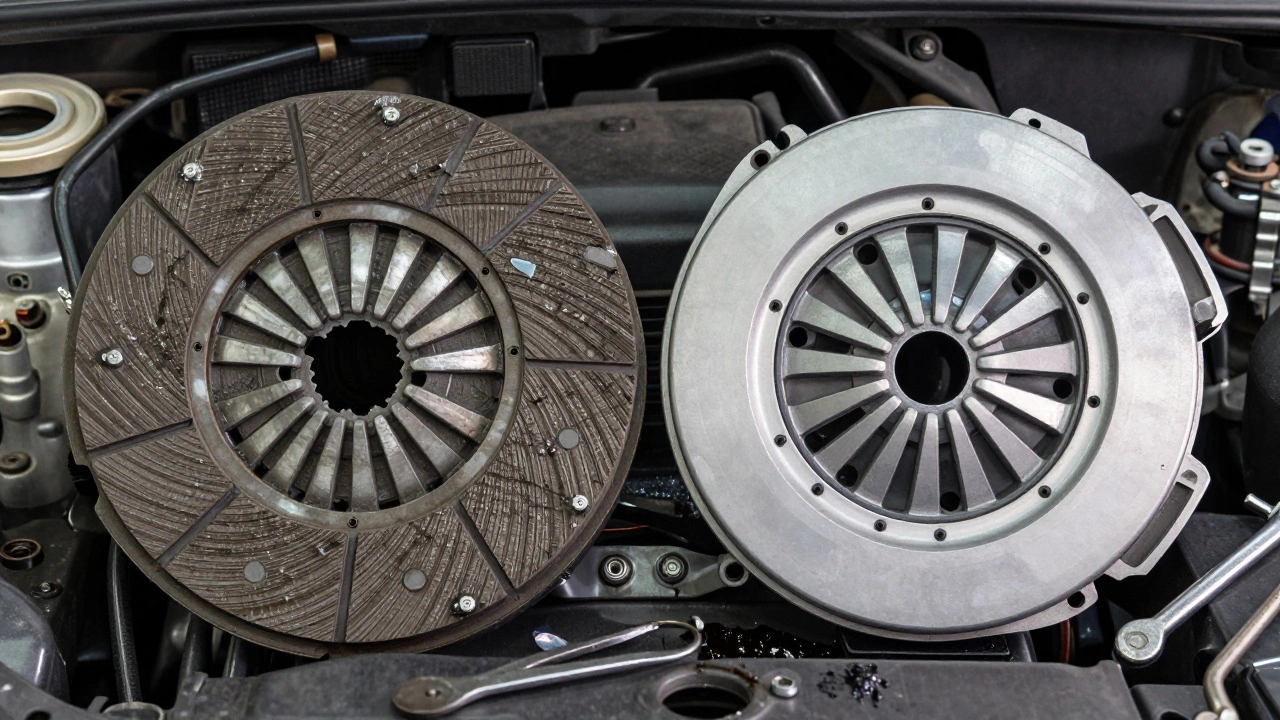
Clutch kits include the pressure plate, disc, and release bearing. The disc is the friction material that grips the flywheel. Over time, that material wears down-like brake pads. When it gets thin, the clamping force drops. Heat builds up. Slippage happens. That’s why older clutches feel lazy.
Replacing it with a new OEM clutch restores factory performance. Upgrading to a performance clutch (like a twin-disc or ceramic unit) doesn’t create more power-it just handles more of it. If you’ve modified your engine for more torque, a stronger clutch is necessary to stop it from burning up under load.
Performance Clutches: Do They Increase HP?
Some people buy a heavy-duty clutch because they think it’ll make their car faster. A Stage 2 or Stage 3 clutch from a brand like Exedy, ACT, or SPEC might have a higher clamping force, a more aggressive friction material, or a dual-disc setup. These are designed for track use or modified engines producing 400+ horsepower.
But here’s the catch: if your engine makes 250 hp and you install a race-grade clutch, you won’t gain any horsepower. In fact, you might lose some drivability. Aggressive clutch discs can be harsh on takeoff. They chatter. They’re noisy. They wear out flywheels faster. They’re not meant for daily driving.
Performance clutches are about durability and torque capacity-not power output. They’re like putting bigger tires on a truck so it can haul more weight. The truck doesn’t get a bigger engine. It just stops sinking in the mud.
When a New Clutch Makes Your Car Feel Faster
There are real situations where a new clutch makes a noticeable difference in how your car performs:
- Your old clutch was slipping badly-especially under hard acceleration or uphill.
- You noticed the clutch pedal going closer to the floor before engaging.
- There was a burning smell after spirited driving.
- Shifting felt vague or inconsistent.
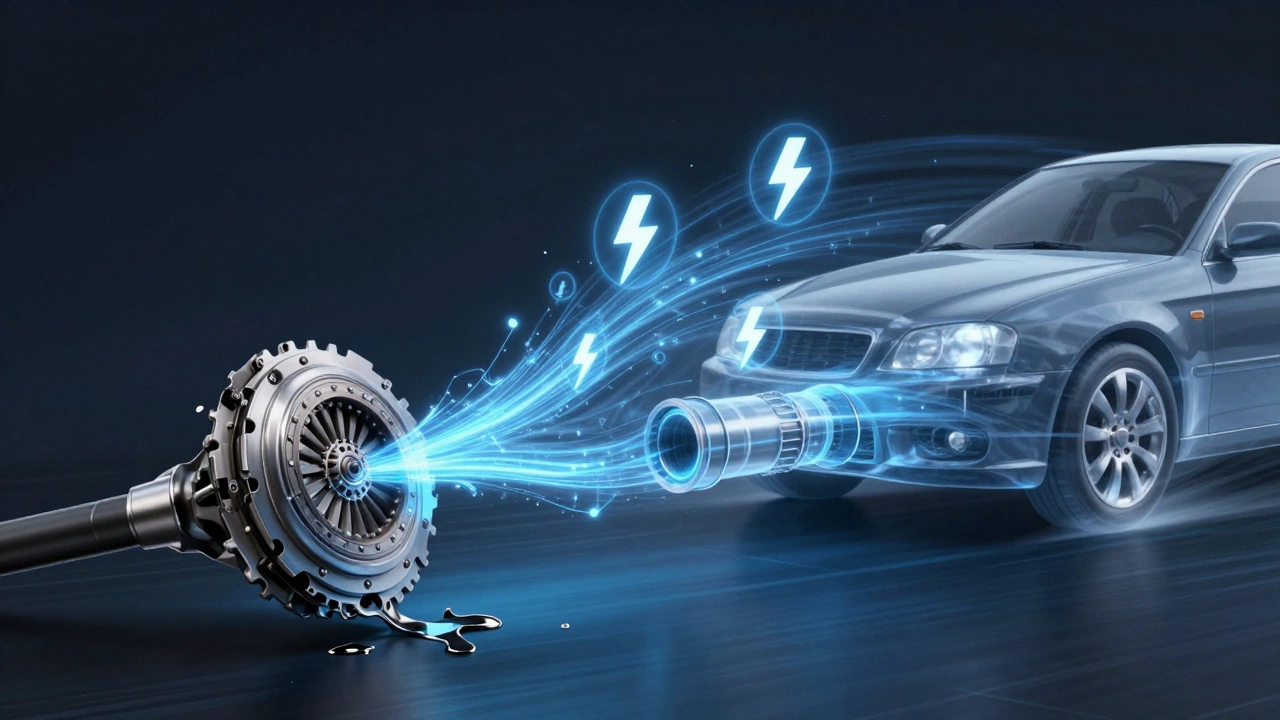
In these cases, the old clutch was robbing you of usable power. A new one fixes that. You’ll feel the difference because you’re no longer losing 10-15% of your engine’s output to slippage. That’s not added horsepower-it’s recovered horsepower.
Think of it like replacing a dirty air filter. You don’t get more air from the engine-you just let more air flow in. Same idea.
What Actually Adds Horsepower?
If you want real power gains, here’s what works:
- Upgrading the intake system for better airflow
- Installing a free-flowing exhaust
- Tuning the ECU with a custom map
- Adding a turbocharger or supercharger
- Improving engine internals (pistons, rods, camshafts)
These changes alter how the engine breathes, burns fuel, or spins. They increase the actual output of the engine. A clutch doesn’t do any of that. It just delivers what’s already there.
Even a lightweight flywheel-which some people pair with a new clutch-doesn’t add horsepower. It reduces rotational mass, which lets the engine rev faster. That makes acceleration feel quicker off the line, especially in lower gears. But peak horsepower? Still unchanged.
What to Look for When Buying a Clutch Kit
Don’t buy a clutch based on hype. Buy based on your needs.
For a daily driver with stock power (under 300 hp): Stick with an OEM-style replacement. It’s smooth, quiet, and lasts 100,000+ kilometers.
For a mildly modified car (300-400 hp): A performance street clutch with a slightly firmer pedal feel and higher torque capacity works well. Brands like Centerforce or LUK offer good balance.
For track use or drag racing: Go for a twin-disc or ceramic clutch-but expect noise, vibration, and reduced comfort. These aren’t for commuting.
Always replace the flywheel if it’s worn or damaged. A warped or glazed flywheel will ruin a new clutch in weeks. And don’t forget to use a torque wrench when installing the pressure plate. Over-tightening can warp components. Under-tightening causes slippage.
Myth vs. Reality: Quick Reference
| Myth | Reality |
|---|---|
| A new clutch adds horsepower | No-it only recovers lost power from slippage |
| Performance clutches make your car faster | Only if your engine makes more torque than the stock clutch can handle |
| Lightweight flywheels add HP | No-they reduce inertia, making revs quicker, not more powerful |
| All aftermarket clutches are better | Only for high-power applications. For stock cars, OEM is best |
| A clutch upgrade improves fuel economy | Not directly. But eliminating slippage can improve efficiency slightly |
What Happens If You Skip Replacing a Worn Clutch?
Driving with a slipping clutch isn’t just frustrating-it’s dangerous. You might think you’re saving money by waiting, but you’re risking more expensive damage.
A slipping clutch overheats the flywheel. That can warp it. A warped flywheel will ruin your new clutch even if you install one later. It can also crack the pressure plate or damage the transmission input shaft.
In extreme cases, the clutch disc can disintegrate. Metal shards can enter the transmission. That’s a $3,000+ repair. Replacing a clutch at the first sign of wear? That’s $800-$1,500 depending on the car.
Don’t wait until the clutch fails completely. If you notice any of these signs, act now:
- Engine revs rise without speed increase
- Clutch pedal feels spongy or goes too low
- Grinding or squealing when shifting
- Clutch smells like burnt toast after driving
Final Answer: Does a New Clutch Add HP?
No. A new clutch does not add horsepower. It restores what you’ve lost.
Think of your engine as a water pump. The clutch is the hose. If the hose is kinked or cracked, water flows poorly-even if the pump is running at full strength. Replace the hose, and the water flows freely again. The pump didn’t get stronger. You just fixed the leak.
A new clutch is about efficiency, not power. It’s about making sure every bit of torque your engine produces actually moves your car forward. That’s worth doing. But don’t expect magic. If you want more horsepower, upgrade the engine-not the clutch.
And if you’re considering a performance clutch? Make sure you need it. Most street cars don’t. A stock replacement is cheaper, smoother, and lasts longer. Save your money for real power upgrades-or just enjoy the ride.
Can a new clutch improve acceleration?
Yes-but only if your old clutch was slipping. A worn clutch loses power during launches and shifts. A new one transfers all engine torque to the wheels, making acceleration feel sharper and more immediate. It doesn’t add power, but it makes the power you have more effective.
Will a lightweight flywheel add horsepower?
No. A lightweight flywheel reduces rotational mass, which lets the engine rev faster and improves throttle response, especially in lower gears. But it doesn’t increase peak horsepower. It just makes the car feel more responsive. It’s a driving feel change, not a power gain.
Is an aftermarket clutch worth it for a stock car?
Usually not. Aftermarket clutches are designed for higher torque output or track use. For a stock engine under 300 hp, they’re overkill. They often have harsher engagement, more pedal effort, and shorter life on the street. Stick with a factory-replacement clutch for daily driving.
How long does a clutch last after replacement?
A standard OEM clutch lasts 100,000 to 150,000 kilometers under normal driving. Performance clutches may last 50,000-80,000 km, depending on driving style. Aggressive launches, riding the clutch, or frequent stop-and-go traffic shorten lifespan.
Should I replace the flywheel when replacing the clutch?
Yes-if the flywheel shows signs of wear, warping, or glazing. A damaged flywheel will cause a new clutch to slip or chatter. Most mechanics recommend replacing or resurfacing the flywheel during a clutch job. It’s a small extra cost that prevents premature failure.