Oil Change Calculator
Most people think they need to change their car’s oil every 5,000 kilometers, but that’s not always true. Modern engines and synthetic oils can go much longer-some up to 15,000 km. But how do you really know when it’s time? Waiting too long can wreck your engine. Changing it too often is just wasting money. The answer isn’t just a calendar date. It’s a mix of your car’s signals, your driving habits, and what the manual actually says.
Check the oil level and color
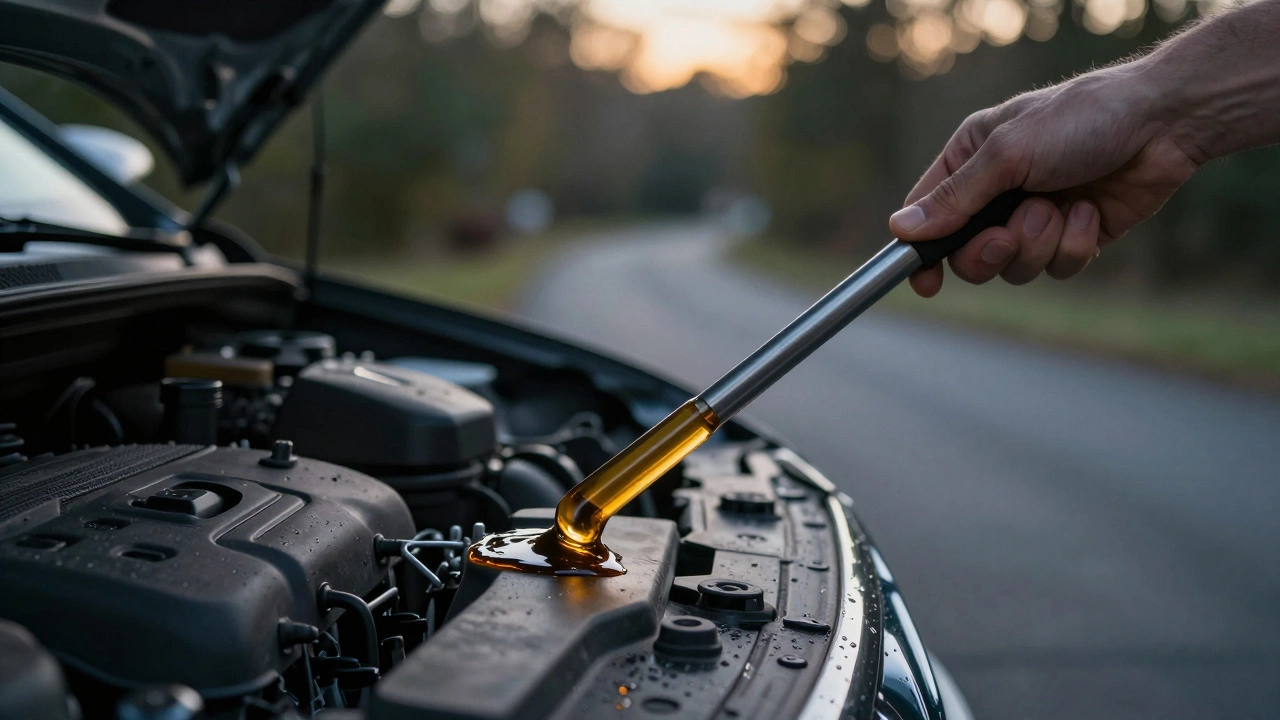
The easiest way to tell if your oil needs changing is to pull out the dipstick. Do this when the engine is cold and the car is on level ground. Wipe the stick clean, put it back in, then pull it out again. Look at the level first. If it’s below the minimum mark, you’ve got a problem-either a leak or burning oil. Either way, get it checked.
Now look at the color. Fresh oil is amber or light brown. Old oil turns dark, almost black. But that alone doesn’t mean it’s bad. Synthetic oils stay darker longer. The real test is texture. Rub a drop between your fingers. If it feels gritty or thick like tar, it’s done. Clean oil should feel smooth. Grit means metal particles are floating in there-signs your engine’s internal parts are wearing out.
Listen to your engine
Engine noise changes when the oil breaks down. You might hear a knocking or ticking sound when you start the car, especially in the morning. That’s not normal. It’s metal parts hitting each other because the oil isn’t coating them properly. Some people ignore it, thinking it’s just an old car. But that ticking? It’s your engine begging for help.
Another sign is a louder engine overall. If your car sounds like it’s working harder than before, even on flat roads, low oil viscosity could be the cause. Old oil loses its ability to maintain proper thickness. That means parts aren’t lubricated as they should be. The engine has to work harder, which lowers fuel efficiency and increases heat.
Watch the dashboard warning lights
Modern cars have oil life monitors. These aren’t just gimmicks-they’re sensors that track engine temperature, RPM, driving time, and even how hard you drive. Your car knows when the oil is losing its effectiveness. If the oil change light comes on, don’t ignore it. It’s not based on mileage alone. It’s based on how your car actually performs.
Some cars show a percentage. Like “Oil Life: 15%.” That’s your warning. Don’t wait until it hits 0%. By then, the oil is already thinning and dirty. Most mechanics recommend changing it when it hits 10-15%. If your car doesn’t have a monitor, check your manual. Most manufacturers say 10,000 to 15,000 km for synthetic oil. But if you drive in stop-and-go traffic or haul heavy loads, cut that in half.
Know your driving style
Two people with the same car can need oil changes at totally different times. Why? Driving habits matter more than you think.
If you mostly drive on highways at steady speeds, your oil lasts longer. The engine runs cool and consistent. But if you’re stuck in Adelaide traffic every day, making short trips under 10 km, your oil degrades faster. Short trips don’t let the engine reach full operating temperature. That means moisture and fuel get into the oil and don’t burn off. Over time, that turns into sludge.
Driving in extreme heat or cold also wears oil out faster. Adelaide summers can hit 40°C. Winter nights drop below 5°C. Both extremes stress the oil. Towing a trailer? Carrying heavy loads? That’s extra heat and pressure. Your oil breaks down quicker. If you do any of this regularly, stick to the “severe conditions” schedule in your manual. That usually means every 7,500 km or six months-whichever comes first.

Smell and smoke tell stories too
Open your hood after driving and sniff near the oil cap. If you smell burnt oil or gasoline, something’s wrong. That smell means oil is leaking onto hot engine parts or fuel is mixing in. Either way, it’s not normal.
Also watch for smoke from the exhaust. Blue smoke means the engine is burning oil. That could be worn piston rings or valve seals. But if you see blue smoke right after an oil change, it might just be old oil being cleaned out. If it keeps happening after a few hundred kilometers, you’ve got a bigger issue. Don’t just change the oil-get the engine checked.
Follow the manual, not the myths
You’ve heard the 3,000-mile rule. That was true in the 1970s. Today’s engines are different. Synthetic oils are better. Filters are more efficient. Most manufacturers now recommend oil changes between 10,000 and 15,000 km for synthetic blends. For conventional oil, it’s more like 5,000 to 7,500 km.
But here’s the catch: your manual is the only source that matters. A Toyota Corolla with synthetic oil might go 15,000 km. A Ford Ranger used for towing might need it at 8,000 km. Don’t guess. Open the manual. Look for “Maintenance Schedule” or “Oil Change Intervals.” There’s usually a section for “Normal” and “Severe” driving conditions. If you’re not sure which one fits you, pick severe. Better safe than sorry.
What happens if you wait too long?
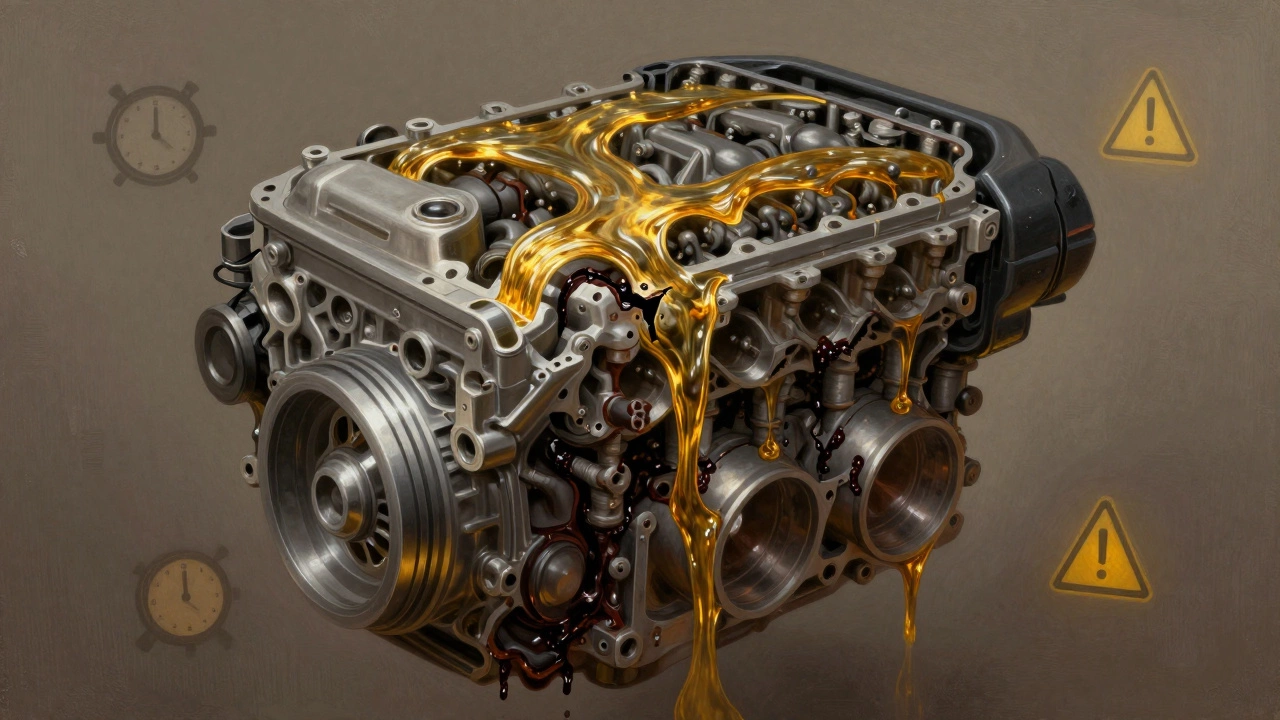
Skipping oil changes doesn’t break your car right away. It slowly kills it. Dirty oil doesn’t lubricate well. That means more friction. More friction means more heat. More heat means metal parts warp or seize. You might hear a rattle. Then a knock. Then nothing. Engine failure.
And it’s expensive. Replacing an engine in Australia can cost between $4,000 and $8,000. An oil change? Around $80 to $150, depending on the oil and shop. That’s not even a contest. The cost of waiting isn’t just money. It’s being stranded on the side of the road. It’s losing your car for weeks. It’s stress.
One mechanic in Adelaide told me he sees the same pattern every year. People wait until the oil light flashes. Then they bring the car in. The oil is black, thick, full of metal shavings. The engine’s already damaged. He’s seen engines where the oil filter was clogged so badly it looked like a mud cake.
Pro tips for getting it right
- Keep a log. Write down every oil change date and km. Even if your car has a monitor, having a paper trail helps when you sell the car.
- Use the right oil. Check your manual for viscosity (like 5W-30 or 10W-40) and type (synthetic, semi-synthetic, conventional). Using the wrong oil can void your warranty.
- Replace the oil filter every time. A clean oil filter with dirty oil is pointless. The filter traps contaminants. If it’s old, they’ll just flow back in.
- Don’t overfill. Adding too much oil can cause foaming, which reduces lubrication. Stick to the dipstick marks.
- Change oil before long trips. If you’re driving to the coast or up north, do it first. Heat and load stress the engine. Fresh oil gives you peace of mind.
What about oil additives?
There are a lot of products that claim to “extend oil life” or “clean your engine.” Most are useless. Some are even harmful. Modern oils already have detergents, dispersants, and anti-wear additives built in. Adding more doesn’t help. It can mess with the oil’s balance.
Stick to reputable brands: Mobil 1, Castrol, Shell, AMSOIL. Don’t buy the cheapest oil you can find. It might save $10 now, but cost you $5,000 later.
Final checklist: When to change your oil
- Oil light is on
- Oil looks dark and gritty
- Engine sounds louder or knocks
- You’ve hit the km or time limit in your manual
- You drive short trips often or in extreme weather
- There’s blue smoke from the exhaust
- It’s been more than six months since the last change
If two or more of these apply, don’t wait. Get it done. Your engine doesn’t care about your budget. It only cares if you keep it clean and lubricated.
Can I just go by mileage or time, whichever comes first?
Yes. Most manufacturers recommend changing oil based on whichever comes first: distance (like 10,000 km) or time (like 6 months). Even if you drive very little, oil still breaks down over time. Moisture, heat, and oxidation degrade it. So if you only drive 2,000 km a year, change the oil every six months.
Does synthetic oil last longer than conventional oil?
Yes. Synthetic oil is engineered to resist heat, sludge, and breakdown better than conventional oil. It typically lasts 1.5 to 2 times longer. A conventional oil change might be needed every 5,000 km, while synthetic can go 10,000-15,000 km. Synthetic also flows better in cold weather, which helps with engine startup.
What if I don’t drive much? Do I still need to change the oil?
Absolutely. Oil degrades even if the car sits. Moisture from condensation builds up in the crankcase. Fuel can leak past the pistons and mix in. These contaminants turn into acids and sludge. If you drive less than 5,000 km a year, change the oil every six months. It’s cheap insurance.
Can I change the oil myself?
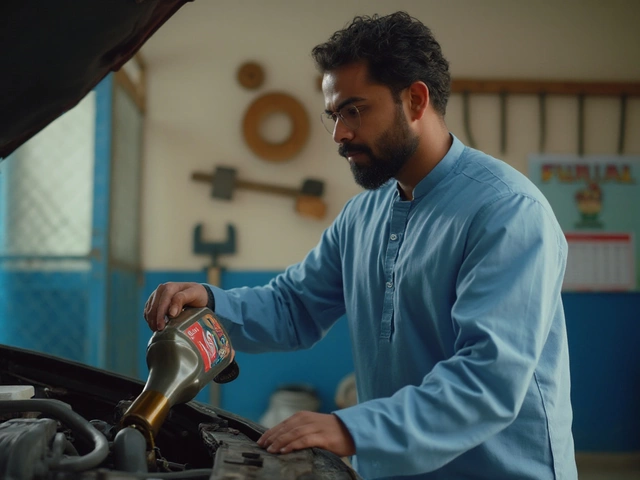
Yes, and it’s easier than most people think. You’ll need a wrench, oil filter wrench, funnel, new filter, and the right oil. Drain the old oil, replace the filter, refill with fresh oil, and check the level. It takes about 45 minutes. You’ll save $50-$80 per change. Just make sure to dispose of the old oil properly-at an auto shop or recycling center.
Is it okay to mix synthetic and conventional oil?
In an emergency, yes. Mixing them won’t cause immediate damage. But it’s not ideal. Synthetic oil has better additives and stability. Mixing it with conventional oil dilutes those benefits. If you’re topping up, use the same type and grade. Don’t make it a habit.
Next steps if your oil is bad
If you’ve noticed multiple warning signs, don’t delay. Book an oil change. While you’re at it, ask the mechanic to check for oil leaks, worn seals, or engine wear. A quick inspection now can prevent a costly repair later.
If your car has over 150,000 km and you’ve never changed the oil regularly, consider a full engine flush before the new oil. It’s not always needed, but for neglected engines, it can remove years of sludge buildup.
And if you’re unsure about your car’s needs, take the manual to a trusted mechanic. They’ll tell you exactly what your engine needs-not what they think you should buy.