Car Suspension: What It Is, How It Works, and When It Needs Repair
When you drive over a bump and your car doesn’t jump like a pogo stick, that’s thanks to the car suspension, a system of springs, shocks, and links that connects the wheels to the chassis and keeps the tires in contact with the road. Also known as vehicle suspension, it’s not just about comfort—it’s one of the most critical safety systems in your car. Without it, steering becomes unpredictable, tires wear unevenly, and braking distances grow dangerously long.
A bent suspension, a common result of hitting potholes, curbs, or accidents can turn a minor repair into a major risk. You might not notice it right away, but if your car pulls to one side, rides lower on one corner, or the tires look unevenly worn, the suspension is sending you a warning. Suspension damage, whether from wear, impact, or poor maintenance doesn’t just hurt handling—it can lead to tire blowouts, loss of control, or even rollovers. And no, you can’t just ignore it because the car still drives. Many drivers do, and end up paying far more later.
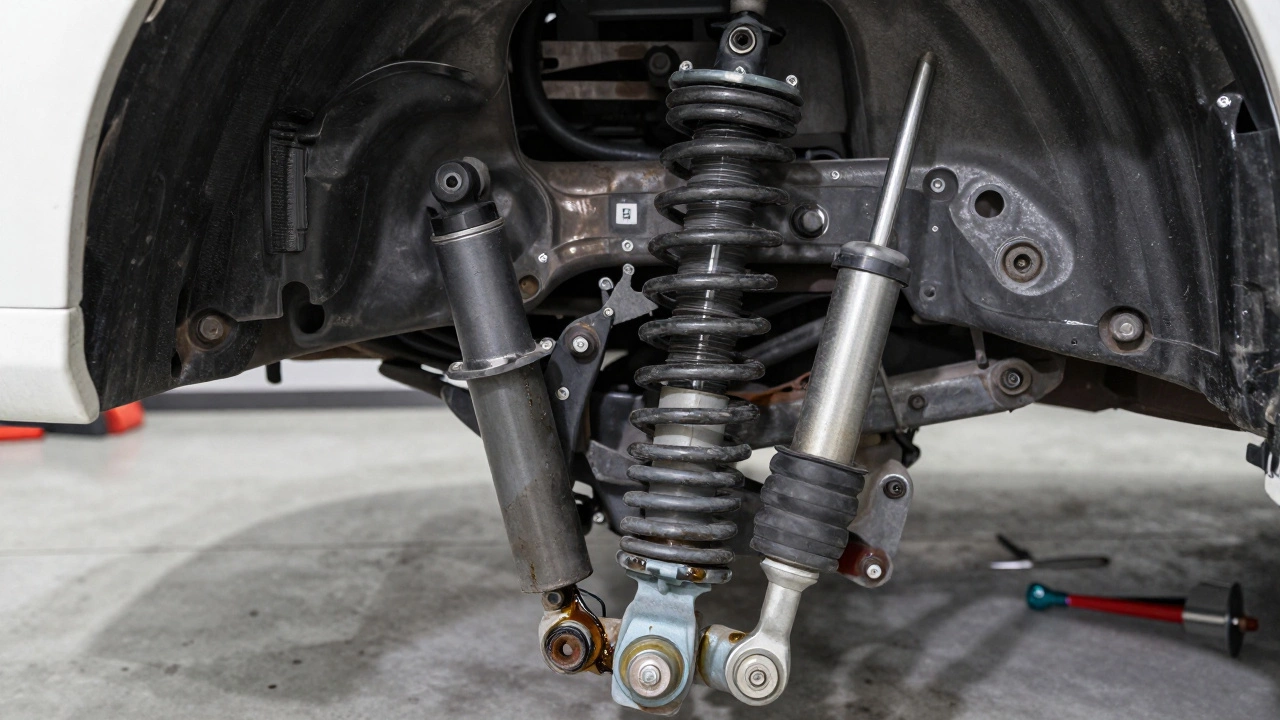
The suspension components, including shock absorbers, struts, control arms, and ball joints all work together. When one fails, the others wear out faster. That’s why replacing just one shock absorber often isn’t enough—you need to check the whole system. Some signs are obvious: clunking over bumps, excessive bouncing, or a nose dive when braking. Others are quieter but just as dangerous: uneven tire wear or steering that feels loose or wobbly.
You won’t find a single fix for every suspension problem. Some cars need new struts. Others need control arms replaced. Some just need a simple alignment. But every repair starts with the same question: Is your suspension still doing its job? The posts below cover real cases—from drivers who ignored warning signs and ended up with $2,000 repairs, to those who caught the issue early and saved time and money. You’ll find clear guides on how to spot damage, what parts are most likely to fail, and how to decide whether to fix it yourself or head to a shop. No fluff. No guesses. Just what actually matters for your safety and your wallet.