Ever hit a pothole and felt your whole car jump like it’s trying to escape? Or noticed your ride feels bouncier than it used to? That’s your suspension talking. It’s not just about comfort - it’s safety, control, and keeping your tires planted on the road. Most people don’t think about their suspension until something breaks. But knowing what’s inside it helps you spot trouble early, save money, and drive with more confidence.
What’s Actually Inside Your Suspension?
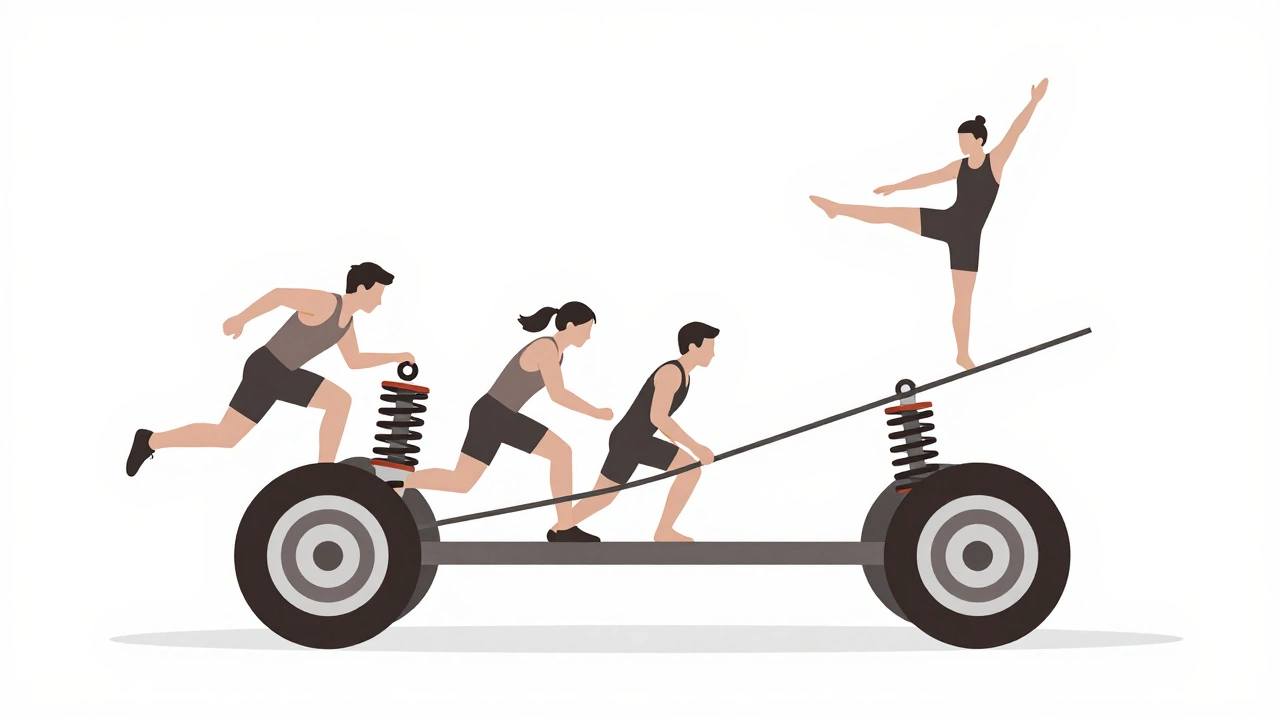
Your suspension isn’t one big part. It’s a team of components working together. Think of it like a team of athletes: each has a job, and if one slips up, the whole system suffers.
The main players are:
- Shock absorbers (or struts)
- Spring coils (or leaf springs)
- Control arms
- Ball joints
- Stabilizer bars (also called sway bars)
- Mounts and bushings
These parts vary by car. A truck might use leaf springs. A sports car might have coilovers. But most everyday cars use the same basic setup.
Shock Absorbers and Struts: The Brakes of Bounce
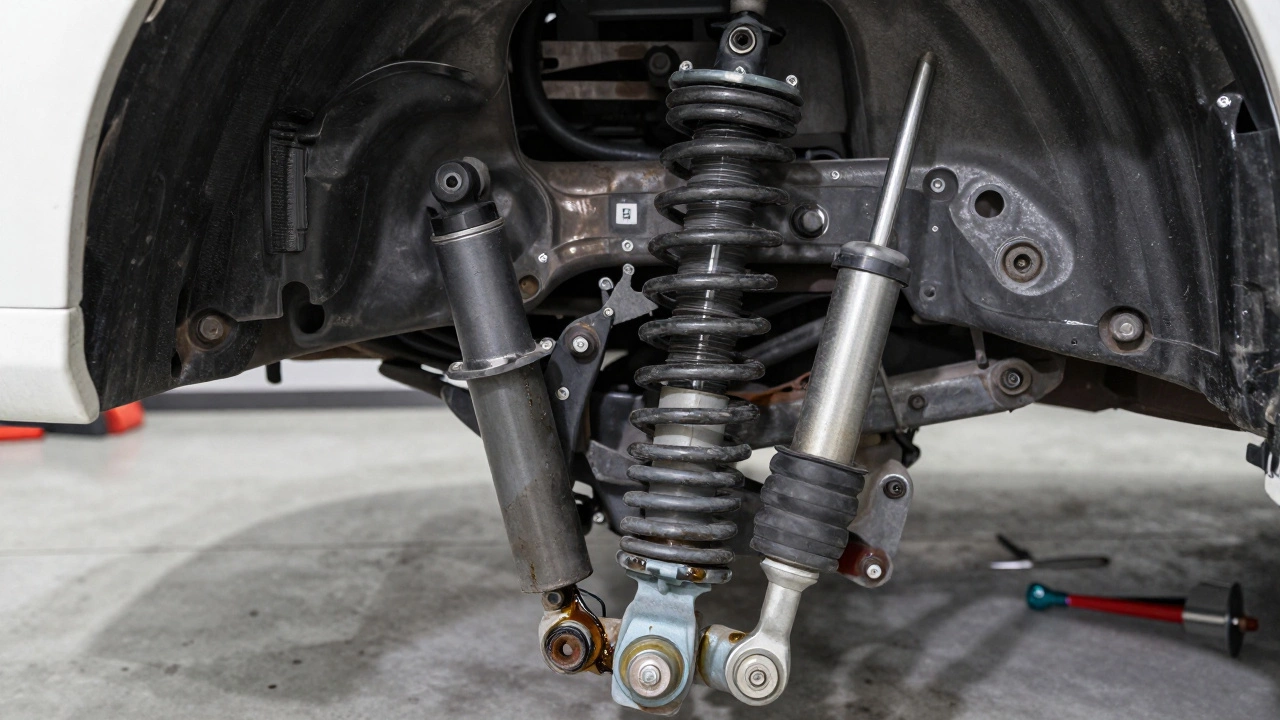
People often say "shocks" and "struts" interchangeably, but they’re not the same. Both control spring movement, but struts are structural - they’re part of the steering and wheel alignment. Shocks are just dampers.
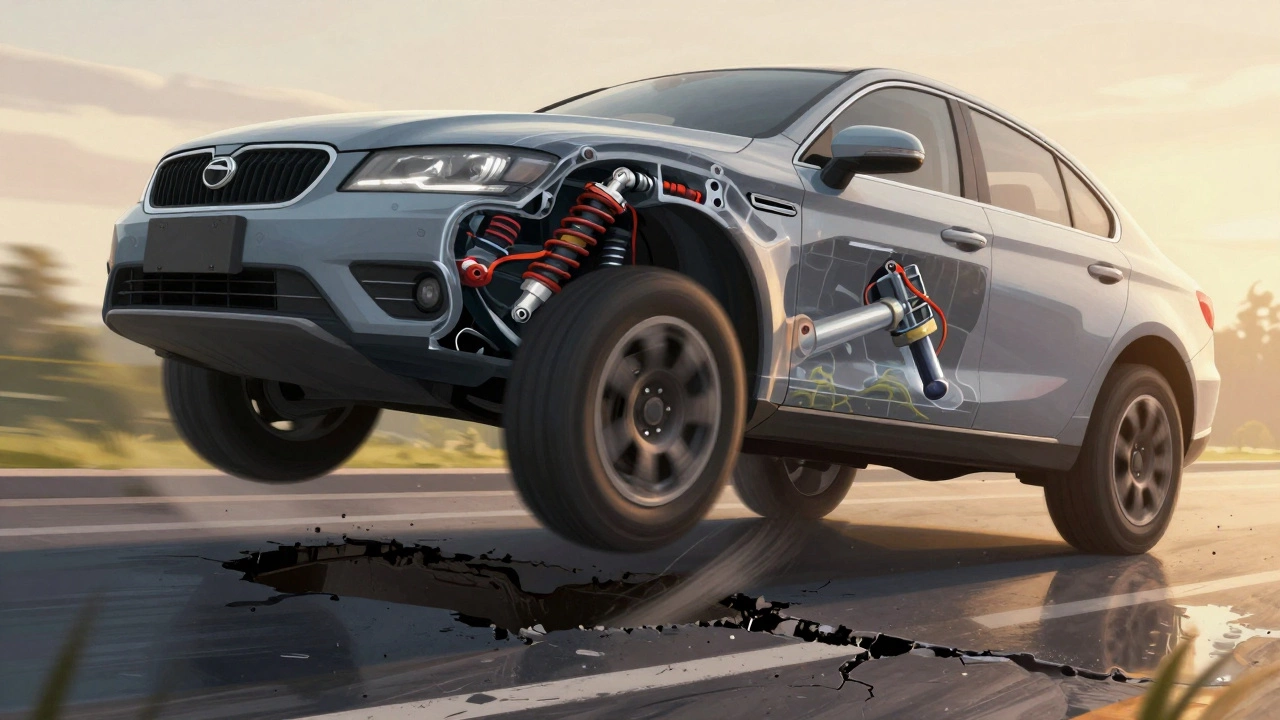
Here’s how they work: when your tire hits a bump, the spring compresses. Without a shock absorber, the spring would keep bouncing like a pogo stick. The shock slows that motion down with hydraulic fluid and valves. It turns energy into heat.
Signs your shocks or struts are worn? Your car dives when braking, leans hard in turns, or bounces more than twice after you push down on the hood. Many mechanics recommend checking them every 50,000 km - or sooner if you drive on rough roads often. In Adelaide, where gravel roads and potholes are common after heavy rain, that’s not just advice - it’s a safety must.
Springs: The First Line of Defense
Springs hold up your car. They’re what absorb the initial impact from bumps. Most modern cars use coil springs - metal coils wrapped around each wheel. Older cars, trucks, and SUVs might still use leaf springs: stacked metal strips that bend under load.
Springs don’t wear out like shocks, but they can break or sag. If your car looks lower on one side, or you notice uneven tire wear, the springs might be losing their tension. A sagging spring throws off alignment and makes steering harder. It also puts extra stress on other parts like ball joints and control arms.
Control Arms: The Link Between Wheel and Frame
Control arms are the metal arms that connect your wheels to the car’s frame. They let the wheels move up and down while keeping them aligned. Most cars have upper and lower control arms - some have just one.
These arms are tough, but they’re not indestructible. Rust, impacts, and age can crack them. If you hear clunking noises over bumps, especially when turning, it’s often a sign the control arm bushings are worn - or worse, the arm itself is loose.
Driving with a broken control arm is dangerous. Your wheel could shift out of position, leading to loss of control. It’s not a "fix it later" kind of problem.
Ball Joints: The Pivot Points
Ball joints are like your shoulder or hip joint - they let parts move in multiple directions. Each wheel has one or two ball joints that connect the control arm to the steering knuckle.
They’re sealed with rubber boots to keep dirt out and grease in. When those boots crack, dirt gets in, grease leaks out, and the ball joint wears fast. A worn ball joint can make your steering feel loose or wobbly. You might hear clicking or popping when turning.
Worn ball joints are a leading cause of sudden steering failure. Many mechanics test them by lifting the wheel and shaking it - if there’s play, it’s time to replace.
Stabilizer Bars: Keeping Your Car Flat in Turns
Ever feel your car lean hard to one side when taking a sharp turn? That’s body roll. Stabilizer bars - or sway bars - reduce that lean.
They’re metal rods that connect the left and right sides of the suspension. When one wheel goes up, the bar twists and pulls the other side up too. That keeps the car level.
Worn stabilizer bar links (the small rods that connect the bar to the control arms) cause a rattling noise over bumps. You might also notice more body roll than usual. It won’t make your car unsafe to drive, but it makes handling feel sloppy, especially at higher speeds.
Mounts and Bushings: The Quiet Heroes
These are the rubber or polyurethane pieces that cushion metal-to-metal contact. You’ll find them on shocks, struts, control arms, and stabilizer bars.
They’re small, but they do big work. They absorb vibrations, reduce noise, and help keep everything aligned. When they wear out, you’ll hear squeaks, clunks, or rattles - especially over bumps or when turning.
Old bushings also let parts move out of position. That leads to uneven tire wear, poor handling, and extra stress on other components. Replacing them is cheap. Ignoring them? Not so much.
How to Know When It’s Time to Replace Something
You don’t need to replace everything at once. But here’s what to watch for:
- Excessive bouncing after hitting a bump
- Car leaning or swaying in turns
- Clunking or knocking noises over rough roads
- Uneven tire wear (cupping or feathering)
- Steering feels loose or wobbly
- Vehicle sits lower on one side
Many people wait until something breaks. But suspension parts wear gradually. A quick visual check - looking for leaks on shocks, cracks in bushings, or rust on control arms - can save you from a costly repair later.
What Happens If You Ignore It?
Bad suspension doesn’t just make your ride uncomfortable. It affects your brakes, tires, and steering.
Worn shocks mean longer stopping distances. Worn bushings cause misalignment, which eats through tires faster. A broken control arm or ball joint? That’s not a repair - that’s a roadside emergency.
Insurance companies in Australia have seen a rise in accidents linked to suspension failure, especially in rural areas where roads are rougher. It’s not just about comfort. It’s about staying alive.
What to Do Next
If you’re unsure, get a professional inspection. Most garages offer a free suspension check. Ask them to show you the worn parts - a picture of a cracked bushing or leaking shock is worth a thousand words.
If you’re handy, you can check a few things yourself:
- Push down hard on each corner of the car. It should bounce once and stop. If it bounces more than twice, your shocks are worn.
- Look under the car. Check for oil leaks on shocks, cracked rubber on bushings, or rust on control arms.
- Check tire wear. Cupping (scalloped dips) means suspension trouble. Even wear means things are likely okay.
Don’t wait for a loud noise or a scary wobble. Suspension parts wear slowly. By the time you notice, you’re already behind.
How Long Do Suspension Parts Last?
There’s no fixed timeline. It depends on your driving:
- City driving with smooth roads? Shocks can last 80,000-100,000 km.
- Country roads, gravel, potholes? Expect 50,000-70,000 km.
- Heavy loads or towing? Replace shocks and springs sooner.
Bushings and ball joints often last longer - but only if they’re protected. A single cracked boot can kill a ball joint in 10,000 km.
Keep your suspension in good shape, and you’ll get more life out of your tires, brakes, and steering. Plus, you’ll actually enjoy driving again - not just tolerate it.
What’s the difference between shocks and struts?
Shocks are dampers that control spring movement. Struts are shocks that also support the car’s weight and are part of the steering system. Most modern cars use struts on the front, shocks on the rear. Struts are more complex and expensive to replace.
Can I drive with a broken suspension?
Not safely. A broken control arm, ball joint, or strut can cause you to lose control of the vehicle. Even worn parts reduce braking performance and tire grip. If you suspect major damage, stop driving and get it towed.
How much does it cost to replace suspension parts?
It varies. Shock absorbers cost $150-$300 each, including labor. Struts run $300-$600 per corner. Ball joints are $100-$250 each. Bushings are cheaper - $50-$150 per pair. Labor adds $100-$200 per hour. Replacing all major parts can hit $1,500-$3,000, but fixing one worn part early might cost under $300.
Do I need to replace all suspension parts at once?
No. But if one shock is worn, the opposite one is likely close behind. Replacing them in pairs (front or rear) keeps the ride balanced. Same with ball joints - replace both sides if one is bad. Mismatched parts cause uneven wear and handling issues.
Can I upgrade my suspension?
Yes. Performance shocks, lowering springs, or coilovers can improve handling. But don’t just go for the stiffest option. Overly stiff setups hurt ride comfort and can damage other parts. Stick to upgrades designed for your car model and driving style.