Clutch Replacement Guide: What Parts to Swap for a Lasting Fix
Learn what parts to replace alongside your clutch to avoid costly repeat labor. Covers flywheels, hydraulic cylinders, bearings, and essential seals.
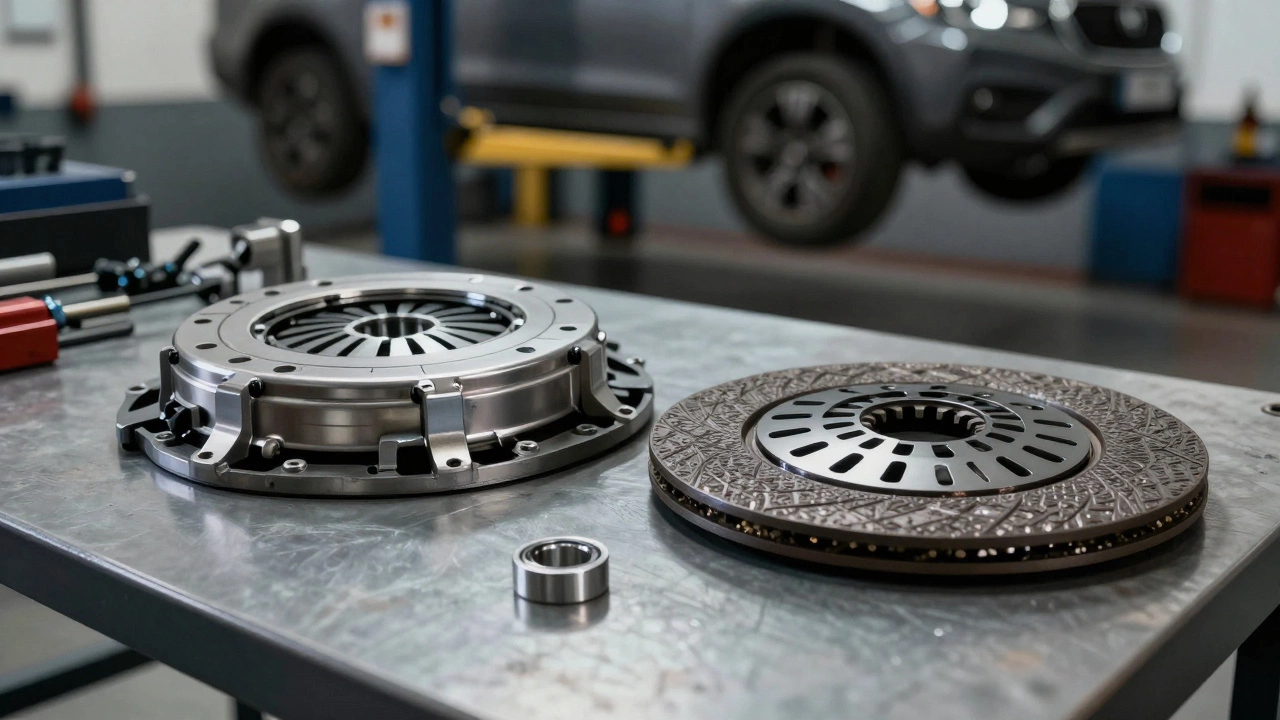
View moreWhen you press the pedal and shift gears in a manual car, you're relying on a clutch kit, a set of components that connects and disconnects the engine from the transmission to allow smooth gear changes. Also known as a clutch assembly, it includes the clutch disc, pressure plate, release bearing, and sometimes the flywheel—working together to transfer power without slipping. Without it, your car can’t shift properly. And if it fails, you’re not just stuck—you could be looking at a much bigger repair bill.
Most people think clutches last 100,000 miles or more. But that’s only true if you drive gently. With frequent stop-and-go traffic, riding the clutch, or quick launches, a clutch kit can burn out in as little as 20,000 miles. The clutch disc, the friction material that grips the flywheel wears down over time, just like brake pads. And when it gets thin, you’ll notice slipping—especially when accelerating uphill or towing. The pressure plate, the part that clamps the disc against the flywheel can also lose tension, causing the same symptoms. Then there’s the release bearing, the component that disengages the clutch when you press the pedal. A worn one makes a grinding or whining noise when you press the clutch down.
Some drivers replace just the clutch disc, but that’s a gamble. If the pressure plate is fatigued or the flywheel is warped, the new clutch won’t last. That’s why most mechanics recommend replacing the full clutch kit—not just one part. A damaged flywheel can even ruin a brand-new clutch in weeks. And if you’re upgrading to a performance clutch, like a stage 1 clutch, a stronger version designed for mild engine mods, you need to make sure everything else in the system can handle the extra torque.
Signs you need a new clutch kit aren’t always loud. It’s not always a screech or a bang. More often, it’s subtle: the car feels sluggish when you press the gas, the clutch pedal feels higher than usual, or you hear a strange noise when the pedal is pressed. If you’ve noticed any of these, don’t wait until you’re stranded on the side of the road. Check your clutch before it leaves you with no options.
What you’ll find below are real-world guides on clutch failure, how driving habits destroy clutches faster than you think, what a stage 1 clutch actually does, and how to spot a failing flywheel before it costs you more. These aren’t theory pieces—they’re fixes people have used to avoid expensive breakdowns and get their cars back on the road without overpaying.
Learn what parts to replace alongside your clutch to avoid costly repeat labor. Covers flywheels, hydraulic cylinders, bearings, and essential seals.
View more
Curious about how much horsepower a stage 2 clutch can actually handle? This article breaks down what a stage 2 clutch is, its typical power range, and the real factors that determine its limits. You'll get straight info on how mods like torque upgrades and aggressive driving affect clutch life. We’ll touch on common myths and provide easy tips for making your clutch last longer. If you're tuning or considering upgrades, these details matter.
View more
Torn between swapping just your clutch or the flywheel too? This article breaks down when a flywheel actually needs to go, why it matters, and signs you shouldn't ignore. Learn what shops sometimes overlook and how you can make your clutch job last longer. Get tips on checking flywheel condition yourself. Save money and headaches with real-world advice for any driver tackling clutch kit questions.
View more
Ever wondered if you can shift gears without the clutch? This article explains how clutchless shifting actually works, the risks you’re taking, and why people attempt it anyway. Get insights on the science behind smooth gear changes, real-world scenarios, and expert tips to avoid turning your gearbox into a pile of scrap. Save money on repairs and understand your car better before trying anything risky.
View more
Replacing a clutch isn't something car owners often think about until it's too late. Recognizing the signs of a worn-out clutch and knowing when to replace it can save a lot of headaches. This article dives into the lifespan of clutch kits, warning signs to watch out for, and tips to extend their life. Different types of cars and driving styles affect how long a clutch lasts. Understanding these factors helps in planning for timely replacements and avoiding unexpected breakdowns.
View more
Driving with a bad clutch can be challenging and risky. This article explores the symptoms of a failing clutch and whether you can still drive your car safely. Learn about temporary fixes, how to recognize when your clutch needs immediate attention, and practical tips to prolong its life. Get insights into when it's necessary to replace the clutch kit entirely.
View more
Replacing a clutch might seem like a mammoth task, but is it really? We'll break it down for you, looking at what the job entails, the time it takes, and the skills required. If you're wondering about the costs and how to make the process smoother, this article has got you covered. Plus, we'll share some handy tips for anyone thinking about tackling this job themselves.
View more
Identifying a bad primary clutch isn't rocket science, but missing the signs can lead to bigger issues. From odd noises to a burning smell, knowing what to look for can save you a headache and maybe even your ride. Let's break down the essential tips and tricks to spot these problems before they spin out of control.
View more
Exploring the practicality of using a stage 3 clutch in everyday driving situations, this article delves into the mechanisms of high-performance clutches and their renowned durability. While the benefits of improved power handling are enticing, the reality of daily driving with a stiffer pedal feel and quicker engagement can pose challenges. Tips for mastering the unique driving experience and choosing the right setup are provided. The insights aim to aid those considering this upgrade for their vehicles.
View more