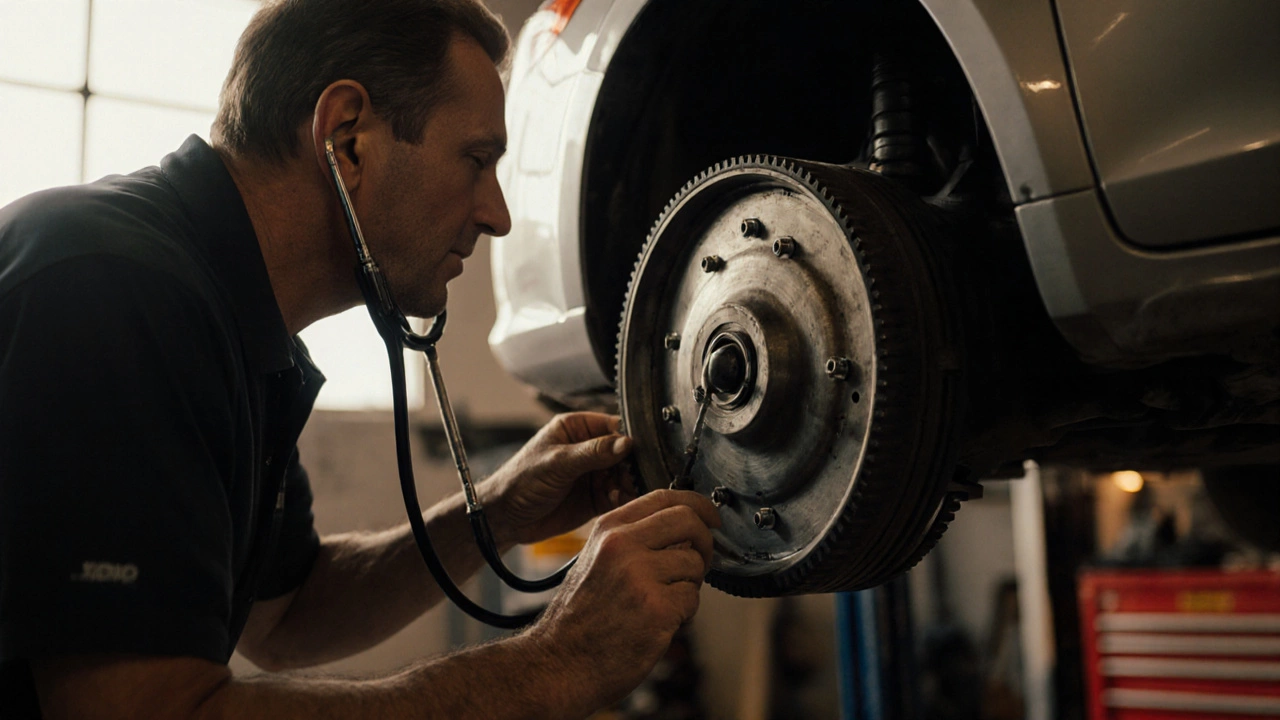
Bad Flywheel Noise: Identify, Diagnose, and Fix Common Sounds
Learn how to identify, diagnose, and fix the noises a bad flywheel makes, with clear steps, causes, and repair tips for clutch kit owners.
View moreWhen you hear a grinding, rattling, or clunking sound coming from your engine’s bell housing, it’s often the flywheel, a heavy rotating disc that connects the engine to the transmission and smooths out power delivery. Also known as a crankshaft flywheel, it’s not meant to make noise—so when it does, something’s wrong. This isn’t just a minor annoyance. A noisy flywheel usually means wear, damage, or failure in one of the most critical parts of your manual transmission system.
Flywheel noise rarely happens alone. It’s often tied to the clutch, the component that engages and disengages engine power from the transmission. If your clutch is worn or slipping, it puts extra stress on the flywheel, causing uneven contact and vibration. You might also hear it when the dual mass flywheel, a type of flywheel with internal damping springs designed to reduce engine vibrations starts to break apart. These springs can wear out or snap, leading to loud clunks or rattles—especially when shifting or letting off the gas. Many modern cars use these, and when they fail, the noise gets worse over time.
Don’t ignore it. A failing flywheel can damage your clutch, pressure plate, or even the transmission input shaft. If you hear a rhythmic clunk when idling, or a grinding noise when pressing the clutch pedal, it’s not just the clutch—it’s likely the flywheel behind it. Mechanics often find that what looks like a clutch problem is actually a cracked or warped flywheel. And if you’ve had a clutch replaced recently but the noise came back, the old flywheel was probably reused. That’s a common mistake.
There’s no quick fix. You can’t just lubricate it or tighten a bolt. The only real solution is inspection and replacement. A visual check requires pulling the transmission, so most people rely on symptoms: unusual vibrations at idle, noise that changes with engine RPM, or a clutch that feels spongy or inconsistent. If you drive a performance car or tow regularly, your flywheel wears faster. Heavy use accelerates wear on both the clutch and the flywheel surface.
What you’ll find in the posts below are real-world fixes, signs you’ve missed, and what to ask for when you take your car in. Some posts cover how to tell if your clutch is failing—which often goes hand-in-hand with flywheel issues. Others explain why replacing just the clutch without checking the flywheel is a waste of money. You’ll also find advice on what to look for in a replacement flywheel, whether to go with a single mass or dual mass, and how to avoid being upsold on parts you don’t need. No fluff. Just what actually works.
Learn how to identify, diagnose, and fix the noises a bad flywheel makes, with clear steps, causes, and repair tips for clutch kit owners.
View more