Spark Plug Failure Analyzer
This tool helps identify why your spark plugs might be failing based on common symptoms. Select your observed issues to get targeted advice.
Select symptoms to get your diagnosis
Spark plugs are small, but they do a huge job. They ignite the fuel-air mix in your engine, and if they fail, your car won’t run right-or at all. Yet many drivers don’t think about spark plugs until their engine starts misfiring or the check engine light comes on. By then, it’s often too late. The real question isn’t just when to replace spark plugs-it’s why they die so fast.
Wrong Spark Plug Type
Not all spark plugs are made the same. Your car’s manufacturer picks a specific heat range, thread size, reach, and electrode material for a reason. Putting in a plug that’s too hot for your engine causes the tip to overheat, leading to pre-ignition or even melted electrodes. Too cold, and carbon builds up, fouling the plug and causing misfires.
For example, a high-performance engine like a turbocharged 2.0L four-cylinder needs a colder plug to handle the extra heat. If you install a standard plug designed for a naturally aspirated engine, it’ll overheat within a few thousand miles. Same goes for using a plug with the wrong reach-too long, and it can hit the piston. Too short, and the flame kernel doesn’t form properly.
Always check your owner’s manual or use a reliable parts lookup tool. Don’t guess. A $5 plug that’s wrong can cost you $500 in engine damage.
Fouling from Rich Fuel Mixtures
When your engine runs too rich-meaning too much fuel and not enough air-the excess fuel doesn’t burn completely. That leftover fuel coats the spark plug electrodes in black, sooty carbon. This carbon acts like a conductor, letting the spark jump to the wrong place instead of jumping cleanly across the gap.
Common causes of a rich mixture include a leaking fuel injector, a clogged air filter, a failing oxygen sensor, or a bad mass airflow sensor. If your spark plugs look black and dry, that’s carbon fouling. If they’re wet and oily, that’s a different problem-more on that in a bit.
Drivers often blame the spark plug when the real issue is upstream. Replace the plug without fixing the fuel system, and the new one will foul in days. Fix the root cause first.
Oil Leaking Into the Combustion Chamber
Oil in the combustion chamber is a spark plug killer. It leaves a thick, greasy, brownish coating on the electrodes and insulator. Unlike carbon, which is dry, oil fouling makes the plug wet and slick. The spark can’t jump through the oil film, so the cylinder misfires.
This usually happens because of worn valve seals, damaged piston rings, or a cracked cylinder head. Older engines with high mileage are especially prone to this. If you’re replacing spark plugs every 15,000 miles or less and your car has over 100,000 miles, oil leakage is likely the culprit.
Check your exhaust smoke. Blue smoke on startup or under acceleration? That’s oil burning. A compression test or leak-down test will confirm if rings or valves are worn. No point replacing spark plugs if the engine is leaking oil into the cylinders.
Over-Tightening or Under-Tightening
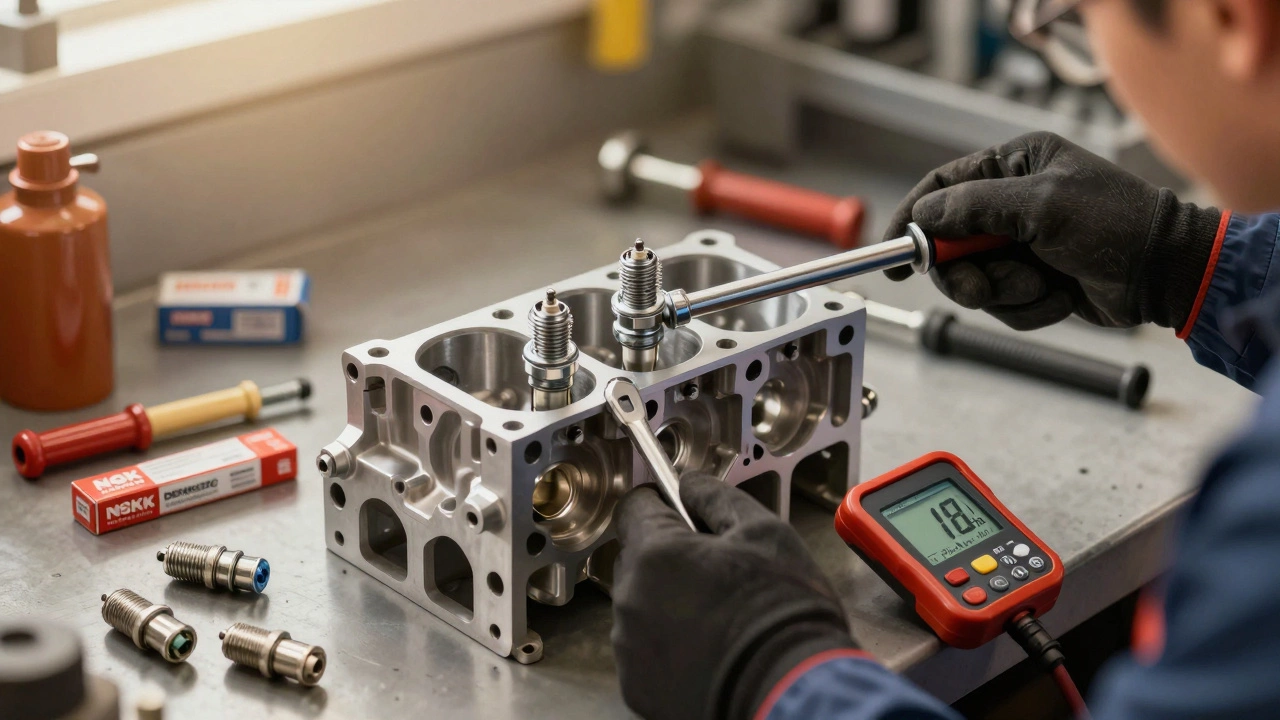
Spark plugs screw into the cylinder head. Too loose, and they won’t seal properly. Hot gases escape, the plug overheats, and the ceramic insulator cracks. Too tight, and you risk stripping the threads in the aluminum head-or worse, cracking the plug’s metal shell.
Most spark plugs need 15-20 lb-ft of torque, but it varies by type and thread size. A 14mm plug with a gasket seat usually takes 18 lb-ft. A 10mm plug might only need 10 lb-ft. Always use a torque wrench. Never just snug them with a socket.
Some mechanics swear by the ‘hand-tight plus 1/4 turn’ rule. That’s fine for new plugs with clean threads. But if the threads are dirty, corroded, or if you’re reusing old plugs, torque specs are non-negotiable. A single over-tightened plug can ruin a cylinder head repair job that cost $1,200.
Engine Knocking or Detonation
Detonation-also called knocking or pinging-is when the fuel-air mixture explodes instead of burning smoothly. This creates extreme pressure spikes inside the cylinder, and spark plugs are the first to suffer.
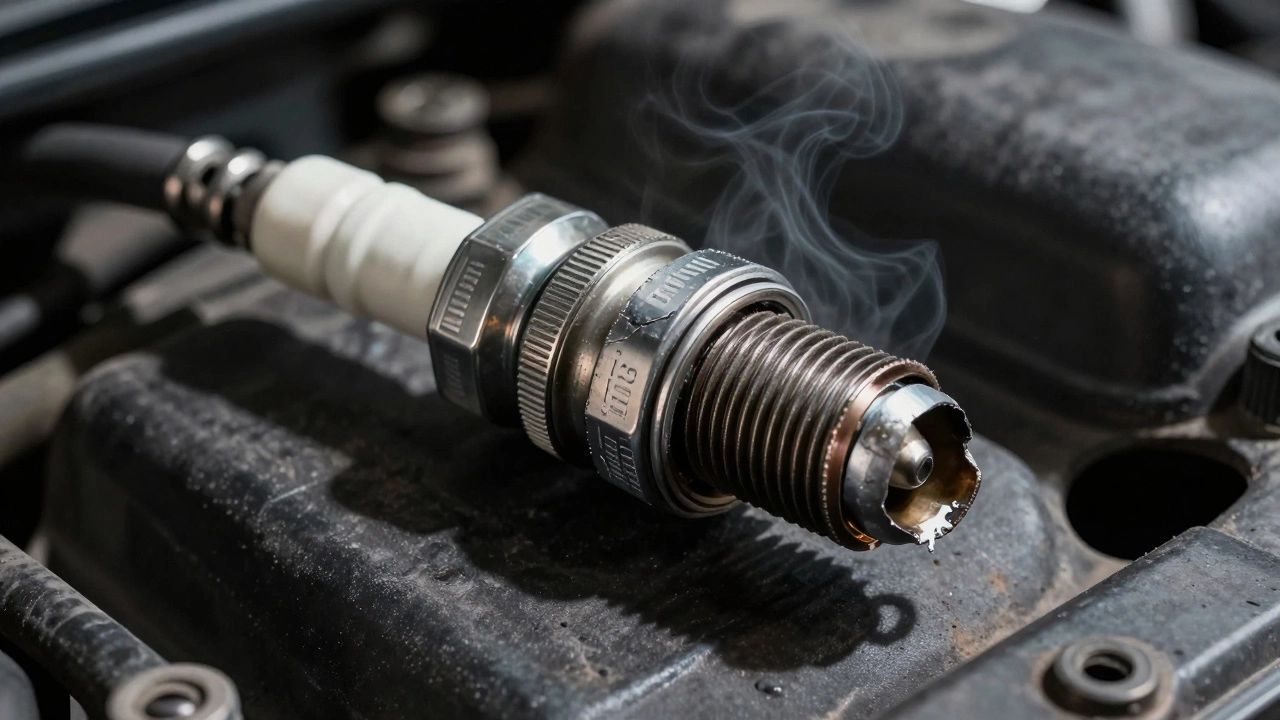
Low-octane fuel in a high-compression engine is the classic cause. But it can also come from carbon buildup, overheating, or incorrect ignition timing. When detonation happens, the electrodes on the spark plug get eroded, cracked, or even melted. You’ll see a white, blistered appearance on the center electrode.
Modern cars have knock sensors that adjust timing to prevent this, but if the sensor fails or the engine is modified, detonation can sneak in. If your spark plugs show signs of melting or cracking, check your fuel quality, cooling system, and timing first. Don’t just replace the plugs and call it done.
Using Poor-Quality or Counterfeit Plugs
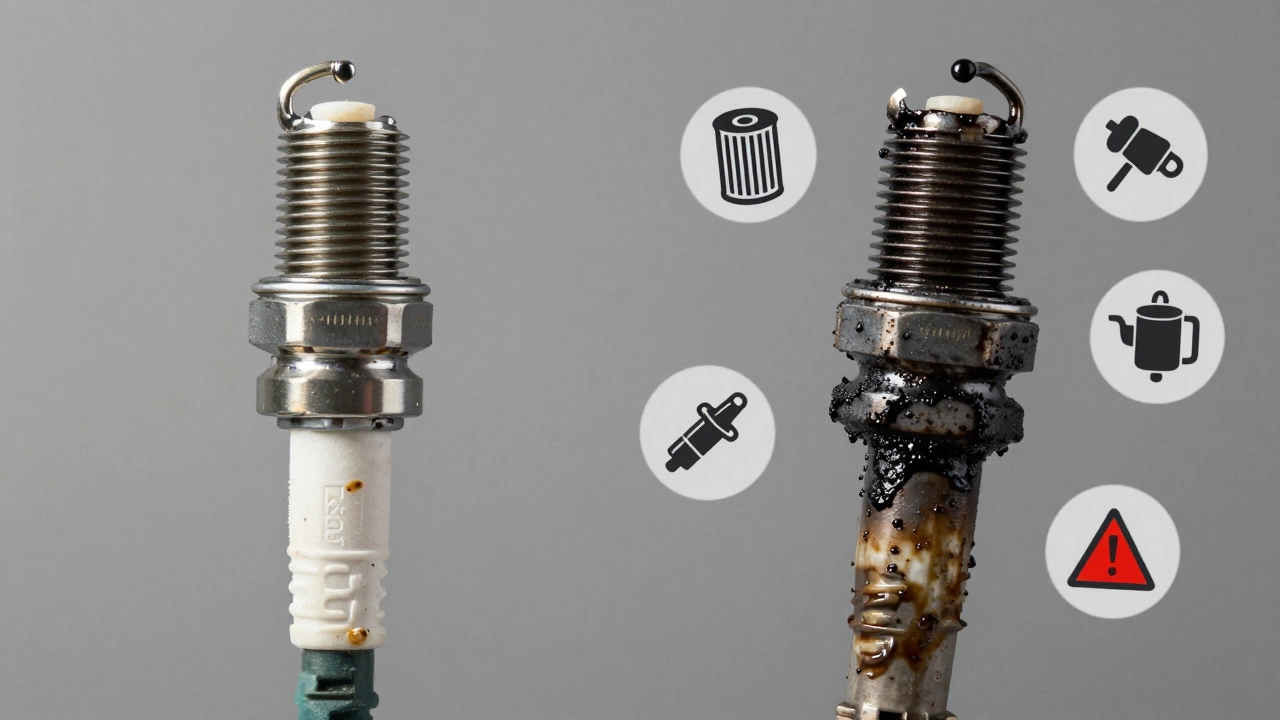
There’s a huge market for cheap spark plugs sold as ‘OEM replacements.’ Many are made in unregulated factories with low-grade materials. The center electrode might be thinner than it should be. The insulator might be made of inferior ceramic that cracks under heat. The nickel alloy electrodes wear out in half the time of iridium or platinum.
One mechanic in Ohio replaced spark plugs in 12 cars last year-all bought from the same discount auto parts store. All 12 failed within 10,000 miles. The plugs looked fine on the surface, but under a microscope, the gaps were inconsistent and the electrodes were pitted.
Stick to trusted brands: NGK, Denso, Bosch, Champion. Avoid no-name brands sold in bulk packs at gas stations or online marketplaces. You’re not saving money-you’re paying for premature failure.
Ignoring Maintenance Intervals
Many modern spark plugs are rated for 100,000 miles. That doesn’t mean they last forever. It means they’re designed to last that long under ideal conditions. Real-world driving? It’s different.
If you do a lot of short trips, stop-and-go traffic, or haul heavy loads, your engine never reaches full operating temperature. That means moisture and unburned fuel accumulate inside the combustion chamber. That’s a recipe for fouling and corrosion.
Even if your car says ‘100,000-mile service,’ check your plugs at 60,000 miles if you drive in harsh conditions. Look for gap widening, electrode erosion, or heavy deposits. A plug that’s been running for 80,000 miles might still fire-but it’s working harder than it should. That strains your ignition coil and reduces fuel economy.
Think of spark plugs like tires. Just because they haven’t blown out doesn’t mean they’re safe. Wear adds up. Replace them before they fail.
How to Extend Spark Plug Life
- Use the correct plug type for your engine-check the manual.
- Replace air filters regularly-dirty filters cause rich mixtures.
- Fix oil leaks before replacing plugs.
- Always torque plugs to spec with a torque wrench.
- Use high-octane fuel if your engine requires it.
- Buy plugs from reputable brands-don’t go cheap.
- Inspect plugs every 30,000-40,000 miles if you drive in stop-and-go traffic.
Spark plugs are not a ‘set it and forget it’ part. They’re a diagnostic window into your engine’s health. The condition of your spark plugs tells you about fuel delivery, oil consumption, ignition timing, and even engine wear. Pay attention to them, and you’ll avoid expensive repairs down the road.
How often should I replace my spark plugs?
Most modern spark plugs last between 60,000 and 100,000 miles, depending on the material (copper, platinum, or iridium) and your driving habits. If you mostly drive short trips or in heavy traffic, check them every 30,000 miles. Always follow your vehicle manufacturer’s recommendation, but don’t ignore signs of trouble like misfires or poor fuel economy.
Can bad spark plugs damage my engine?
Yes. A misfiring spark plug can cause unburned fuel to enter the exhaust system, overheating and damaging the catalytic converter. Prolonged misfires can also lead to carbon buildup, increased engine wear, and in extreme cases, piston or valve damage from detonation. Ignoring spark plug problems is a risk you can’t afford to take.
Why do my spark plugs keep fouling?
Fouling usually means your engine is running too rich (too much fuel) or leaking oil into the combustion chamber. Check your air filter, fuel injectors, oxygen sensors, and valve seals. If the plugs are black and dry, it’s a fuel issue. If they’re wet and oily, you likely have worn rings or valve seals. Replacing the plugs without fixing the root cause won’t help.
Is it okay to clean and reuse old spark plugs?
It’s not recommended. Cleaning a spark plug with a wire brush or sandblaster can damage the electrodes and insulator. Even if it looks clean, the gap may be widened, the materials degraded, or the seal compromised. Spark plugs are designed for single use. A $10 plug is cheaper than a $1,500 catalytic converter repair.
What does a good spark plug look like after 30,000 miles?
A healthy spark plug will have light tan or grayish deposits on the electrode and insulator. The electrodes should be slightly worn but not eroded. The gap should be close to the manufacturer’s spec. No cracks, no oil, no heavy carbon buildup. If it looks like this, you’re doing things right.